
Vertical Garden Guide: Types, Best Plants, Watering and Setup
How to plan a vertical garden indoors or outside: the five main types, how to read the light on your wall, which plants fit, how to water without damaging the wall, and a step-by-step setup.
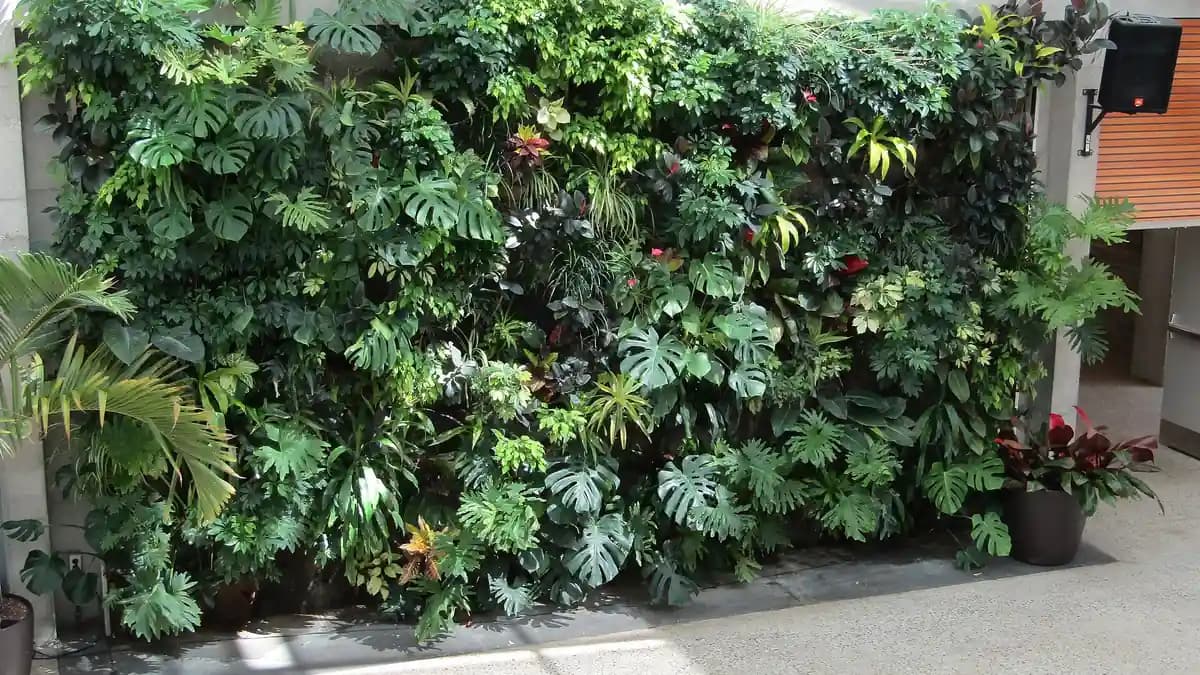
A vertical garden grows plants up a wall, fence or frame instead of across the ground, so you get a lot of green from a small footprint. For most homes the easiest start is a pocket or modular wall planter on an indoor wall with steady light, or a simple trellis outdoors for climbing vegetables. The two things that decide success are light and water: match the plants to the light the wall really gets, and plan how water goes in at the top and where it ends up at the bottom.
Hero photo credit: Leonora (Ellie) Enking / Wikimedia Commons, CC BY-SA 2.0
This guide covers what a vertical garden is, the main types, how to measure the light on your wall, which plants suit each spot, how to water without hurting the wall, and how to put one up step by step. If you are still deciding where plants should live in your home, our guide to indoor plant shelf ideas is a good companion read.
What Is a Vertical Garden?
The University of Arkansas Division of Agriculture describes vertical gardens, often called green walls, as self-sufficient living walls that can stand on their own or attach to the inside or outside of a building. The same article notes that they differ from an ivy-covered facade because the plants actually grow within a structural support, and that they work both indoors and outdoors.
In a home, the word covers a wide range of setups. A row of felt pockets on a hallway wall is a vertical garden. So is a ladder shelf of potted herbs by a sunny window, a cucumber vine on a backyard trellis, or a stacked tower of strawberries on a balcony. What they share is the idea of using height instead of floor or bed space.
That is why vertical gardening is so popular in apartments and small houses. Oregon State University Extension points out that gardeners with limited space or mobility may particularly benefit from this style of gardening. A wall planter at chest height is also easier to tend than a bed at ground level, which matters if bending is hard for you.
The Five Main Types of Vertical Garden
Almost every product or DIY plan you will find is a version of one of five designs. They differ in cost, weight, how much water they hold and what they ask of your wall.
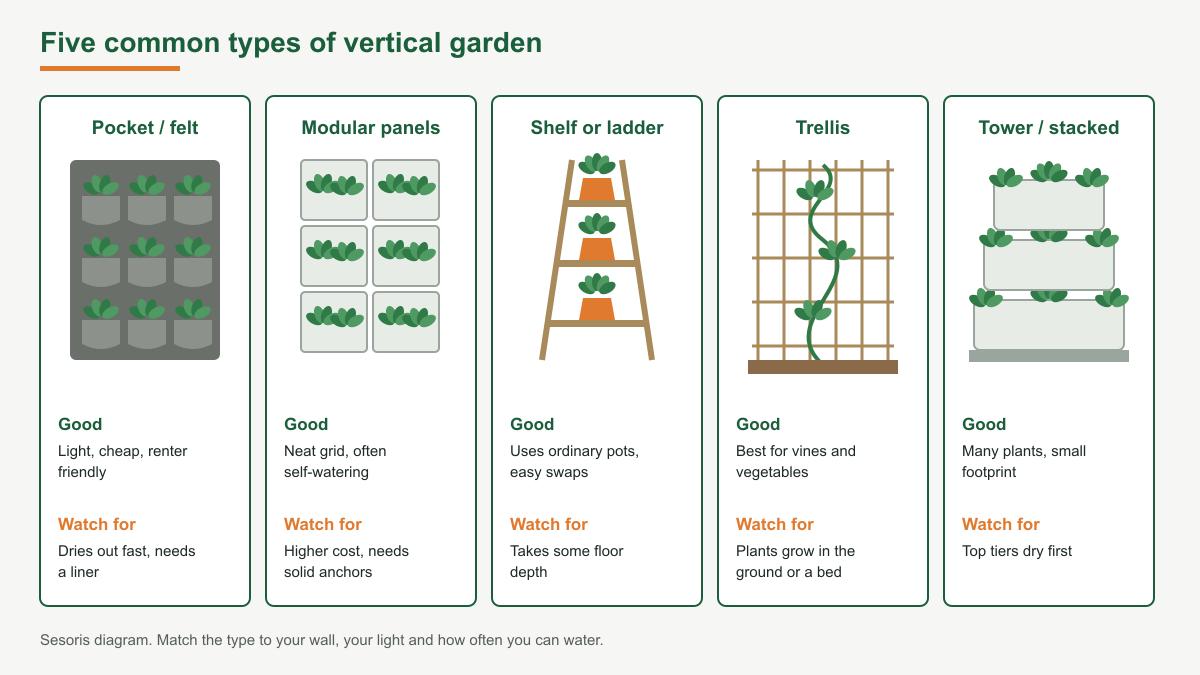
Table 1. The five main vertical garden types compared by where they fit best and what to check before you buy or build.
| Type | Best for | Main advantage | What to check first |
|---|---|---|---|
| Pocket or felt planter | Renters, indoor walls, small herbs and foliage | Light and inexpensive, hangs from a few hooks | A waterproof back and a plan for drips |
| Modular panels | A long-term feature wall | Tidy grid, many kits include built-in irrigation | Wall anchors, total wet weight, refill access |
| Shelf or ladder with pots | Beginners and anyone who likes to rearrange | Uses ordinary pots, each plant drains on its own | Floor depth and a tray under every pot |
| Trellis | Climbing vegetables and flowering vines | Cheap, and plants root in soil below | Sun exposure and a frame strong enough for the crop |
| Tower or stacked planter | Balconies, patios, strawberries and herbs | Many plants on a small footprint | Top tiers dry fastest, and wind exposure |
Pocket and Felt Planters
Pocket planters are fabric panels sewn into rows of pouches. NC State Extension lists pocket systems, wooden panels with slots, or pre-made kits with built-in irrigation as the common choices for wall-mounted planters. Larger felt walls work a little differently: Mississippi State University Extension explains that these systems use a felt fabric instead of soil, with roots anchored directly into the felt layer.
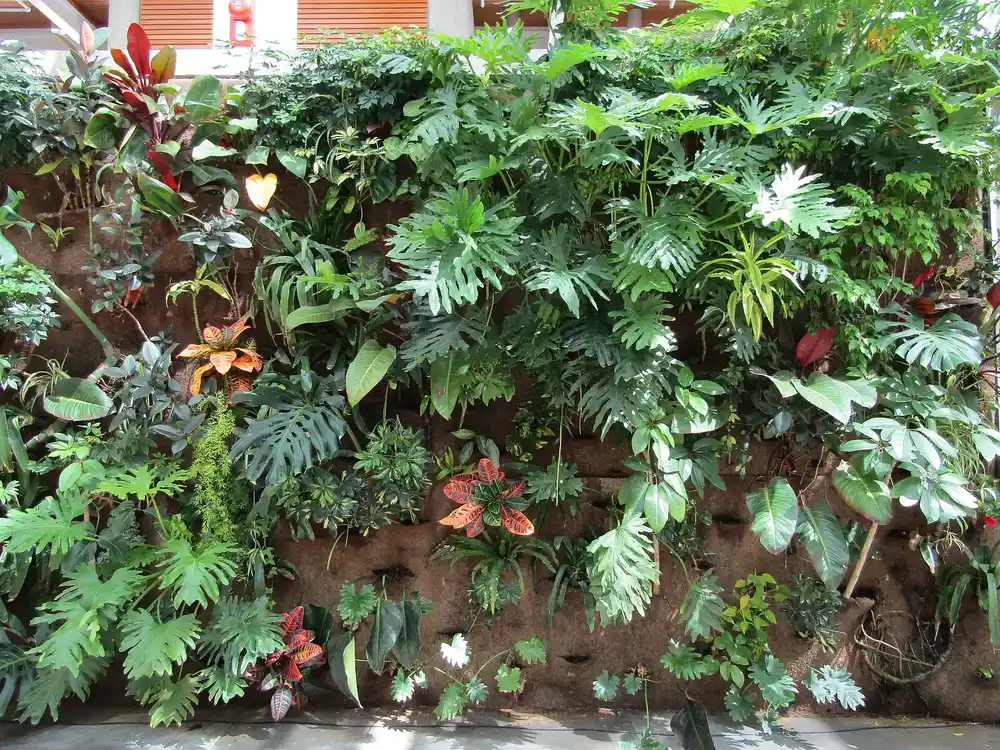
Photo credit: Leonora (Ellie) Enking / Wikimedia Commons, CC BY-SA 2.0
The close-up above shows the idea at a large scale: each plant sits in a slit in the growing mat, and the mat itself holds the moisture. At home, a pocket planter does the same job on a smaller wall. It is light, cheap and easy to take down when you move, but a thin pocket holds little water, so it needs more frequent checks than a pot.
Modular Panels
Modular systems are rigid trays or cells that clip together into a grid. They look tidy from day one and often include a reservoir or drip line. They also hold more growing mix, which means more weight. Treat a modular wall as a small piece of furniture that must be anchored, not a picture you can hang from one nail.
Shelves, Ladders and Wall-Mounted Pots
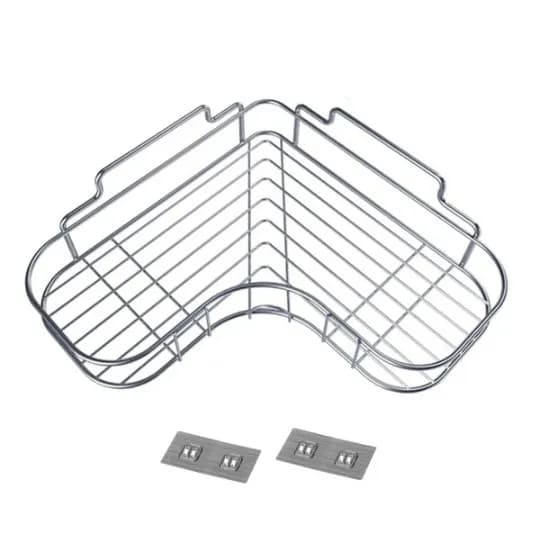
The simplest vertical garden is a set of shelves or a ladder stand filled with ordinary pots. Each plant keeps its own drainage hole and saucer, and you can swap a struggling plant in seconds. Our roundups of indoor plant wall shelf ideas and indoor plant stand ideas show many ways to do this, and a small open wire unit such as the 4-Tier Corner Wire Shelf can turn an empty corner into a plant column if you put a drip tray under every pot.
Trellises and Towers
Outdoors, the classic vertical garden is a trellis. Oregon State University Extension defines vertical gardening as using trellises, cages, strings, poles, or other devices to support growing plants, and says vining crops such as pole beans, snap peas and cucumbers are well suited to it. Towers stack several planting rings on top of each other and suit herbs, lettuce and strawberries on a patio.
Start With Light: Read Your Wall Before You Buy Plants
Light is the part most people guess wrong. A wall that looks bright to your eyes can be far too dim for most plants, especially a few steps away from the window. Plant light is measured in foot-candles. The University of Maryland Extension explains that one foot-candle is approximately the brightness of one candle, one foot away.
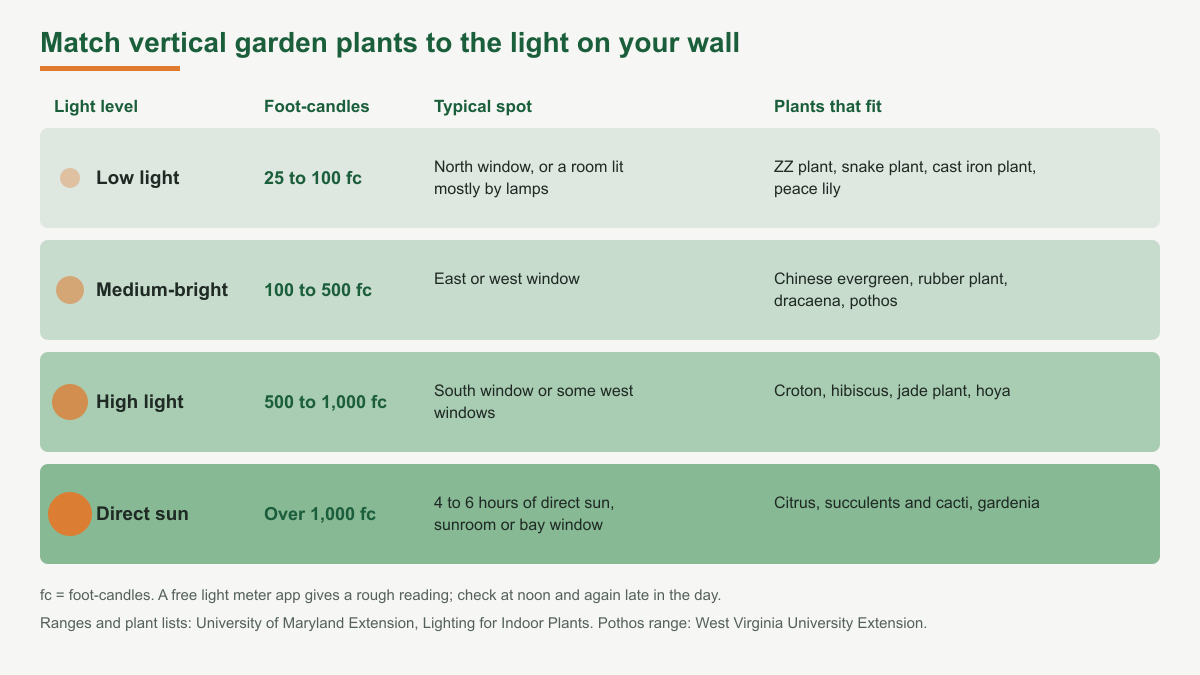
The chart above uses the ranges and plant lists from the University of Maryland guide. Distance matters as much as direction. The University of Illinois Extension gives a simple rule of thumb: low light of about 75 foot-candles is found a few feet from a north window or 3 to 10 feet from an east or west window, while bright light of about 300 foot-candles means directly in front of an east or west window or within 5 feet of a south one.
To check your own wall, open a free light meter app on your phone, hold it flat against the wall where the plants will sit, and take readings around noon and again late in the afternoon. Light also changes with the seasons, so a wall that works in June may be too dim in December. If the reading is low, choose low-light plants or add a plant light above the wall.

Photo credit: Andre Carrotflower / Wikimedia Commons, CC BY-SA 4.0
Large public living walls like this one sit far from windows, which is why they are planned together with their lighting. At home, a slim LED fixture mounted above the planter does the same job on a smaller scale. Put it on a plug-in timer so the plants get the same hours every day.
The Best Plants for a Vertical Garden
Good vertical garden plants stay fairly compact, tolerate a small root space and forgive the odd missed watering. Trailing and clumping foliage plants are the safest choice indoors. Outdoors, herbs, salad greens and climbing vegetables do well.
Table 2. Plant ideas for a vertical garden, grouped by where they grow best.
| Spot | Plant ideas | Why they work |
|---|---|---|
| Indoor, low light | ZZ plant, snake plant, cast iron plant, peace lily | Listed for 25 to 100 foot-candles by the University of Maryland Extension |
| Indoor, filtered to bright light | Pothos, Chinese evergreen, rubber plant, dracaena | Pothos is listed for filtered light of 100 to 500 foot-candles by West Virginia University Extension |
| Indoor, sunny window | Hoya, jade plant, succulents | Need high light or direct sun, and like to dry out between waterings |
| Outdoor wall or fence pockets | Leafy greens such as spinach, small herbs | Shallow roots that fit a small amount of soil |
| Outdoor trellis | Pole beans, snap peas, cucumbers | Vining habit, recommended for vertical growing by Oregon State University Extension |
Pothos is a favorite for a reason. West Virginia University Extension lists it for filtered light of 100 to 500 foot-candles with easy maintenance, and its trailing stems soften the edges of a planter. Mix one or two trailing plants with upright ones so the wall looks full without every pocket growing the same way.
For outdoor food walls, Washington State University Extension notes that hanging containers such as cans, shoe caddies or gutters can be filled with soil and plants, as long as you do not plant anything that will get too big for the space. Keep that rule in mind for any pocket: a plant that outgrows its pouch will dry out daily and pull the panel forward.
Watering and Drainage Without Damaging the Wall
Vertical gardens dry out faster than pots on a table and much faster than a garden bed. Oregon State University Extension notes that plants growing vertically sit higher off the ground, so they tend to dry out more rapidly and may need more water than in-ground plants. Indoors, the other half of the problem is where the extra water goes.
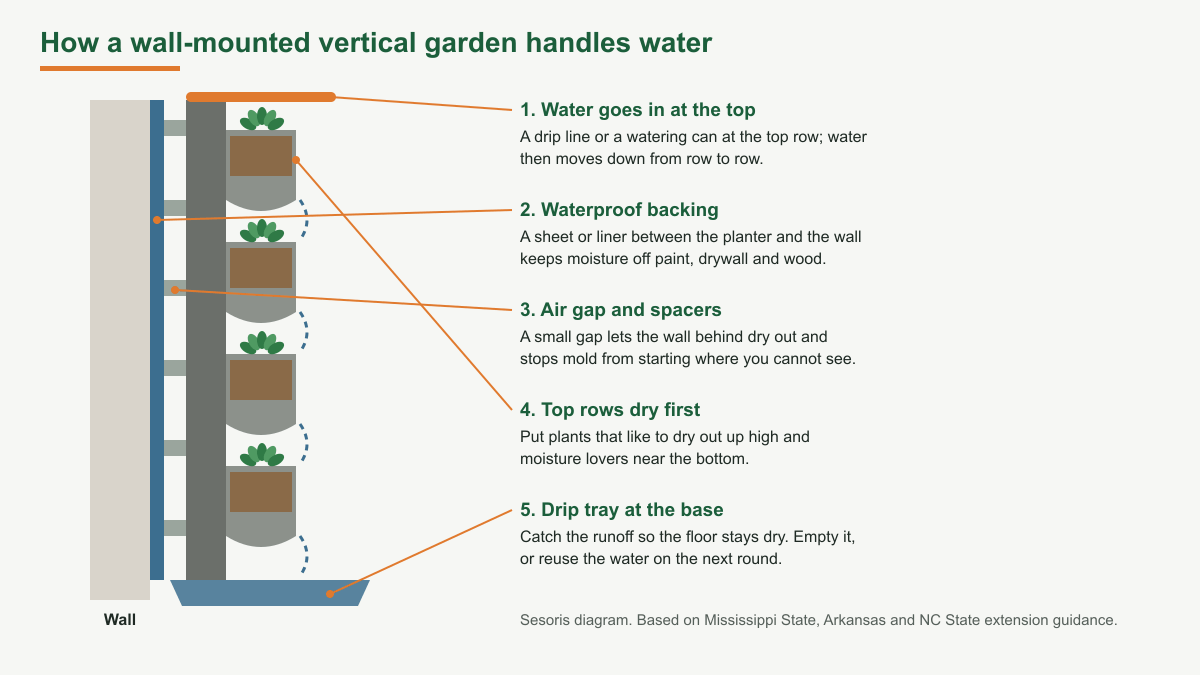
- Water from the top. The University of Arkansas article describes water traveling from the top row down via drip irrigation or hand watering. Pour slowly so the mix can absorb it instead of running straight through.
- Protect the wall. Mississippi State University Extension says frames attached to a building need a waterproof membrane between the growing media and the wall surface. At home, choose planters with a sealed back, or add a plastic sheet behind them.
- Leave an air gap. Small spacers between the planter and the wall let air move, so the wall surface can dry between waterings.
- Catch the runoff. NC State Extension advises using a saucer or tray to catch excess water and making sure drainage prevents overwatering. A long plant tray or boot tray under the wall does the job indoors.
- Place plants by thirst. Water collects lower down, so plants that like to dry out go in the top rows and moisture lovers go near the bottom.
Check the mix with a finger every few days at first, top and bottom, until you learn the rhythm of your wall. If you want an easier routine for watering cans, sprayers and plant food, our guide to setting up an indoor plant watering station keeps everything in one spot.
How to Set Up a Vertical Garden, Step by Step
This process works for a pocket planter or a small modular kit on an indoor wall. Give yourself an afternoon, and do the planting near a sink or outside.
- Pick the wall. Measure the light first, as described above. Avoid walls right above radiators, electronics or a sofa you care about.
- Measure the space. Note the width and height you want to cover and where the studs are. A stud finder costs little and saves a lot of trouble.
- Choose the system. Match the type to your light, your budget and how long you plan to stay. Renters usually do best with a light pocket planter or a freestanding shelf.
- Mount it securely. Fix the frame or hooks into studs or with anchors rated well above the planter's wet weight. Remember that wet mix and mature plants weigh far more than the empty panel.
- Add the tray. Put the drip tray in place before any water goes near the wall.
- Plant from the top down. Use a light potting mix, firm each plant in, and place drought-tolerant plants at the top and thirstier ones at the bottom.
- Water in slowly. Give the first watering in small amounts, then check the tray and the wall behind the planter an hour later.
- Let it settle. Expect a few plants to sulk for a week or two. Replace any that keep declining rather than overwatering the whole wall to save one.
Outdoor Vertical Gardens and Edible Walls
Outdoors, a vertical garden is one of the best ways to grow food in a small yard or on a balcony. NC State Extension calls vertical gardening a great way to grow lots of food with a small footprint, and suggests fences for vining vegetables such as peas, beans, cucumbers and melons.
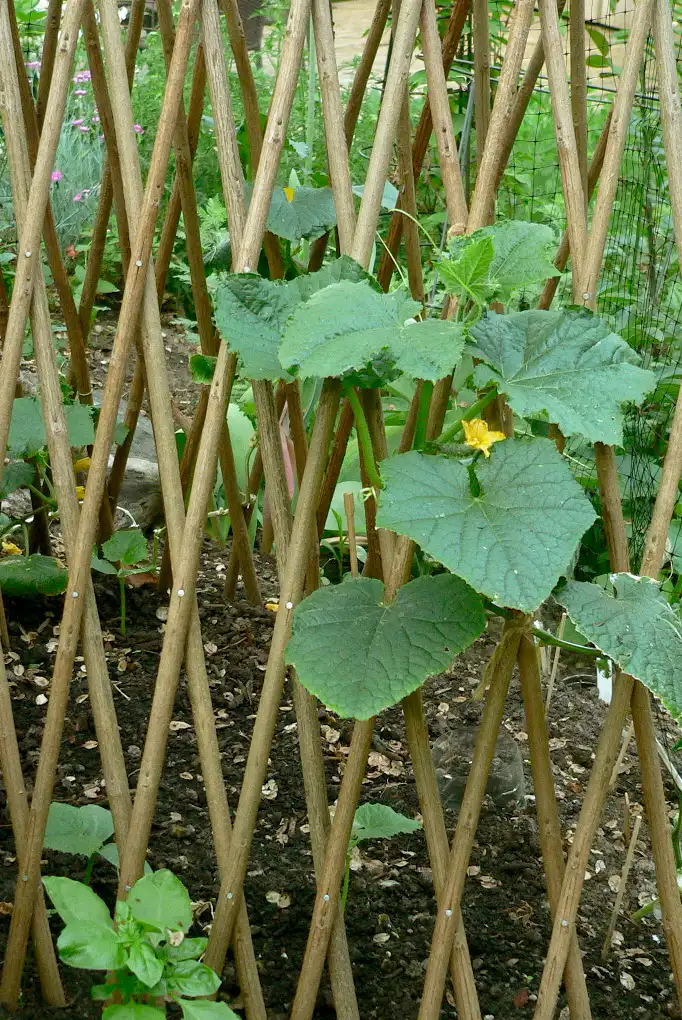
Photo credit: sakura from between places / Wikimedia Commons, CC BY 2.0
Two warnings apply outdoors. First, the structure has to carry a lot. University of Wisconsin Extension advises making sure structures are solid to hold weight of developing plants, and to expect more frequent irrigation. Second, wind. The University of Arkansas article says to attach the structure to something sturdy, because wind can knock it over.
There is a bonus too: Oregon State University Extension notes that growing vertically increases airflow, which may reduce certain plant diseases. For more patio layouts, see our outdoor plant shelf ideas and outdoor plant stand ideas.
Vertical Garden Ideas for Small Spaces
You do not need a whole wall. These smaller setups give you the same effect with less weight, water and cost.
- Herb strip by the kitchen window. Three or four small wall pots of basil, parsley and chives within reach of the stove.
- Ladder of trailing plants. A narrow ladder shelf with pothos and hoya spilling over each step. Our DIY plant stand ideas include simple builds.
- Framed living picture. A shallow framed planter with low-light plants above a console table.
- Balcony rail planters. Rail boxes stacked with a trellis behind them for peas or beans.
- Corner column. A corner shelf with one plant per tier, which uses space that is usually empty. Our guide to home organization ideas for small spaces has more ways to use corners.
Whatever you choose, keep the plant tools close. A small caddy with pruners, a narrow-spout watering can and plant food makes the weekly check quick, and our plant care station tutorial shows one way to set that up.
Common Vertical Garden Mistakes
- Guessing the light. Measure it. Most failed walls are simply too dark for the plants on them.
- Choosing plants that grow too big. A plant that outgrows its pocket dries out daily and tips the panel.
- Hanging a heavy planter from drywall alone. Use studs or anchors rated for the wet weight.
- Skipping the tray. One overwatering on a wall without a tray can stain a floor or a baseboard.
- Watering everything the same. Top rows dry first. Check top and bottom separately.
- Forgetting the back of the wall. Look behind the planter every few weeks for damp patches, and fix the cause early.
Frequently Asked Questions
What is a vertical garden?
A vertical garden is a way of growing plants upward on a wall, fence, frame or stacked planter instead of across the ground. It can be a pocket planter on an indoor wall, a shelf of pots, a trellis for vegetables, or a large living wall with its own irrigation.
What plants are best for an indoor vertical garden?
Compact, forgiving foliage plants. In low light, try ZZ plant, snake plant, cast iron plant or peace lily. In filtered to bright light, pothos, Chinese evergreen and rubber plant are good choices. Match each plant to the light the wall really gets.
How often should I water a vertical garden?
There is no fixed schedule, because light, temperature and planter type all change it. Vertical planters dry out faster than pots on a table, so check the mix with a finger every few days, top rows and bottom rows separately, and water when the top inch feels dry.
Will a vertical garden damage my wall?
It can if water reaches the wall. Use a planter with a waterproof back or add a liner, leave a small air gap behind it, and put a drip tray at the base. Check behind the planter every few weeks for damp spots.
Can a vertical garden grow in low light?
Yes, if you choose low-light plants such as ZZ plant, snake plant or peace lily, which the University of Maryland Extension lists for 25 to 100 foot-candles. For anything hungrier, add a plant light above the wall on a timer.
Can I grow vegetables in a vertical garden?
Yes. Climbing crops such as pole beans, snap peas and cucumbers grow well on a trellis or fence. Shallow-rooted greens such as spinach and small herbs suit wall pockets. Outdoor food walls usually need more frequent watering than garden beds.
How do I hang a vertical garden in a rental?
Choose a light pocket planter or a freestanding shelf or ladder, so you need few or no holes in the wall. Ask your landlord before drilling, keep a tray under the plants, and avoid anything that needs plumbing.
How heavy is a vertical garden?
Much heavier wet than dry. Growing mix holds water, and plants gain weight as they grow, so a planter that feels light in the box can weigh several times more once planted and watered. Mount it into studs or with anchors rated well above that wet weight.
Conclusion: Grow Up, Not Out
A vertical garden is one of the easiest ways to add living green to a small home, as long as you plan it in the right order. Measure the light first, pick a type that suits your wall and your lease, choose plants that fit the light and the pocket size, and plan the water from the top of the wall to the tray at the bottom. Start small, learn how your wall dries, then add more plants once the routine feels easy. For more ideas on displaying plants, browse our plant stand ideas and our guide to the best indoor plant pots and planters.
Liked this guide?
Get new organizing guides and the occasional new product by email. No spam, unsubscribe anytime.
Related articles
Explore more articles
- Best Storage Solutions for the Bedroom: 30+ Smart Ideas to Organize Your Space in 2026
- Practical Home Organizing Tips That Keep Your House Tidy
- Eid al-Fitr Prep Checklist: A Home Cleaning Countdown
- Tips to Keep Your Kid's Room Tidy
- IKEA Laundry Room Organization: Smart Ideas
- Refrigerator Organizer: How to Arrange Your Fridge Neatly and Save Electricity
- Simple Ramadan Decoration Ideas to Create a Festive Home Atmosphere
- Bathroom Closet Organization Systems: How to Set Up Zones, Shelves, and Bins