
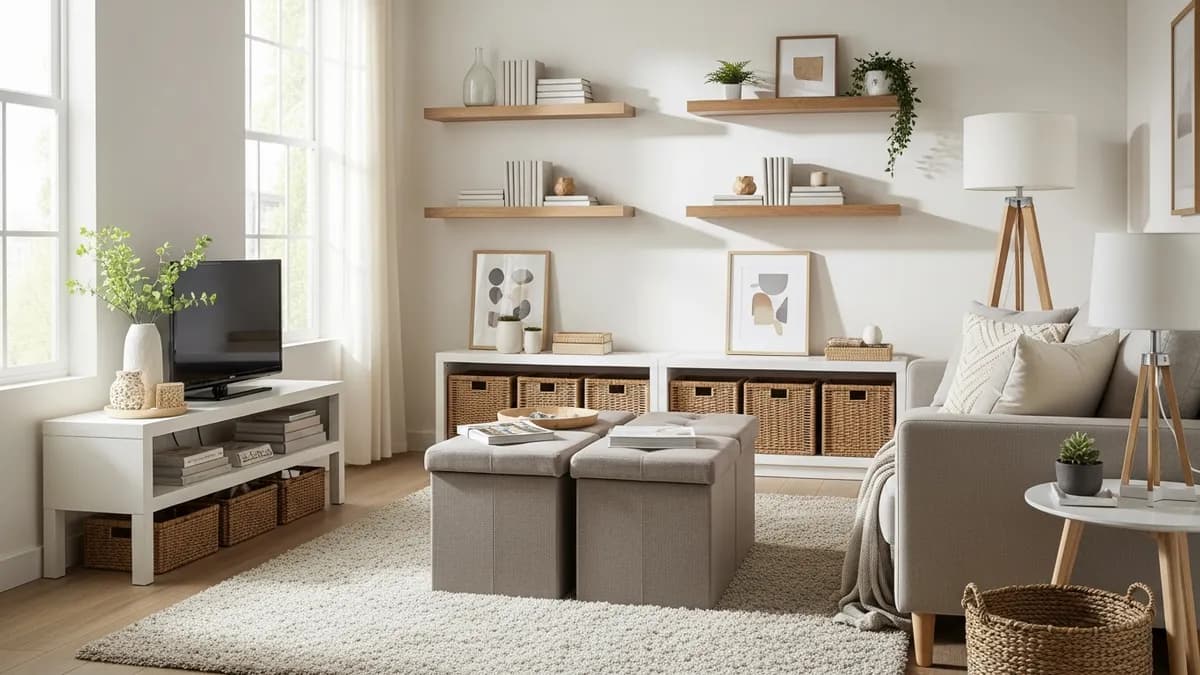
Home Organization Ideas for Small Spaces: 30+ Smart Solutions to Maximize Every Inch in 2026
Living with limited square footage does not have to mean living with clutter. In 2026, more Americans than ever are embracing apartment living, downsizing, or making the most out of cozy starter homes, and the demand for smart home organization ideas for small spaces has never been higher. Whether you're working with a 400-square-foot studio or a two-bedroom house that simply never has enough storage, the right strategies can completely transform how your home feels and functions. In this step-by-step tutorial, I'm walking you through more than 30 proven, practical solutions you can start implementing today to reclaim your space and your sanity.
Why Home Organization Ideas for Small Spaces Are More Important Than Ever
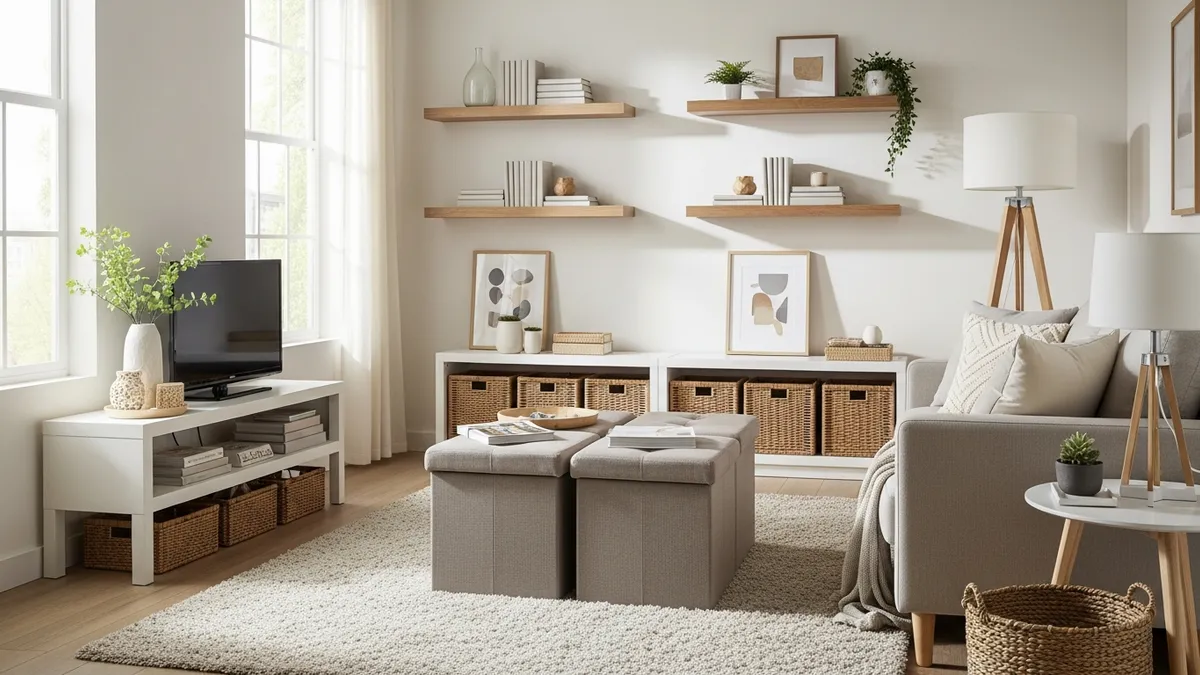
Smaller homes put a premium on every single square inch you have. The good news is that living small does not mean living cramped. Thoughtful organization turns limitations into opportunities by giving frequently used items clear homes and keeping low-use items out of prime storage zones.
When a space is poorly organized, it feels even smaller than it actually is. Visual clutter makes rooms look chaotic, walls feel like they are closing in, and daily routines become frustrating. On the flip side, a well-organized compact home feels airy, calm, and even luxurious. The key is working smarter, not harder, with your storage. That means going vertical, choosing multi-functional furniture, and using every hidden nook your space has to offer.
Before you run out and buy a bunch of bins and baskets, I recommend starting with a solid declutter session. Check out our home decluttering tips guide to get your foundation right before adding any new organization systems.
Step 1: Audit Your Space and Identify Dead Zones
The very first step in any small-space organization project is a thorough audit. Walk through every room with fresh eyes and a notepad. You are looking for two things: what is creating the most clutter, and where the underutilized storage opportunities are hiding.
Identify Your Dead Zones
Dead zones are areas of your home that currently serve no purpose but could be storing things efficiently. Common dead zones in small homes include:
- The wall space above doorways, which can hold shallow floating shelves
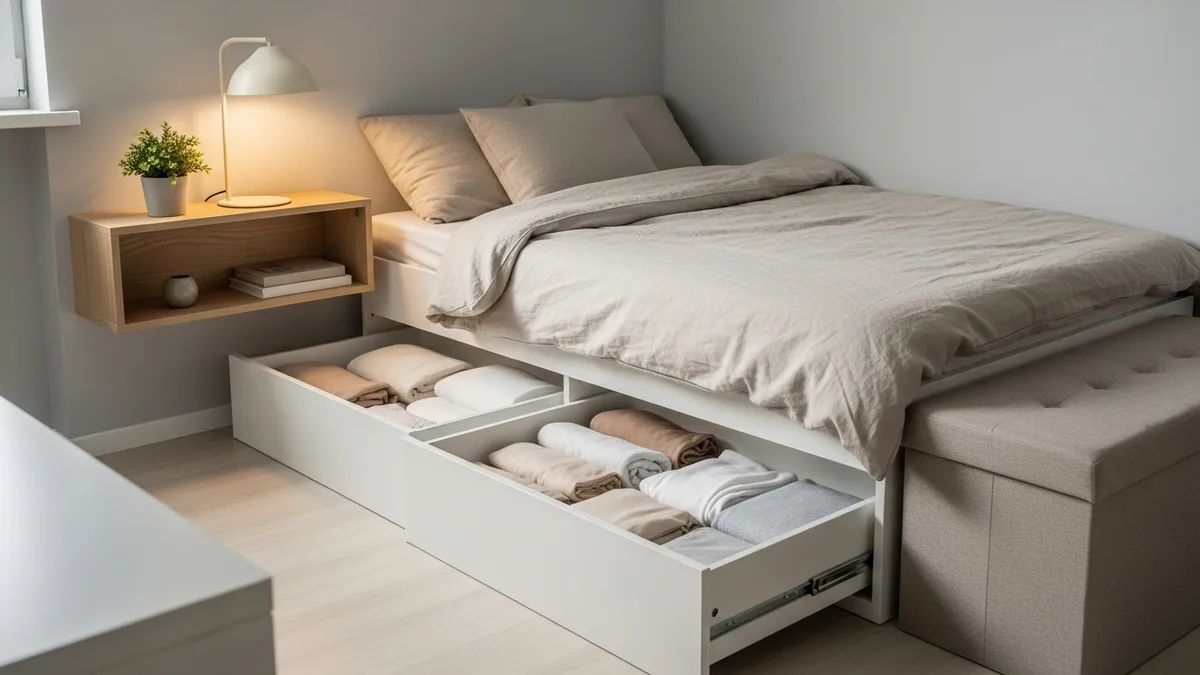
- The area under beds, which can hide flat storage containers or rolling drawers
- The backs of cabinet and closet doors, which are perfect for over-door organizers
- The corners of rooms, which are ideal for corner shelving units
- The vertical wall space between furniture and the ceiling, which is often completely ignored
- The space under stairs if your home has them, which can become a mini storage room
Categorize What You Own
Once you know your dead zones, categorize everything you own into three groups: things you use daily, things you use occasionally, and things you rarely or never use. Daily-use items should be the most accessible. Occasional-use items can go on higher shelves or in labeled bins. Rarely-used items are candidates for donation, or they can go in the deepest, least accessible storage spots you have.
This audit process is the foundation that everything else builds on. Skipping it is like painting over a cracked wall. The problems will show back up fast.
Step 2: Go Vertical with Wall Storage
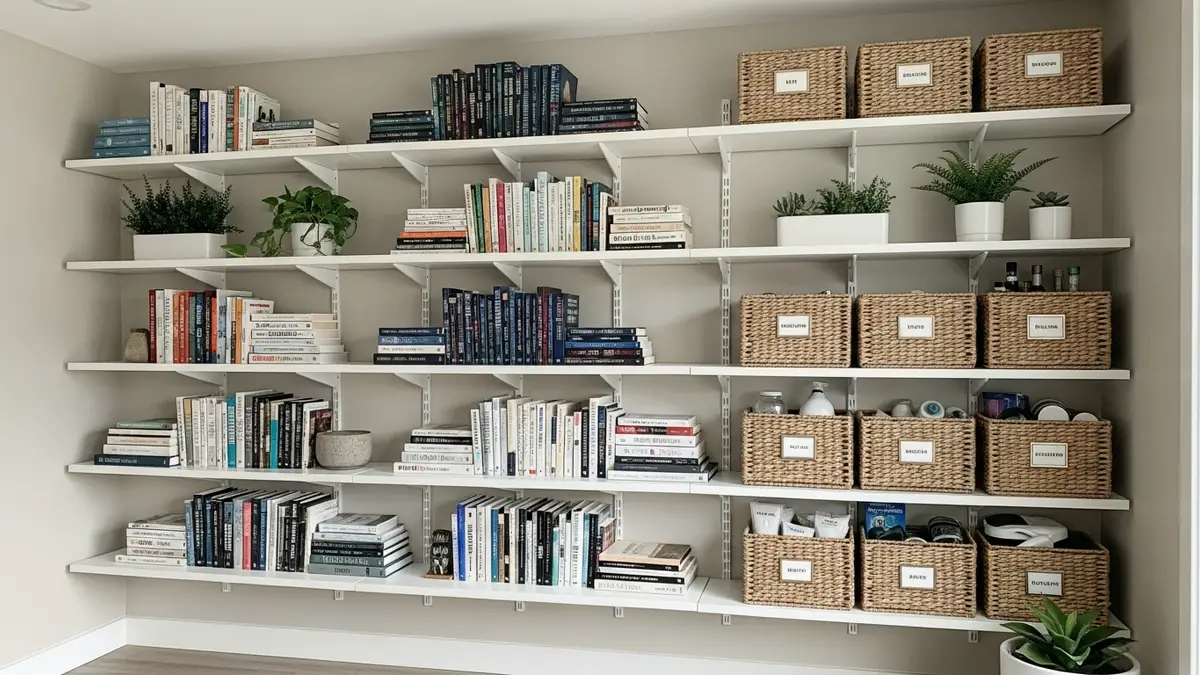
If floor space is limited, the answer is almost always to look up. Vertical storage is one of the most powerful home organization ideas for small spaces because it takes advantage of real estate you are almost certainly not using right now.
Floating Shelves
Floating shelves are a small-space essential. They add display and storage space without eating into your floor footprint at all. In a living room, a gallery wall of floating shelves can hold books, plants, decorative objects, and baskets with folded blankets. In a kitchen, open floating shelves replace bulky upper cabinets and make items feel more accessible. In a bedroom, small floating shelves work beautifully as nightstands.
When installing floating shelves, I recommend going all the way up to the ceiling. Most people stop at eye level and waste the top 18 to 24 inches of wall space. That top zone is perfect for storing items you don't reach for every single day.
For creative floating shelf inspiration across every room, browse our collection of wall shelf storage ideas.
Floor-to-Ceiling Shelving Units
Freestanding floor-to-ceiling shelving units are another excellent option, especially in living rooms, home offices, and entryways. They make a dramatic visual statement while providing serious storage capacity. Look for modular systems so you can configure them to fit your exact wall dimensions.
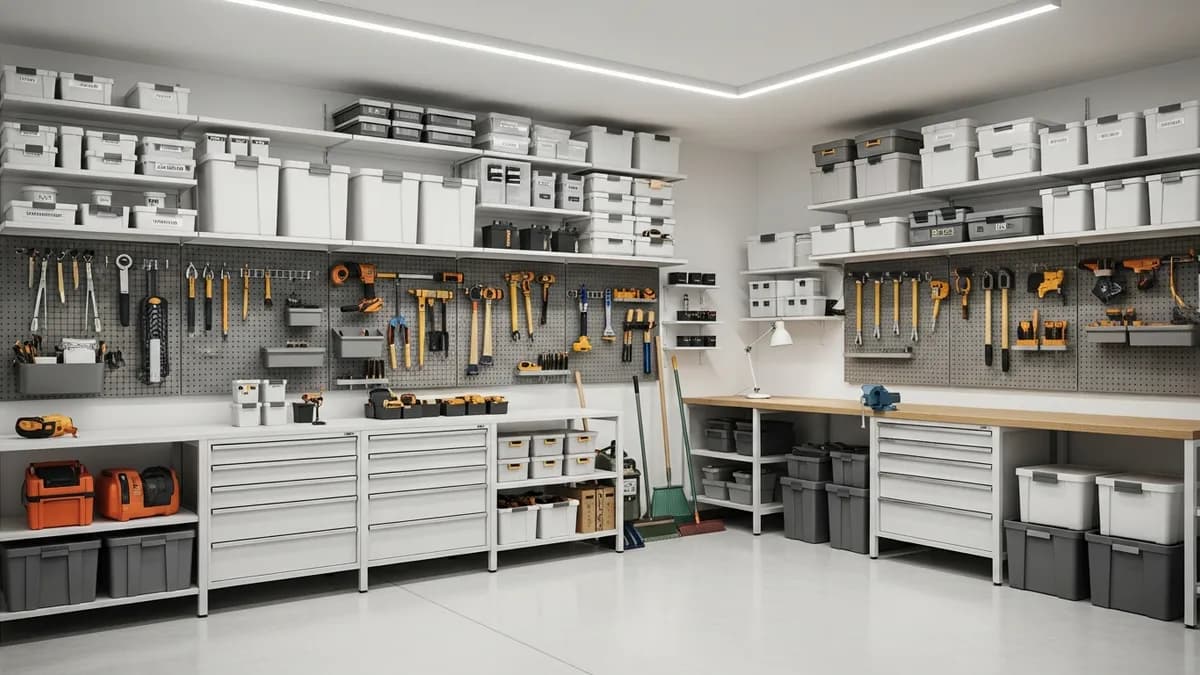
Pegboards and Grid Panels
Pegboards are not just for garages anymore. A pegboard mounted in a home office, kitchen, or craft area lets you hang tools, utensils, small baskets, hooks, and shelves in a completely customizable arrangement. You can rearrange the configuration whenever your needs change, which makes it one of the most flexible wall organization systems available.
Step 3: Choose Multi-Functional and Storage Furniture
In a small home, every single piece of furniture should be earning its keep. If a furniture item does only one thing, ask yourself whether it could be replaced with something that does two or three things.
Storage Ottomans
A storage ottoman at the foot of your bed or in your living room does triple duty: it serves as a footrest, extra seating when guests come over, and a hidden storage compartment for blankets, pillows, games, or seasonal items. This is one of my absolute favorite small-space swaps.
Beds with Built-In Storage
Platform beds with built-in drawers underneath are a game-changer for small bedrooms. They can hold an enormous amount without taking up any additional floor space. If your current bed frame does not have built-in storage, invest in a good set of under-bed storage containers. Low-profile rolling bins or flat airtight containers work especially well in this space. Learn more in our bedroom storage solutions for small bedrooms guide.
Nesting Tables and Fold-Down Surfaces
Nesting coffee tables can be spread out when you have guests and tucked together when you need more floor space. Fold-down wall-mounted desks are brilliant in small home offices or bedroom workspaces. When you're done working, the desk folds flat against the wall and the space is reclaimed entirely.
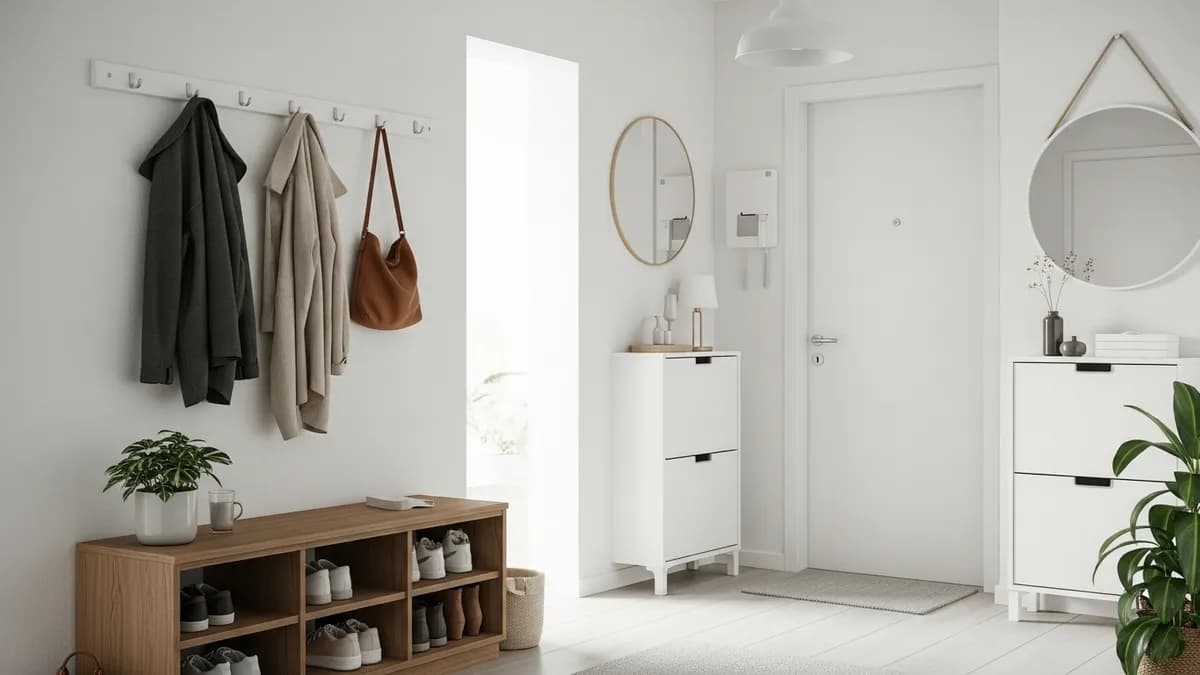
Entryway Benches with Storage
An entryway bench with a hinged lid and interior storage compartment gives you a place to sit while putting on shoes, hooks above for coats and bags, and hidden space inside for shoes, hats, gloves, or sports gear. It keeps your entryway from becoming a dumping ground. For more entryway ideas, check out our entryway organization complete guide.
Step 4: Organize Every Room with Smart Small-Space Strategies
Now let's get room-by-room and talk about specific, actionable home organization ideas for small spaces in each area of your home.
Small Kitchen Organization
The kitchen is often the hardest room to organize in a small home because there are so many categories of items competing for limited space. Here is what works best:
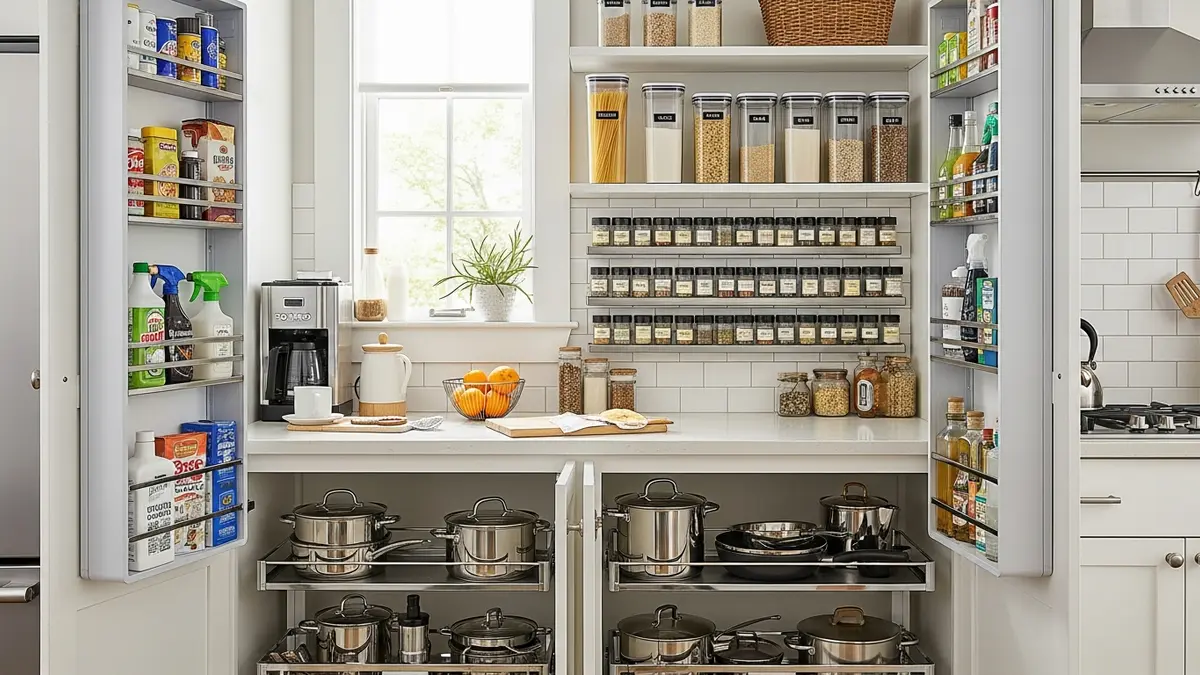
- Use the inside of cabinet doors. Mount small racks or over-door organizers on the inside of your cabinet doors to store pot lids, foil boxes, cutting boards, or cleaning supplies.
- Install a magnetic knife strip. Instead of a bulky knife block taking up counter space, a magnetic strip mounted on the backsplash keeps your knives accessible and frees up valuable countertop real estate.
- Go stackable with your pantry storage. Stackable airtight food storage containers allow you to build upward inside your pantry instead of spreading outward. Square and rectangular containers stack much more efficiently than round ones. Explore our full range of airtight food storage containers to find the right fit for your kitchen.
- Add a tension rod under the sink. Hang spray bottles from a tension rod under the kitchen sink to free up floor space in that cabinet for other items.
- Use a tiered spice rack. A 3-tier spice rack fits in a fraction of the space of a cluttered spice cabinet and lets you see everything at a glance.
- Mount a roll of paper towels inside a cabinet door. Get the paper towel holder off your counter entirely.
Decanting dry goods like pasta, cereal, and flour into uniform, labeled containers can help pantry shelves use space consistently. Only decant products you replace frequently, and keep expiration details visible so the system stays safe as well as tidy.
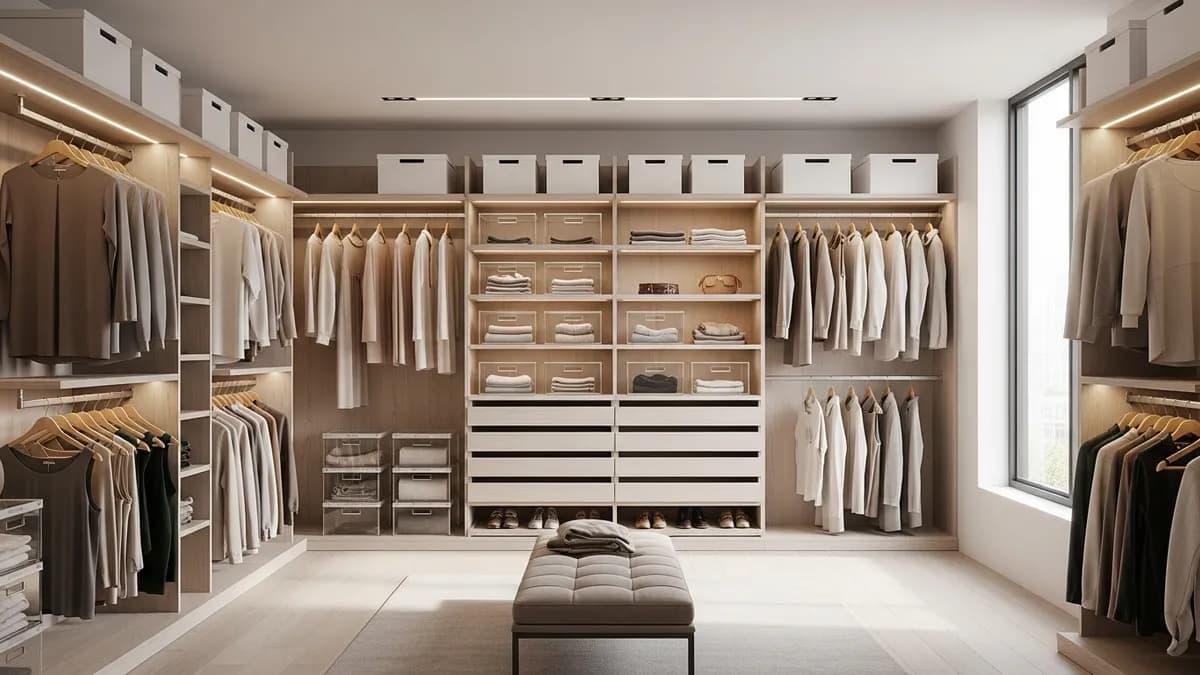
Small Bedroom Organization
- Use vertical closet organizers. A double-hanging rod system instantly doubles your hanging space in a standard closet.
- Add over-door shoe storage. An over-door shoe organizer holds far more than just shoes. Use the pockets for accessories, hair tools, small bags, or folded scarves.
- Mount bedside shelves instead of nightstands. Wall-mounted floating shelves as nightstands take zero floor space and can be positioned at exactly the height that works for you.
- Use vacuum storage bags for seasonal clothing. Compress bulky sweaters, comforters, and seasonal items down to a fraction of their size. A vacuum storage bag can compress soft goods by up to 75 percent, according to product specifications.
- Install hooks on the back of your bedroom door. This is instant, free storage for robes, bags, and tomorrow's outfit.
For a deeper dive, our small bedroom storage solutions guide has 35 more ideas.
Small Bathroom Organization
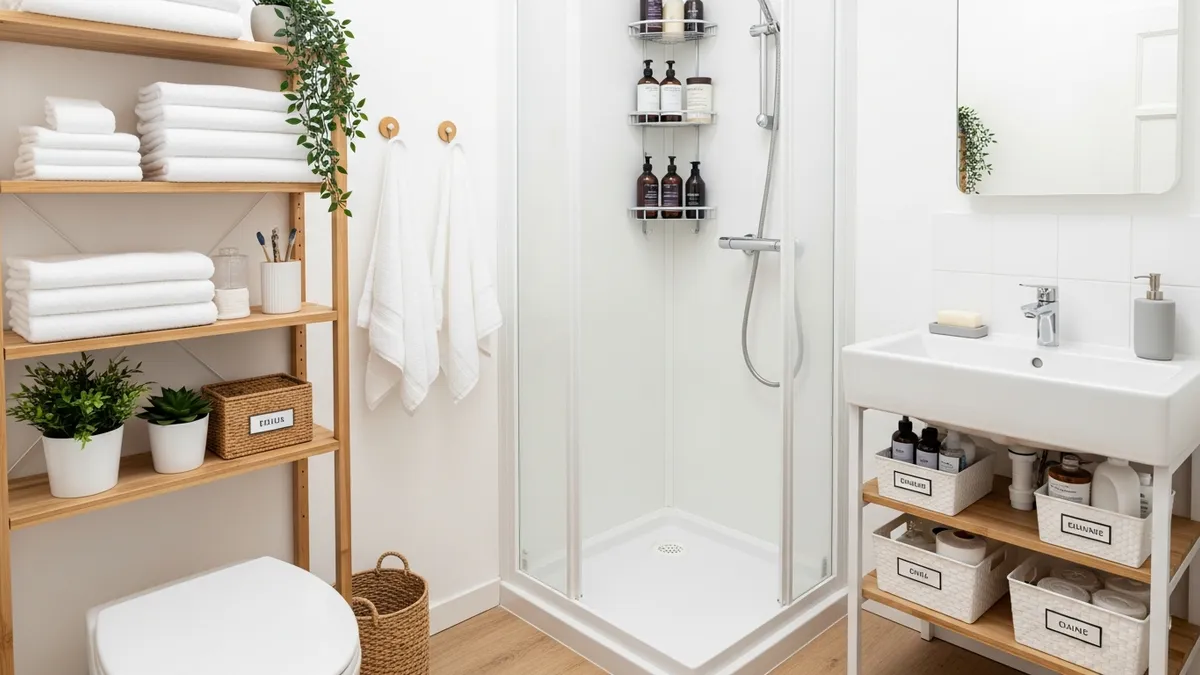
- Install an over-toilet shelving unit. The vertical space above your toilet is prime real estate. A freestanding over-toilet shelving unit adds two to three shelves of storage without requiring any drilling.
- Use a corner shower caddy. A tension pole caddy in the corner of your shower or tub holds shampoo, conditioner, and body wash without cluttering the tub edge.
- Hang a small shelf inside the shower on the wall. Even a single small floating shelf in the shower can hold your most frequently used products.
- Put an organizer under the sink. Use stackable bins, small baskets, or a two-tier turntable to organize the awkward cabinet space under your bathroom sink.
- Mount hooks at multiple heights on the back of the bathroom door. You can hang towels, robes, and bags all on one door if the hooks are staggered at different heights.
Our smart bathroom storage solutions guide covers 20 more bathroom-specific ideas.
Small Living Room Organization
- Choose a media console with closed storage. Open shelving around a TV tends to accumulate clutter fast. A console with doors lets you hide electronics, remotes, games, and cables behind a clean facade.
- Use baskets as decorative storage. Woven baskets on open shelves store blankets, toys, or miscellaneous items while looking intentional and stylish.
- Float your sofa away from the wall. Counterintuitively, pulling your sofa a few inches away from the wall and placing a narrow console table behind it adds a surface for lamps and storage without making the room feel smaller.
- Invest in a coffee table with drawers or a lower shelf. A coffee table with built-in storage keeps remotes, coasters, and books within reach but out of sight.
- Limit decorative items to curated collections. In a small living room, less is genuinely more. Choose a few meaningful decorative pieces rather than covering every surface.
Step 5: Label Everything and Maintain Your System
Setting up an organization system is only half the battle. The real challenge is maintaining it over time. This is where labeling and simple maintenance habits make all the difference.
Why Labeling Matters
Labels tell every member of your household where things belong. When everyone knows where something lives, things actually get put back where they belong. This sounds simple, but it is the single biggest reason why some organization systems last for years while others fall apart within a week.
You do not need a fancy label maker to start. Painter's tape and a marker work perfectly well. If you want a more polished look, a handheld label maker is a relatively small investment that pays off enormously in how much easier maintenance becomes. Learn more about building a smart labeling system in our label organizer guide.
The One-In-One-Out Rule
This is the non-negotiable rule of maintaining a small home organization system: every time something new comes into your home, something old has to leave. If you buy a new kitchen gadget, an old one goes to donation. If you bring home a new pair of shoes, an old pair leaves. This rule prevents the slow creep of clutter from undoing all your hard work.
Weekly Reset Routines
I recommend building a 10-to-15-minute weekly reset routine into your schedule. Pick a consistent time, like Sunday evening or Friday morning, and do a quick pass through every room to put stray items back in their designated spots. This prevents small messes from snowballing into overwhelming clutter. For a comprehensive cleaning and organizing routine, our organization and cleaning tutorial is a great resource.
"A place for everything and everything in its place" is the golden rule of small-space living. When every single item in your home has a designated home, tidying up takes minutes instead of hours.
Step 6: Use Smart Organizational Products That Actually Earn Their Space
In a small home, every organization product you bring in has to earn its place. Here are the categories of products that deliver the most value in small spaces:
- Stackable, modular containers for pantries, fridges, and cabinets because they use space three-dimensionally instead of spreading out flat
- Over-door organizers for closets, bathrooms, kitchens, and entryways because they use space that is otherwise completely wasted
- Drawer dividers and organizers for kitchen drawers, bathroom vanities, and bedroom dressers so items do not become a jumbled mess
- Tension rods used creatively under sinks, inside cabinets, and in closets to create extra hanging levels
- Clear bins and containers so you can see exactly what is inside without pulling everything out
- Turntables or lazy Susans for deep cabinets and pantry shelves so items at the back are always easily reachable
- Collapsible or foldable storage boxes that collapse flat when not in use, saving space when seasons change
For a practical starting point, browse our best sellers collection and choose one organizer that solves the room's largest daily friction first.
Common Mistakes to Avoid When Organizing Small Spaces
Even with the best intentions, there are a few mistakes I see people make repeatedly when tackling small-space organization. Knowing about them ahead of time will save you a lot of frustration.
Buying storage products before decluttering. This is the number one mistake. If you buy a bunch of bins and baskets and then try to fit all your existing stuff into them, you end up organizing clutter rather than eliminating it. Always declutter first.
Choosing style over function. A beautiful wicker basket that is too awkward to open easily will get ignored. Storage products need to be functional above all else.
Ignoring the vertical dimension. Almost every small space has significantly more vertical storage potential than its owner realizes. Go up.
Over-organizing. Yes, this is a thing. Sometimes people create such elaborate organizational systems with so many subcategories and steps that no one in the household can realistically maintain them. Keep your systems simple enough that they can be maintained on autopilot.
Neglecting the entryway. Your entryway sets the tone for your entire home. If it is chaotic, you feel stressed every time you walk in the door and every time you leave. Prioritize it. Our entryway organization ideas guide has 25 ideas to get you started.
Buying multiples of things you already have. Before buying any new organizing product, do a full inventory. You might already have what you need hiding in another room.
A useful final check is to photograph the room from the doorway. The image makes visual clutter and blocked pathways easier to spot than when you are standing inside the space.
Related Products from Sesoris
If you want to turn this guide into a real setup, start with Foldable Storage Bins and Floating Wall Shelf Set. For broader options, browse the Home & Decor collection so the article journey does not stop at reading only.
Our practical rule: choose one product that solves the main clutter problem first, then add supporting organizers only when the daily workflow is already clear. This keeps the shopping path useful, not pushy.
FAQ: Home Organization Ideas for Small Spaces
Q: Where do I start when organizing a small home that is completely overwhelmed with clutter?
Start with one small area, not the whole house. Pick the space that bothers you the most or where you spend the most time, like your kitchen counter or your bedroom dresser, and tackle just that area first. A quick win builds momentum and makes the bigger project feel manageable. Follow the declutter-first, organize-second rule consistently.
Q: What is the most effective storage solution for a tiny apartment?
Vertical wall storage combined with multi-functional furniture gives you the biggest return. Floating shelves, over-door organizers, and storage ottomans collectively add significant storage capacity without using any additional floor space. These three together can transform even the tiniest studio apartment.
Q: How do I organize a small space on a tight budget?
Start with free solutions first: decluttering, rearranging existing furniture, and using what you already have in smarter ways. Then invest in a few high-impact, affordable products like over-door organizers, tension rods, drawer dividers, and clear stackable bins. You do not need to spend a fortune to get dramatically better results. Check out our full shop collection for budget-friendly organization essentials.
Q: How do I keep a small space organized with kids?
The key with kids is making it incredibly easy to put things away. Every toy, game, and art supply needs a clearly labeled, accessible home that a child can reach and use independently. Low baskets, open bins, and labeled shelves at child height work much better than complicated drawer systems. Fewer toys on rotation at one time also helps enormously.
Q: What are the best containers for small pantry organization?
Square or rectangular airtight containers stack far more efficiently than round ones and use every inch of shelf space without wasted gaps. Clear containers let you see what is inside at a glance. Uniform sizing across a pantry shelf looks clean and makes restocking easy. Visit our food storage containers for pantry guide for detailed recommendations.
Q: How do I make a small bedroom feel bigger and more organized?
Use light colors on walls and bedding, mount your lighting on the wall instead of using floor or table lamps, use under-bed storage to get things off the floor, keep surfaces clear, and limit the number of decorative items. A clutter-free room with good lighting always feels larger than its actual square footage.
Conclusion: Start Your Small-Space Organization Journey Today
Implementing smart home organization ideas for small spaces is one of the highest-return improvements you can make to your home in 2026. You do not need more square footage. You need better systems, smarter products, and a clear strategy for using the space you already have. From going vertical with floating shelves to choosing multi-functional furniture to maintaining a simple one-in-one-out rule, every idea in this tutorial is designed to help you live more comfortably and efficiently in whatever space you call home.
The best time to start is right now, even if you just tackle one drawer or one shelf today. Small, consistent progress adds up fast, and once you experience how calm a well-organized space feels, you will wonder how you ever lived any other way.
Ready to find the right products to bring your organization vision to life? Browse our curated collection of home organization essentials at Sesoris, and check out our new arrivals for the latest tools designed to help you live more organized.
Weekly Home Tips
Get home organization ideas, product picks, and exclusive deals delivered weekly.
No spam. Unsubscribe anytime.
Explore More Articles
- Pretty Food Storage Containers: Transform Your Kitchen with Stylish Organization Solutions 2026
- Makeup Organizer: Ultimate Guide to Beauty Storage Solutions 2026
- Mini Bar for Small Kitchens: 15 Creative Ideas to Maximize Space
- Complete Guide to Plastic Storage Containers Food: Best Solutions for Fresh Food Storage in 2026
- Best Containers for Dog Food Storage: Keep Your Pet Food Fresh in 2026
- Pyrex Food Storage Containers: Complete Review & Buying Guide for 2026
- Glass Containers with Glass Lids for Food Storage: Complete Tutorial Guide 2026
- Pyrex Glass Food Storage Containers: The Complete Guide to Premium Kitchen Storage in 2026