
How to Organize a Small Apartment: A Room-by-Room Plan
How to organize a small apartment or studio: declutter first, create zones, use vertical space, choose two-job furniture, and keep it tidy with simple daily habits.
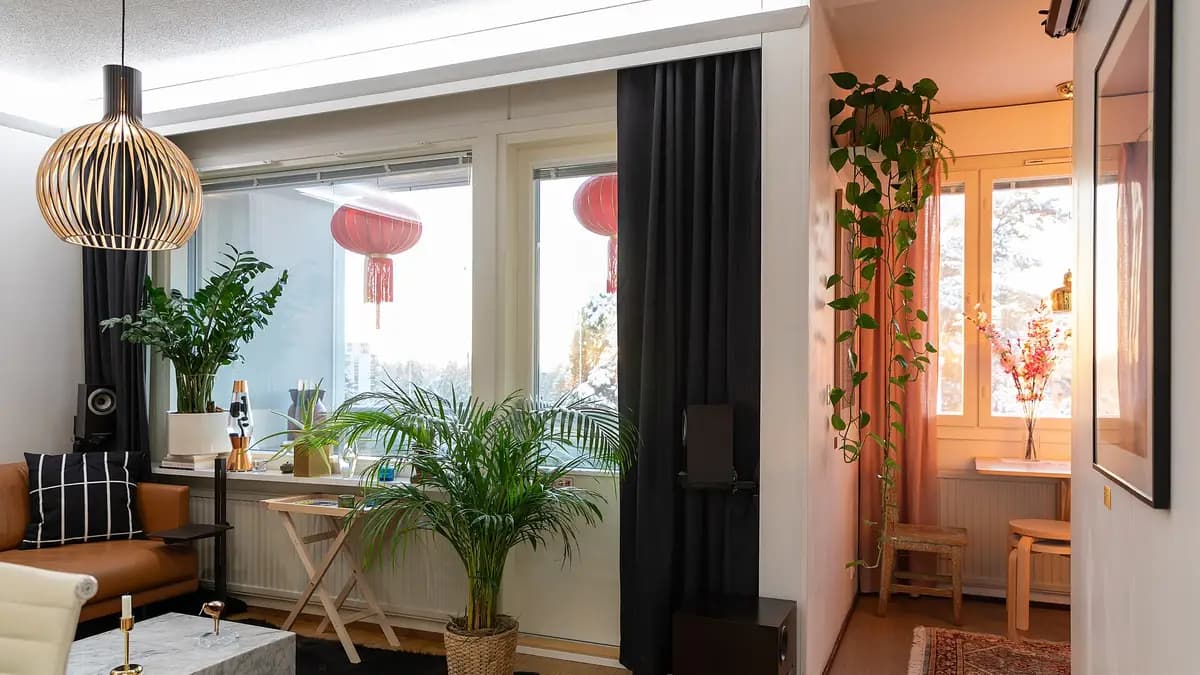
To organize a small apartment, split the room into zones, cut what you own before you buy storage, and use the height of your walls, doors and bed frame rather than the floor. Give every item one home, keep the floor clear, and repeat a five-minute reset each evening. This order matters, because storage bought before a declutter usually just hides the same mess.
Hero photo credit: Aaaatu / Wikimedia Commons, CC BY-SA 4.0, cropped
This guide walks through a room-by-room plan for studios and one-bedrooms, the storage that works without drilling, what renters should check first, and the small habits that stop clutter from returning. If you want quick wins before you start, our list of small space organization hacks is a good warm-up.
Start With an Honest Declutter
The first step in organizing a small apartment is removing what no longer earns its space. Every item you keep costs floor, shelf or closet room, and a small home has very little of each. Go through one category at a time, such as clothes, kitchen tools, paper and cables, and sort into keep, donate, sell and trash.
Be strict about duplicates. Three can openers, six water bottles and a drawer of mystery chargers take up room that a studio cannot spare. If you have not used something in the past year and it holds no real sentimental value, it is a strong candidate to go. Our guide on how to declutter your home has a fuller method if the job feels big.
Work in short sessions. Twenty minutes on one drawer finishes the job, while a whole-apartment Saturday usually ends with piles on the bed. Keep a donation bag by the door, and take it out as soon as it is full so the items cannot drift back onto shelves.
Divide One Room Into Zones
Zoning means giving each part of the room a single job, which is what walls do in a larger home. A studio can hold five zones: sleep, work, cook, live and drop. When each zone has its own storage, items stop wandering across the apartment and you always know where to put them away.
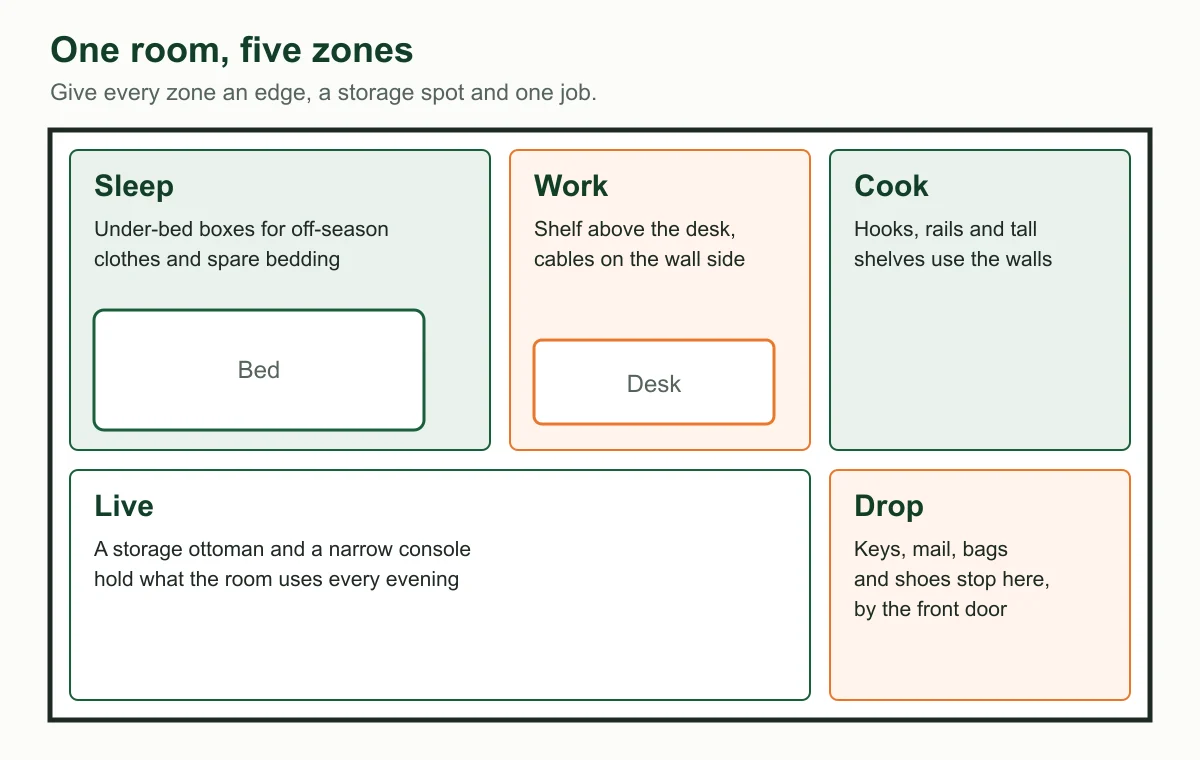
You do not need walls to create a boundary. A rug marks the living area, an open shelf can separate the bed from the sofa, and a pendant light can define a dining corner. Keep tall, solid furniture away from windows so daylight can still reach the back of the room, because a brighter room feels larger.
| Zone | Its one job | Storage that fits | Common mistake |
|---|---|---|---|
| Drop zone | Catch keys, mail, bags and shoes | Wall hooks, a narrow shoe rack, a small tray | Letting mail pile up on the kitchen counter |
| Sleep | Rest, and store soft items | Under-bed boxes, a headboard shelf | Using the bed as a closet during the day |
| Work | Keep tools and papers together | Wall shelf, drawer trays, a monitor riser | Working from the sofa and scattering cables |
| Cook | Prep and store food | Hooks, rails, stacking shelves in cabinets | Keeping appliances you rarely use on the counter |
| Live | Relax and host | Storage ottoman, a slim console, baskets | Oversized furniture that blocks walkways |
Table 1. Five zones for a studio or one-bedroom apartment, with storage that suits each one.
Use Vertical Space First
Vertical space is the largest unused storage area in most small apartments. Floors fill quickly, but the wall above a desk, the back of a door and the top of a closet are usually empty. Moving items upward clears the floor, and a clear floor is the main thing that makes a small room feel calm.
Open shelves work well above desks, sofas and doorways. Keep daily items at eye level and put rarely used ones up high. Stick to one or two colors for boxes on display, because a shelf of mixed packaging looks busy in a small space. Our floating shelf ideas and corner shelf ideas show how to use awkward walls.
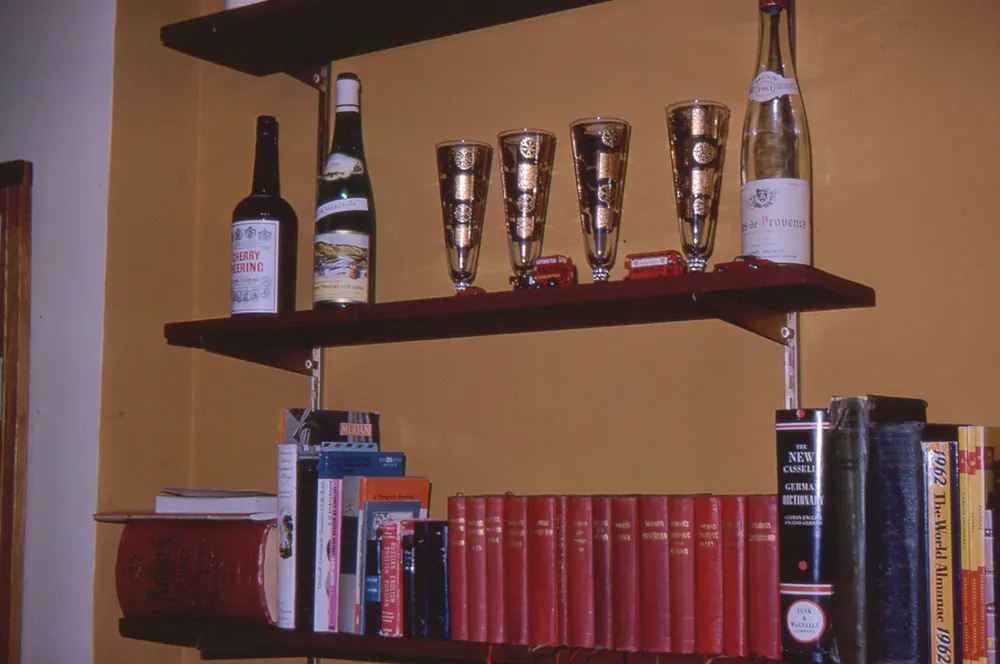
Photo credit: Roger W from Sarasota, Florida.jpg) / Wikimedia Commons, CC BY-SA 2.0
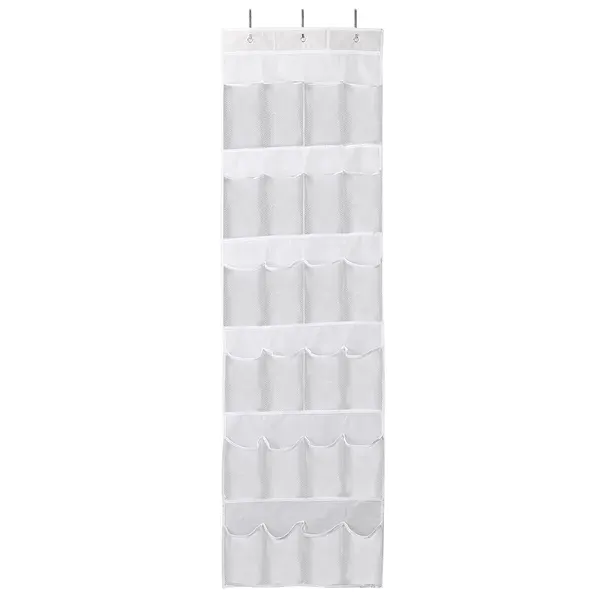
Doors are the other easy win. An over-the-door organizer with 24 clear pockets hangs on hooks without drilling and holds shoes, cleaning supplies or small toiletries. Inside a closet, a second hanging rod can nearly double the room for shirts, and a shelf above the rod can hold the bins you open only a few times a year.
Any tall piece of furniture needs care, even in a rental. The Anchor It program from the U.S. Consumer Product Safety Commission explains how to anchor TVs and furniture to prevent tip-overs. This is especially important if children visit or live in the home.
Choose Furniture That Does Two Jobs
Multi-use furniture is worth the money in a small apartment, because each piece has to justify its footprint. A storage ottoman replaces a coffee table and a blanket chest. A bed with drawers replaces a dresser. A drop-leaf table folds away between meals and can double as a desk.
The classic example is the wall bed. A Murphy bed folds up against the wall or into a cabinet, which frees the floor during the day. It is a bigger investment and usually needs secure wall fixing, so it suits owners or long-term renters who have permission. A daybed or a good sofa bed is a simpler choice for most people.
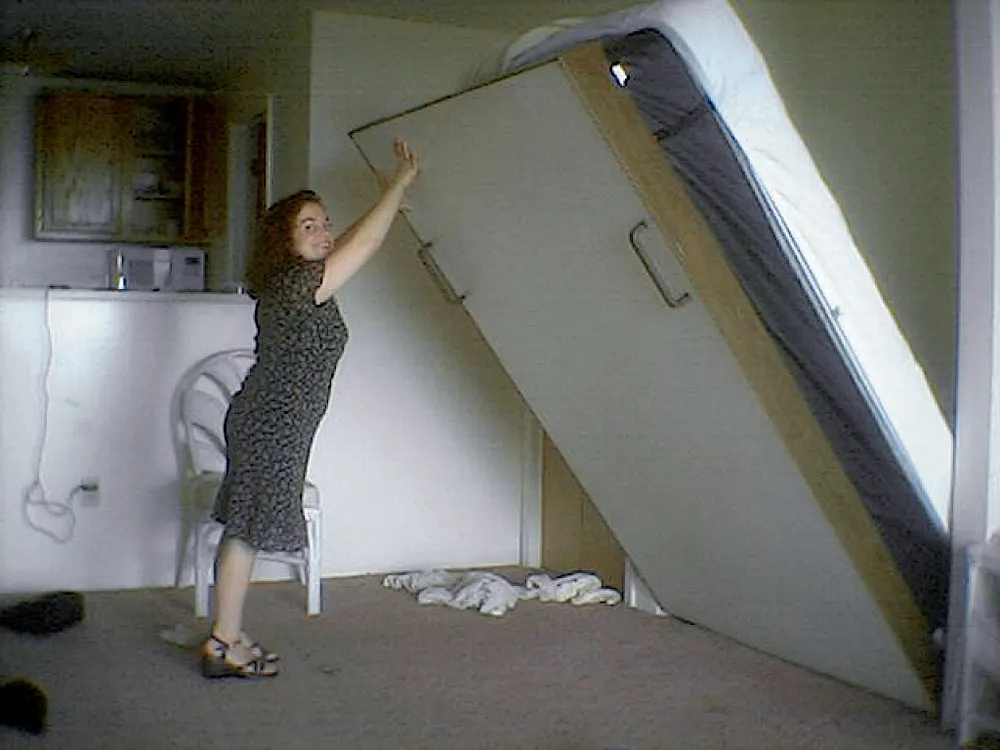
Photo credit: David Boyle / Wikimedia Commons, CC BY 2.0
Measure before you buy anything. Note the room, doorway and elevator sizes, and leave a clear path around each piece. A sofa that fits the wall but blocks a closet door is not a good fit. Lighter legs and open bases also help, because seeing floor underneath a piece makes the room feel more open.
Room-by-Room Plan for a Small Apartment
A room-by-room plan keeps the job manageable, because each area has different problems. Start with the entry, since it sets the tone every time you come home, then move through the rest in order of daily use.
Entry. Even a tiny entry needs a landing spot. Add hooks for coats and bags, a tray for keys, and a slim rack for the shoes you wear this week. Keep the rest elsewhere. Our guide to small entryway organization ideas has layouts for tight halls.
Kitchen. Clear the counter of everything you do not use daily. Stack inside cabinets with shelf risers, hang pans or utensils on rails, and use the inside of cabinet doors for lids and wraps. The small kitchen organization ideas guide goes deeper on tight cabinets.
Bathroom. Small bathrooms need wall and corner storage. Add a shelf over the toilet, a shower caddy and a narrow cart if the floor allows it. See our small bathroom storage ideas for more.
Closet. Use matching slim hangers, fold bulky knits and store off-season clothes in vacuum bags or under the bed. Our small closet organization ideas cover shelf and rod layouts.
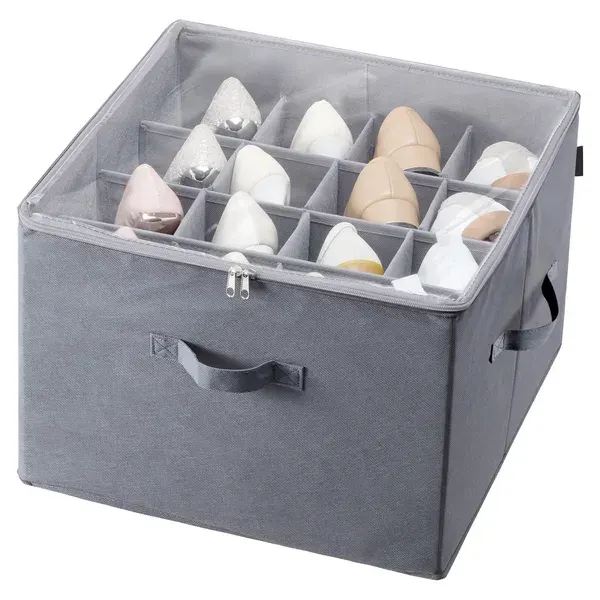
Bedroom area. The space under the bed is often the largest hidden storage spot in a studio. Low boxes with lids protect clothes from dust and slide out easily. An under-bed shoe storage box with 16 compartments keeps pairs visible through a clear lid. For more options, see our guide to under-bed storage.
Storage for Renters: No-Drill Options
Renters can organize a small apartment without damaging walls by choosing storage that hangs, stands or sticks. Before you drill anything, read your lease, because rules about wall holes differ, and any damage may come out of your deposit. When in doubt, ask your landlord and keep the reply in writing.
| Storage type | Good for | Watch out for |
|---|---|---|
| Over-the-door hooks and racks | Coats, towels, shoes, cleaning supplies | Check that the door still closes fully |
| Tension rods | Hanging spray bottles under a sink, extra closet space | Follow the weight limit and check them often |
| Adhesive hooks | Light items such as keys and small towels | Paint can lift, so follow the removal steps |
| Freestanding shelves | Books, baskets and plants | Tall units still need to be stable |
| Rolling carts | Kitchen overflow, bathroom items, craft supplies | Keep a clear path so they can move |
| Under-bed boxes | Off-season clothes, spare bedding, shoes | Measure the gap under the frame first |
Table 2. No-drill storage for renters. Always follow the load limits printed on the product.
Take dated photos of the walls and floors when you move in, and keep them with your lease. If you do get permission to hang shelves, keep the original screws and patch small holes properly when you leave. Simple care now can help avoid arguments later.
Build Habits That Keep It Organized
A small apartment stays organized through small daily habits, not one big weekend. In a little home, a single bag on a chair changes how the whole room feels, so short resets pay off quickly.
- Do a five-minute evening reset. Put items back in their zones before bed.
- Follow one in, one out. When something new arrives, something similar leaves.
- Deal with mail at the door. Recycle junk right away and keep one small tray for the rest.
- Make the bed. It is the largest surface in a studio, so a neat bed makes the whole room look tidy.
- Review storage each season. Swap clothes, clear shelves and donate what you skipped.
Link each habit to something you already do. Empty the dish rack while the kettle boils, or clear the table right after dinner. Small routines like this last longer than big plans, and our small living room organization ideas can help you refine the setup over time.
Common Mistakes to Avoid
The biggest mistake is buying containers before you declutter. Bins are useful, but they cannot fix having too much. Other mistakes are nearly as common: choosing furniture without measuring, pushing everything against the walls so the room looks like a hallway, and using dark, heavy pieces where light ones would do.
Be careful with storage that hides things completely as well. Opaque boxes on high shelves are easy to forget, so label them on the side you can see. And leave some empty space on purpose. A shelf with a little room to breathe looks calmer and gives you space for the items that will arrive next month.
Frequently Asked Questions
Where should I start when organizing a small apartment?
Start with a declutter, one category at a time. Once you know what you are keeping, divide the room into zones, then choose storage that fits those items.
How do I organize a studio apartment with no closet?
Use a freestanding garment rack, under-bed boxes and wall hooks. Keep only the clothes you wear this season on the rack, and store the rest in boxes.
How can I make a small apartment feel bigger?
Keep the floor clear, keep tall furniture away from windows, use furniture with visible legs and stick to a short color palette. Clear surfaces make the biggest visible difference.
What is the best storage for renters?
Over-the-door racks, tension rods, freestanding shelves, rolling carts and under-bed boxes all work without drilling. Read your lease first, since rules about walls differ.
How do I store bulky items in a small apartment?
Put bedding and winter coats in vacuum bags under the bed or on a high closet shelf. Keep large items like suitcases useful by storing off-season clothes inside them.
Should I buy storage bins before I declutter?
No. Declutter first so you know how much storage you really need, then measure the space and buy bins that fit.
How do I keep a small kitchen organized?
Keep only daily tools on the counter, stack with shelf risers, hang utensils on rails and use the inside of cabinet doors for lids and wraps.
How often should I reorganize a small apartment?
Do a five-minute reset each evening and a bigger review each season, when you swap clothes and donate what you did not use.
Conclusion: Small Space, Clear System
A small apartment does not need more room as much as it needs a clear system. Cut what you own, give each zone one job, use your walls, doors and bed frame, and choose furniture that does two things. Then protect the result with a five-minute evening reset. Start with the zone that annoys you most, finish it this week, and move on to the next. For more inspiration, browse our small home organization ideas.
Liked this guide?
Get new organizing guides and the occasional new product by email. No spam, unsubscribe anytime.
Related articles

Explore more articles
- Rubbermaid Food Storage Containers: The Complete 2026 Guide to Fresh, Organized Kitchens
- 30+ Best Kitchen Organizer Ideas to Transform Your Cooking Space in 2026
- Stainless Steel Food Storage Containers: The Complete 2026 Tutorial Guide to Durable, Healthy Kitchen Organization
- Pretty Food Storage Containers: Transform Your Kitchen with Stylish Organization in 2026
- BPA-Free Food Storage Containers: The Complete 2026 Guide to Safer, Healthier Food Storage
- Lidded Food Storage Containers: The Complete 2026 Guide to Fresh, Organized Kitchens
- Very Small Closet Organization Ideas: 25+ Smart Solutions to Transform Your Tiny Space in 2026
- Glass Food Storage Containers with Glass Lids: The Complete 2026 Guide to Fresh, Safe Kitchen Organization