
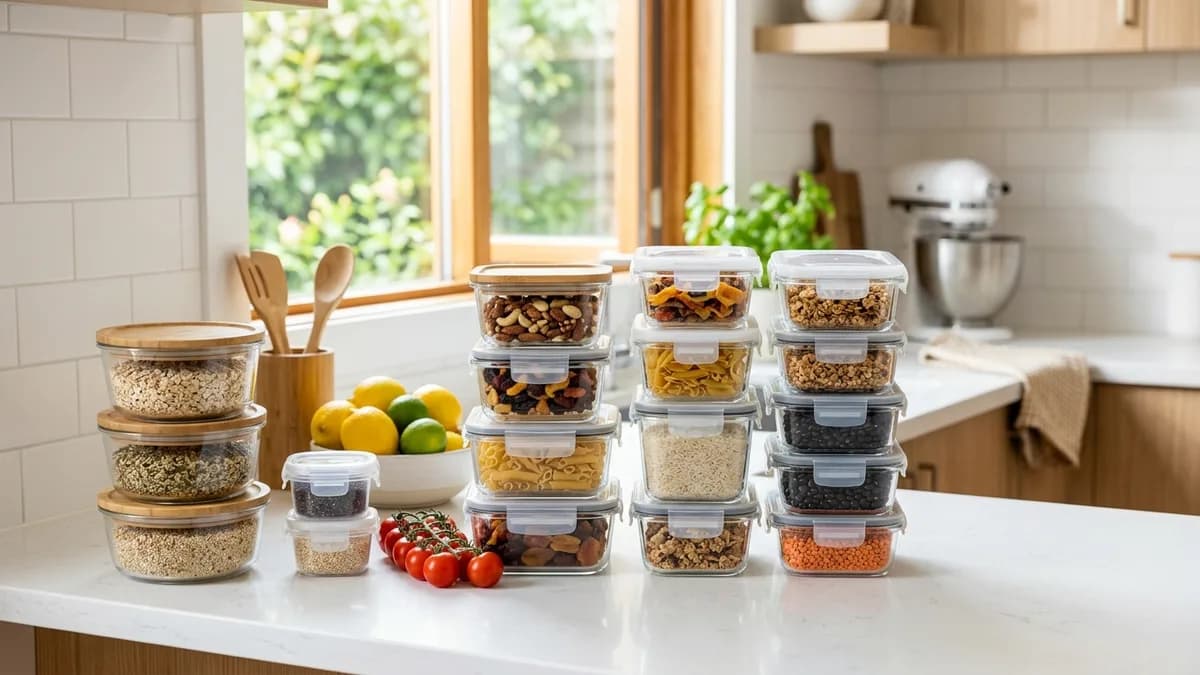
Lidded Food Storage Containers: The Complete 2026 Guide to Fresh, Organized Kitchens
If your kitchen drawers are overflowing with mismatched bowls and orphaned lids, you already know how frustrating it is to hunt for a matching pair when dinner is on the stove. Lidded food storage containers are one of the single most impactful upgrades you can make to your kitchen in 2026. Whether you are meal prepping on Sunday, packing lunches for the week, or just trying to keep leftovers from drying out in the fridge, the right container with a well-fitting lid can genuinely change how your household runs. In this guide, I am breaking down everything you need to know, from materials and lid styles to organization strategies, so you can shop smarter and eat fresher.
Why Lidded Food Storage Containers Belong in Every American Kitchen
The case for investing in quality lidded food storage containers goes well beyond simple convenience. According to the USDA Food Safety and Inspection Service, proper food storage is one of the most effective ways to prevent foodborne illness at home. When food is left uncovered or stored in poorly sealed containers, it is exposed to bacteria, moisture fluctuations, and odor transfer, all of which shorten shelf life and compromise safety.
Beyond safety, there is the very real issue of food waste. When leftovers are properly sealed and stored, families are far more likely to actually eat them before they spoil. A reliable container with a tight-fitting lid keeps cooked food at the right moisture level, protects against fridge odors seeping in, and makes it easy to identify what you have stored without opening every container.
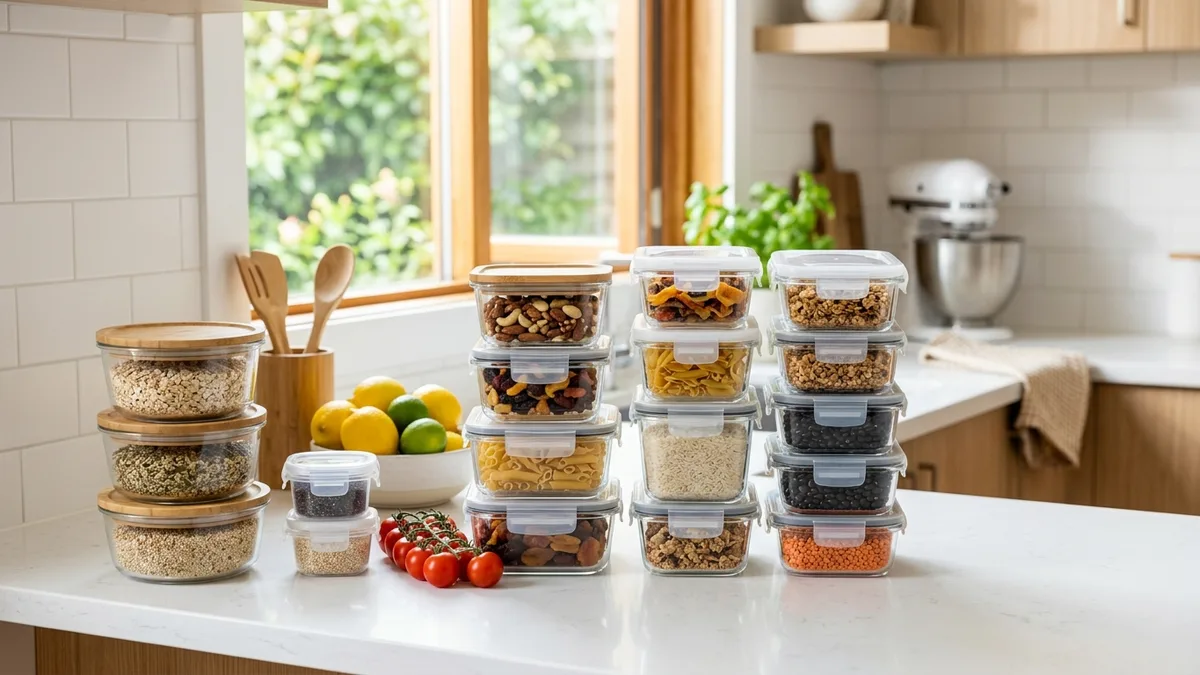
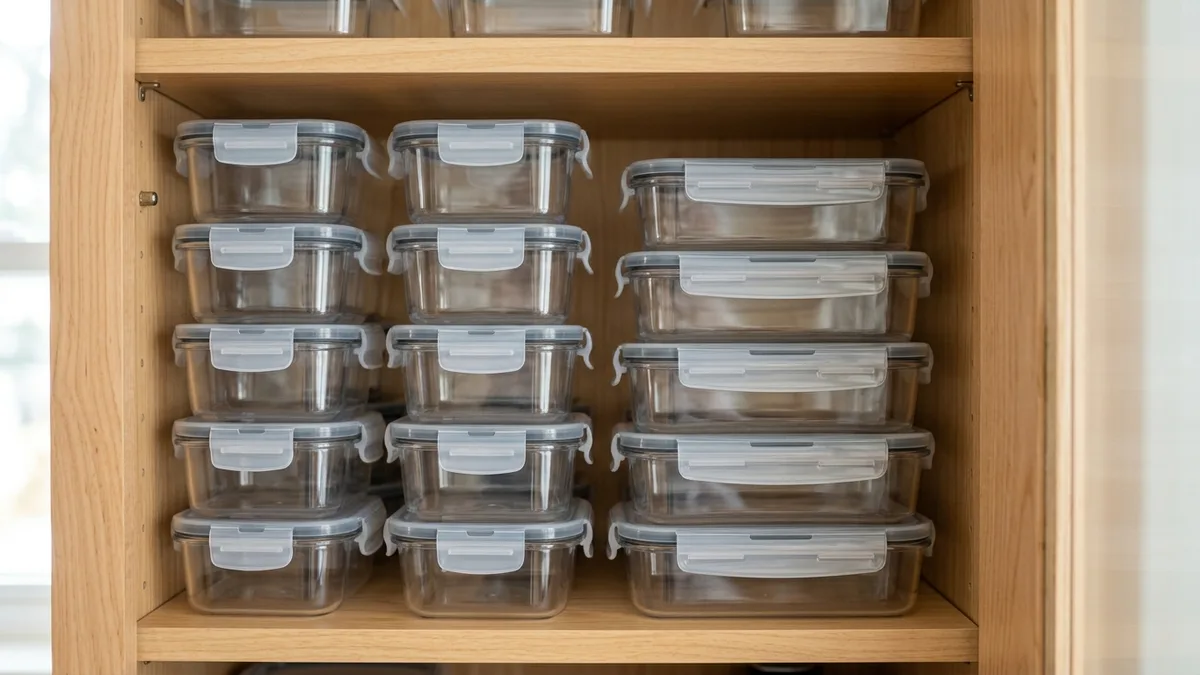
Lastly, there is the organization factor. Uniform, stackable lidded containers make your fridge, freezer, and pantry look tidy and function better. You can actually see what you have, and nothing gets lost in the back of a shelf.
Choosing the Right Material for Your Lidded Food Storage Containers
One of the first decisions you will face when shopping for lidded food storage containers is what material to choose. Each option has real pros and cons depending on how you plan to use them.
Glass Containers
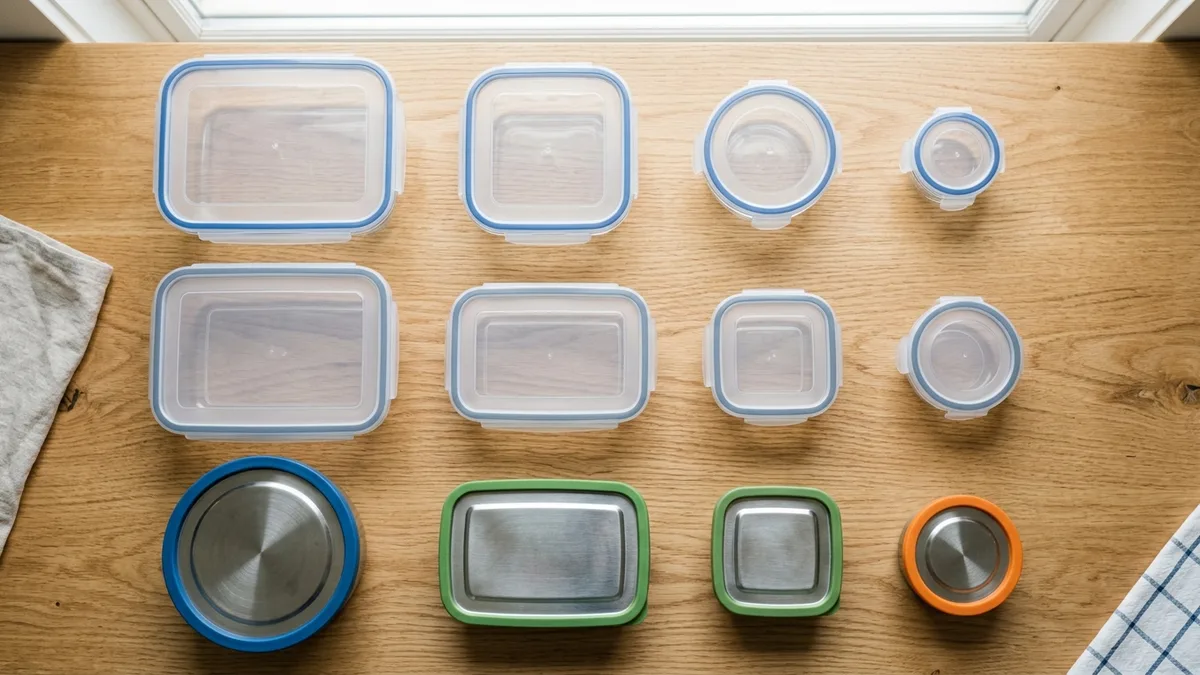
Glass is widely considered the gold standard for food storage. It does not absorb odors or stains, it is safe for the microwave and oven, and it is completely free of chemical leaching concerns. Tempered glass containers are durable enough to handle temperature changes, though they are heavier than other options and can break if dropped.
- Best for: Reheating leftovers, storing saucy or heavily spiced foods, meal prep
- Lid types: Usually paired with BPA-free plastic snap lids or glass lids with silicone seals
- Weight: Heavier, which can be a drawback for packed lunches
- Dishwasher safe: Almost universally yes
For a deeper look at glass options, check out our guide to best food storage containers glass.
BPA-Free Plastic Containers
Clear plastic containers are lightweight, shatterproof, and often more affordable than glass. The key is making sure they are certified BPA-free. According to the FDA, BPA-free plastics are generally regarded as safe for food contact, though many consumers still prefer glass for anything going into the microwave.
- Best for: Packed lunches, transporting food, pantry dry goods
- Lid types: Snap lids, screw tops, or push-button locking lids
- Weight: Lightweight and easy to carry
- Dishwasher safe: Most are top-rack dishwasher safe; always check the label
For a comprehensive breakdown, our article on BPA-free food storage containers has you covered.
Stainless Steel Containers
Stainless steel containers are incredibly durable, eco-friendly, and naturally resistant to bacteria. They do not leach chemicals and are perfect for taking food on the go. The main downside is that they are not microwave safe and you cannot see the contents without opening them.
- Best for: Packed meals, outdoor use, kids' lunches
- Lid types: Clip-on lids with silicone gaskets for a tight seal
- Weight: Moderate, lighter than glass but heavier than plastic
- Dishwasher safe: Most are, but check manufacturer instructions
Understanding Lid Styles on Food Storage Containers
Not all lids are created equal, and the lid is often what separates a truly useful lidded food storage container from a frustrating one. Here is a breakdown of the most common lid styles you will encounter in 2026.
Snap-Lock Lids
Snap-lock lids feature four side clips that lock down onto the container. This style creates a very secure seal and is ideal for transporting soups, stews, and liquids without worrying about spills. They take a bit more effort to open and close, but the security is worth it for anything you are carrying in a bag.
Push-Button Lids
Some containers feature a central push-button vent on the lid. When you press the button, it releases the air seal, making the lid easy to open. These are convenient for everyday use and work well for refrigerator storage, though they may not be as leak-proof as snap-lock styles.
Screw-Top Lids
Screw-top lids create a strong seal and are especially popular for round containers. They are excellent for storing dry goods in the pantry, such as flour, sugar, oats, and pasta.
Hinged or Flip-Top Lids
Hinged lids are attached to the container so you can never lose them. They are commonly used for cereal containers and dry storage bins where you need quick, one-handed access.
Glass Lids
Some premium containers come with matching glass lids that have a silicone rim for a snug fit. These look beautiful and are oven-safe, though they are heavier and more fragile.
Pro Tip: Whatever lid style you choose, always look for a silicone gasket or seal around the interior edge. That silicone ring is what creates a truly airtight connection and keeps your food fresh significantly longer.
How to Organize Lidded Food Storage Containers in Your Kitchen
Even the best lidded food storage containers become a source of chaos if they are not organized well. Here are practical strategies I recommend for American kitchens of every size.
Dedicate a Single Cabinet or Drawer
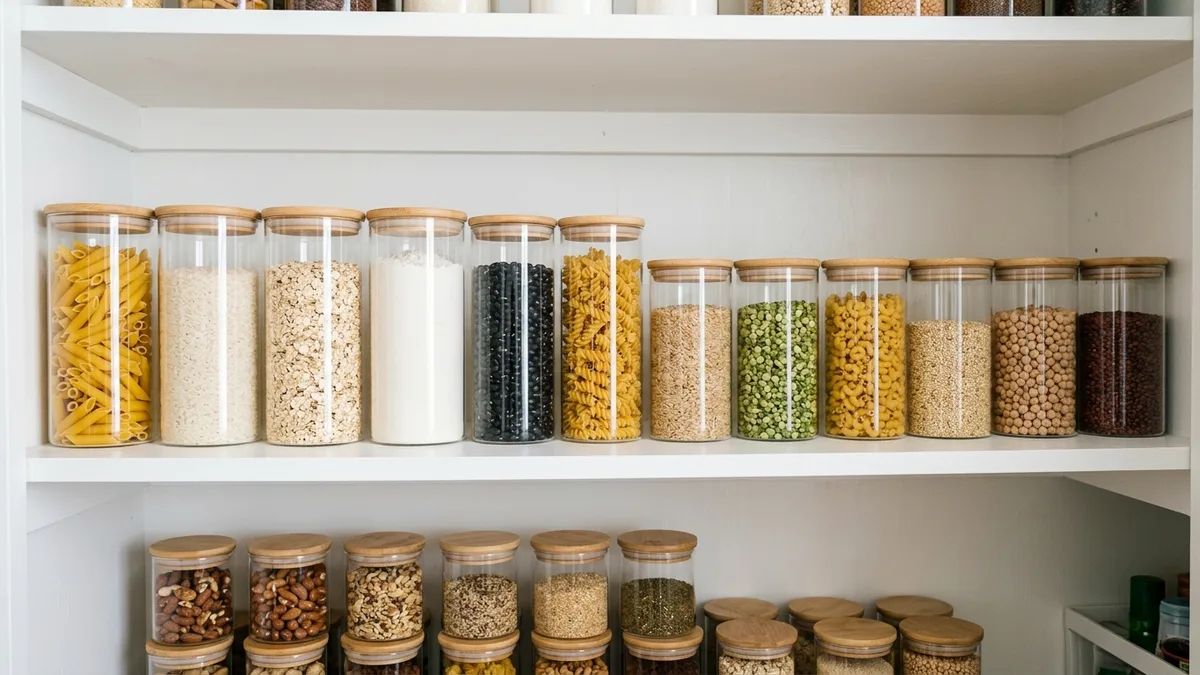
Pick one designated spot for all of your food storage containers and commit to it. A lower cabinet near the stove or a deep pantry shelf works well. Keep containers nested inside each other by size and store all the lids together in a separate bin or slot organizer within the same space.
Invest in Uniform Sets
Mixing and matching containers from different brands or sets leads to mismatched lids and wasted space. Buying sets where all containers share the same lid size, or where one lid fits multiple container bases, dramatically simplifies storage and reduces clutter.
Use a Lid Organizer
A simple vertical file organizer, a tension rod system, or a dedicated lid rack inside a drawer keeps lids upright and easy to grab. This is one of the most-recommended kitchen organization tricks on The Spruce and for good reason. It eliminates the avalanche of lids every time you open the cabinet.
Label Your Containers
If you use your pantry containers for dry goods, labels make a huge difference. A simple label maker or even handwritten masking tape labels tell everyone in the house what is in each container at a glance. Pair this with our tips from how to keep your kitchen organized for a full kitchen overhaul.
Stack Strategically
Rectangular and square containers stack far more efficiently than round ones. If you are tight on cabinet space, switching to a square or rectangular set can free up a surprising amount of room. Check out our full article on food storage containers for pantry for more pantry-specific tips.
Using Lidded Food Storage Containers for Meal Prep
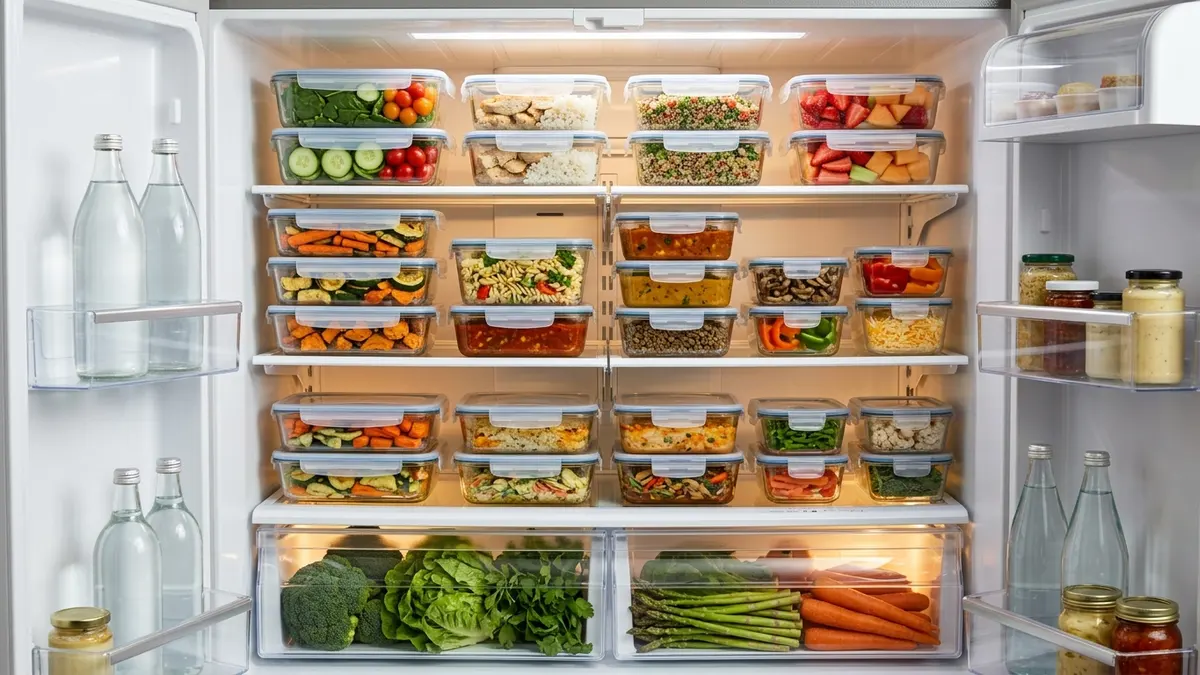
Meal prepping has become a cornerstone habit for busy American households, and lidded food storage containers are the backbone of any successful meal prep system. Here is how to make the most of them.
Build a Size System
Think about the types of food you prep most often and match your container sizes accordingly.
- Small containers (1-2 cups): Dressings, dips, sauces, snack-sized portions
- Medium containers (3-4 cups): Single-serve salads, grain bowls, pasta portions
- Large containers (6-8 cups): Full meals, soups, large salads for two
- Extra-large containers (10+ cups): Batch-cooked proteins, large casseroles, bulk grains
Color Code for the Week
Some container sets come with color-coded lids, or you can use colored labels to assign a color to each day of the week. Monday gets blue lids, Tuesday gets green, and so on. This makes it instantly clear which meals need to be eaten first.
Know Your Temperature Limits
Always check whether your containers are freezer-safe, microwave-safe, and oven-safe before using them accordingly. Glass containers with plastic lids are usually microwave-safe without the lid. Stainless steel containers should never go in the microwave. Our guide to freezable food storage containers walks through freezer-specific considerations in detail.
Leave Headspace for Frozen Foods
Liquids and soups expand when frozen. Always leave at least half an inch of space at the top of a container before freezing to prevent the lid from popping off or the container from cracking.
What to Look for When Shopping for Lidded Food Storage Containers in 2026
The market for lidded food storage containers in 2026 is wide and varied. These are the key features worth prioritizing as you shop.
Airtight Seal Quality
This is non-negotiable. An airtight seal keeps food fresh longer, prevents odors from escaping into your fridge, and stops liquids from leaking. Look for containers that specifically advertise an airtight or leak-proof seal, and read user reviews to confirm this claim holds up in everyday use.
Stackability
Containers that stack cleanly save a tremendous amount of cabinet, fridge, and freezer space. Look for flat lids rather than domed ones, and containers with recessed bottoms that sit securely on top of the lid below them.
Microwave and Dishwasher Compatibility
For most American households, microwave and dishwasher compatibility are essential features. Reheating food in the same container you stored it in saves on dishes and time. Always verify that both the container body and the lid are dishwasher safe, as some lids require hand washing.
Transparency
Being able to see what is inside a container without opening it is a small convenience that adds up significantly over time. Clear glass or clear plastic containers make it easy to take a quick inventory of your fridge or pantry without disturbing anything.
Set Value
Buying a set typically delivers better value than purchasing individual containers. A well-rounded starter set for a family of four might include four small containers, four medium containers, and two large containers. Good Housekeeping recommends looking for sets where multiple container sizes share the same lid size to minimize the number of different lids you have to manage.
Durability
Consider how the containers will be used. If you are tossing them in a bag for work every day, you need something shatterproof. If they will live permanently in a pantry, glass is perfectly practical. For families with young children, lightweight plastic tends to be the most forgiving option.
Common Mistakes to Avoid with Lidded Food Storage Containers
Even with great containers, there are a few habits that can undermine their effectiveness.
Storing Food While Still Hot
Putting hot food directly into a sealed container traps steam, which condenses into water and creates a wet environment that accelerates bacterial growth. Always let food cool to room temperature before sealing and refrigerating, ideally within two hours of cooking per food safety guidelines.
Overfilling Containers
An overfilled container puts pressure on the lid seal and can cause leaks or prevent a proper airtight closure. Fill containers to about three-quarters full for the best seal performance, and always leave extra space for anything going in the freezer.
Ignoring Replacement Schedules
Plastic containers do not last forever. Over time, plastic can scratch, crack, or warp, making it harder to clean and potentially causing the lid seal to degrade. A good rule of thumb is to replace plastic containers every one to two years with heavy daily use, and to replace any container that shows visible scratches, discoloration, or warping immediately.
Buying Mismatched Sets
Resist the temptation to grab single containers on clearance. Mismatched containers create a chaotic cabinet and make it harder to find matching lids. Commit to one or two container systems that use interchangeable lids, and stick with that system. Your future self will thank you.
Not Cleaning Lids Thoroughly
Lids, especially those with gaskets and snap mechanisms, can trap food residue in their crevices. Remove the silicone gasket from the lid whenever possible and wash it separately. This prevents odors from building up and keeps the seal functioning properly.
How Many Lidded Food Storage Containers Does Your Household Actually Need?
This is a question I get often, and the honest answer is: it depends on your household size and habits. Here is a rough starting framework.
For a single person or couple:
- 4 to 6 small containers for snacks, dips, and individual servings
- 4 medium containers for daily meal prep and leftovers
- 2 large containers for batch cooking or bulk storage
For a family of four:
- 6 to 8 small containers
- 6 to 8 medium containers
- 4 large containers
- 2 extra-large containers for soups, stews, or big casseroles
For meal prep enthusiasts:
Add roughly 50% more containers than the above numbers to account for having a full week of prepped meals ready at once.
The goal is never to have more containers than you can easily store and keep organized. A smaller, well-chosen set beats a massive jumbled collection every time. Our friends at Real Simple agree that a curated, intentional kitchen toolkit always outperforms sheer quantity.
Related Products from Sesoris
If you want to turn this guide into a real setup, start with Stainless Steel 2-Tier Dish Rack and Portable Blender. For broader options, browse the Kitchen & Dining collection so the article journey does not stop at reading only.
Our practical rule: choose one product that solves the main clutter problem first, then add supporting organizers only when the daily workflow is already clear. This keeps the shopping path useful, not pushy.
FAQ: Frequently Asked Questions About Lidded Food Storage Containers
Q: Are lidded food storage containers truly airtight?
Not all lidded containers are airtight. Look specifically for containers that mention an airtight or leak-proof seal in the product description. Containers with silicone gaskets and snap-lock or locking-tab lids tend to offer the best airtight performance. Standard snap-on plastic lids without a gasket are not truly airtight.
Q: Can I use lidded containers in the freezer?
Most glass and plastic lidded food storage containers are freezer-safe, but always check the manufacturer's label before assuming. Leave headspace when freezing liquids, and avoid placing glass containers that are too full directly from the freezer into a hot oven, as extreme temperature changes can cause cracking.
Q: How do I get rid of stubborn odors in plastic containers?
Soak the container in a mixture of warm water and baking soda for several hours, then wash as normal. For very stubborn smells, try filling the container with crumpled newspaper overnight. If odors persist after repeated cleaning, it may be time to replace the container.
Q: Are lidded glass containers safe in the microwave?
Most tempered glass containers are microwave-safe, but the plastic lid typically is not. Remove the lid before microwaving and use a microwave-safe cover instead. Always check the manufacturer's guidelines on both the container and the lid.
Q: What is the best shape for lidded food storage containers?
Square and rectangular containers make the most efficient use of space in your fridge, freezer, and cabinets because they pack together without wasted gaps. Round containers work well for soups and individual servings but are less space-efficient overall.
Q: How do I keep my lids organized?
Use a vertical file organizer, a tension rod divider inside a drawer, or a dedicated lid rack. Store all lids in one location, separate from the containers themselves, and nestle containers inside each other by size. This is the single most effective change most people can make to reduce container chaos.
Conclusion
Whether you are rebuilding your entire kitchen storage system or simply filling in the gaps, investing in the right lidded food storage containers in 2026 is one of the smartest organizational moves you can make. The right set keeps food fresher longer, reduces waste, simplifies meal prep, and brings a genuine sense of calm and order to one of the most-used spaces in your home. Focus on quality seals, stackable shapes, the right material for your lifestyle, and a uniform system you can actually maintain.
Ready to upgrade your kitchen storage? Browse the full collection of home organization essentials at Sesoris and discover our best-selling food storage solutions designed to help every household live more organized. Check out our new arrivals for the latest additions to our kitchen lineup, and explore our full shop to find everything you need to build a kitchen that truly works for you.
Weekly Home Tips
Get home organization ideas, product picks, and exclusive deals delivered weekly.
No spam. Unsubscribe anytime.

Explore More Articles
- How to Organize a Tiny Kitchen: 20+ Smart Ideas for 2026
- Aluminum Kitchen Rack: Choose, Install & Care Guide 2026
- Dish Rack for Kitchen Cabinet: 2026 Buying Guide
- Stackable Plastic Spice Rack: Ideas for a Tidy Kitchen
- How to Declutter Your Home: Complete 2026 Guide
- Hanging Kitchen Shelf: Complete Buying Guide for 2026
- Minimalist Kitchen Decor Ideas: 25+ Modern Looks 2026
- Kitchen Storage Rack: How to Choose the Best One 2026