
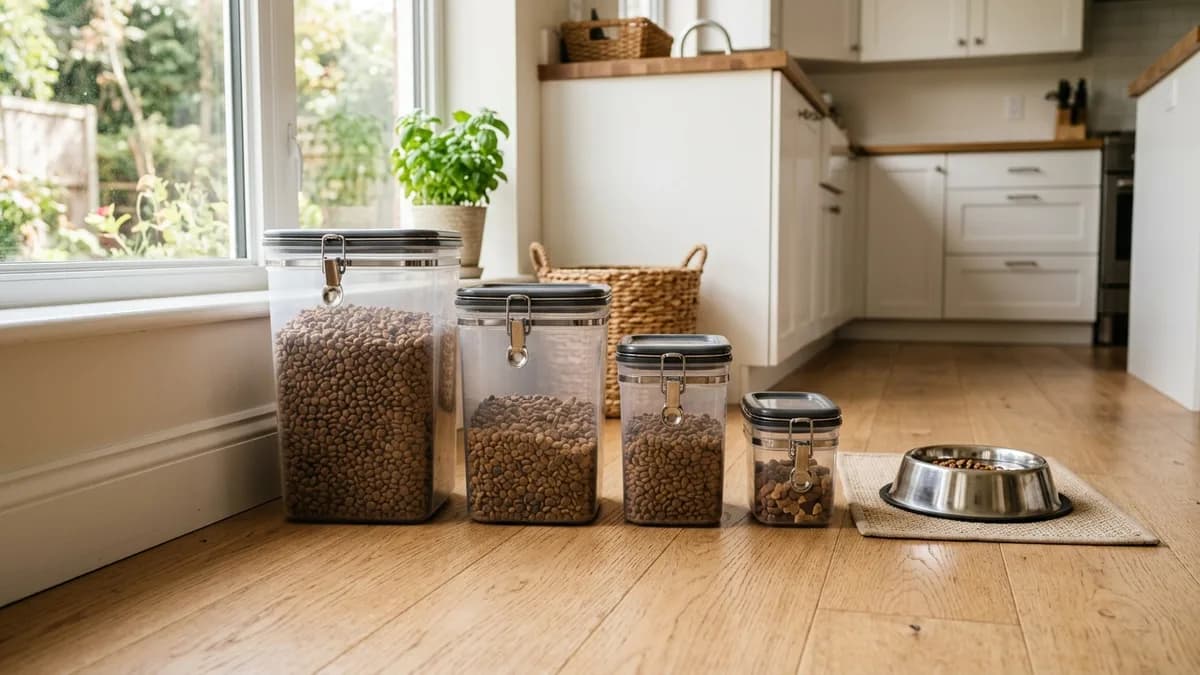
Airtight Pet Food Storage Containers: The Complete 2026 Review & Buying Guide to Keep Kibble Fresh
If you share your home with a dog, cat, or any other hungry companion, you already know how quickly an open bag of kibble can go stale, attract bugs, or lose its nutritional punch. That is exactly why airtight pet food storage containers have become one of the most searched home organization products of 2026. The right container does not just keep food fresh longer - it blocks moisture, seals out pests, and transforms a messy pile of pet food bags into a clean, organized feeding station. In this complete review and buying guide, I am breaking down everything you need to know before you invest in a container that works as hard as your pet expects you to.
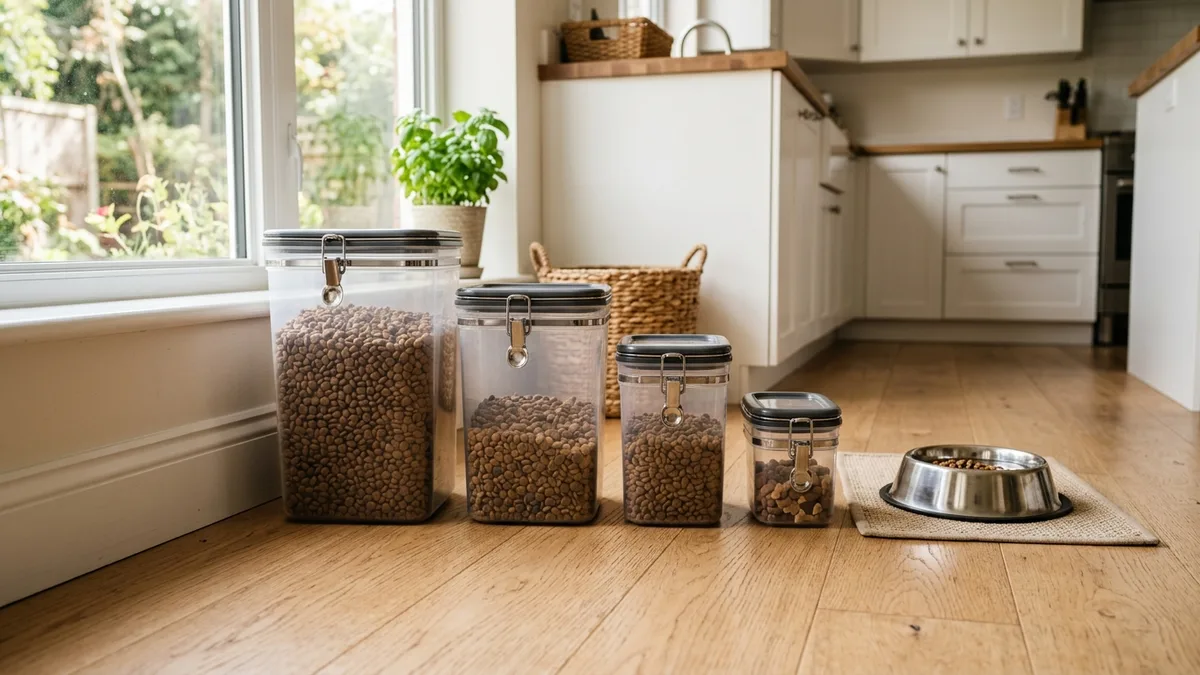
Why Airtight Pet Food Storage Containers Are Worth It in 2026
Many pet owners still store kibble directly in the original bag, folding the top over and clipping it shut. While that is better than nothing, it is far from ideal. Paper and thin plastic bags are permeable to air, moisture, and odors. Over time, exposure to oxygen causes the fats in kibble to oxidize, which leads to rancidity - a process that not only makes food less palatable but can also reduce its nutritional value. Moisture is equally damaging, creating conditions where mold and bacteria can thrive.
Airtight pet food storage containers create a sealed environment that dramatically slows down these processes. According to The Spruce Pets, keeping dry pet food in a sealed, airtight container and storing it in a cool, dry location is one of the best ways to maintain freshness and prevent contamination. This is especially important in humid climates or homes where pantry pests like pantry moths and grain beetles are a concern.
Beyond freshness, there is the organization factor. A purpose-built container looks far better on your pantry shelf or in your mudroom than a half-crumpled bag. Pair it with a label and a scoop, and you have a functional pet feeding station that fits right into your home organization system.
Key Features to Look For in Airtight Pet Food Storage Containers
Not all containers marketed as "airtight" perform equally. When I review products in this category, I focus on a specific set of features that actually make a difference in day-to-day use.
1. The Seal Quality
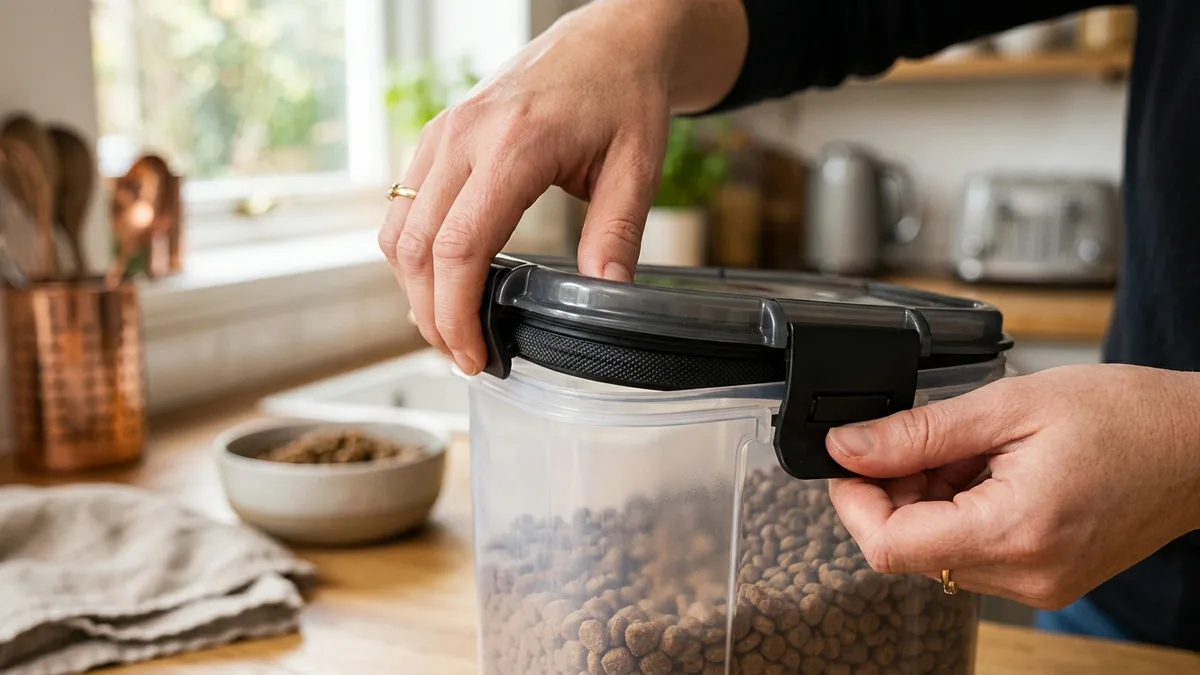
The seal is the most critical component. Look for containers that use a thick silicone or rubber gasket around the inner edge of the lid. Flip-top latch locks and push-button pump seals tend to outperform simple snap-on lids. Press down on the lid with your palm and feel for resistance - a good seal creates light suction. If air escapes easily, the container will not keep food fresh as promised.
2. Material: Plastic, Stainless Steel, or Galvanized Metal
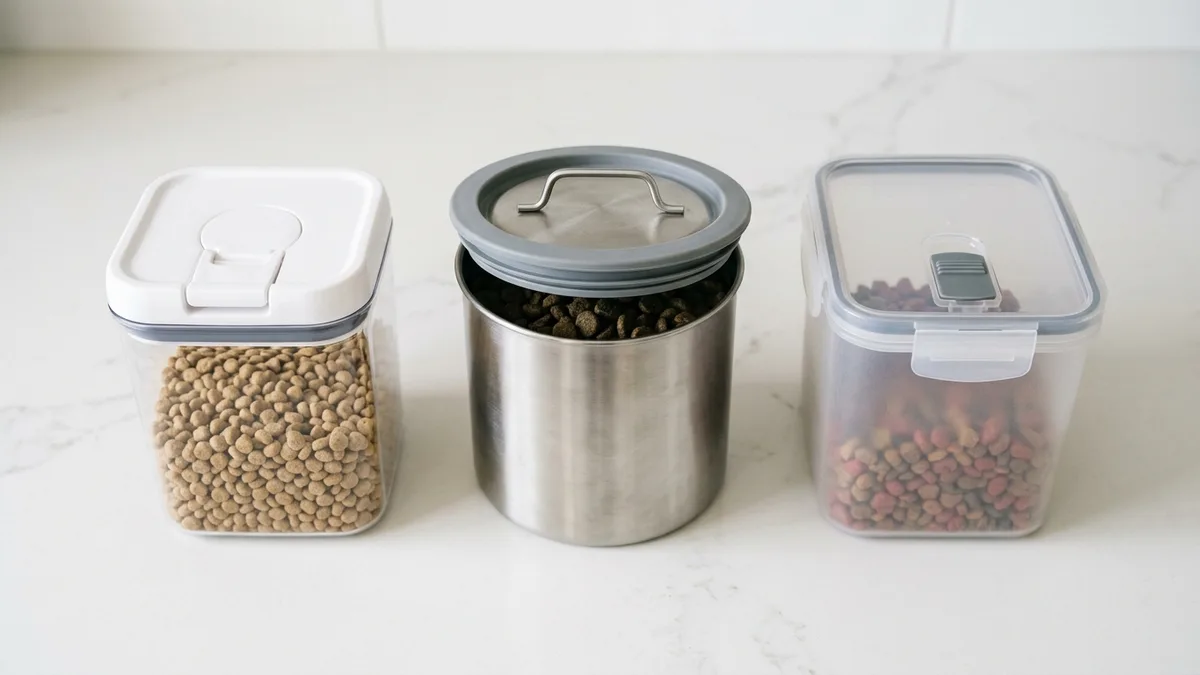
The three dominant materials in 2026 are food-grade BPA-free plastic, stainless steel, and galvanized steel. Each has real trade-offs worth understanding:
- BPA-free plastic - Lightweight, transparent (so you can see food levels at a glance), and generally the most affordable option. Look for labels that say food-grade or FDA-compliant. Clear containers also make portion control much easier.
- Stainless steel - Durable, rust-resistant, and odor-neutral. Stainless steel does not absorb smells the way plastic can over time. It is a great long-term investment, though it is heavier and you cannot see inside without opening the lid.
- Galvanized steel - Common for very large outdoor pet food storage. Highly pest-resistant since rodents cannot chew through metal. Best for homes with multiple large dogs or outdoor feeding areas.
3. Capacity and Size
This is where a lot of buyers make mistakes. Before purchasing, check the weight of your pet food bag and match it to the container's stated capacity. Most manufacturers list capacity in quarts or pounds of dry kibble. As a general guide:
- Small cats or dogs (under 20 lbs): A 4- to 6-quart container is usually sufficient.
- Medium dogs (20 to 50 lbs): Look for containers in the 10- to 15-quart range.
- Large or multiple dogs: You will likely need 20 quarts or more, or a set of multiple containers.
One practical tip: it is actually better to pour the entire bag into the container rather than mixing old and new food, since older kibble at the bottom can transfer oils and oxidation to the fresh batch.
4. Ease of Cleaning
Pet food containers need regular cleaning to prevent oil buildup and odor absorption. Wide-mouth openings make a huge difference here - you should be able to fit your hand and a sponge inside comfortably. Dishwasher-safe containers save significant time. Check whether the lid's gasket is removable for thorough cleaning, since mold can hide in sealed crevices.
5. Extras: Scoops, Wheels, and Labels
Many top-rated airtight pet food storage containers now include a built-in scoop holder, a measuring cup scoop, or even rolling casters for large containers. These extras may seem minor, but they add real convenience to your daily feeding routine. A container with a locking scoop holder means you are never hunting for the scoop right before dinner time.
The Best Types of Airtight Pet Food Storage Containers Reviewed for 2026
I have organized the top container types into clear categories to help you find the right match for your home, pet size, and budget.

Clear BPA-Free Plastic Canisters with Locking Lids
These are the bestselling category for a reason. A well-made clear plastic canister with a multi-latch locking lid and silicone gasket offers visibility, affordability, and a reliable seal. Capacity typically ranges from 4 quarts all the way up to 33 quarts. They work especially well in pantries and kitchen cabinets where you want to see food levels without opening the container.
What I like: Easy to monitor food quantity, lightweight to carry, widely available at price points from budget to mid-range.
Watch out for: Lower-priced models often use thin, stiff plastic gaskets that shrink or crack over time. Always check that the gasket is soft, pliable silicone before buying.
Stainless Steel Canisters with Rubber-Sealed Lids
Stainless steel containers appeal to pet owners who want something that ages well and does not absorb odors. These are also a better choice in warmer climates, since stainless steel does not warp or degrade from heat the way some plastics can.
What I like: Extremely durable, odor-neutral, sleek visual appeal that fits minimalist and modern kitchen aesthetics.
Watch out for: Price is higher than plastic, and without a window, it can be easy to let food run out unexpectedly. Some owners solve this with a small label noting the fill date.
Large Roll-Away Bins with Airtight Seals
For households with large or multiple dogs, a roll-away bin with caster wheels and an airtight flip-top or hinged lid is a game changer. These containers typically hold 30 to 50 pounds of kibble and are designed to sit on the floor of a pantry, laundry room, or mudroom.
What I like: Eliminates the need to lift heavy bags repeatedly, generous capacity, often includes a scoop holder.
Watch out for: Bulky footprint requires dedicated floor space. Make sure the floor seal is tight - look for a full-circumference gasket, not just a center press-fit.
Galvanized Steel Trash-Can Style Containers
A favorite of multi-pet households and farm settings, galvanized steel containers are virtually indestructible and completely rodent-proof. They range in size from 10 to 30 gallons and seal with a friction-fit or locking lid.
What I like: Maximum pest protection, incredibly long lifespan, often the most cost-effective per quart of storage.
Watch out for: Heavier than other options, and the lid seal on some models is not as airtight as premium plastic or stainless designs. Best suited for dry storage rooms or garages rather than kitchen pantries.
How to Properly Store Pet Food Using Airtight Containers
Buying the right container is only half the equation. How you use it matters just as much. Here are the habits I recommend building into your pet feeding routine:
- Always clean the container before refilling. Even if the container looks clean, residual oils from the previous batch can turn rancid and contaminate fresh kibble. Wash with warm soapy water, rinse well, and let it dry completely before adding new food.
- Store the container in a cool, dry spot. Heat and humidity accelerate fat oxidation and promote mold growth. A pantry or air-conditioned laundry room is ideal. Avoid storing near the oven or in a hot garage.
- Consider keeping the food inside the original bag inside the container. Some veterinary nutritionists suggest this approach because the bag itself has a moisture-barrier lining, and the container adds a second layer of protection. This also makes it easy to check the expiration date.
- Label the container with the fill date and best-by date. A simple label maker or even a piece of masking tape does the job. This removes any guesswork about freshness.
- Do not top off - use the oldest food first. Emptying the container completely and cleaning it before each refill prevents old, rancid crumbs from mixing with fresh kibble.
According to Good Housekeeping, dry dog food should ideally be used within six weeks of opening, regardless of the listed expiration date. A good airtight container helps you stay within that window more confidently.
What Capacity Do You Actually Need?
One of the most common questions I get is: "How big should my container be?" Here is a simple breakdown based on common pet food bag sizes available in the US market:
- A 5-pound bag of cat food fits comfortably in a 4- to 6-quart container.
- A 15-pound bag of medium dog kibble typically requires 15 to 18 quarts of capacity.
- A 30-pound bag of large-breed dog food needs at least 30 quarts, or roughly 7.5 gallons.
- For multi-pet homes, consider separate labeled containers for each pet to avoid cross-contamination and make portion tracking easier.
A practical rule of thumb: one pound of standard dry kibble occupies roughly 0.5 to 0.6 quarts of space. Use this ratio to estimate the size you need before purchasing.
Building a Pet Feeding Station Around Your Airtight Container
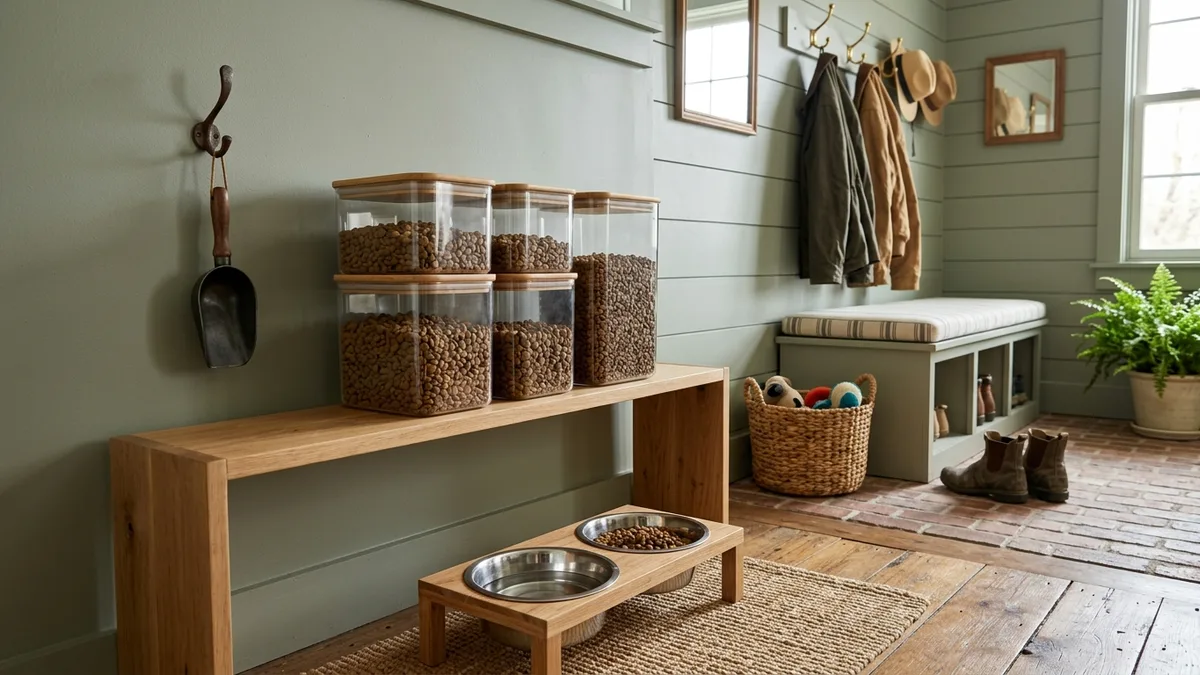
The best home organization setups treat pet care as part of the overall home system, not an afterthought. A dedicated pet feeding station - anchored by a quality airtight pet food storage container - keeps everything within arm's reach and reduces daily friction.
Here is how I recommend setting one up:
- Choose a low shelf, a section of the mudroom, or a corner of the pantry as your dedicated pet zone.
- Place your airtight container at floor level or on a sturdy low shelf, depending on container size.
- Hang a scoop on a small hook inside the cabinet door or clip it to the container if it has a built-in holder.
- Store pet bowls on a small elevated tray or kitchen organizer rack nearby to keep the area visually tidy.
- Add a small basket for leashes, treats, and medications to keep the entire pet routine centralized.
- Label each container clearly with the pet's name and the type of food if you have multiple animals on different diets.
This kind of intentional setup saves time every single day and keeps your home looking clean and organized - very much in line with the Sesoris philosophy of living more organized.
Airtight Pet Food Storage vs. Regular Food Storage Containers: What Is the Difference?
You might wonder whether a regular food storage container works just as well for pet food. The honest answer is: sometimes, but not always. Here is what distinguishes purpose-built pet food containers:
- Larger capacity - Most kitchen food storage containers top out at a few quarts. Pet food containers are specifically engineered for 10, 20, or 30+ quart volumes.
- Stronger seals for heavy daily use - Pet food containers are opened and closed multiple times a day. The latches and gaskets are built for that frequency.
- Integrated scoops and dispensers - Features designed specifically for portioning kibble are rare in standard kitchen containers.
- Floor-standing and stackable designs - Pet food containers are often designed to stand on the floor, with ergonomic lifting handles and flat bottoms that stack safely.
That said, a high-quality airtight kitchen canister can absolutely double as a small pet food container for cats or toy breeds. Flexibility is a benefit of investing in well-made airtight storage containers for your home.
"The right airtight pet food storage container is not just a convenience - it is an investment in your pet's health and your home's cleanliness."
Related Products from Sesoris
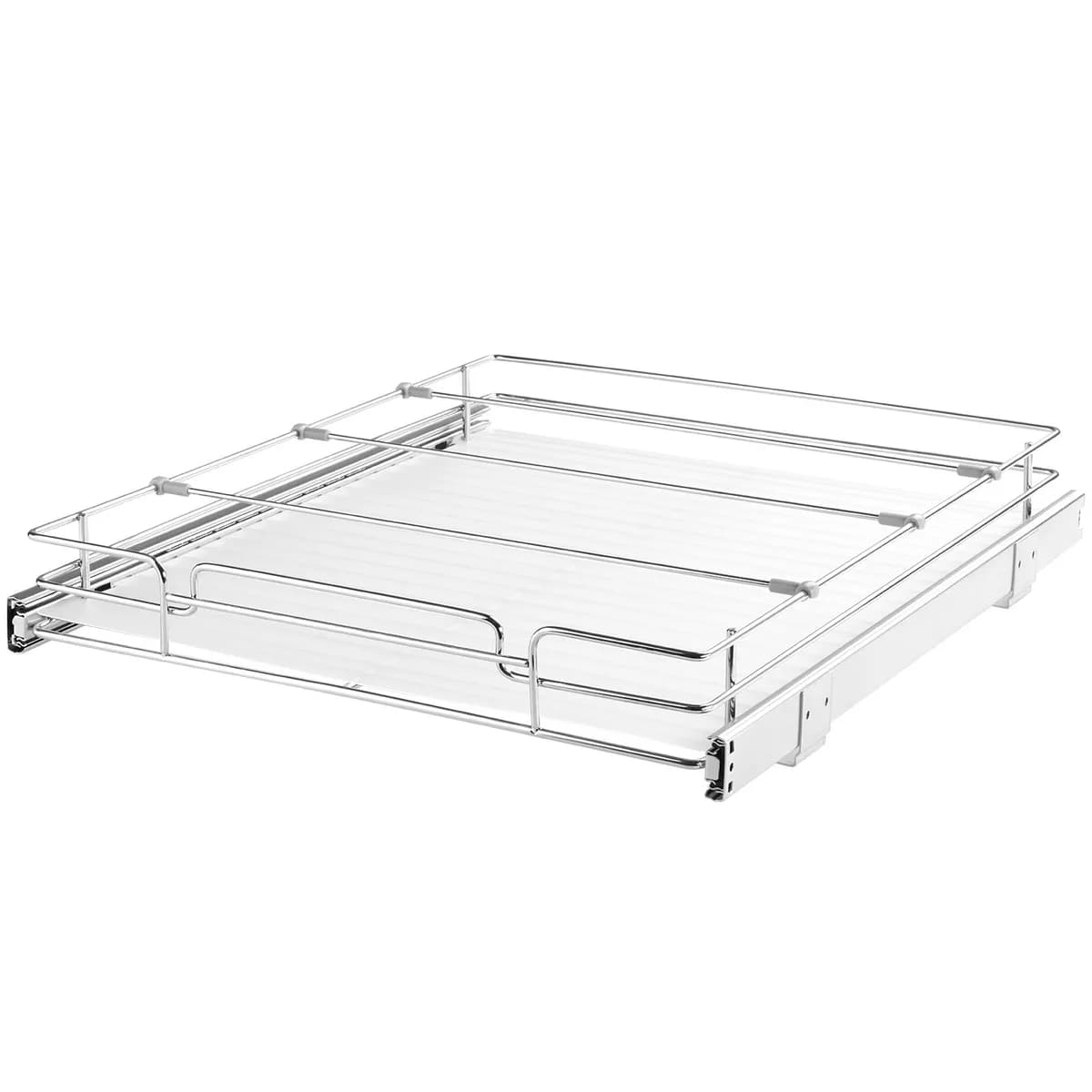
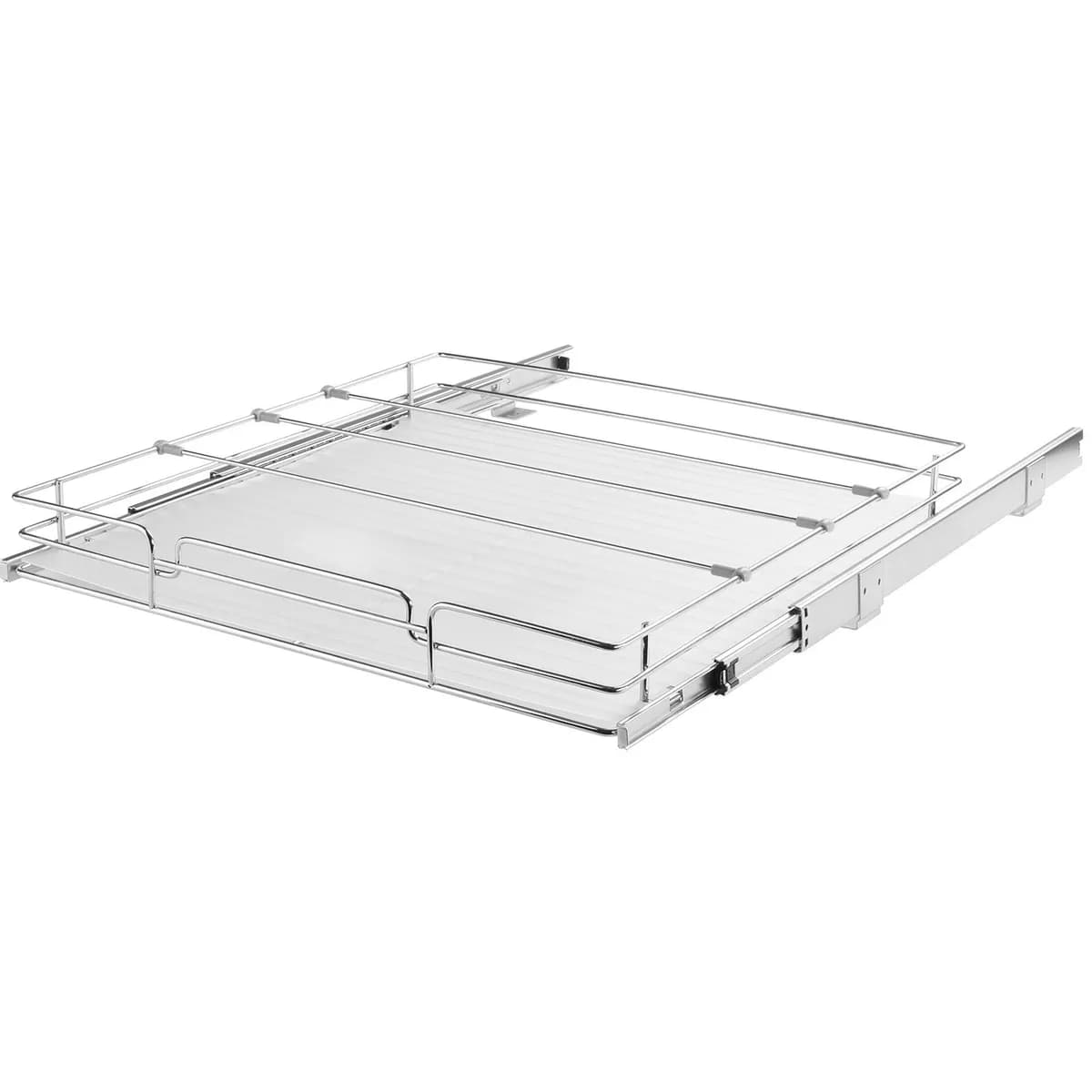
If you want to turn this guide into a real setup, start with Pull-Out Cabinet Organizer, 14 in. Wide and Double-Layer Bamboo Bread Box. For broader options, browse the Kitchen & Dining collection so the article journey does not stop at reading only.
Our practical rule: choose one product that solves the main clutter problem first, then add supporting organizers only when the daily workflow is already clear. This keeps the shopping path useful, not pushy.
FAQ: Frequently Asked Questions About Airtight Pet Food Storage Containers
Q: Can I store wet pet food in the same airtight containers?
Wet or canned pet food should not be stored in the same containers as dry kibble. Once opened, wet food should be transferred to a small airtight container (glass or stainless steel works well) and refrigerated for no longer than two to three days. Dry food containers are designed for ambient-temperature storage and are not suitable for refrigerating moist food.
Q: How often should I clean my pet food storage container?
I recommend washing the container thoroughly every time you empty it before refilling - which is typically every two to four weeks depending on your pet's size and appetite. At minimum, clean it once a month. Use warm water with a small amount of dish soap, rinse thoroughly, and let it air dry completely before adding fresh food. Residual moisture is one of the fastest ways to ruin a fresh batch of kibble.
Q: Are plastic pet food storage containers safe?
Food-grade, BPA-free plastic containers are considered safe for storing dry pet food. Look for recycling codes 2 (HDPE), 4 (LDPE), or 5 (PP) on the bottom of the container, which are generally recognized as the safest options for food contact. Avoid containers made of polycarbonate (recycling code 7) unless they are explicitly labeled BPA-free. According to Wikipedia's entry on BPA, concerns about bisphenol A center on its potential to leach into food, particularly in higher-temperature conditions - so even with BPA-free plastics, avoid leaving containers in direct sunlight or hot environments.
Q: Is it okay to pour new food on top of old food in the container?
Nutritionists and veterinarians generally advise against this. Old kibble at the bottom may already be oxidizing and developing off-flavors. It is better practice to let the container empty completely, clean it, dry it thoroughly, and then add the new bag. If you buy food frequently in small quantities, this is much easier to manage.
Q: What is the best way to keep pests out of pet food storage?
A true airtight seal is your best defense. Containers with multi-point locking lids and silicone gaskets leave no gaps for pantry moths, weevils, or ants to exploit. Galvanized steel containers add an additional layer of protection against rodents. Storing containers off the floor on a shelf, rather than directly on concrete (especially in garages), also reduces pest exposure significantly.
Q: How long does dry kibble stay fresh in an airtight container?
Generally, an opened bag of dry kibble stored in a proper airtight pet food storage container in cool, dry conditions remains fresh for up to six weeks. Always check the manufacturer's best-by date and try to purchase bag sizes that your pet can finish within that window. Larger bags may seem economical, but if your pet takes three months to finish them, freshness is compromised regardless of the container.
Conclusion
Choosing the right airtight pet food storage containers in 2026 comes down to matching your pet's food volume to the correct capacity, prioritizing a quality silicone-sealed lid, and selecting a material that fits your home, lifestyle, and budget. Whether you go with a sleek clear canister for the pantry, a durable stainless steel option for the kitchen, or a large roll-away bin for a multi-dog household, the investment pays off in fresher food, a cleaner home, and a more organized daily routine.
At Sesoris, we believe every corner of your home - including your pet's feeding zone - deserves the same thoughtful organization. Browse our new arrivals and best sellers to find storage solutions that help your whole household live more organized.
Weekly Home Tips
Get home organization ideas, product picks, and exclusive deals delivered weekly.
No spam. Unsubscribe anytime.
Explore More Articles
- DIY Wall Shelf Ideas: Budget-Friendly Storage
- Minimalist Shoe Rack for Your Home's Foyer
- 20+ Best Towel Rack Ideas for Kitchen: Stylish & Functional Solutions in 2026
- Sustainable Living: Eco-Friendly Home Organization
- Ultimate Cleaning Closet Organization: 25+ Smart Solutions to Transform Your Storage Space in 2026
- 35+ Creative Wall Book Shelf Ideas to Transform Your Home Library in 2026
- 30+ Creative Kitchen Counter Organizer Ideas to Transform Your Cooking Space in 2026
- 15 Brilliant Toy Storage Ideas for Living Room: Transform Your Family Space in 2026