
Kitchen Pan Organizer Ideas: Store Pans, Pots and Lids Without the Stack
Kitchen pan organizer ideas for every cabinet: vertical racks, pull-out baskets, expandable shelves, lid storage, protecting nonstick pans, small-kitchen solutions and how to measure before you buy.
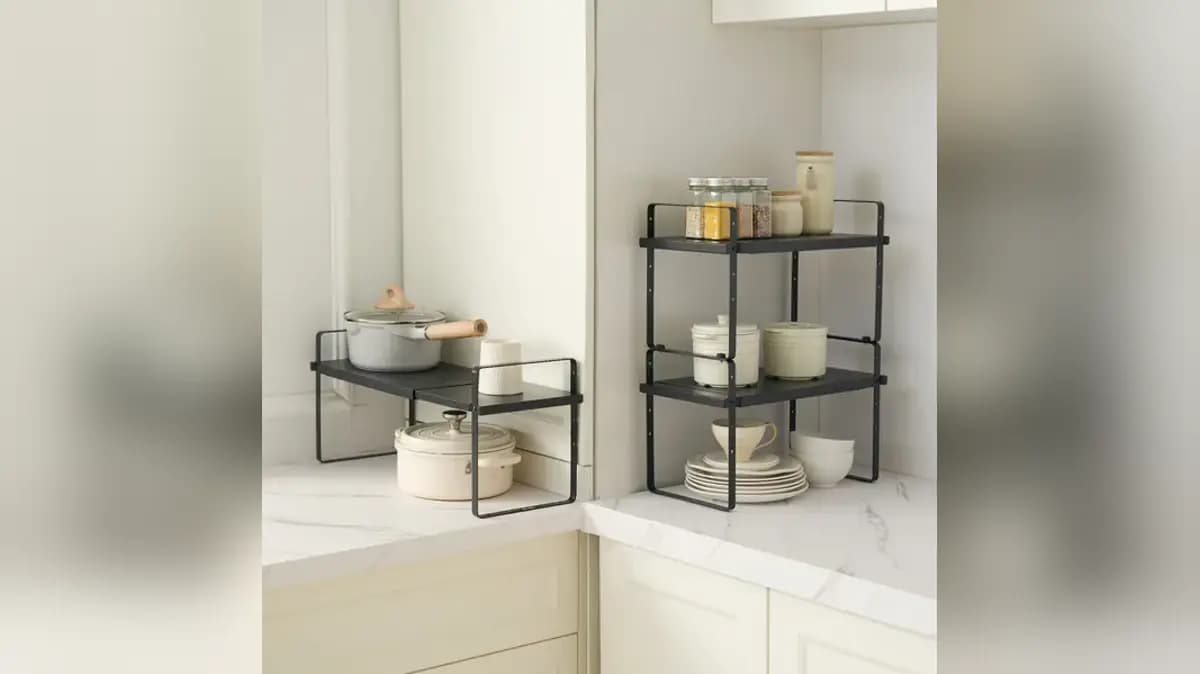
The best kitchen pan organizer ideas stop you from unstacking five pans to reach the one at the bottom. Store frying pans upright in a vertical rack or on their edges in a deep drawer, put a pull-out basket in low cabinets so the back is as easy to reach as the front, add an expandable shelf to split tall cabinet space into two levels, and give lids their own holder. Keep everyday pans closest to the stove and move rarely used pieces higher or further away.
Pans are awkward to store. They are heavy, oddly shaped, have long handles and come with lids that never seem to fit anywhere. Most kitchens default to a nested stack in a low cabinet, which works until you need the pan at the bottom. Every pull scrapes surfaces, rattles the whole pile and sends lids sliding. This guide walks through the main ways to organize pans, which organizer suits which cabinet, how to deal with lids, how to protect nonstick and cast iron, and what to do in a small kitchen with very little cabinet space.
Start With a Pan Inventory
Organizing goes faster when you know what you are storing. Take every pan, pot and lid out of the cabinets and group them on the counter.
- Daily pans: the skillet and saucepan you use most days. 2. Weekly pans: a stockpot, a larger skillet, a sauté pan, a sheet pan. 3. Occasional pieces: a roasting pan, a large Dutch oven, a grill pan, specialty bakeware. 4. Lids: match each lid to its pan. Lids without a pan, and pans you never use, are candidates to donate. 5. Damaged pieces: warped pans that wobble on the burner or nonstick with flaking coating. Many manufacturers advise replacing nonstick pans once the coating is visibly damaged, so check the care guidance for yours.
You will probably find duplicates, especially lids. Editing now means the organizer you buy only has to hold what you actually cook with. If your cabinets need a full reset, our step-by-step guide to organizing kitchen cabinets covers the whole process.
Kitchen Pan Organizer Types Compared
Each organizer solves a different storage problem. Most kitchens combine two or three.
| Organizer type | Best for | Strengths | Watch out for |
|---|---|---|---|
| Vertical pan rack | Frying pans, sheet pans, cutting boards | Each pan slides out without moving others | Needs cabinet height for tall pans |
| Pull-out cabinet basket | Pots, Dutch ovens, heavy pans in base cabinets | Brings the back of the cabinet to you | Must be measured to the cabinet opening |
| Expandable cabinet shelf | Splitting tall cabinet space into two levels | Doubles usable surface, no tools needed | Check the weight rating for heavy pans |
| Lid organizer | Pot and pan lids | Stops lids sliding and stacking | Lid sizes vary, so check slot widths |
| Deep drawer with dividers | Pans and lids stored on their edges | Easy to see everything from above | Needs deep drawers with strong slides |
| Wall rail or hanging pot rack | Pans used daily, larger collections | Frees cabinet space entirely | Pans collect dust and grease near the stove |
| Pan protectors | Nonstick pans that must be stacked | Prevent scratches between pans | Only helpful when stacking is unavoidable |
If you prefer pans on display, our kitchen pot rack ideas cover ceiling and wall-mounted options.
Store Frying Pans Vertically
The single biggest upgrade for most kitchens is turning frying pans on their sides. A vertical rack holds each pan in its own slot, like files in a folder. You can see every pan at once and pull one out without disturbing the rest.
Vertical storage works especially well for:
- Skillets and frying pans of different sizes. - Sheet pans and baking trays, which are hard to stack neatly. - Cutting boards and cooling racks. - Shallow lids that fit between dividers.
Place the rack so pan handles face you. Put the largest pans at the back or on one side, and the pan you use every day in the most accessible slot. Measure your tallest pan, including the handle if the pan stands handle-up, before choosing a cabinet for the rack.
Pull-Out Baskets for Deep Base Cabinets
Deep base cabinets are where heavy pots and pans usually end up, and also where they get lost. Kneeling down to reach the back of a cabinet is uncomfortable and makes it tempting to stop using the pans stored there. A pull-out basket solves this by bringing the whole contents forward.
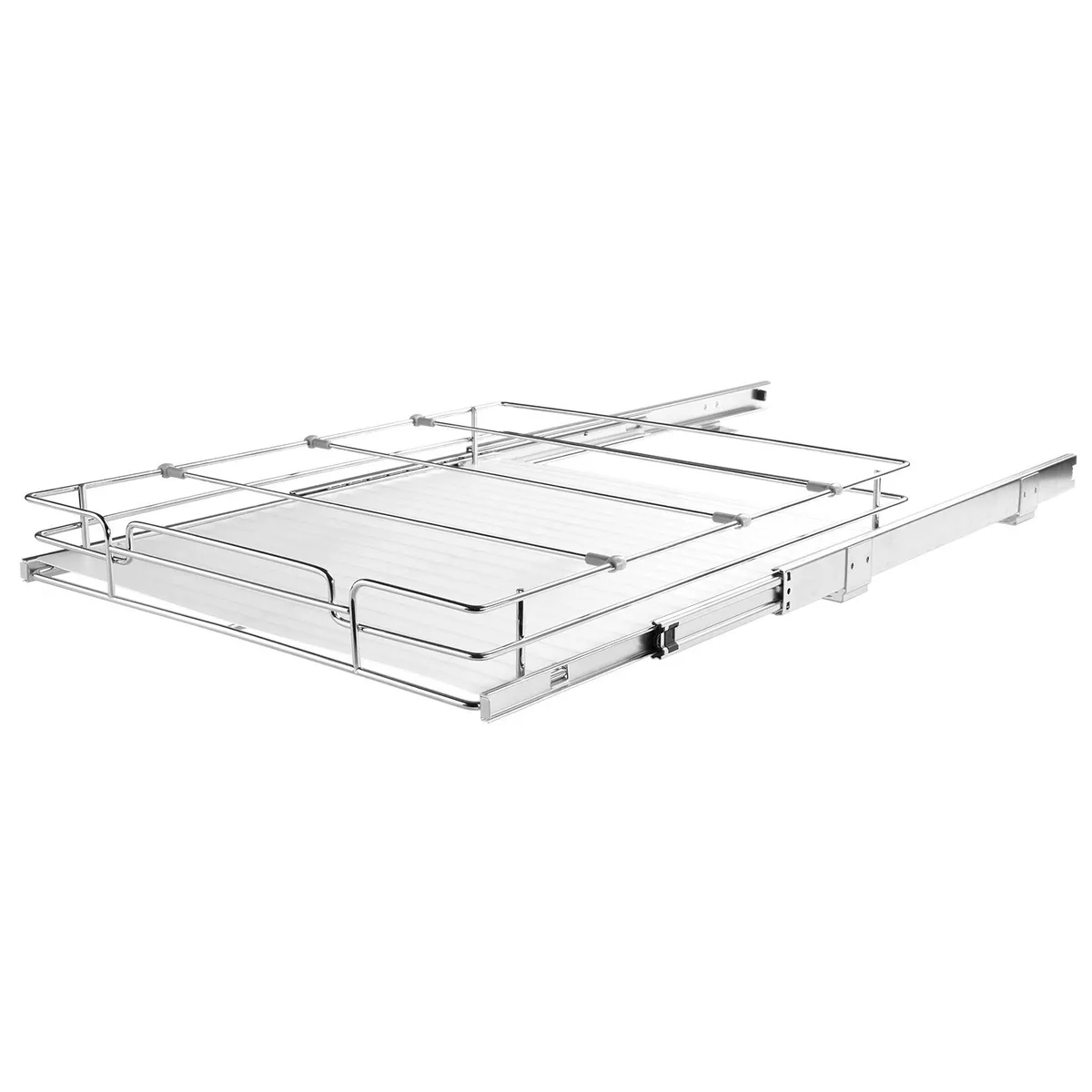
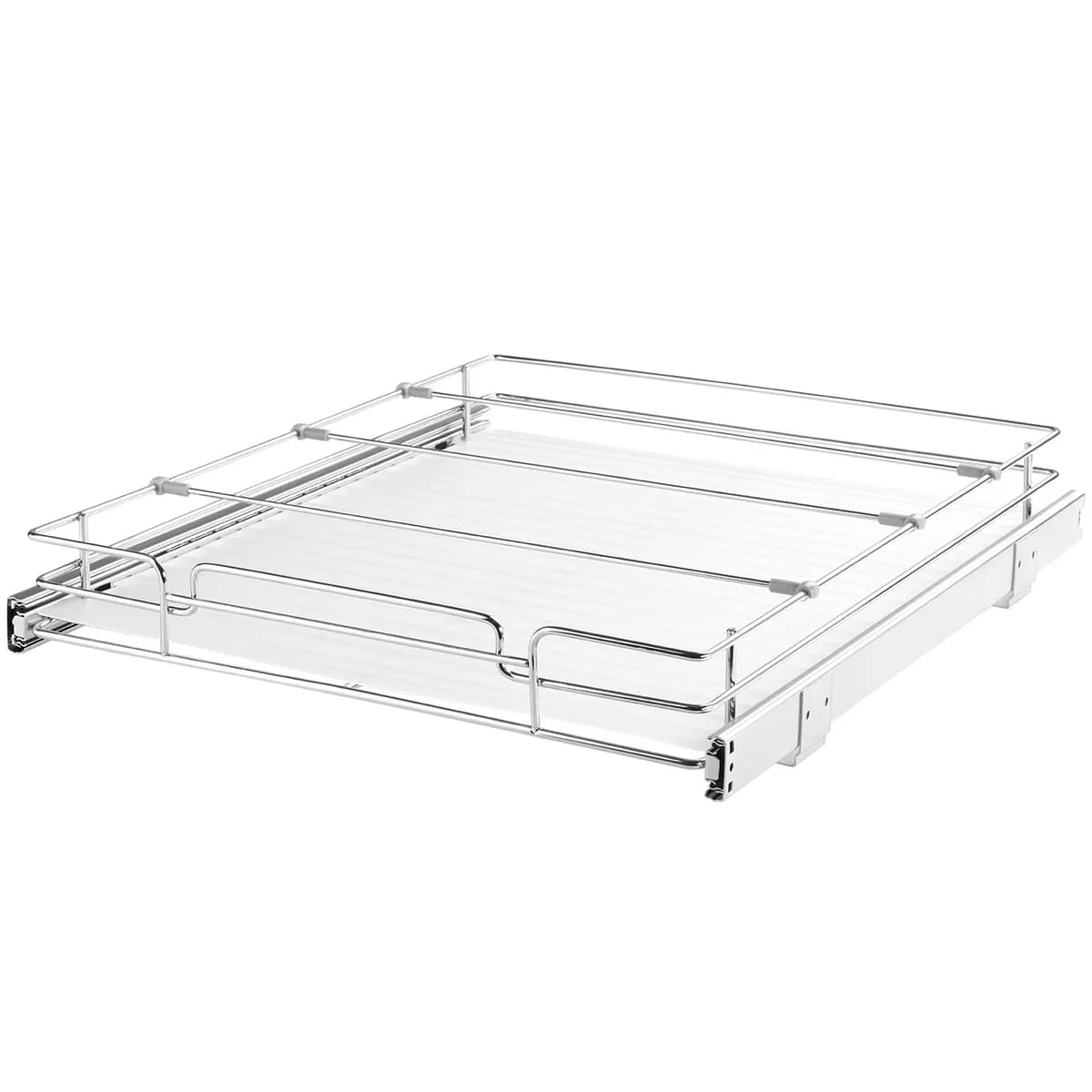
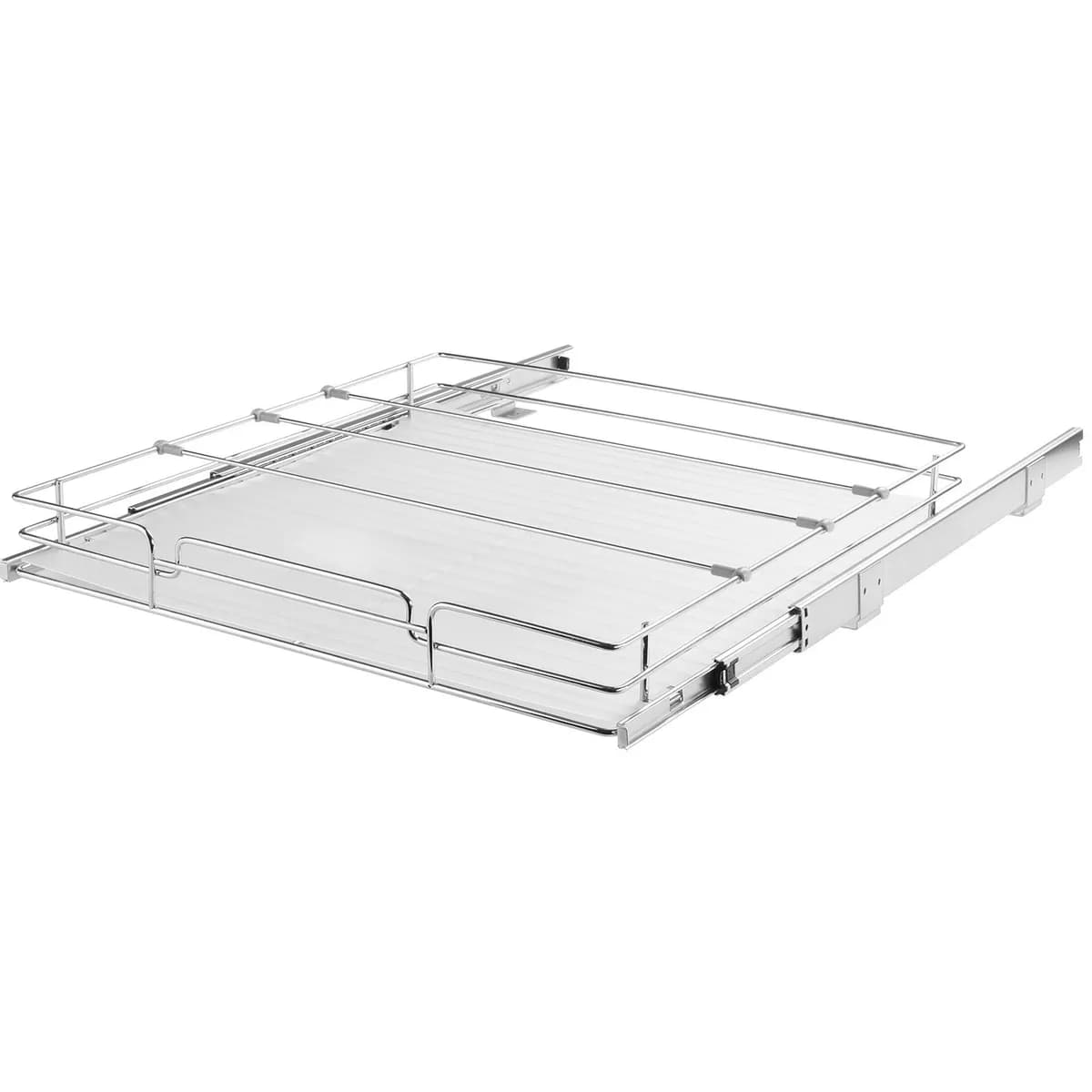
The 17-inch pull-out cabinet organizer is one example. The chrome-plated steel basket is 17 inches wide, 21 inches deep and 2.5 inches tall, runs on ball-bearing slide rails and extends to a full depth of 41.8 inches. It includes a frosted liner and three partition rods, screws into the cabinet floor and is rated for 28.6 pounds. A low-sided basket like this suits pots and pans set side by side, with the partition rods keeping them from sliding.
Set up a pull-out basket for pans by placing the heaviest pieces near the slide rails, where the basket is best supported, and lighter pans toward the front. Keep within the weight rating, which matters more with pans than with almost anything else in a kitchen.
Measure Your Cabinet Before Buying
Pull-out organizers are installed inside the cabinet, so a few inches of error mean the organizer will not fit or the door will not close. Measure carefully.
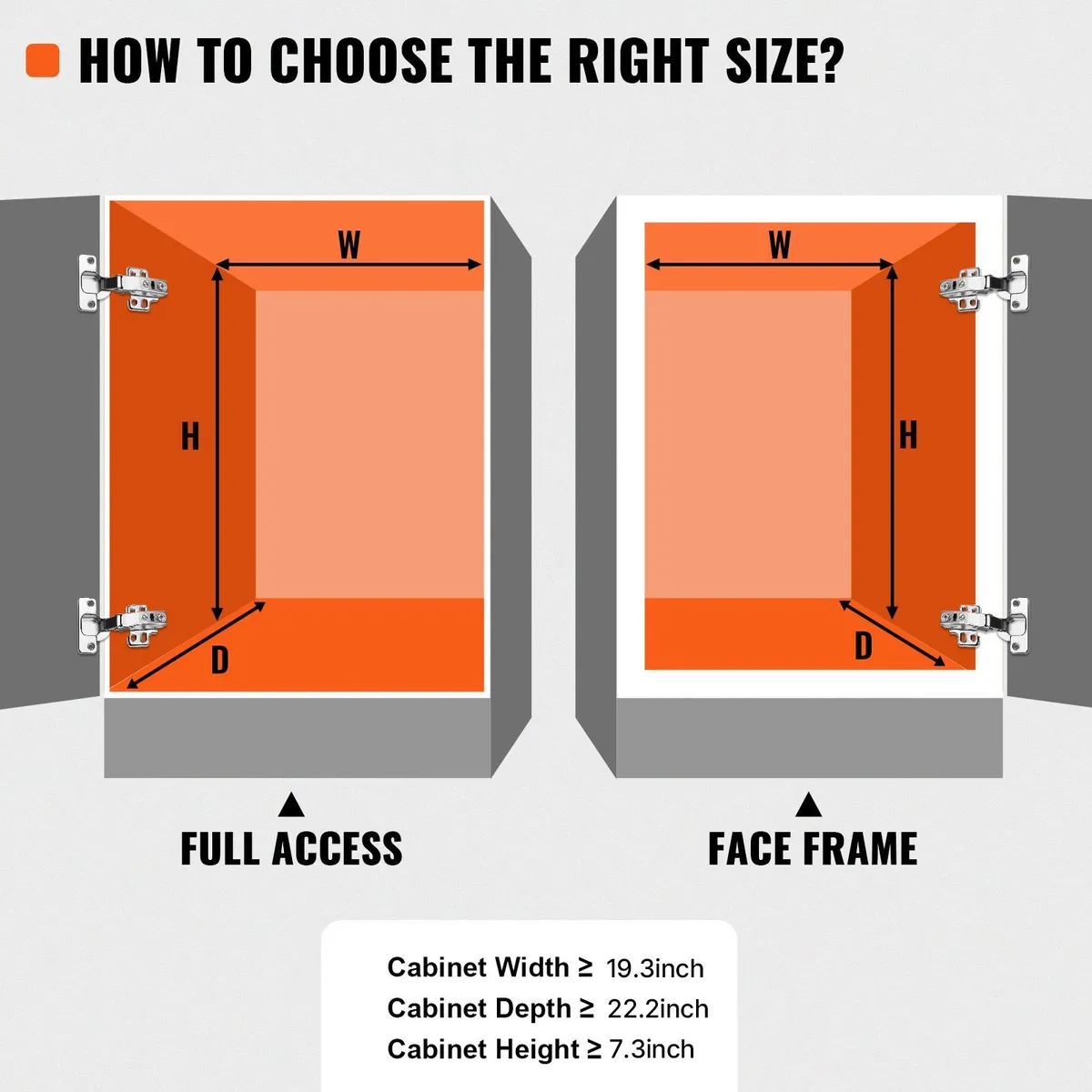
- Width: measure the narrowest point of the opening. Face-frame cabinets have a lip around the opening that reduces usable width. 2. Depth: measure from the inside of the door frame to the back wall of the cabinet. 3. Height: measure the clear opening, especially if there is a fixed shelf above. 4. Obstacles: note hinges, door stops, pipes and any center stile between double doors.
The 17-inch organizer above needs a cabinet opening of at least 19.3 inches wide, 22.2 inches deep and 7.3 inches high. Every pull-out organizer lists its own minimums, so compare your measurements with the listing before ordering.
Expandable Shelves to Split Tall Cabinet Space
Many cabinets have one fixed shelf with a large gap above it. Pans stacked in that space waste most of the height. An expandable shelf adds a second level, so you can store pans on the bottom and lids, smaller pots or bakeware above.
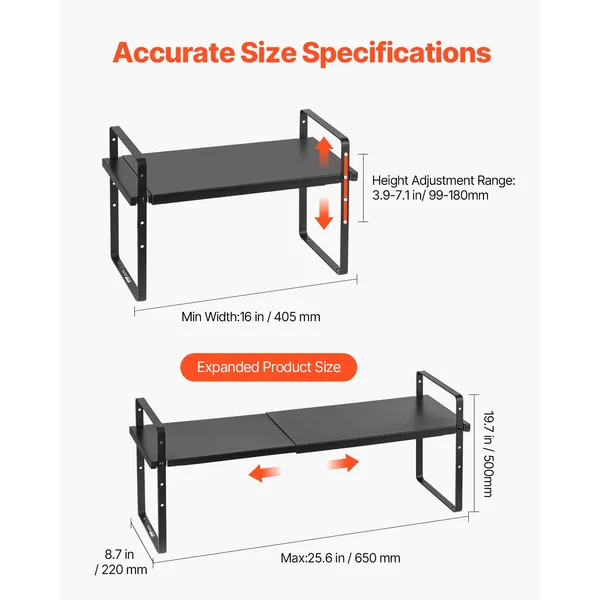
The expandable 2-tier cabinet shelf expands from 16 to 25.6 inches wide, is 8.7 inches deep and has legs that adjust between 3.9 and 7.1 inches. The two shelves can be used side by side or stacked. The supplier rates each shelf at 22.05 pounds, which is enough for most saucepans and lids but worth checking against a heavy cast iron skillet or Dutch oven. Keep the heaviest pans on the cabinet floor, not on the added shelf.
Expandable shelves also work on a countertop next to the stove, as the hero photo shows, to hold a pot you use daily above a casserole dish without taking up extra width.
Give Lids Their Own Home
Lids are the most common reason pan storage falls apart. They do not stack, they slide off pans and they rattle every time a cabinet opens. A few approaches work well:
- Lid racks inside cabinet doors. A rack mounted on the inside of a door holds lids flat against it. Check that the door still closes with lid knobs in place. - Vertical dividers. A divided rack or file sorter holds lids upright, one per slot. - Store lids upside down on their pans. Flip the lid so the knob sits inside the pan. The pan can then go on a shelf without the lid sliding. - A shallow drawer for lids only. Lay lids on their edges with dividers between them. - Pull-out basket with partition rods. Lids lean against the rods instead of tipping over.
Keep only lids that match pans you own. Most kitchens have a few orphan lids that can go.
Deep Drawers for Pans and Lids
If your kitchen has deep drawers near the stove, they are often better for pans than a cabinet. You look down into a drawer, so you can see every pan at once.
Store pans on their edges with sturdy dividers between them, or nest two or three similar pans together and keep each nest in its own section. Put lids in a separate divided section. Check the drawer's weight limit, as heavy cookware can strain lightweight slides. Our deep kitchen drawer organizer ideas cover dividers and layouts in detail.
Protect Nonstick, Cast Iron and Stainless Pans
How you store a pan affects how long it lasts. Different materials need slightly different care.
| Pan material | Storage tip | Avoid |
|---|---|---|
| Nonstick | Store vertically or with a pan protector between stacked pans | Stacking bare pans, which can scratch the coating |
| Cast iron | Store fully dry, with airflow, and follow the maker's seasoning care | Storing damp or with a tight lid trapping moisture |
| Stainless steel | Stack freely, nest by size | Storing while wet, which can leave spots |
| Enameled cast iron | Store with a protector or cloth between lid and pan | Knocking against other heavy pans |
| Carbon steel | Store dry and lightly oiled, like cast iron | Long periods in a humid cabinet |
When in doubt, follow the care instructions that came with the pan. Manufacturers know their coatings and finishes best.
Use Under-Sink and Lower Cabinet Space Wisely
The cabinet under the sink is rarely a good home for pans because of the plumbing and the risk of leaks. It is, however, a good home for the cleaning supplies and backups that might otherwise crowd the cabinet you want for cookware.
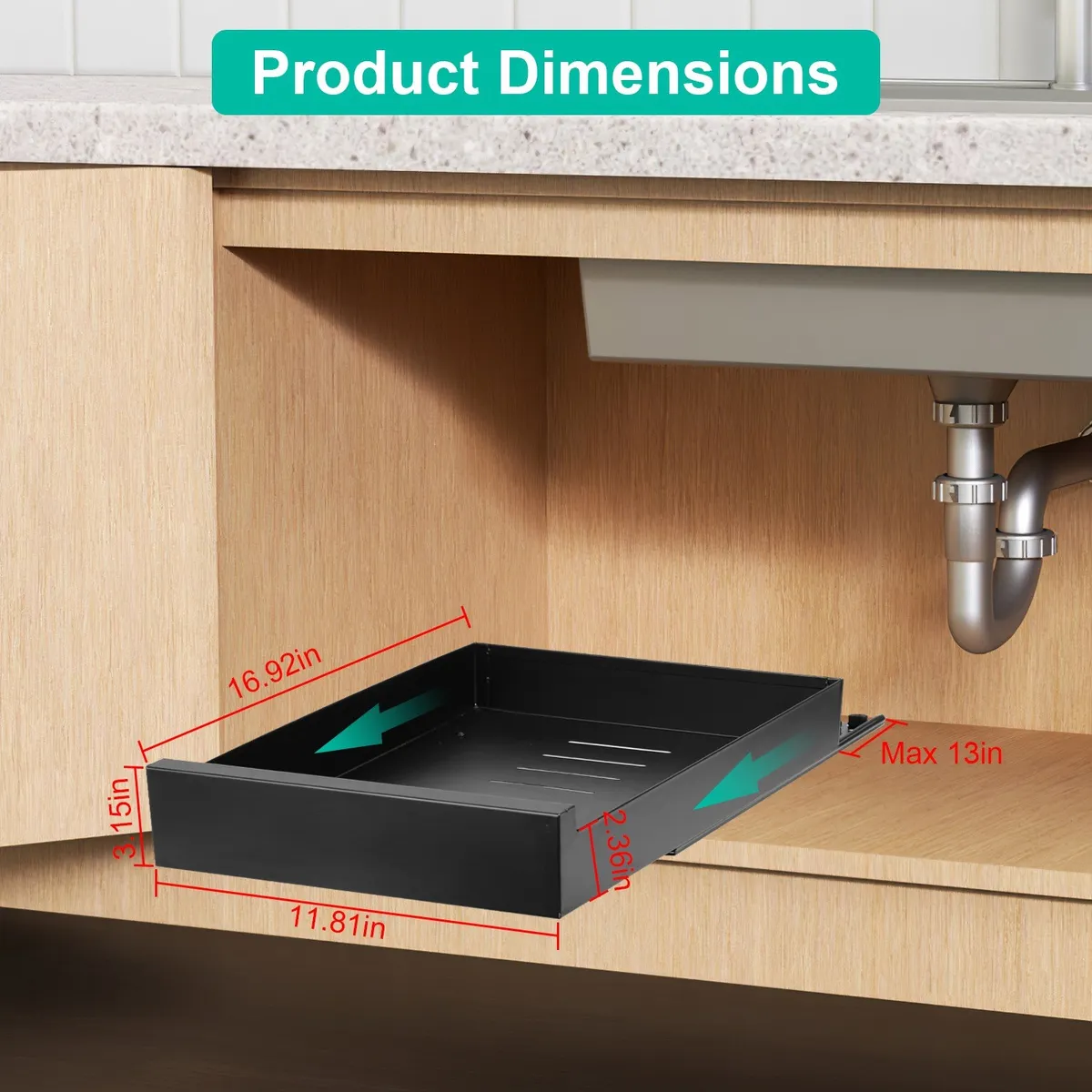
Moving cleaning supplies under the sink, organized on a slide-out tray, often frees an entire base cabinet for pans. Our under kitchen sink organization ideas show how to set that up.
Pan Storage Ideas for Small Kitchens
When cabinets are few, pans need to share space or move out of cabinets altogether.
- Keep only the pans you use. A skillet, a saucepan and a stockpot cover most everyday cooking. Store specialty pieces elsewhere or let them go. - Choose nesting cookware. Some sets are designed to stack with removable handles and take up a fraction of the space. - Use the oven drawer. Many ranges have a drawer below the oven. Check your range manual first, since some drawers are warming drawers and should not be used for storage. - Hang pans on a wall rail. A rail with S-hooks near the stove keeps daily pans at hand and frees cabinet space. - Add a vertical rack in a narrow cabinet. Sheet pans and skillets fit into cabinets too narrow for much else. - Store occasional pans out of the kitchen. A roasting pan used twice a year can live on a high shelf or in a pantry.
For more space-saving ideas, see our small kitchen organization ideas.
Bakeware, Sheet Pans and Odd Shapes
Bakeware rarely fits the same organizer as stovetop pans. Sheet pans, muffin tins, loaf pans, pie dishes and cooling racks each have their own awkward shape, and they tend to end up in a sliding pile at the bottom of a cabinet.
- Sheet pans and cooling racks: store upright in a vertical rack or between tension rods in a narrow cabinet, ideally next to the oven. - Muffin tins and loaf pans: nest pans of the same shape together, then store each nest upright or on its own shelf level. - Pie and tart dishes: stack by size with a soft liner between glass or ceramic pieces. - Casserole dishes: keep them low and on a sturdy shelf, since glass and ceramic are heavy and breakable. - Roasting pans: if used only for holidays, store them on a high shelf or in a pantry, with smaller items nested inside to save space.
Grouping bakeware separately from stovetop pans also makes cooking faster. When you bake, everything comes from one cabinet. When you cook on the stove, the bakeware stays out of the way.
Rental-Friendly Pan Storage
If you rent, you may not be able to screw organizers into cabinet floors or walls. Many options work without drilling:
- Freestanding vertical racks that simply sit in the cabinet. - Expandable shelves that stand on their own legs. - Adhesive-mounted slide-out trays, following the maker's instructions for surface preparation. - Tension rods set vertically in a cabinet to create dividers for sheet pans. - Over-the-door lid racks that hook onto a cabinet door instead of screwing into it.
Check your lease before using adhesive products on cabinets, and test any adhesive on a hidden area first.
Where to Put Each Pan
Location matters as much as the organizer. Plan storage around how you cook.
- Next to the stove: daily skillet and saucepan, plus their lids. - Lower cabinets near the stove: heavier pots and the Dutch oven, ideally on a pull-out. - Upper or high shelves: light, rarely used pieces only. Never store heavy pans overhead. - Pantry or another room: holiday roasting pans, large stockpots for canning and other occasional items.
Keep heavy pans between knee and shoulder height whenever possible, so lifting them is safe and comfortable. Our kitchen cabinet organization ideas cover how to zone the rest of your cabinets.
Keep Pan Storage Organized
Organizers help, but habits keep it working:
- Return pans to the same slot. Labels on shelf edges help everyone in the household. 2. Dry pans fully before storing. Moisture in a closed cabinet leads to spots and rust. 3. Edit once a year. Check for warped, damaged or unused pans and lids. 4. One in, one out. When a new pan arrives, an old one leaves.
Frequently Asked Questions
What is the best way to organize pots and pans in a cabinet?
Store frying pans upright in a vertical rack, put heavy pots on a pull-out basket in a base cabinet, use an expandable shelf to split tall spaces and give lids a dedicated holder. Keep daily pans nearest the stove.
How do I store pans without scratching them?
Store nonstick pans vertically so their surfaces do not touch, or place a pan protector or soft cloth between them when stacking. Avoid stacking bare nonstick pans.
Where should I store pan lids?
On a rack inside a cabinet door, in a vertical divider, upside down on their own pans or in a dedicated shallow drawer. Keep only lids that match pans you own.
Are pull-out cabinet organizers worth it for pans?
For deep base cabinets, yes. A pull-out basket brings pans at the back within reach without kneeling. Measure the cabinet opening and check the weight rating before buying.
How do I measure a cabinet for a pull-out organizer?
Measure the width at the narrowest point of the opening, the depth from the door frame to the back wall and the clear height. Note hinges, pipes and face frames, then compare with the organizer's minimum cabinet size.
Can I store pans in the oven drawer?
Only if the drawer is a storage drawer. Some ranges have warming drawers instead, which should not be used for storage. Check your range manual.
How do I store pans in a small kitchen with few cabinets?
Keep fewer pans, choose nesting cookware, hang daily pans on a wall rail, use a vertical rack in a narrow cabinet and store occasional pieces outside the kitchen.
How should cast iron pans be stored?
Store cast iron completely dry with some airflow, and follow the manufacturer's seasoning and care instructions. Avoid trapping moisture under a tight lid.
Final Thoughts
Good pan storage ends the nested stack. Edit your collection first, store frying pans and sheet pans vertically, add pull-out baskets to deep base cabinets, use expandable shelves to split tall spaces and give lids their own home. Protect nonstick and cast iron with the right storage, keep heavy pans low and daily pans near the stove, and measure every cabinet before you buy. For a complete kitchen plan, see our kitchen cabinet organizer ideas.
Liked this guide?
Get new organizing guides and the occasional new product by email. No spam, unsubscribe anytime.
Related articles
Explore more articles
- Pretty Food Storage Containers: Transform Your Kitchen with Stylish Organization Solutions 2026
- Best Containers for Dog Food Storage: Keep Your Pet Food Fresh in 2026
- Complete Home Organizer Guide: Products and Tips for a Tidy Home (2026)
- Kitchen Bakers Rack Ideas: 12 Ways to Use an Open Rack Without the Clutter
- Outdoor Shoe Storage Ideas: 12 Ways to Keep Shoes Dry by the Door
- Shoe Storage Ideas for Bedroom Spaces Without the Clutter
- How to Organize a Spice Drawer: A Step-by-Step System You Can Keep
- Slow Living at Home: The 2026 Lifestyle Guide to a Calmer, More Intentional Life