
Deep Kitchen Drawer Organizer Ideas for Pots, Pans, Lids and Dishes
Deep kitchen drawer organizer ideas for pots, pans, lids, plates and food containers, with how to measure, plan zones and choose between nesting, filing and pegs.
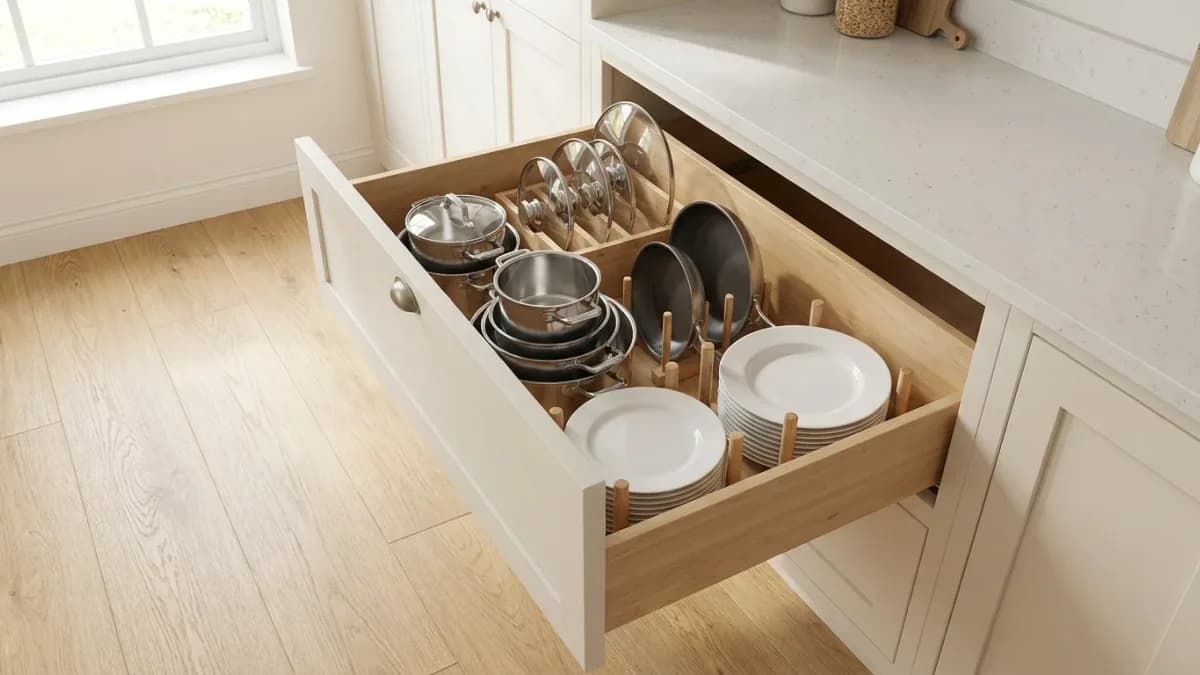
The best deep kitchen drawer organizer ideas turn a tall, open box into zones you can read at a glance: pots nested by size, lids filed on edge in a divider, frying pans standing in a vertical rack, and plates held in place by adjustable pegs. Measure the inside of the drawer first, keep the heaviest pieces low and toward the back, and give every zone one category so nothing gets buried. You rarely need new cabinets; you need a plan for the space you already have.
Deep drawers are the most useful storage in a modern kitchen, and also the easiest to waste. Without structure they become a pile where the one pan you want is always at the bottom. This guide walks through measuring, planning zones, choosing between nesting and filing, and picking organizers for pots, pans, lids, dishes, food containers, bakeware and pantry goods. For general drawer tips, see our kitchen drawer organizer ideas, and for shallow drawers full of spatulas and ladles, our guide to a kitchen drawer organizer for large utensils.
Why Deep Drawers Beat Base Cabinets (When You Organize Them)
A base cabinet with doors and a fixed shelf forces you to kneel, reach and pull out the front row to see the back. A deep drawer brings the whole contents to you: open it and everything is visible from above. That is why many kitchen designers now favor drawers over doors for lower storage.
The catch is that depth works against you if you only stack. Ten items piled on top of each other mean nine lifts to reach the bottom one. The fix is to think in layers and in rows. Items that nest, like a set of saucepans, can stack. Items that are flat, like lids, sheet pans and cutting boards, should stand on edge so you can pull one out like a file. Items that slide around, like plates and bowls, need pegs or bins to stay put when the drawer opens and closes.
If your kitchen has base cabinets rather than drawers, you can still get most of the benefit with pull-out baskets or slide-out trays, which we cover below. Our step-by-step guide to organizing kitchen cabinets explains how to empty and sort a cabinet before you add anything.
Measure Before You Buy Anything
Organizers that do not fit are the most common reason a deep drawer project stalls. Drawer fronts are larger than the box behind them, so measuring the front gives the wrong numbers. Open the drawer fully and measure inside the box.
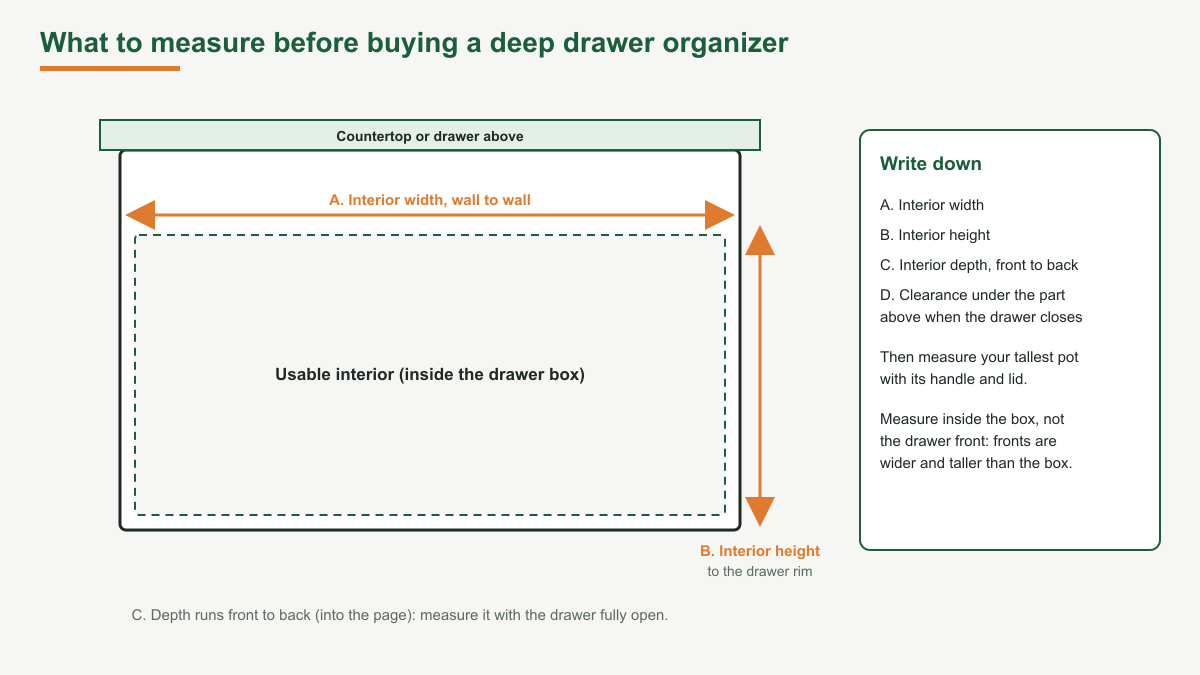
Write down four numbers: the interior width, the interior height to the rim, the interior depth from front to back, and the clearance between the rim and whatever sits above the drawer when it closes. That last number matters for lid racks and vertical pan organizers, because a rack that sticks up above the rim can catch on the countertop or the drawer above.
Then measure the tallest thing you plan to store, with its lid and handle. A stockpot that looks short on the stove can be taller than the drawer once the lid knob is on. If it does not fit, store the lid separately in a divider and keep the pot without it.
Plan Zones Before You Load the Drawer
Zoning is what keeps a deep drawer organized after the first weekend. Empty the drawer, sort everything on the counter, and decide which categories live where. Most households end up with five groups: pots, frying pans, lids, plates and bowls, and food storage containers.
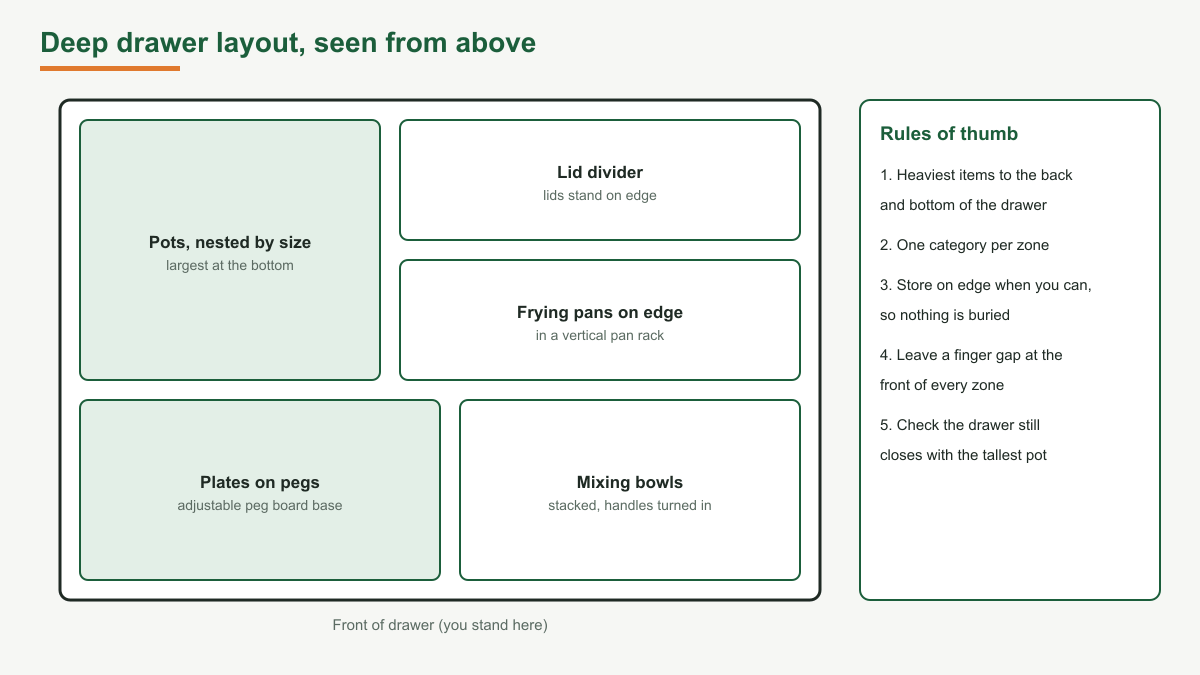
A few rules make the layout work in practice:
- Put the heaviest items at the back and bottom. A drawer full of cookware is heavy, and weight near the back puts less strain on the front of the box as it opens.
- Give each zone one category. When lids live with lids and pans with pans, you can put things away without thinking.
- Store flat items on edge. Lids, baking sheets and cutting boards are easier to grab when they stand up.
- Leave a finger gap. Every zone should have room to pinch an item and lift it out.
- Test the close. Load the drawer and close it slowly to check that nothing catches on the frame or the counter.
Place the drawer near where you use its contents. Pots and pans belong beside the cooktop, dishes near the dishwasher, and food containers near the fridge or the prep area. Our guide on how to keep your kitchen organized explains this work-zone idea for the whole room.
Nesting, Filing or Pegs: Three Ways to Fill a Deep Drawer
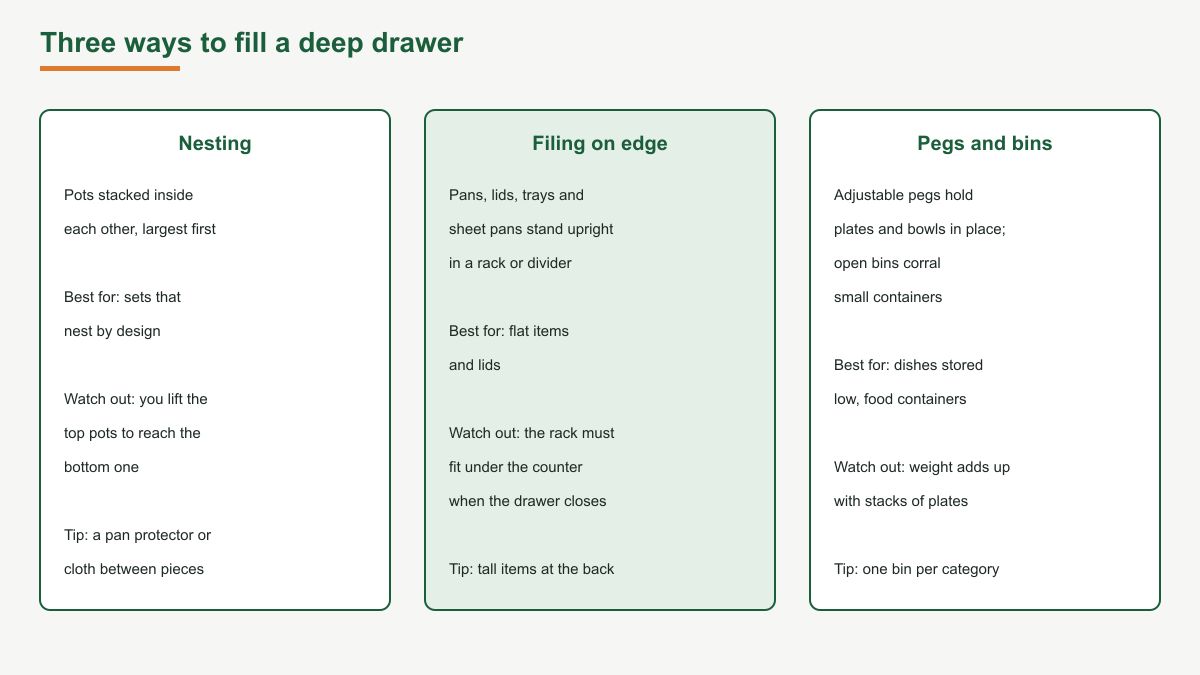
There are three basic methods for filling a deep drawer, and most good layouts mix them.
| Method | Best for | Organizer to use | Watch out for |
|---|---|---|---|
| Nesting | Saucepans, mixing bowls, measuring cups | Pan protectors or a soft cloth between pieces | Lifting the top pieces to reach the bottom one |
| Filing on edge | Lids, frying pans, sheet pans, cutting boards | Lid divider, vertical pan rack, tension dividers | Racks that stick up above the drawer rim |
| Pegs | Plates, shallow bowls, serving dishes | Adjustable peg board base | Weight of tall plate stacks |
| Bins | Food containers, small appliances, pantry packets | Open bins sized to the drawer depth | Bins too tall to see into from above |
| Pull-out baskets | Base cabinets without drawers | Pull-out cabinet organizer on slides | Hinges and face frames narrowing the opening |
Nesting saves the most space but costs the most effort. It works when a set is designed to nest and you use the pieces in rotation. Filing on edge costs a little space and saves a lot of time, which is why it suits lids and pans that you grab every day. Pegs and bins sit in between: they keep things from sliding without hiding anything.
Deep Drawer Organizer Ideas for Pots
Pots are bulky and round, so they waste space unless they nest. Stack saucepans largest to smallest, with handles turned in the same direction so the stack does not tilt. If your pots have long handles, alternate the direction of every other pot so the handles do not collide.
Keep only one stack per category. A tower of six pots is hard to manage, while two stacks of three are easy. Put the pot you use most often on top of the stack, even if it breaks the size order, because it saves a lift every day.
Protect nonstick and enameled surfaces. A soft cloth or a felt pan protector between pieces helps prevent scratches on the coating when you lift one pot out of another. Stockpots and Dutch ovens, which rarely nest well, usually deserve their own corner at the back of the drawer.
If your pots and pans spill over into wall storage, our kitchen pot rack ideas show how to hang the overflow instead of cramming it into one drawer.
Ideas for Frying Pans and Lids
Frying pans stack poorly because their handles stick out and their surfaces scratch. A vertical pan rack lets each pan stand on its rim in its own slot, so you can lift one without moving the others. Adjustable racks are easier to fit around a mix of pan sizes than fixed ones.
Lids are the clutter that ruins most cookware drawers. Two approaches work well. The first is a dedicated lid divider: a row of slots where lids stand on edge, ordered by size. The second is a lid zone inside the pan rack, with each lid filed next to the pan it fits. Both beat a loose pile of lids sliding around the drawer.
Before buying a rack, check the clearance number you wrote down. A lid divider that is taller than the drawer rim will catch on the drawer above or the countertop. If space is tight, lay the largest lids flat at the bottom of the pot stack and file only the smaller ones.
Plates, Bowls and Everyday Dishes in a Deep Drawer
Storing dishes low is helpful for children who set the table and for anyone who finds upper cabinets hard to reach. The challenge is that plates slide when a heavy drawer opens and closes. An adjustable peg board base solves this: you place wooden or plastic pegs around each stack so plates stay put.
Keep plate stacks to a height you can lift comfortably, and store bowls in shorter stacks than plates since they are bulkier. Put everyday dishes in the drawer closest to the dishwasher so unloading takes fewer steps. Serving platters can stand on edge in a divider at the back.
If your dishes currently drain or live on the counter, our kitchen counter organization ideas and open shelving kitchen ideas cover the other side of the routine.
Food Storage Containers Without the Avalanche
A deep drawer is one of the best homes for food storage containers, provided lids and bases are separated. Nest bases by shape and size, then file the lids upright in a divider or a narrow bin. Square and rectangular sets nest more tightly than round ones and fit drawer corners better.
Do a match test before you organize: pair every base with a lid and set aside anything without a partner. Recycle or repurpose the orphans. Keeping fewer, matching sets is the single biggest space saver in this category. Our guide to food storage containers with lids explains what to look for when you replace a mismatched collection.
Bakeware, Cutting Boards and Sheet Pans
Bakeware is flat and often oversized, so it belongs on edge. A set of tension dividers or a vertical rack turns part of a deep drawer into a file for baking sheets, cooling racks, muffin tins and cutting boards. Put the items you use weekly in front and holiday pieces behind them.
Glass and ceramic baking dishes are heavy and can chip when they knock together. Store them flat in a short stack, or stand them on edge with a divider between each one. Keep the lid or cover for each dish in the same zone so you are not searching for it when food goes into the fridge.
When You Have Base Cabinets Instead of Drawers
Many kitchens still have base cabinets with doors. You can add drawer-like access without remodeling by installing pull-out organizers that sit inside the cabinet and slide forward.
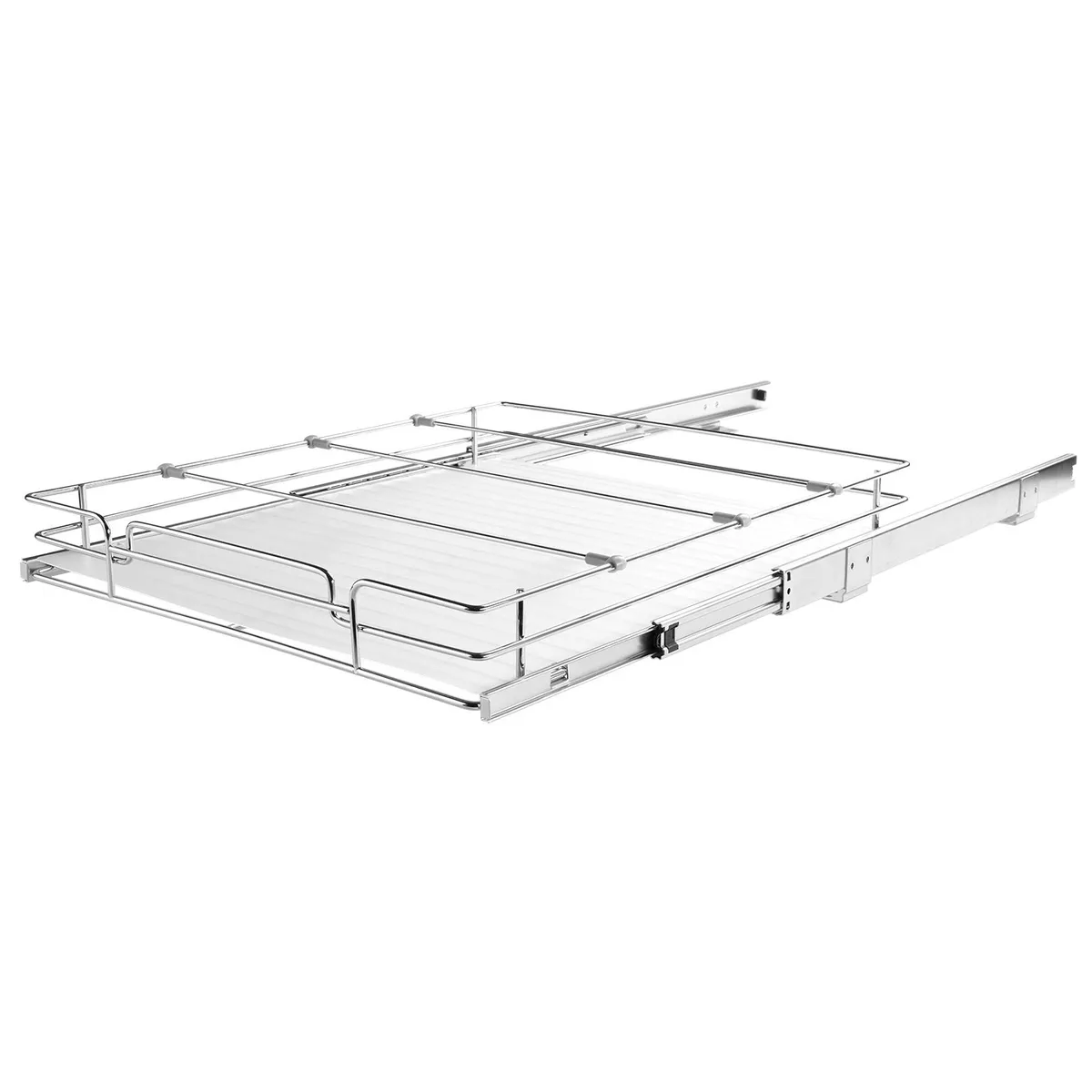
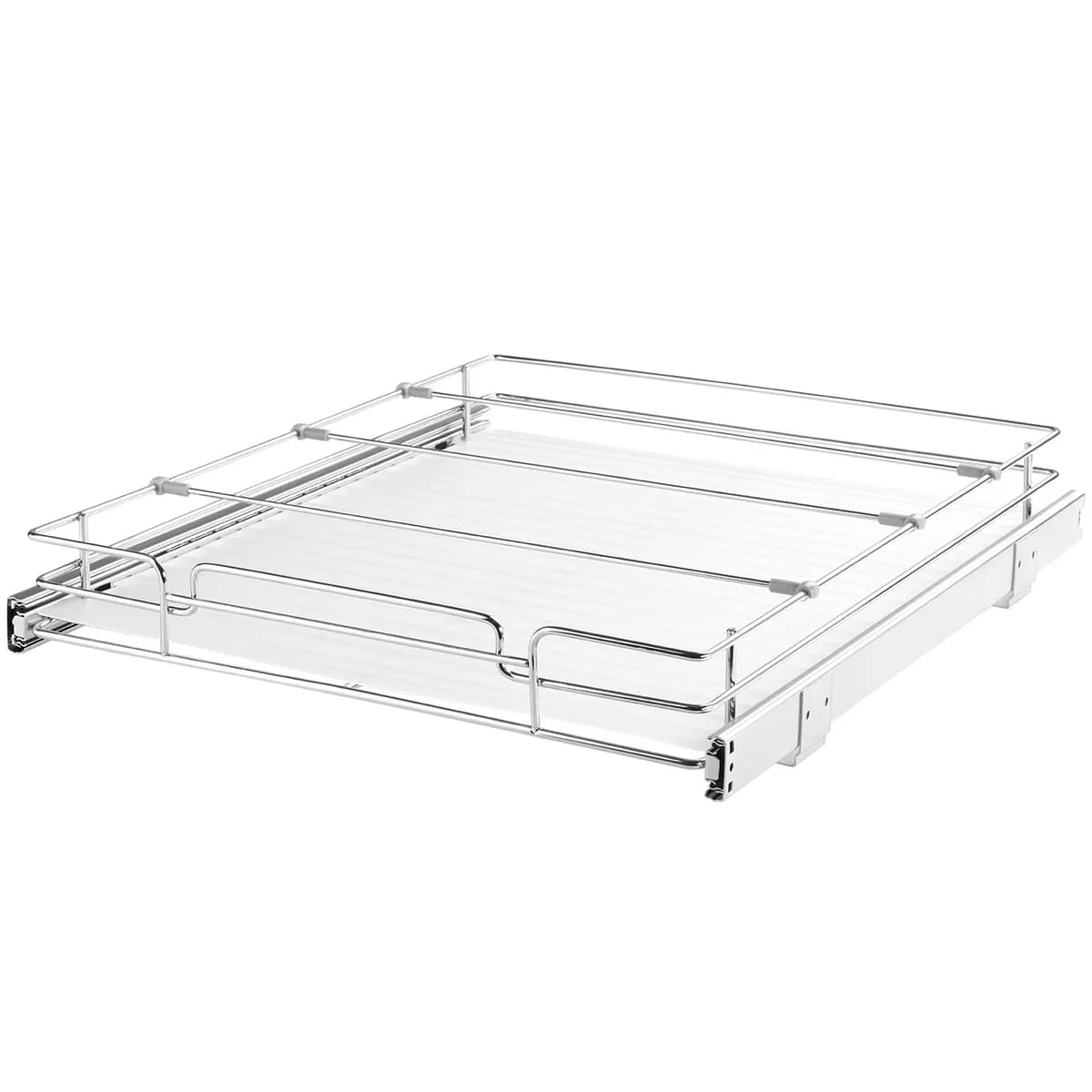
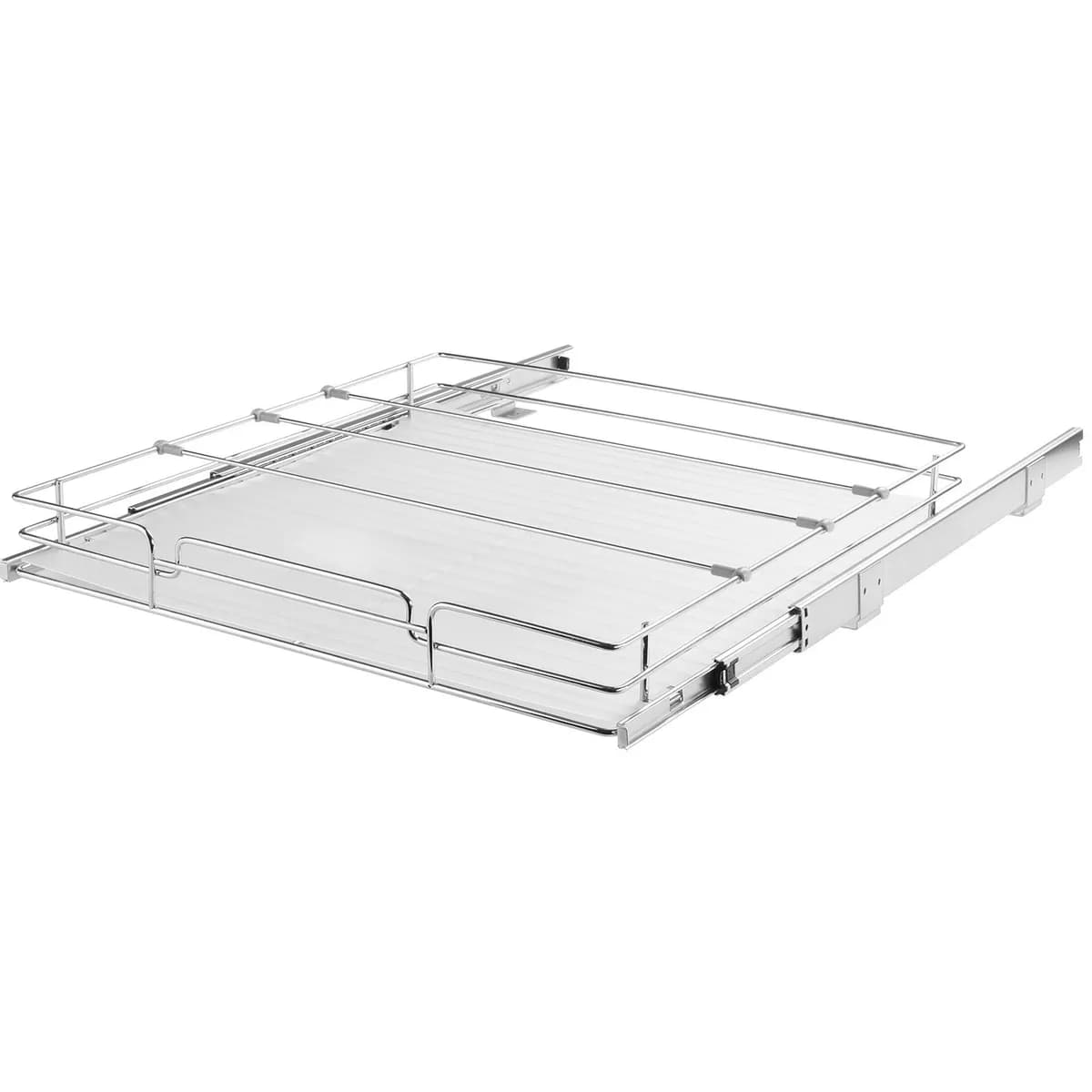
The Pull-Out Cabinet Organizer, 17 in. Wide is one example. According to its product listing, it runs on ball-bearing slide rails, holds up to 28.6 lbs, includes a frosted liner and three adjustable partition rods, and fits cabinets at least 19.3 in. wide, 22.2 in. deep and 7.3 in. tall inside. Those minimums are exactly why you measure first: face frames and door hinges can make the usable opening narrower than the cabinet itself.
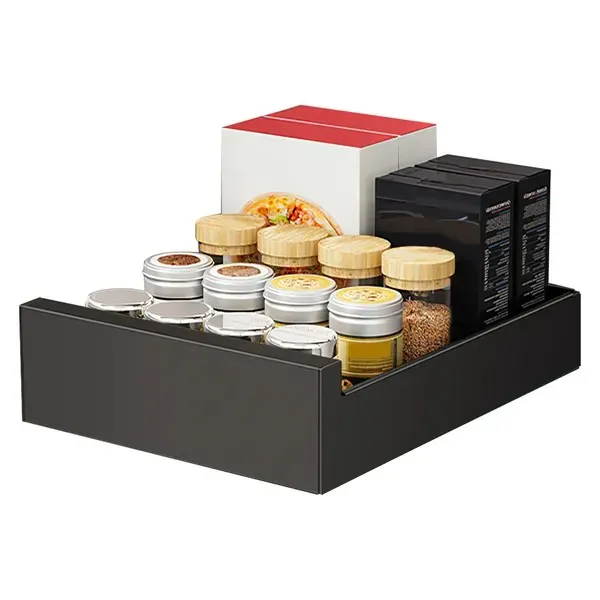
For lighter loads or shallower cabinets, a no-drill option is the Slide-Out Cabinet Drawer, Black Steel. Its listing describes a carbon steel drawer that holds up to 55 lbs, slides out up to 13 in. on side rails, mounts with adhesive tape instead of screws, and has a compact 11.81 x 16.92 in. footprint. It suits spices, oils, cleaning supplies or small containers rather than heavy cookware.
If your base cabinets include an awkward corner, our corner cabinet kitchen ideas cover lazy Susans and blind-corner pull-outs, and our kitchen cabinet organization ideas cover the rest of the run.
Deep Drawers for Pantry Goods and Spices
A deep drawer near the prep area can also work as a mini pantry. Store bags of rice, pasta and flour in clear containers so you can see what is inside from above, and label the lids rather than the sides since you will be looking down. Group by category: grains in one row, baking supplies in another, snacks in a bin of their own.
Spices are the exception. They are small and get lost in a deep drawer unless you add a tiered insert or a shallow tray that raises them. Our guide on how to organize a spice drawer shows layouts that keep every label visible.
Mistakes to Avoid With Deep Drawer Organizers
Most deep drawer problems come from a handful of habits. Watch for these:
- Buying organizers before decluttering. Remove duplicates, broken pieces and pans you never use first, then buy for what is left.
- Overloading one drawer. A drawer packed with heavy cookware is harder to open and close. Spread heavy items across drawers if you can.
- Ignoring the clearance above. Tall racks and lid organizers must clear the counter or the drawer above.
- Mixing categories. One drawer for everything cookware-related quickly becomes a junk drawer. Our junk drawer organization tutorial shows how that happens.
- Choosing bins that are too tall. In a deep drawer you look down, so bins that are taller than they need to be hide their contents.
If you are working with a compact kitchen, our small kitchen organization ideas and minimalist kitchen organization guides help you decide what deserves drawer space at all.
A Simple Weekend Plan
You can reorganize a deep drawer in an afternoon. Here is the order we recommend:
- Empty the drawer and wipe it out.
- Sort everything into categories on the counter.
- Declutter duplicates, warped pans and containers without lids.
- Measure the drawer interior and your tallest pot with its lid.
- Sketch the zones on paper, heaviest items at the back.
- Add organizers: a lid divider, a pan rack or a peg base as needed.
- Load the drawer, close it slowly, and adjust anything that catches.
- Live with it for a week, then move anything you keep reaching past.
Related Products from Sesoris
To put these deep kitchen drawer organizer ideas into practice in base cabinets, start with the Pull-Out Cabinet Organizer, 17 in. Wide or the no-drill Slide-Out Cabinet Drawer, Black Steel. Browse more options in our Kitchen & Dining collection.
Frequently Asked Questions About Deep Kitchen Drawer Organizers
What is the best way to organize a deep kitchen drawer?
Measure the inside of the drawer, sort your items into categories, and give each category its own zone. Nest pots by size, file lids and pans on edge in a divider or rack, and use pegs or bins for dishes and containers. Put the heaviest items at the back.
How do I store pot lids in a deep drawer?
Stand them on edge in a lid divider, ordered by size, or file each lid next to its pan in a vertical rack. Check that the divider does not stick up above the drawer rim, or it may catch when the drawer closes.
Should pots and pans go in drawers or cabinets?
Drawers are usually easier because you see everything from above without kneeling. If you have base cabinets, pull-out baskets or slide-out trays give you similar access without remodeling.
How do I keep plates from sliding in a drawer?
Use an adjustable peg board base. Pegs fit into holes around each stack of plates or bowls and hold them in place when the drawer opens and closes.
How deep is a deep kitchen drawer?
Sizes vary by cabinet maker, so measure your own drawer inside the box rather than relying on a standard. Measure with the drawer fully open and write down the interior width, height and depth.
Can I put heavy cast iron in a deep drawer?
Yes, if the drawer and its slides are sound. Keep heavy pieces low and toward the back, avoid stacking several heavy items in one drawer, and spread the load across drawers if the drawer starts to sag or stick.
How do I organize food storage containers in a deep drawer?
Separate bases from lids. Nest the bases by shape and size, then file the lids upright in a divider or narrow bin. Recycle containers that no longer have a matching lid.
What organizers work for base cabinets without drawers?
Pull-out cabinet organizers on slide rails and slide-out cabinet drawers. Measure the cabinet opening, including hinges and face frames, and compare it with the minimum size listed for the organizer.
Conclusion: A Deep Drawer That Works Every Day
Deep drawers reward a little planning. Measure the inside of the box, divide it into zones, store flat items on edge and keep the heaviest pieces low and at the back. With a lid divider, a pan rack or a peg base doing the heavy lifting, the deep kitchen drawer stops being a pile and becomes the easiest storage in your kitchen.
Liked this guide?
Get new organizing guides and the occasional new product by email. No spam, unsubscribe anytime.
Related articles
Explore more articles
- Rubbermaid Food Storage Containers: Buying Guide
- Best Airtight Storage Containers for Pet Food: Keep Your Pet's Food Fresh in 2026
- Pretty Food Storage Containers: Transform Your Kitchen with Stylish Organization Solutions 2026
- Mini Bar for Small Kitchens: 15 Creative Ideas to Maximize Space
- Simple Minimalist Home Design: Transform Your Space with Easy Tips
- Best Foldable Travel Bags: Light, Practical, and Hassle-Free (2026)
- Pyrex Glass Food Storage Containers: The Complete Guide to Premium Kitchen Storage in 2026
- Plastic Dish Racks: Affordable and Lightweight Kitchen Solutions