
Liquor Wall Shelf Ideas: 12 Smart Ways to Display Bottles Safely
Liquor wall shelf ideas for any home bar: 12 layouts, how to plan load and height, guard rails that stop slides, glass storage, lighting and child-safe choices.
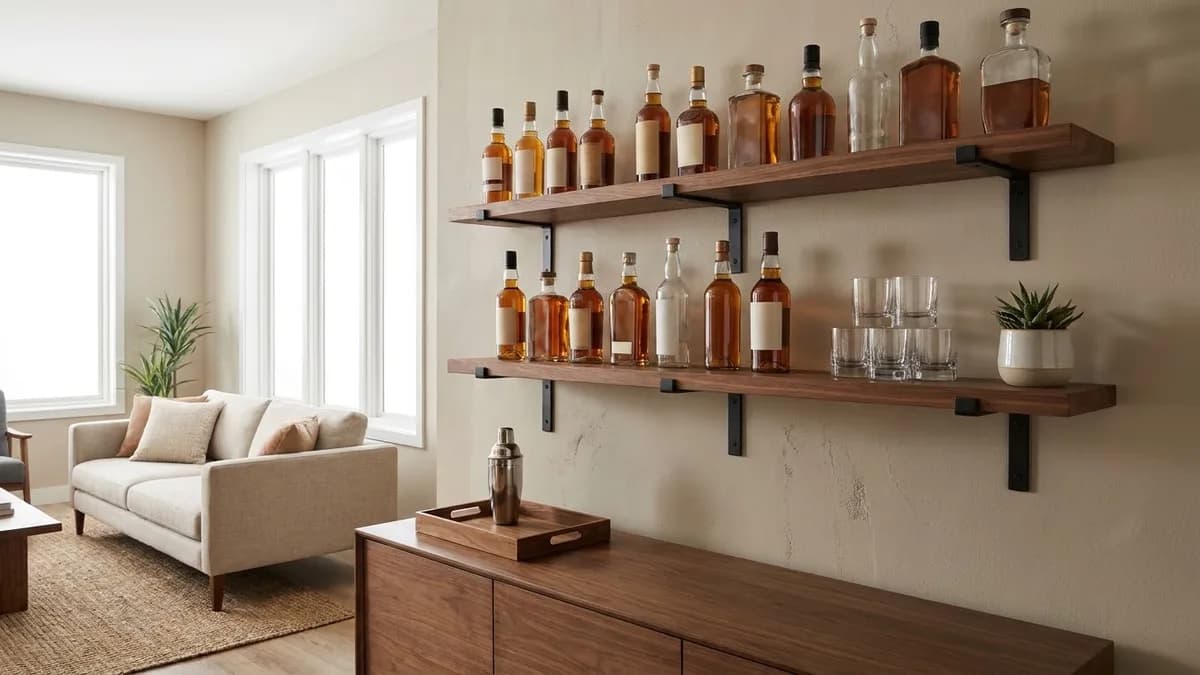
The best liquor wall shelf ideas put your bottles on a solid shelf fixed into wall studs, with a front lip or rail so nothing slides off, at a height where you can lift a full bottle without stretching. Keep the bottles you pour most often at eye level, glasses close by, and anything heavy or fragile low on the wall. Get the load and the fixing right first, and the styling becomes the easy part.
This guide covers 12 shelf ideas for a home bar, how to plan weight and height, how to stop bottles from tipping, where the glasses should go, and what to do if you rent or have small children at home. If you are planning a whole bar corner rather than one wall, our mini bar ideas for small kitchens cover carts, cabinets and counters too.
Why a Wall Shelf Works for a Home Bar
A bottle collection grows quietly. One gift becomes five, and soon the bottles crowd a kitchen counter or hide at the back of a cabinet where you forget what you own. A wall shelf solves both problems at once. It frees the surface underneath, and it puts every bottle in plain sight, so you use what you have before you buy more of the same.
Wall shelves also take up almost no floor area, which matters in apartments and small dining rooms. A bar cart or a cabinet needs its own footprint, while a pair of shelves can sit above a sideboard, a buffet or even a radiator cover that is already there. The same wall can carry glasses, a small tray of tools and a plant, so the whole setup reads as one tidy corner rather than clutter.
There is a practical trade-off, though. Glass bottles are heavy for their size, and a row of them adds up fast. A decorative shelf meant for a few picture frames is the wrong tool. Everything in this guide assumes the shelf, the brackets and the fasteners are chosen for the real weight you plan to put on them.
Plan the Load Before You Pick a Shelf
Start with weight, because it decides almost everything else. Bottle weight varies a lot with the glass and the size, so the simplest method is to weigh one typical full bottle on a kitchen scale and multiply by the number you want on each shelf. Add the glasses, a decanter and any décor you plan to keep up there. That total is the number your shelf and brackets need to beat, with room to spare.
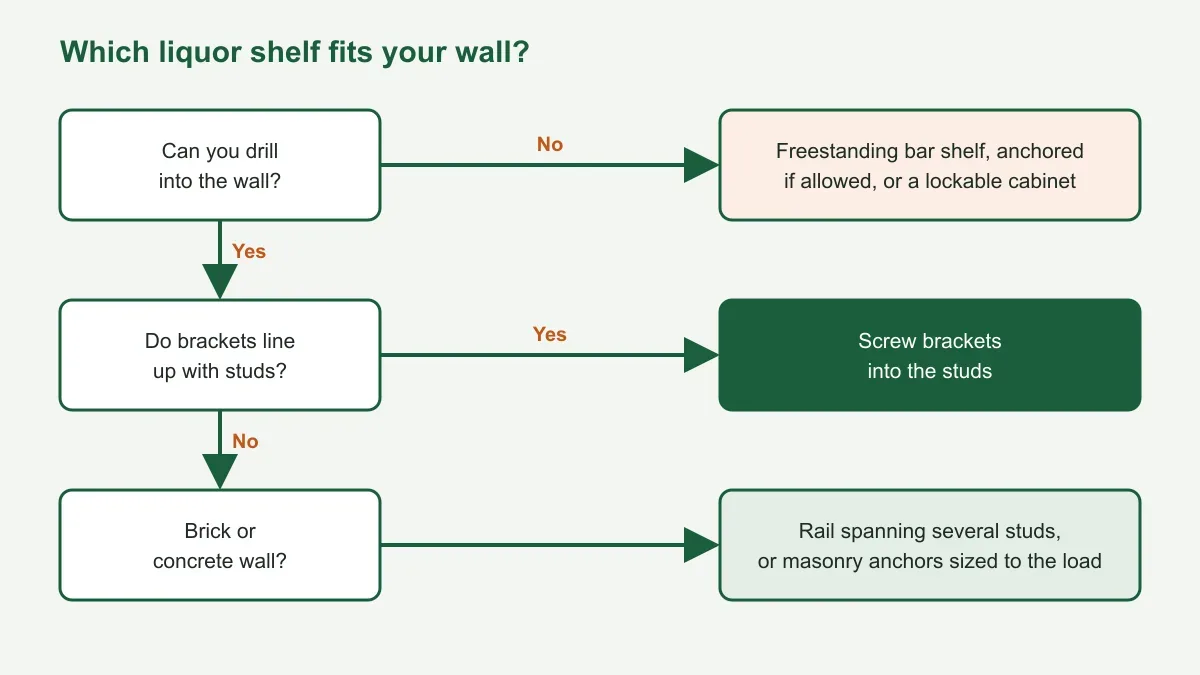
Next, look at the wall. Drywall over wood studs is the most common case in American homes, and the strongest fixing is a screw through each bracket into a stud. A stud finder takes the guesswork out of locating them. Brick and concrete need masonry anchors sized for the load. If the studs do not line up with where you want the shelf, a wall rail that spans several studs lets you place brackets where they are needed.
Finally, think about what happens in an earthquake or a hard knock. Ready.gov's earthquake guidance advises households to secure heavy items, including objects that hang on walls, and to "store heavy and breakable objects on low shelves." A wall of glass bottles is exactly that kind of load, so it deserves solid fixings and a rail even if you do not live in an earthquake zone.
12 Liquor Wall Shelf Ideas That Actually Work
Each idea below solves a slightly different problem. Pick the one that matches your wall, your collection and how often you pour.
- Two solid wood shelves on steel brackets. The classic home bar wall. Thick wood boards on visible brackets carry real weight, and two shelves are usually enough for a small collection plus glasses. Our floating shelf ideas show the lighter version for décor, but for bottles a visible bracket is the safer choice.
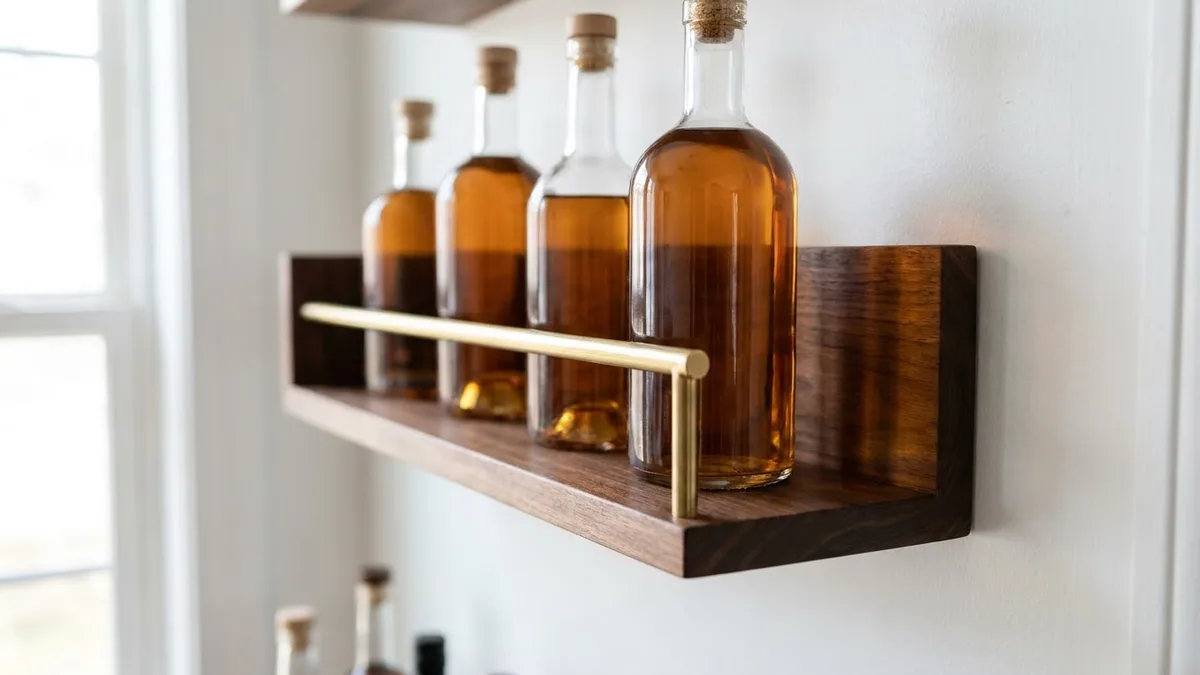
- A shelf with a front guard rail. A slim metal rail or a raised wooden lip along the front edge stops bottles from sliding off when a door slams or someone bumps the wall. It is the single most useful upgrade for any bottle shelf.
- A shelf above a sideboard or buffet. Mount the shelves over furniture you already own, and the top of the sideboard becomes your mixing station. This works well in dining rooms, and our dining room wall shelf ideas cover how to balance the rest of that wall.
- A stepped or tiered shelf. Two or three narrow levels, each set a little higher at the back, let you see every label in a deep collection instead of hiding bottles behind each other.
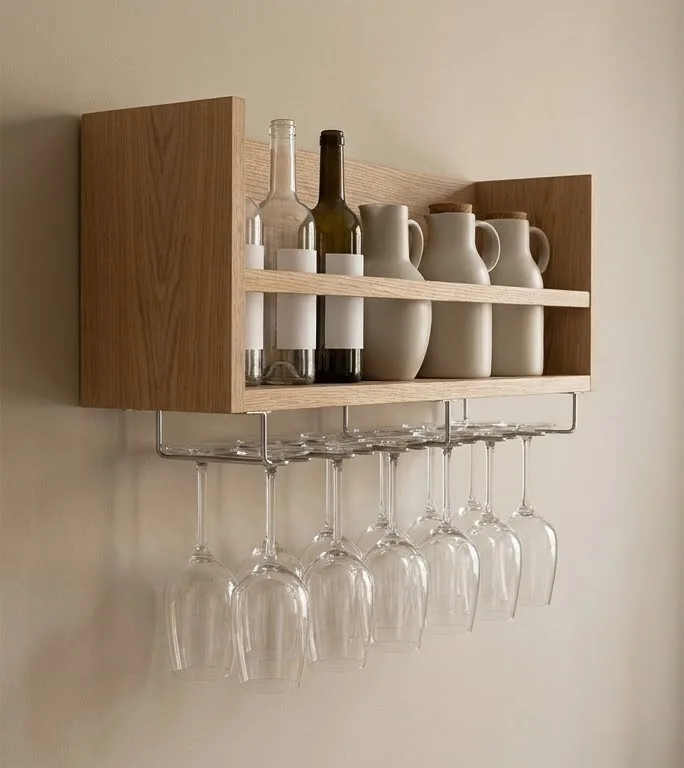
- A shelf with a hanging glass rack underneath. Stemware hangs upside down from rails under the board, while bottles stand on top. One fixing does two jobs, and the glasses stay dust-free on the inside.
- A recessed niche. If you are already opening a wall, a niche between studs gives the cleanest look and keeps bottles out of the walkway. Our guide to recessed wall shelf ideas explains what that kind of project involves.
- A full wall of shelves for a large collection. Shelving that runs across the wall turns a collection into a feature. Plan it like a library, with the strongest fixings and the heaviest bottles at the lower levels. See our wall to wall shelf ideas for layout options.
- A corner shelf. Quarter-round or L-shaped shelves fit a dead corner of a kitchen or living room. They suit a short row of favorites rather than a full collection.
- A lit shelf. A low-heat LED strip under or behind the shelf makes amber and clear bottles glow. Keep the light soft and avoid placing bottles where they get hot.
- A shelf inside a cabinet nook. A shelf set into an alcove between upper cabinets keeps the bar contained and easy to close off visually. This works well alongside the ideas in our kitchen wall shelf ideas guide.
- A pegboard or rail system. Adjustable brackets on a wall rail let you move shelves as the collection changes. It is a practical choice for people who rotate bottles often.
- A high display shelf with a lockable cabinet below. Show off empty or decorative bottles up high, and keep the full ones in a lockable cabinet underneath. It is the best layout for homes with children or frequent young visitors.
Comparing the Main Shelf Types
Most home bars end up with one of a few basic setups. This table compares them on the points that matter most for bottles.
| Shelf type | Best for | Drilling needed | Main watch-out |
|---|---|---|---|
| Wood shelf on visible brackets | Most home bars | Yes, into studs | Check the bracket rating against the full load |
| Shelf with guard rail | Busy rooms, homes with pets | Yes, into studs | Rail height must clear your tallest bottle's shoulder |
| Floating shelf | A few light display bottles | Yes, into studs | Many are rated for décor, not full bottles |
| Rail and bracket system | Collections that change often | Yes, into several studs | Use brackets rated for the load |
| Recessed niche | Remodels | Major work | Needs planning and usually a contractor |
| Freestanding bar shelf | Renters | No | Stability, so anchor it to the wall if allowed |
Height, Depth and Spacing
Height is about comfort and safety. Your everyday bottles should sit roughly between waist and eye level for the people who use the bar most, so nobody lifts a full bottle over their head. Rarely used bottles and display pieces can go higher. Keep the heaviest bottles, such as large formats and full decanters, on the lowest shelf.
Depth is simpler than it looks. Measure the base of your widest bottle and add a little margin, so the bottle stands fully on the board and does not overhang the front edge. A board that is much deeper than you need tempts you to line up bottles two rows deep, and the back row disappears. If you want two rows, a small riser at the back keeps those labels visible.
Spacing between shelves comes from your tallest bottle. Measure it standing up, add enough room to lift it out with your hand around the neck, and set the gap from that. A tall bottle that only fits at an angle is the one most likely to get knocked over. If your collection is mostly short bottles with a few tall ones, give one shelf a larger gap and keep the tall bottles there.
Bottles Upright, Out of the Sun
Store spirit bottles standing up. Wine is often kept on its side to keep a natural cork damp, but spirits are a different case. A strong spirit resting against a cork for a long time can wear it down, and an upright bottle keeps the liquid away from the stopper. A wine rack that holds bottles sideways is a good fit for wine, not for whiskey or gin.
Light and heat matter too. Pick a wall that does not get direct afternoon sun, and keep the shelf away from ovens, radiators and heating vents. A window wall looks lovely in photos, but strong daylight can fade labels and warm the bottles over time. If the best wall gets sun, a shelf with doors or a cabinet below for the bottles you care most about is a sensible compromise.
Where the Glasses Go
A bar wall works best when the glasses live within arm's reach of the bottles. You have three good options. Stemware racks under a shelf hold wine and coupe glasses upside down by their bases. A lower open shelf works for tumblers and rocks glasses, which are sturdy and easy to stack. A closed cabinet keeps fine glassware dust-free if you entertain only now and then.
Keep heavy glassware low, for the same reason as heavy bottles, and avoid stacking delicate stems. A shallow tray on the sideboard below gives you a landing spot for a jigger, a bar spoon and a strainer, so tools do not end up scattered across the shelves.
Safe Installation, Step by Step
A careful install takes an afternoon and saves you from a very expensive crash. Follow these steps, and always follow the instructions that came with your brackets and anchors.
- Weigh one full bottle, multiply by the number per shelf, and add glasses and décor.
- Choose brackets and a shelf with a stated load rating well above that total.
- Find the studs with a stud finder and mark them in pencil.
- Check for hidden pipes and wires with a detector before drilling.
- Mark the shelf height with a level, measured from the floor at both ends.
- Drill pilot holes and screw each bracket into a stud or into anchors made for your wall type.
- Fit the shelf, fix it to the brackets, and add the guard rail or lip.
- Load the shelf gradually, heaviest bottles at the lowest level, and check that nothing flexes.
Ask a handyman if you are unsure about the wall, if the shelf will carry a large collection, or if you plan a full wall of shelving. It is a small cost compared with replacing a broken collection or a damaged floor.
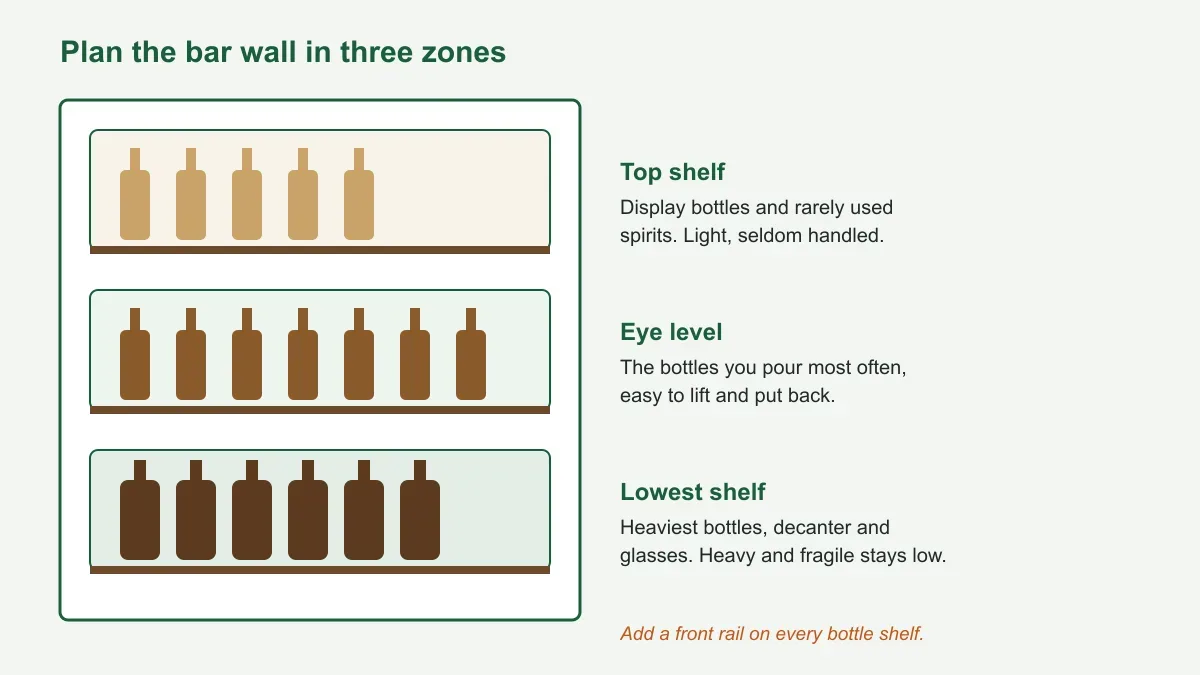
What Goes Where on the Wall
Once the shelves are up, a simple plan keeps the bar easy to use. This table is a starting point you can adapt.
| Zone | What to keep there | Why |
|---|---|---|
| Top shelf | Display bottles, empties with nice labels, rarely used spirits | Looks good, rarely handled |
| Eye-level shelf | The five to eight bottles you pour most | Easy to reach and put back |
| Lower shelf or rail | Glasses, a decanter, heavier bottles | Heavy and fragile items stay low |
| Sideboard top | Tray of tools, ice bucket, a small plant | A safe landing spot while you pour |
| Lockable cabinet | Full bottles in homes with children | Keeps alcohol out of reach |
Homes With Children and Pets
Alcohol is a household poison for small children, and an open shelf at toddler height is an invitation. MedlinePlus explains that drinking a large amount of alcohol causes ethanol poisoning, and that the national Poison Help line (1-800-222-1222) can be reached from anywhere in the United States. Treat a liquor shelf the way you would treat cleaning products.
In practice, that means display shelves go high, full bottles go in a cabinet with a lock or a child-safety latch, and nothing sits on a low shelf a child can pull on. Pets matter too. A cat that likes high places can knock a bottle off a shelf without a rail. A guard rail and a little empty space at each end of the shelf reduce that risk.
Styling Without Clutter
A bar wall looks best when it is edited. Group bottles by type or by color rather than lining up every bottle you own. Leave some breathing room between groups, and add one or two objects that are not bottles, such as a small plant, a framed print or a bowl of citrus on the sideboard. Our indoor plant wall shelf ideas suggest plants that cope well with indoor light.
Repeat a material or a color from the rest of the room so the bar feels built in rather than added on. Black brackets can echo picture frames or light fixtures, and a wood tone can match the dining table. For ideas on balancing shelves with the rest of a wall, see our floating shelf TV wall ideas, which use the same layout rules.
Options for Renters
If your lease does not allow drilling, you still have choices. A freestanding bar shelf or a narrow bookcase can hold bottles on the floor footprint of a small cabinet. Check that it is stable, and ask your landlord whether you may anchor it to the wall with a single anti-tip strap, which is a small hole that is easy to patch. A closed cabinet with a lock suits homes where children visit.
Avoid adhesive hooks, strips and suction shelves for bottles. They are made for light items, and a single failure can drop glass onto the floor. If you are working with a small rental, our guide on how to organize a small apartment has more space-saving ideas that do not involve the walls.
Common Mistakes to Avoid
Most liquor shelf problems come from the same handful of errors. Check your plan against this list.
- Using a decorative floating shelf for full bottles. Hidden brackets are often rated for books and plants.
- Skipping the rail. A bumped wall or a slammed door is enough to slide a bottle off the edge.
- Storing bottles on their side. That suits wine with natural corks, not spirits.
- Choosing the sunniest wall. Direct sun and nearby heat are hard on bottles and labels.
- Putting heavy bottles on the top shelf. Heavy and breakable items belong low.
- Leaving alcohol within a child's reach. Use a lockable cabinet for full bottles.
For more general shelf guidance, our microwave wall shelf ideas article covers brackets and wall types in more detail, and our office wall shelf ideas show how to plan shelves around how a space is actually used.
Frequently Asked Questions
How do you display liquor bottles on a wall?
Use solid shelves fixed into wall studs with brackets rated for the full load, and add a front rail or lip so bottles cannot slide off. Keep the bottles you use most at eye level, glasses nearby, and heavy or fragile pieces on the lowest shelf.
Can floating shelves hold liquor bottles?
Some heavy-duty floating shelves can, but many are rated for décor only. Weigh one full bottle, multiply by the number you plan to store, and compare that total with the shelf's stated rating. A shelf on visible brackets is usually the safer choice.
Should liquor bottles be stored upright or on their side?
Upright. Wine is often stored on its side to keep a natural cork damp, but a strong spirit resting against a cork for a long time can wear it down. Standing bottles up keeps the liquid away from the stopper.
How deep should a liquor shelf be?
Deep enough for the base of your widest bottle to sit fully on the board, with a little margin. Going much deeper tempts you to store bottles two rows deep, which hides the back row. A small riser helps if you want two rows.
How high should a liquor shelf be?
Everyday bottles should sit between waist and eye level for the people who use the bar most, so nobody lifts a full bottle overhead. Display pieces can go higher, and the heaviest bottles belong on the lowest shelf.
How do you stop bottles from falling off a shelf?
Add a front guard rail or a raised lip, leave some space at each end of the shelf, and keep heavy bottles low. Ready.gov advises households to store heavy and breakable objects on low shelves and to secure items that hang on walls.
Where should glasses go on a bar wall?
Hang stemware upside down from rails under a shelf, keep sturdy tumblers on a lower open shelf, and store fine glassware in a closed cabinet if you rarely use it. Keep heavy glassware low and avoid stacking delicate stems.
How do you keep a liquor shelf safe from children?
Keep display shelves high, store full bottles in a cabinet with a lock or a child-safety latch, and never leave alcohol on a low shelf. Alcohol can poison a small child, and the Poison Help line is 1-800-222-1222 in the United States.
Final Thoughts
A good liquor wall shelf comes down to a few simple choices: a real fixing into the wall, a rail along the front, bottles standing upright away from the sun, and heavy pieces kept low. Plan the load before you buy anything, and the rest is styling. Start with two strong shelves and a tray on the sideboard below, and grow the wall as your collection does.
Liked this guide?
Get new organizing guides and the occasional new product by email. No spam, unsubscribe anytime.
Related articles
Explore more articles
- 30+ Best Jewelry Storage Ideas to Keep Your Collection Organized in 2026
- 30+ Best Bathroom Cabinet Ideas to Maximize Every Inch of Your Space in 2026
- 30+ Best Laundry Room Storage Ideas to Maximize Every Inch in 2026
- How to Build DIY Closet Shelves: Step-by-Step Tutorial for a More Organized Home in 2026
- 30+ Best Lego Storage Ideas to Tame the Brick Chaos in 2026
- Spice Rack Organization: The Complete 2026 Guide to a Tidy, Functional Kitchen
- 30+ Best Makeup Organization Ideas to Transform Your Beauty Space in 2026
- 25+ Best Indoor Plant Stand Ideas to Elevate Your Home Decor in 2026