
Office Wall Shelf Ideas: 12 Layouts for a Tidier Workspace
Office wall shelf ideas for home and small offices: 12 layouts, where to place shelves around a desk, how to mount them safely, and no-drill options for renters.
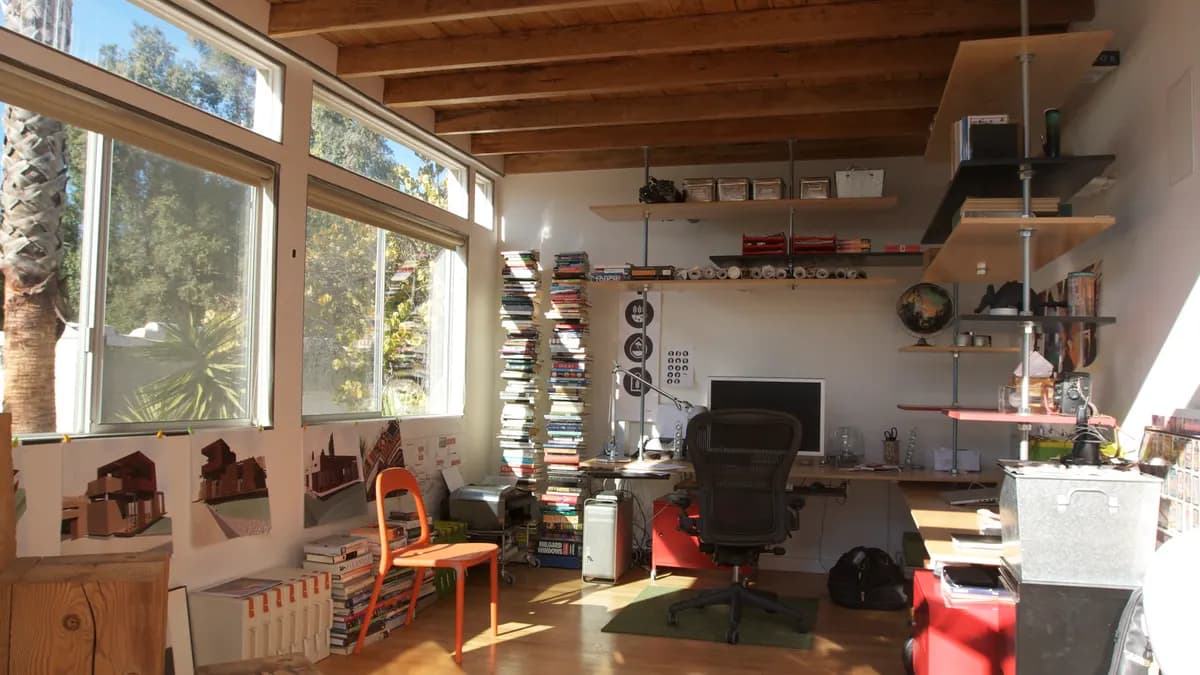
The best office wall shelf ideas put daily items within reach, keep the wall around your monitor open, and hold heavy loads on brackets screwed into studs. A single long shelf above the desk suits most home offices, while staggered shelves add display space and a stacked column works on a narrow wall. Plan the layout around what you actually store, then choose the fixing.
Hero photo credit: Jeremy Levine / Wikimedia Commons, CC BY 2.0, cropped
This guide covers 12 shelf ideas for home and small offices, where to place shelves around a desk, how to choose brackets and fasteners, and what to do when you rent. If you are setting up the whole room, our office organization ideas and home office desk organization guides pair well with this one.
Why Wall Shelves Work So Well in an Office
Wall shelves move storage off the desk without taking any floor space, which is why they suit small offices so well. A desk has a limited surface, and every binder or box on it takes room from your actual work. Moving those items up clears the surface and keeps them visible, so you are less likely to lose them.
Shelves also solve a problem drawers cannot. Items in a closed drawer are easy to forget, while items on a shelf act as a visual reminder. That helps with reference books, current project files and the supplies you run out of. They also give a home office some personality, which matters if you appear on video calls.
The trade-off is that open shelves show everything. A row of mismatched boxes looks untidy right at eye level, so a little discipline goes a long way. Use matching containers for small items, and give each shelf one purpose. Our office supplies organization ideas can help you sort the contents first.
Where to Place Shelves Around a Desk
Good placement starts with how often you use each item. Daily items belong on the desk or within arm's reach, weekly items on a shelf you can reach while seated or by standing up, and rarely used items up high. The goal is to avoid twisting, stretching and getting up over and over.
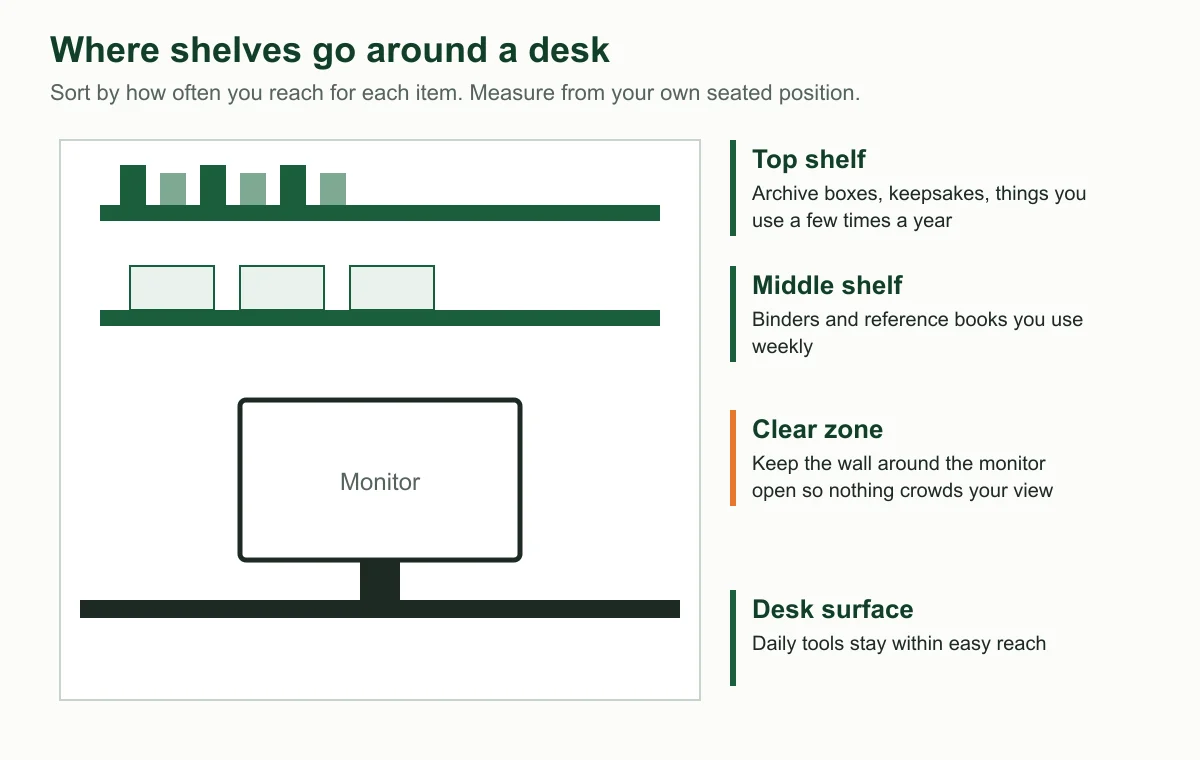
Your monitor sets the lower limit. OSHA's computer workstation guidance says the preferred viewing distance is generally between 20 and 40 inches from the eye to the screen, and that the top of the monitor should be at or slightly below eye level. A shelf placed too low can force the monitor out of that position, so leave a clear zone around it.
Leave enough headroom above the desk that you will not knock your head when you stand up, and allow for a desk lamp or a monitor arm. Since desk and chair heights differ, sit down, reach up and mark the wall with painter's tape before you drill. Tape costs almost nothing and makes it easy to adjust the layout.
| How often you use it | Where it belongs | Examples |
|---|---|---|
| Many times a day | On the desk or in a top drawer | Pens, notebook, charger, headset |
| Weekly | Shelf reachable from your chair or by standing | Current binders, reference books, printer paper |
| Monthly | Higher shelf | Tax folders, spare supplies, manuals |
| A few times a year | Top shelf or a closet | Archive boxes, holiday cards, keepsakes |
Table 1. Shelf placement by frequency of use. Adjust the heights to your own desk, chair and reach.
12 Office Wall Shelf Ideas
These office wall shelf ideas range from one simple board to a full wall system. Choose by the width of your wall and what you plan to store.
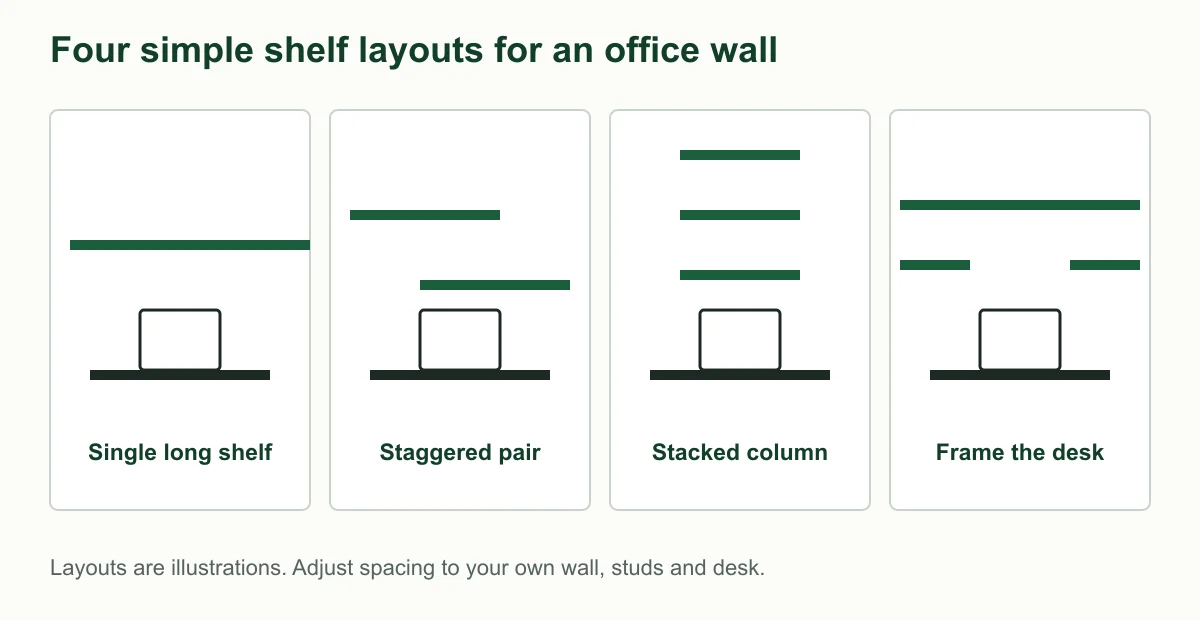
Simple layouts
1. One long shelf above the desk. A single board across the full desk width holds books and boxes, and it reads as calm and tidy. It is the best starting point for most rooms.
2. Staggered pair. Two shorter shelves at different heights leave room for tall items and art. This works well over a small desk.
3. Stacked column. Three or four short shelves in a line suit a narrow wall beside a door or a window.
4. Shelves that frame the desk. Run shelves up both sides of the desk and across the top. It looks built-in and gives a lot of storage, though it needs more planning.
Space-saving layouts
5. Corner shelves. A corner is often wasted in a small office. Our corner shelf ideas show how L-shaped or wedge shelves can use it.
6. Shelf above the door. A high shelf over a doorway holds archive boxes without touching your work area.
7. Picture ledges. These narrow shelves have a small lip and hold notebooks, framed photos and printed references with their faces out.
8. Floating shelves. Hidden brackets give a clean look. They are best for lighter items, so check the rating. See our floating shelf ideas for styles.
Working shelves and systems
9. Adjustable track shelving. Metal uprights with brackets let you move shelves as your needs change. Since each upright can be fixed to a stud, this suits heavy binders and book collections. Our wall-to-wall shelf ideas show how far a system can go.
10. Pole and shelf systems. The hero photo above shows shelves carried on poles between floor and ceiling. A design like this can suit a big studio, but it depends on a solid ceiling and on careful installation.
11. Pegboard with shelves. Perforated hardboard has evenly spaced holes that accept pegs and hooks, so you can mix small shelves, cups and hooks. It suits craft rooms and workshop-style offices.

Photo credit: Brian Kay.jpeg) / Wikimedia Commons, CC BY 3.0, cropped
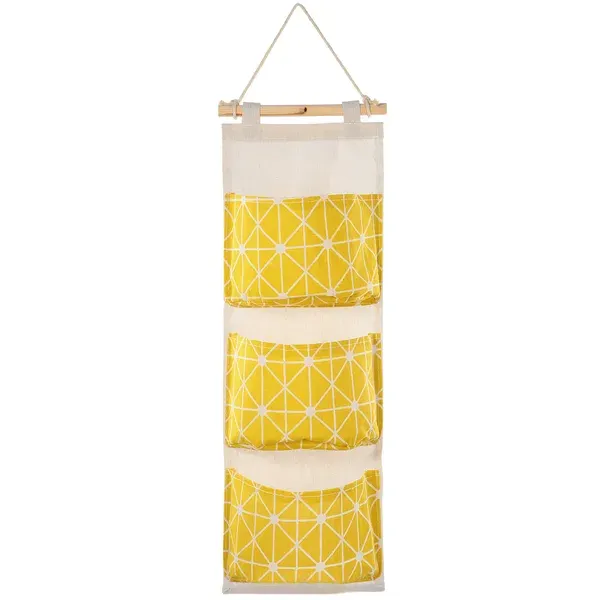
12. Fabric wall pockets. For lightweight papers and mail, a hanging wall organizer with three pockets needs very little wall space. It adds a soft splash of color near the desk too.
How to Hang Office Shelves Safely
Safe mounting depends on the wall, the load and the fastener, so check all three before you start. Paper is heavier than it looks, and a full shelf of binders can weigh far more than a few decorative objects.
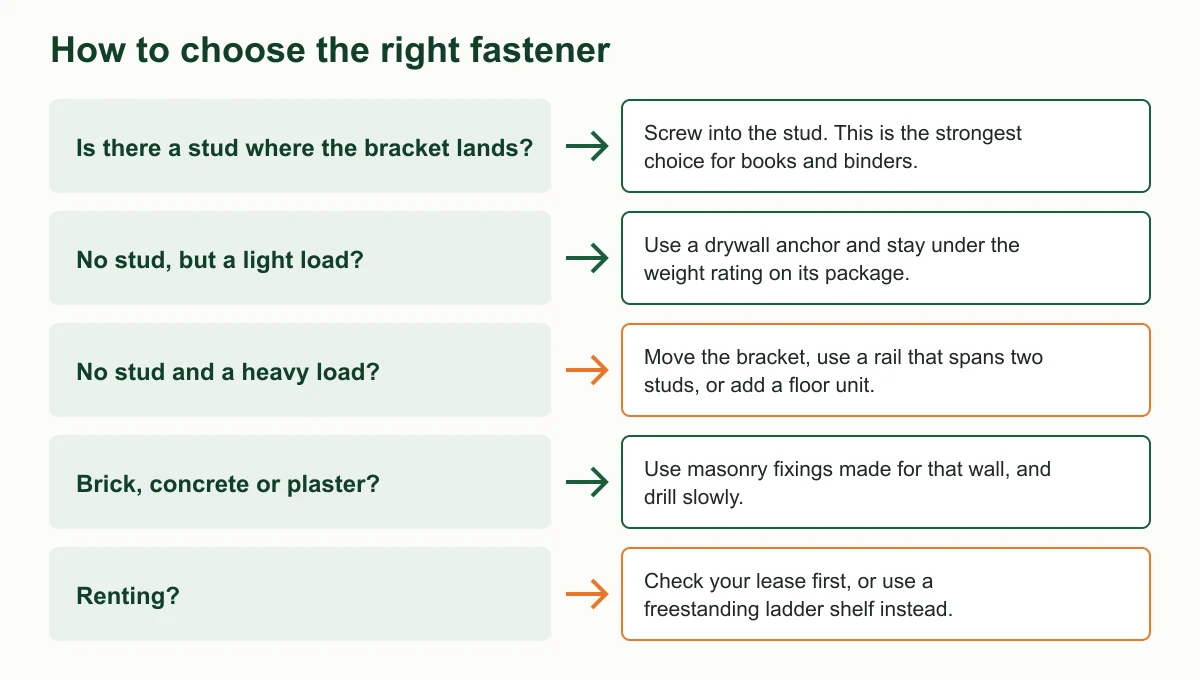
In most U.S. homes, wall studs are usually placed 16 inches apart on center, and sometimes 12 or 24 inches apart. A stud finder will locate them, and a bracket screwed into a stud is the strongest option on drywall. Where a bracket cannot land on a stud, a drywall anchor can hold lighter loads, but you must follow the rating on the package, because capacity changes with the anchor type and the wall.
Before you drill, check for hidden wires and pipes, especially above outlets and switches. Use a level, mark every hole, and fix the first bracket before you measure the second. Load the shelf gradually, with the heaviest items near the brackets. Never go above the bracket maker's rating.
| What you are storing | Suggested setup | Good to know |
|---|---|---|
| Binders and books | Brackets fixed into studs, or track shelving | Full shelves get heavy, so spread the load |
| Boxes of paper | Lower shelf or a floor unit | Keep heavy boxes below shoulder height |
| Plants and small decor | Floating shelf or ledge within its rating | Use a saucer to protect the shelf from water |
| Printer or other equipment | A sturdy cart or floor stand instead of a wall shelf | Vibration and weight favor the floor |
| Light papers and mail | Wall pockets or a ledge | Keep them near the desk to prevent piles |
Table 2. Matching the shelf setup to the load. Always check the rating of your brackets and anchors.
Check the shelf again after the first week of use. Screws can settle, and a bracket that starts to pull away from the wall is a warning sign. If anything moves, unload the shelf and refix it before you put the items back. A level placed on the board will also reveal any sag early.
Options for Renters and Shared Offices
If you cannot drill, you can still get most of the benefit from a wall shelf. Read your lease or office rules first, since policies on wall holes differ. A ladder shelf that leans on the wall, a freestanding bookcase or a desk hutch can all add vertical storage with no holes.
Tall freestanding pieces still need to be stable. The Anchor It program from the U.S. Consumer Product Safety Commission explains how anchoring prevents furniture tip-overs, so ask your landlord about fixing tall units. Lighter options include adhesive hooks for small items and a monitor riser, which creates a storage spot under the screen without touching the wall.
Keeping Shelves Tidy
A shelf stays useful only when its contents stay under control. Give each shelf one job, label boxes on the visible side, and leave some gaps so the wall does not feel crowded. A simple mix of closed boxes for small items and open space for books looks tidier than rows of loose supplies.
- Do a monthly sweep. Remove anything that has drifted onto a shelf and does not belong there.
- Use one box color. Matching containers make shelves look calm on video calls.
- Stand files upright. Magazine holders stop paper from slumping and make labels easy to read.
- Hide cables. Run charging cables behind the desk rather than across shelves. Our desk cable management ideas show simple fixes.
- Keep your desk clear. A mesh desk drawer organizer keeps small tools off the shelves and out of sight.
Think about your video background as well. If you take calls from this desk, sit down, open your camera and check what appears behind you before you style the shelves. A few books, one plant and one personal item usually look better than a packed display. Our desk setup ideas and small home office organization ideas offer more ways to finish the room.
Frequently Asked Questions
How high should a shelf be above a desk?
There is no single number, because desks, chairs and monitors differ. Sit at the desk, keep the monitor at a comfortable height, and mark a line with painter's tape that clears your head when you stand and leaves the screen area open.
How deep should office wall shelves be?
Measure what you plan to store. Add a little depth beyond your largest binder or book, and avoid shelves so deep that they crowd the desk or hit your head.
Can drywall anchors hold a shelf of books?
Books are heavy, so screwing brackets into studs is the safer choice. Anchors are better for lighter loads, and you should stay within the rating printed on the package.
What are the best wall shelves for a small office?
A single long shelf, a stacked column on a narrow wall, or corner shelves all work well. Pick the one that keeps your desk clear without crowding the monitor.
How do I add shelves without drilling?
Use a leaning ladder shelf, a freestanding bookcase, a desk hutch or light adhesive hooks. Check your lease first, and make sure tall pieces are stable.
How do I style office shelves for video calls?
Keep it simple: a few books, one plant and one personal item. Open your camera to check the view, and move anything distracting out of the frame.
Should office shelves be open or closed?
Open shelves keep items visible and easy to reach. Closed boxes on open shelves give you both, because small items stay hidden while the room still feels light.
Where should I put a printer in a small office?
A sturdy cart or a floor stand is usually better than a wall shelf, because printers are heavy and they vibrate. A cart with a shelf can store paper as well.
Conclusion: Plan the Wall Before You Drill
The best office wall shelf is the one that matches what you store and how you work. Sort items by how often you use them, keep the monitor area clear, and pick a layout that fits the wall. Fix heavy shelves into studs, stay within the rating on anything else, and use tape to test the position first. Start with one long shelf above the desk, live with it for a week, and add more only if you need them. For a broader wall plan, see our guide to home office wall organization systems.
Liked this guide?
Get new organizing guides and the occasional new product by email. No spam, unsubscribe anytime.
Related articles
Explore more articles
- How to Keep Your Kitchen Organized: Complete 2026 Guide
- Home Storage Solutions: 2026 Guide to a Tidy Home
- How to Organize a Small House: Complete 2026 Guide
- Garage Storage Solutions Near Me: Complete Review & Buying Guide for 2026
- Kitchen Dish Rack Guide: Best Kitchen Plate Storage Solutions for 2026
- Eid Table Setting Tips for Small Homes
- Laundry Room Organization: Simple Guide for Small Homes
- Sustainable Living: Eco-Friendly Home Organization