
Men's Closet Organization Ideas: A Practical System for Shirts, Shoes and Gear
Men's closet organization ideas that actually last: zoning by daily use, hanger and shelf rules, shoe and accessory storage, small closet fixes and a simple upkeep routine.
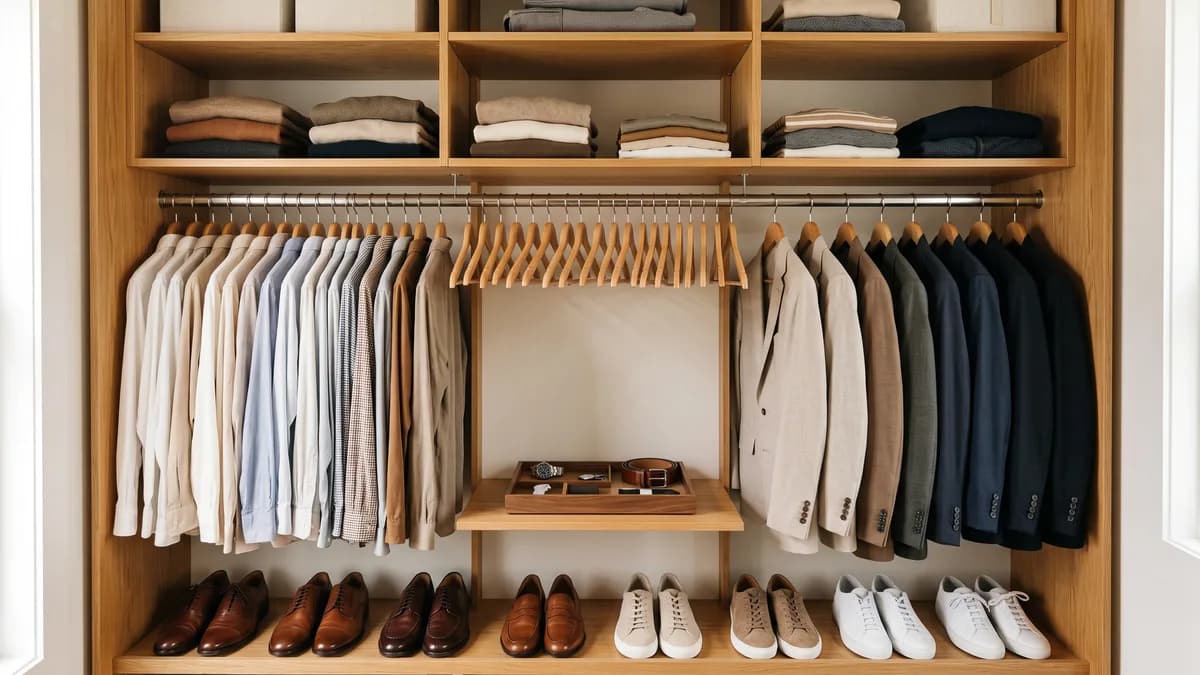
Most men's closets fail in the same way. A handful of shirts get worn every week, everything else slowly migrates to the back, and the floor turns into a mix of sneakers, gym bags and a suit that has not seen daylight since the last wedding. The good news is that men's closet organization ideas do not need to be complicated. A wardrobe that is built around a smaller number of repeat pieces is actually easier to organize than a large, varied one, because the system can be simple and visual.
This guide walks through a complete approach: how to edit what you own, how to zone the closet by how often you reach for things, which hangers and shelves work best for shirts, trousers and knitwear, and how to store shoes, watches, belts and bags so they stay visible. We also cover fixes for small reach-in closets and shared closets, plus a short weekly routine that keeps the whole thing from sliding back into chaos. If you are starting from zero, our guide on how to organize your closet covers the general method, and this article applies it specifically to a men's wardrobe.
Start With an Honest Edit
Organizing clothes you never wear only means you store clutter more neatly. Before buying a single hanger, pull everything out of the closet and sort it into three piles: wear regularly, wear occasionally for a specific purpose, and do not wear. The third pile is usually bigger than expected. Shirts that pull across the shoulders, trousers from a previous job, and shoes that hurt after an hour all belong there.
A useful test for each item is to ask whether you would buy it again today at full price. If the honest answer is no, it is taking up space that a piece you actually like could use. Items in good condition can be donated or sold, and anything worn out can be recycled where textile recycling is available in your area.
The occasional pile matters too. A suit, formal shoes, ski gear and a heavy winter coat all have a place, but they do not need prime real estate. Setting them aside now makes the next step, zoning, much easier. For a broader look at letting go of things around the house, see our guide on how to declutter your home, which uses the same keep, store and release logic.
Many men find that the edit naturally points toward a capsule approach: a tight set of neutral shirts, two or three pairs of trousers, a couple of jackets and shoes that work with all of them. Our capsule wardrobe for men guide goes deeper into building that kind of wardrobe, and it pairs very well with the closet system below.
Zone the Closet by How Often You Use Things
The single most effective idea in any closet is to give the best space to the things you use most. In a typical closet, the best space is the section of hanging rod and shelving between roughly shoulder and hip height, directly in front of the door. Top shelves and the far corners are harder to reach, so they suit seasonal and occasional items.
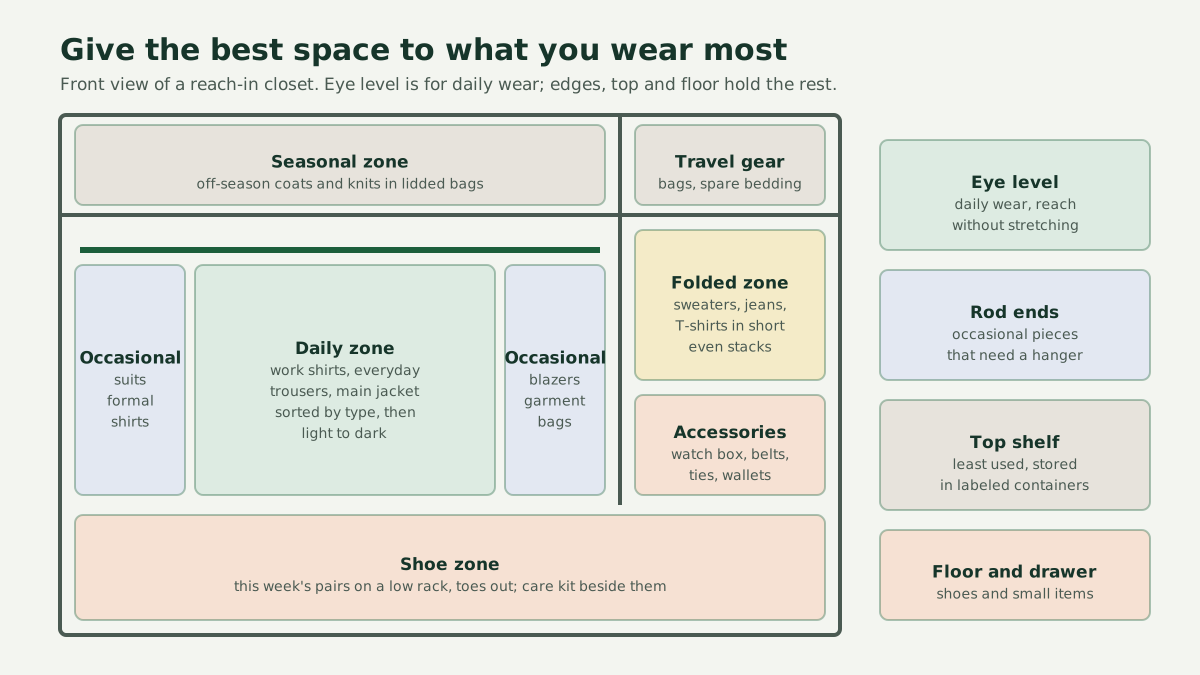
A simple zone plan for a men's closet looks like this:
- Daily zone: work shirts, everyday trousers and the jacket you wear most, hung at eye level in the middle of the rod.
- Folded zone: T-shirts, sweaters and jeans on shelves or in drawers within easy reach.
- Shoe zone: the shoes you wear this week on a low rack or the closet floor, toes facing out.
- Accessory zone: watches, belts, ties and wallets in a shallow tray or box at waist height.
- Occasional zone: suits, formal shirts and travel gear at the ends of the rod or on a high shelf.
- Seasonal zone: off-season coats and knitwear in lidded bags on the top shelf or under the bed.
The point is not to follow this exactly but to decide on purpose where each category lives. Once every category has an address, putting things away takes seconds, and it becomes obvious when one zone is overflowing.
Hanging Rules for Shirts, Trousers and Jackets
Matching slim hangers are one of the cheapest upgrades you can make. They take less space than bulky plastic or wire hangers, keep shoulders at the same height so the rod looks tidy, and stop shirts from sliding off. Wooden hangers with shaped shoulders are best for jackets and blazers because they support the shape of the shoulders over time.
Hang shirts facing the same direction and sort them in a consistent order. Two orders work well for men's wardrobes: by type (dress shirts, casual button-downs, polos, overshirts) or by color from light to dark. Sorting by color makes it easier to see when you own five near-identical blue shirts, which is useful information the next time you shop.
Trousers can either hang full length from clip hangers or fold over a bar hanger. Folding over a bar saves height, which leaves space underneath for a shoe rack or a set of drawers. Jeans and chinos that do not wrinkle much are fine folded on a shelf, which frees the rod for shirts.
Leave some breathing room. A rod packed so tightly that you have to wrestle a shirt out will wrinkle everything and discourage you from putting things back. A practical rule is to keep enough space to slide hangers apart with one hand. If the rod is full, that is a signal to edit, not to squeeze.
Shelves and Drawers for Folded Clothes
Knitwear should be folded, not hung, because hangers stretch the shoulders of sweaters over time. Fold sweaters, T-shirts and sweatshirts to the same width so the stacks line up, and keep each stack short enough that pulling one item out does not topple the rest. Shelf dividers help stacks stay upright on deep shelves.
For T-shirts, underwear, socks and gym clothes, drawers are better than shelves because small items collapse into a pile on an open shelf. File folding, where items stand on edge in the drawer like files in a cabinet, lets you see every T-shirt at a glance instead of only the top one. Our dresser drawer organization ideas show how to set up dividers for this.
If the closet has no built-in drawers, a freestanding wardrobe unit or a set of fabric bins on a shelf can fill the gap. Label the front of each bin so you are not opening three to find socks. The same idea works for a closet with only one long rod: add a hanging shelf organizer under the shorter garments and use it for folded basics.
| Item | Best storage | Why |
|---|---|---|
| Dress shirts | Slim hangers, eye level | Stay pressed and visible |
| Blazers and jackets | Wooden shaped hangers | Support the shoulder shape |
| Sweaters | Folded on a shelf | Hangers stretch knit shoulders |
| Jeans and chinos | Folded or bar hanger | Save rod space |
| T-shirts and gym wear | File-folded in drawers | See every item at once |
| Off-season coats | Lidded bags, top shelf | Protected from dust |
Shoe Storage That Keeps Pairs Visible
Shoes are often the messiest part of a men's closet because they pile up on the floor. The fix is to give every pair you wear regularly a defined spot. A low two or three tier rack at the bottom of the closet works well, and it lets you slide trousers or long coats above it. Store shoes with the toes facing out, or alternate heel and toe, to fit more pairs on each shelf.
Separate shoes by use. Everyday sneakers and work shoes belong in the most accessible spot, while dress shoes, hiking boots and sandals can sit higher or in a box. If you own more shoes than the closet can hold, a compartment box that slides under the bed keeps off-season pairs out of the way. Our ideas for shoe storage in a small closet cover more layouts.
Keep a shoe horn, a brush and a small tin of polish in the same zone. When the care tools live next to the shoes, a quick wipe actually happens, and leather shoes last noticeably longer.
Accessories: Watches, Belts, Ties and Wallets
Small accessories are easy to lose in a closet because they end up in jacket pockets or on top of the dresser. Giving them a dedicated home is one of the most satisfying men's closet organization ideas, because the result is visible every morning.
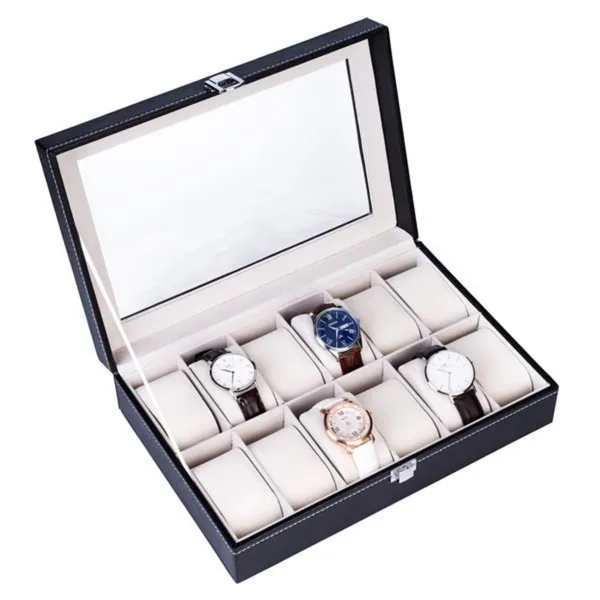
Watches are best kept in a box with individual cushioned slots so they do not scratch each other. Our 12-Slot Watch Box with Clear Lid has two rows of six cushions and a window lid, so you can choose a watch without opening anything. It measures 11.81 x 7.87 x 3.15 in., which fits on most closet shelves or the top of a dresser.
Belts can be rolled and stored upright in a shallow drawer divider, or hung from a belt hook on the closet wall or door. Ties hang neatly on a dedicated tie hanger, or they can be rolled into a drawer insert, which also prevents creasing. Wallets, sunglasses and keys you only use for special occasions can share a small tray so you are not hunting for cufflinks before an event.
A good rule for accessories is one container per category. When the watch box is full, the belt hooks are full and the tie rack is full, you have a clear visual cap that stops the collection from spreading into every drawer.
Seasonal and Occasional Storage
Off-season clothes take up a surprising share of closet space. Rotating them out twice a year frees the rod and shelves for what you wear now. Heavy coats, wool sweaters and thermal layers can go into lidded storage bags on the top shelf, under the bed or in a guest room closet.
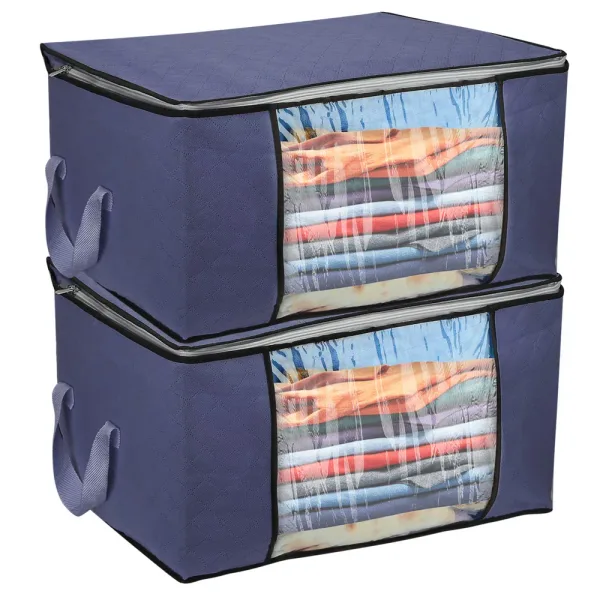
Look for bags with a window or a clear label so you can see what is inside without unpacking. Our 90L Clothes Storage Bags come as a set of two, each 23.6 x 15.7 x 13.8 in., with a clear front panel, a zippered lid and side handles, and they fold flat when empty. Make sure clothes are clean and fully dry before storing them, because stored stains and moisture are hard to fix later.
Suits and formal wear deserve a garment bag, especially if they are worn only a few times a year. A breathable fabric bag keeps dust off while letting air circulate. Hang suits at the end of the rod so they do not get crushed by daily shirts.
Ideas for Small and Shared Closets
A small reach-in closet needs vertical thinking. Add a second rod below the first for shirts and folded trousers, since neither needs full height. Use the back of the door for belts, ties or a slim shoe organizer if the door swings. A shelf above the rod is often underused, so fill it with labeled bins for seasonal items.
When there is simply not enough closet, a freestanding wardrobe can add a full second zone. A covered unit keeps dust off clothes stored in a spare room or basement.
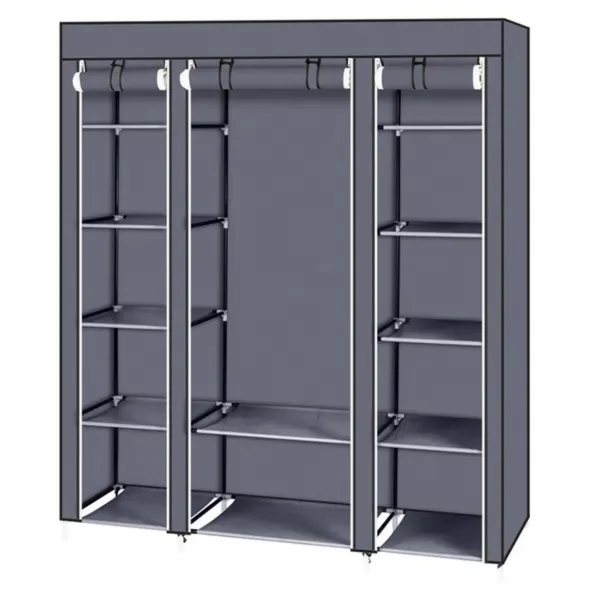
Our Portable Closet Wardrobe with Cover measures 58 x 17 x 68.9 in. assembled, with 12 shelves around a central hanging rod and a zippered fabric cover. It is a practical way to give one person in a shared bedroom a complete closet of his own.
In a shared closet, split the rod clearly rather than mixing. Each person gets a defined section and shelves above it, with hangers in different colors if that helps. Shared items such as luggage or bedding go in the neutral zone at the top. For more space-saving ideas, our small space clothing storage ideas and very small closet organization ideas are worth a look.
Lighting, Mirrors and the Finishing Touches
A closet that is easy to see into is easier to keep tidy. Battery or plug-in LED strip lights under the top shelf make dark corners usable and help you tell navy from black in the morning. Motion-activated lights switch on when the door opens, which is handy if your hands are full.
A full-length mirror on the inside of the closet door or on a nearby wall makes the space function as a dressing area, so you are not carrying clothes across the house to check an outfit. A small valet hook or stand is useful too. It gives tomorrow's outfit, or a jacket you plan to wear again, a home that is not the back of a chair.
Finally, consider a laundry hamper near the closet. When the hamper is close, worn clothes go straight into it instead of onto the floor. Our guide to closet storage and organization ideas covers more finishing details like hooks, labels and lighting.
A Five-Minute Weekly Routine
Even the best closet system drifts without a little maintenance. A short weekly reset keeps it working:
- Return strays: hang or fold anything that ended up on the bed, chair or floor.
- Check the daily zone: move anything you have not worn in a month toward the occasional zone.
- Reset shoes: put pairs back on the rack and wipe off anything muddy.
- Empty pockets: move receipts, coins and keys out of jackets and into their trays.
- Note gaps: jot down anything you are missing or need to replace, so shopping is deliberate.
Twice a year, when the seasons change, do a larger rotation: swap seasonal clothes, edit anything you did not wear, and wash or dry clean items before storing them. Pairing the closet routine with a broader bedroom organization habit keeps the whole room calm.
Related Products from Sesoris
If you want to turn this guide into a real setup, start with the 12-Slot Watch Box with Clear Lid for accessories and the 90L Clothes Storage Bags for seasonal rotation. For a second closet zone, the Portable Closet Wardrobe with Cover adds hanging space and shelves. You can browse more options in our Home & Decor collection.
Our practical rule: choose one product that solves the main clutter problem first, then add supporting organizers only when the daily routine is already clear.
Frequently Asked Questions About Men's Closet Organization Ideas
Q: How should a man organize his closet?
Start by editing out anything you do not wear, then zone the closet by frequency of use. Put daily shirts and trousers at eye level, folded knitwear on shelves, shoes on a low rack, accessories in a tray or box and seasonal items on the top shelf.
Q: Should men's shirts be organized by color or by type?
Both work. Sorting by type (dress shirts, casual shirts, polos) is fastest when you dress for a specific occasion, while sorting light to dark makes duplicates obvious. Many people sort by type first and by color within each type.
Q: Is it better to hang or fold sweaters?
Fold them. Hangers tend to stretch the shoulders of knitwear over time. Fold sweaters to the same width and keep stacks short so they stay stable on the shelf.
Q: How can I store shoes in a small men's closet?
Use a low two or three tier rack under hanging shirts, store pairs toe out or alternating heel and toe, and move off-season or occasional pairs into a compartment box under the bed or on a high shelf.
Q: What is the best way to store watches in a closet?
Keep watches in a box with individual cushioned slots so they do not scratch each other. A clear lid lets you choose one without opening the box, and a shelf at waist height keeps it easy to reach.
Q: How do I organize a closet shared with a partner?
Divide the rod and shelves into clearly defined sections rather than mixing clothes, give shared items like luggage and bedding the top shelf, and use different hanger colors if that helps everyone stay in their own zone.
Q: How often should I declutter my closet?
A quick weekly reset keeps things tidy, and a larger edit twice a year, usually when you swap seasonal clothes, is enough to stop the closet from filling up with things you no longer wear.
Q: What should go on the top shelf of a closet?
Items you use least often: off-season clothes in lidded bags, formal accessories, travel bags and spare bedding. Label containers on the front so you can find things without pulling everything down.
Conclusion: A Closet Built Around What You Actually Wear
The best men's closet organization ideas all point in the same direction: own fewer things you love, give the best space to what you wear most, and give every category a clear address. Slim matching hangers, folded knitwear, a proper shoe rack and a home for accessories do most of the work, and seasonal storage keeps the daily zone clear.
Start with the edit this weekend, set up the zones, and add organizers only where a real gap remains. If you want to keep going, our guides to small walk-in closet ideas and modular closet organization are good next steps.
Liked this guide?
Get new organizing guides and the occasional new product by email. No spam, unsubscribe anytime.
Related articles
Explore more articles
- 30+ Best Laundry Room Storage Ideas to Maximize Every Inch in 2026
- 35+ Best Floating Shelf Ideas to Transform Every Room in Your Home in 2026
- DIY Shelves: How to Build Beautiful, Functional Shelves on Any Budget in 2026
- Under-Bed Storage Ideas for Dorm Rooms
- 25+ Best Indoor Plant Stand Ideas to Elevate Your Home Decor in 2026
- 25+ Best Kids Book Storage Ideas to Create a Tidy, Reading-Friendly Space in 2026
- 25+ Best Work From Home Desk Setup Ideas to Build a Productive Workspace in 2026
- 40+ Best Home Storage Ideas to Organize Every Room in 2026