
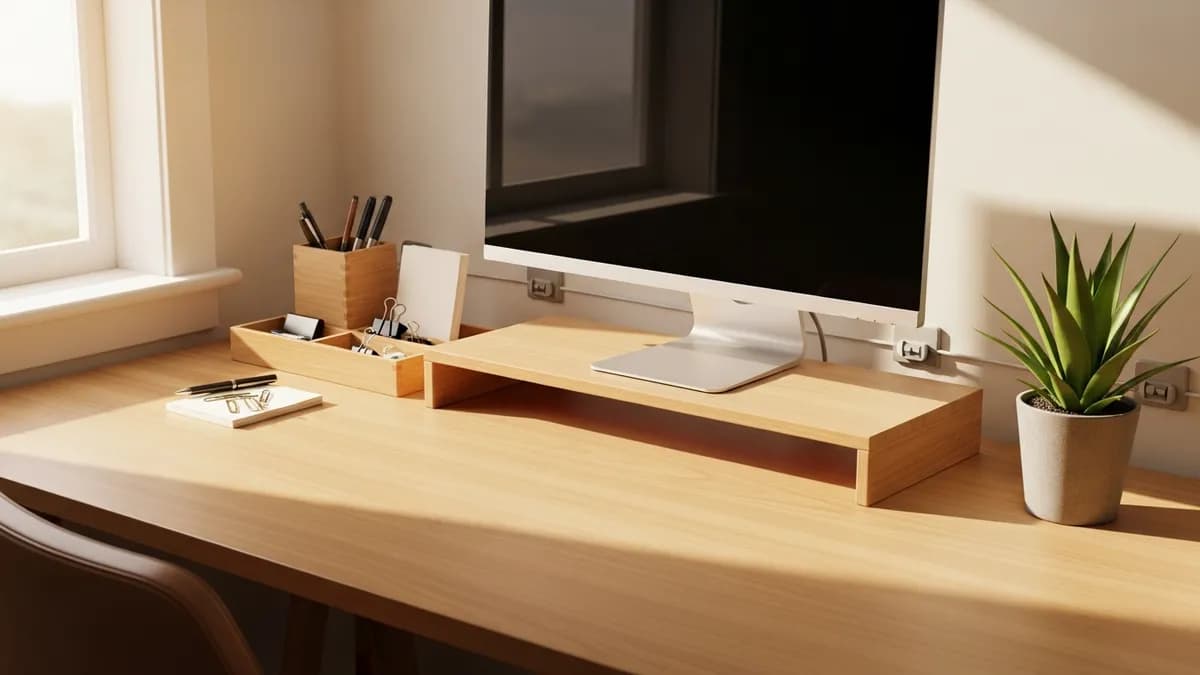
Home Office Desk Organization: 20+ Smart Tips to Build a Productive Workspace in 2026
If you work from home, you already know how quickly a desk can go from pristine to completely buried in papers, chargers, sticky notes, and random items that somehow end up living there permanently. Home office desk organization is one of the most impactful changes you can make to your day-to-day productivity and mental clarity. A well-organized desk is not just about aesthetics. It directly affects how focused you feel, how fast you can find what you need, and how much you actually enjoy sitting down to work each day. In this guide, I am breaking down everything you need to know to transform your workspace in 2026, from the best tools and systems to use to the daily habits that keep the clutter from creeping back.
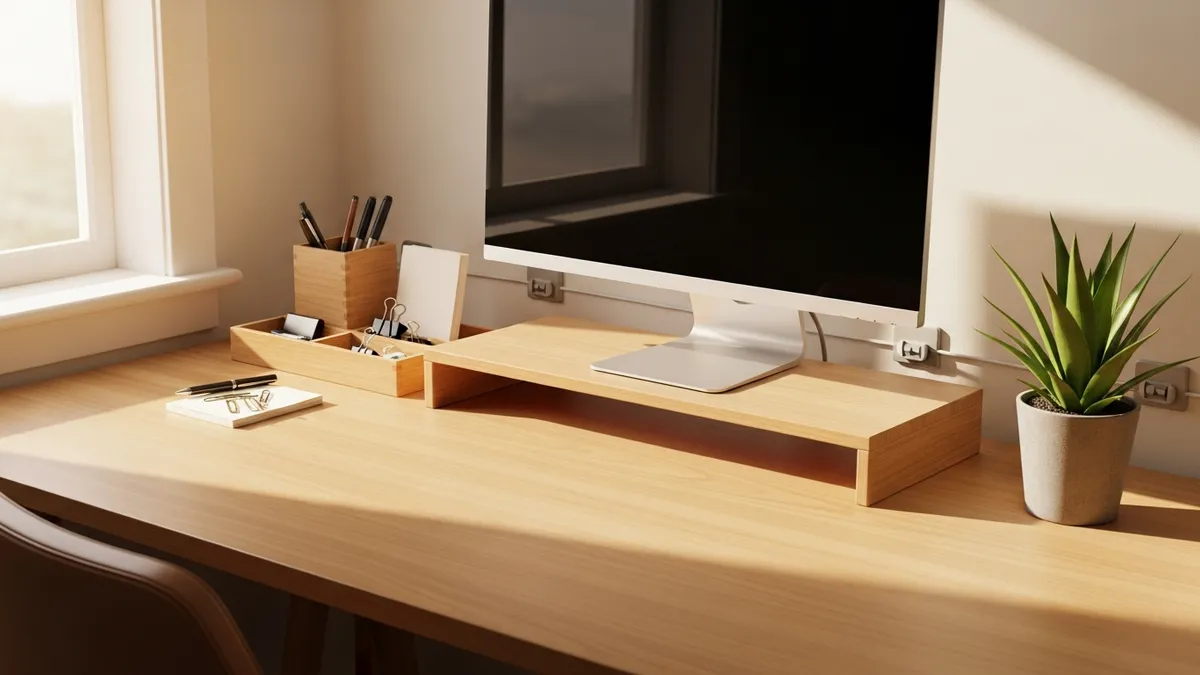
Why Home Office Desk Organization Matters More Than Ever in 2026
Remote work and hybrid schedules have become the new normal for millions of Americans, and that means our home desks are pulling double or even triple duty. Your desk might be your meeting room, your focus zone, your creative space, and your lunch spot all in one. According to Good Housekeeping, a cluttered workspace can contribute to increased stress and difficulty concentrating, which is the last thing you want when you are trying to be productive at home.
The stakes are higher than they were just a few years ago. A disorganized desk used to mean a few misplaced pens. Today, it can mean missing a video call because you cannot find your headset, losing an important document under a pile of mail, or simply feeling so overwhelmed by the visual noise that you avoid sitting down at your desk altogether.
The good news is that home office desk organization does not require a complete renovation or a massive budget. With the right systems and a few smart products, you can build a workspace that genuinely works for you.
Step 1: Declutter Your Desk Before You Organize Anything
The number one mistake people make when trying to organize their home office desk is jumping straight into buying organizers without first clearing out the clutter. If you organize around junk, you just end up with neatly stored junk. So the very first step is a thorough declutter.
Here is how I approach it:
- Clear everything off the desk surface completely. Everything. Place it all on the floor or a nearby table so you are starting with a blank slate.
- Sort into three piles: keep, relocate, and toss. Be honest with yourself. If you have not touched something in 30 days, it probably does not belong on your desk.
- Toss or recycle aggressively. Old receipts, dried-out pens, duplicate cables for devices you no longer own, expired sticky notes pads, and random paper scraps are all fair game.
- Relocate items that belong elsewhere. Books go back to the bookshelf, dishes go to the kitchen, and personal items go to their proper home in another room.
- Wipe down the entire desk surface before anything goes back. A clean surface gives you a fresh psychological start.
Once you have decluttered, you are ready to design your organization system. Think about the zones on your desk. What do you use every single day? What do you use occasionally? What just needs to be accessible but not necessarily on the surface? These answers will guide every product and decision you make going forward.
For more decluttering strategies that apply beyond just your desk, check out our home decluttering tips guide for a full room-by-room approach.
The Best Home Office Desk Organization Tools and Products
Now that your desk is clear, it is time to build your system. The best desk organization setups rely on a combination of surface organizers, drawer solutions, wall storage, and cable management. Here is a breakdown of each category.
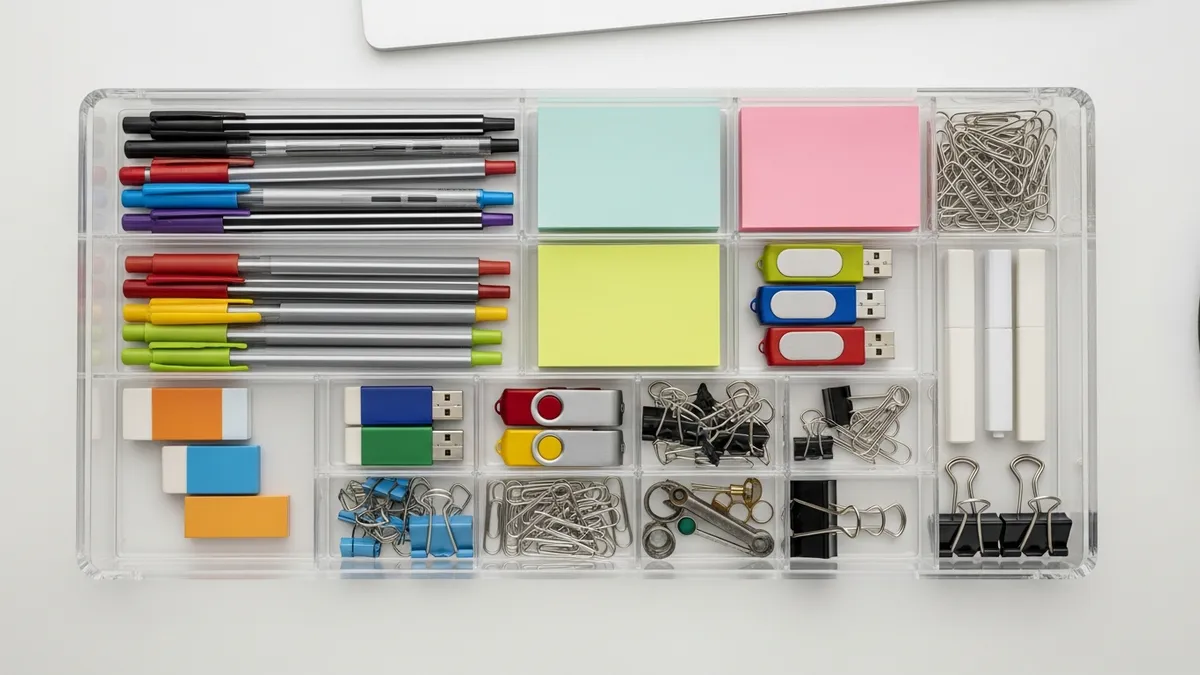
Desktop Organizers and Trays
A good desktop organizer is the backbone of any well-run desk. Look for one that fits your specific workflow rather than just buying the biggest or most elaborate one you can find.
- Mesh desktop organizers are lightweight, affordable, and easy to clean. They typically include compartments for pens, scissors, sticky notes, and small notepads.
- Bamboo desk organizers add warmth and a natural feel to your workspace. They tend to be sturdier and have a more elevated look that suits minimalist or Scandinavian-style home offices.
- Desktop file trays are essential if you deal with physical paperwork. A two-tier or three-tier tray keeps incoming, active, and outgoing documents separated and visible.
- All-in-one desktop organizer sets bundle a pen holder, paper tray, drawer unit, and phone stand into one coordinated system. These are great for smaller desks where visual consistency matters.
When choosing a desktop organizer, measure your available surface space before buying. A standard desk is about 48 to 60 inches wide and 24 to 30 inches deep, but home office desks vary widely. You want your organizer to complement the space, not overwhelm it.
Drawer Organizers
If your desk has drawers, they are some of the most valuable real estate in your office, and also the easiest to turn into a black hole of random clutter. A simple drawer organizer insert can completely change how functional your drawers are.
- Look for adjustable divider sets that let you customize compartment sizes based on what you store.
- Felt-lined drawer organizers are great for storing items like scissors, USB drives, or anything that might scratch surfaces.
- Shallow drawer trays work well for pens, paper clips, binder clips, and other small supplies.
The key rule for desk drawers is to assign every item a permanent home. If something does not have a designated spot, it will drift to whatever open space it can find, which is usually right on top of your desk.
Monitor Risers and Shelf Accessories
A monitor riser does two things at once. It raises your screen to a healthier eye level and creates usable storage space underneath for a keyboard, notepads, or small trays. According to Good Housekeeping, proper monitor height is a key factor in reducing neck and eye strain during long work sessions.
- Choose a riser with built-in storage drawers for extra functionality.
- Floating wall shelves above the desk can offload books, binders, speakers, or decorative items that take up valuable surface space.
- A small desktop bookend set keeps reference books upright and accessible without letting them topple into your work zone.
Tackling Cable Management for a Cleaner Home Office Desk Setup
Nothing undermines a beautifully organized desk faster than a tangled nest of cables. Cable management is a crucial but often overlooked part of home office desk organization. The moment you tame your cords, the entire desk looks and functions better.
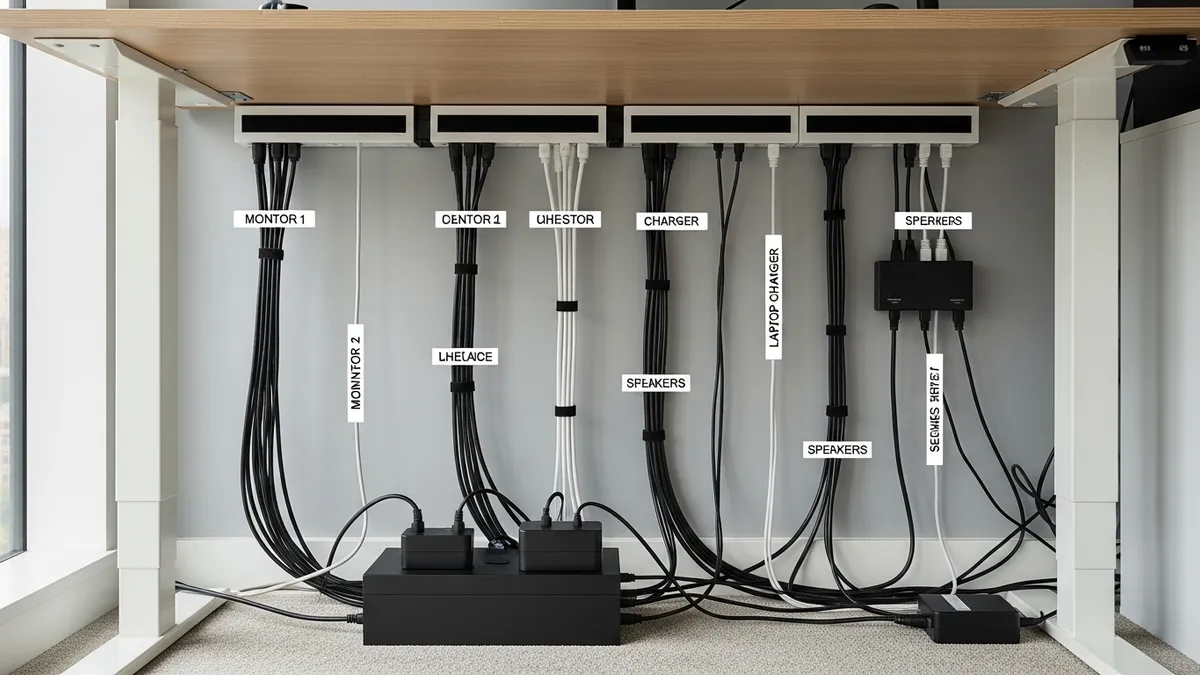
Here are the most effective cable management solutions I recommend in 2026:
- Velcro cable ties are far better than twist ties or zip ties because they are reusable and gentle on cable insulation. Bundle similar cables together and label them so you always know which cord is which.
- Cable management boxes hide your power strip and excess cable length inside a clean-looking box that sits on or under the desk. This instantly eliminates the most visually chaotic part of most home office setups.
- Adhesive cable clips stick to the underside or back edge of the desk and route cables neatly along a fixed path.
- Cable sleeves or raceways bundle multiple cables into a single wrapped tube, great for runs from your desk down to a wall outlet.
- Wireless peripherals are the ultimate cable-cutting solution. Switching to a wireless keyboard, mouse, and headset eliminates several cables entirely.
For a much deeper dive into cable solutions, our cable management guide walks through the full process from start to finish.
A tangle-free desk is not just prettier. It is faster to clean, easier to reconfigure, and less likely to result in accidentally unplugging something critical mid-meeting.
Wall and Vertical Storage: The Secret to a Clear Desk Surface
One of the smartest strategies in home office desk organization is getting things off the desk entirely by moving storage to the wall. Vertical space above and around your desk is often completely wasted, and using it well can dramatically reduce surface clutter.
Pegboards
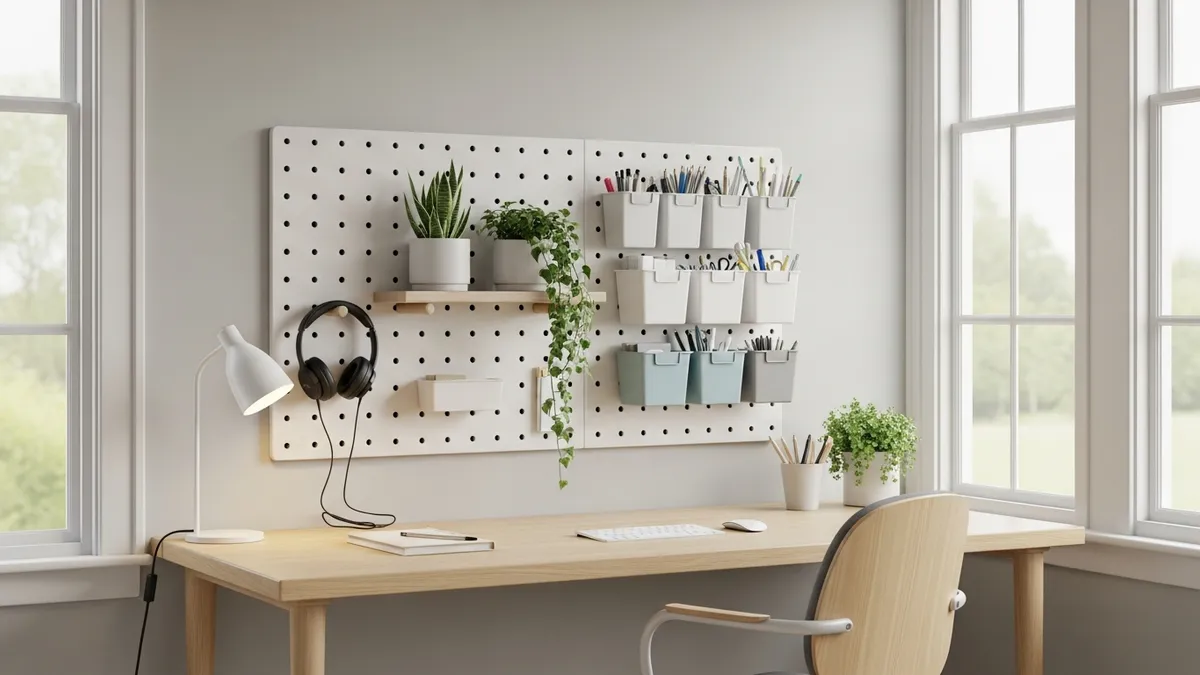
A pegboard mounted on the wall behind your desk is one of the most flexible and affordable wall storage solutions available. You can configure and reconfigure it endlessly with hooks, shelves, bins, and holders to match exactly what you need to store. Hang your headphones, a small whiteboard calendar, a few reference books, your most-used office supplies, and even a small plant.
Pegboards are especially useful for creative professionals who need quick access to tools, art supplies, or tech accessories without digging through drawers.
Floating Shelves
A simple set of floating shelves above the desk keeps frequently referenced books, binders, and decorative items up and out of the way. Keep the bottom shelf at a comfortable reach from your seated position so you are not constantly getting up to grab things.
Magnetic Boards and Corkboards
If you deal with a lot of notes, deadlines, and visual reminders, a magnetic whiteboard or corkboard above the desk is a game-changer. It keeps important information visible without covering your desk in sticky notes.
For broader wall organization ideas that complement your desk setup, browse our home organization office guide for more vertical storage inspiration.
Building a Daily Desk Reset Habit
Even the most beautifully designed home office desk organization system will fall apart without a simple daily maintenance habit. The good news is that maintaining a clean desk takes far less effort than the initial setup. Here is the routine I recommend:
- At the end of every workday, spend 5 minutes resetting your desk. Put every item back in its designated spot. File or toss any papers that landed on the surface during the day.
- Do a quick cable check. Make sure nothing got unplugged accidentally and that cords are still routed neatly.
- Clear your inbox tray. Process, file, or forward any physical paperwork that came in.
- Wipe the desk surface down once a week. Dust and coffee rings are the enemy of a clean workspace.
- Do a monthly mini-audit. Once a month, pull out your drawer organizers and check whether anything has migrated into the wrong spot. Recalibrate as needed.
The 5-minute daily reset is the single most powerful habit for long-term desk organization. It prevents the gradual buildup of clutter that makes the desk feel chaotic again within days of a big cleanup.
For organization habits that extend to your whole home, our minimalist home organization tips are a great companion read.
Personalizing Your Organized Home Office Desk
An organized desk does not have to look sterile or corporate. The best home offices feel personal and inspiring while still being functional. A few well-chosen personal touches can make your workspace a place you actually want to spend time in.
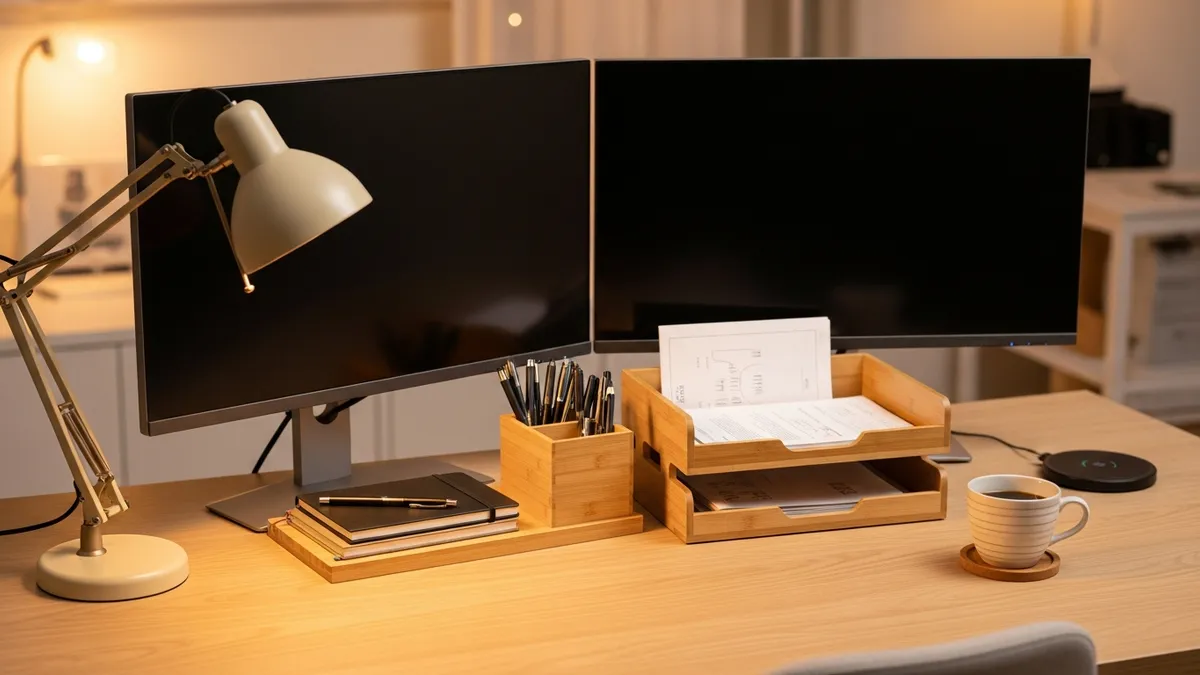
- Add a small plant. Succulents, pothos, or a small snake plant thrive in home offices with limited natural light and require minimal care. Studies consistently link greenery in workspaces with improved mood and reduced stress.
- Choose a desk lamp with warm-to-cool adjustable light. The right lighting makes a huge difference in how comfortable your desk feels for long work sessions.
- Use a coordinated color palette for your organizers. Matching your pen holder, tray, and file box in the same color family creates a cohesive, intentional look even in a small space.
- Add a framed photo or piece of art at eye level nearby, not on the desk surface, to give the space personality without adding clutter.
- A wireless charging pad on the desk surface keeps your phone topped up without adding another cable to manage.
For setup inspiration across different styles and budgets, Pinterest is a fantastic resource for browsing real-world home office desk organization ideas that might spark something for your own space.
You can also explore Houzz's home office design gallery for professionally designed workspace ideas across every style from ultra-minimalist to warm and rustic.
Home Office Desk Organization for Small Spaces
Not everyone has a dedicated home office. Millions of Americans work from a corner of a bedroom, a spot at the kitchen table, or a tiny alcove. Home office desk organization strategies for small spaces require a slightly different approach focused on maximizing every square inch.
- Go vertical immediately. When horizontal surface space is limited, the wall above your desk becomes your best friend. Even two small floating shelves can triple your usable storage.
- Choose a wall-mounted fold-down desk if space is extremely tight. These fold flat against the wall when not in use and open to a full work surface when needed.
- Use the back of a door for a slim over-door organizer holding office supplies, notebooks, or charging cables.
- Opt for compact, stackable organizers rather than large standalone units. A stackable letter tray takes up the same footprint as one tray but offers double the storage.
- Keep your desk surface as minimal as possible. In a small space, only items you use multiple times per day should live on the surface. Everything else goes into a drawer, shelf, or cabinet nearby.
Our small home office organization ideas guide is packed with practical solutions specifically designed for compact workspaces.
Related Products from Sesoris
If you want to turn this guide into a real setup, start with Slide-Out Cabinet Drawer, Black Steel and Stackable Storage Bins, 24 Pack. For broader options, browse the Home & Decor collection so the article journey does not stop at reading only.
Our practical rule: choose one product that solves the main clutter problem first, then add supporting organizers only when the daily workflow is already clear. This keeps the shopping path useful, not pushy.
FAQ: Frequently Asked Questions About Home Office Desk Organization
Q: How do I keep my desk organized when I have a lot of paperwork?
The best approach is a simple inbox-outbox system combined with a weekly filing habit. Use a two or three-tier desktop tray to separate incoming documents, active projects, and items ready to be filed or discarded. Set aside 10 to 15 minutes every Friday to process the tray completely. If you can go digital, scanning and storing documents electronically will reduce paper clutter significantly.
Q: What should I keep on my desk versus in a drawer?
Only items you use at least once every single workday deserve prime desk surface real estate. This typically includes your monitor, keyboard, mouse, a single notepad, your most-used pens, and your phone or charger. Items you use a few times a week like scissors, tape, staplers, or extra pens belong in a drawer where they are easy to reach but not taking up visual space.
Q: What is the best way to organize computer cables on a desk?
Start by identifying every cable you actually need and eliminating any that belong to devices you no longer use. Then route remaining cables along the back or underside of the desk using adhesive cable clips. Bundle cables going in the same direction with velcro ties, and hide excess length and your power strip inside a cable management box. Label cables at both ends with small tags so you always know which is which.
Q: How do I organize a desk with no drawers?
A desk with no drawers relies entirely on surface organizers and wall storage. Invest in a good desktop organizer with multiple compartments, add a monitor riser with built-in storage underneath, mount a pegboard or floating shelves above the desk, and use a small rolling cart beside the desk for supplies that do not fit on the surface. A compact desktop file box can substitute for a file drawer.
Q: How often should I reorganize my desk?
A 5-minute daily reset keeps things manageable on a day-to-day basis. A slightly deeper tidy-up once a week takes care of any drift. A full reorganization, where you pull everything out and reassess the system, is worthwhile every three to six months as your work habits and needs evolve.
Conclusion
A truly productive workspace does not happen by accident. It is the result of intentional home office desk organization, the right tools, a system that matches how you actually work, and simple daily habits that keep everything in its place. Whether you are working with a spacious dedicated home office or carving out a corner in a small apartment, the strategies in this guide will help you build a desk setup that feels calmer, functions better, and makes you genuinely excited to sit down and get to work in 2026.
Ready to take your workspace to the next level? Explore our full range of desk and workspace organization products at Sesoris. From desk organizers and trays to office organization supplies, we have everything you need to build a workspace that truly works for you. Browse our best sellers or check out our new arrivals for the latest workspace organization solutions. Live More Organized.
Weekly Home Tips
Get home organization ideas, product picks, and exclusive deals delivered weekly.
No spam. Unsubscribe anytime.


Explore More Articles
- L-Shaped Kitchen Design: The Most Efficient Layout
- Tips to Keep Your Kid's Room Tidy
- Closet Storage and Organization Ideas That Work
- Best Food Storage Solutions: Complete Guide to Organizing Your Kitchen in 2026
- Aluminum Kitchen Racks: Complete Guide to Durable Kitchen Storage Solutions 2026
- Aluminum Dish Cabinets: Strength Meets Style in Modern Kitchen Storage
- Organization and Cleaning Services vs DIY: Complete Guide to Home Organization Solutions in 2026
- Mini Aluminum Dish Racks: Perfect Space-Saving Solutions 2026