
Best Under-Stair Storage Solutions: Complete 2026 Review & Buying Guide to Reclaim Hidden Space
Discover the best under-stair storage solutions in 2026. Expert reviews, buying tips, and product picks to transform dead space. Shop smarter today!
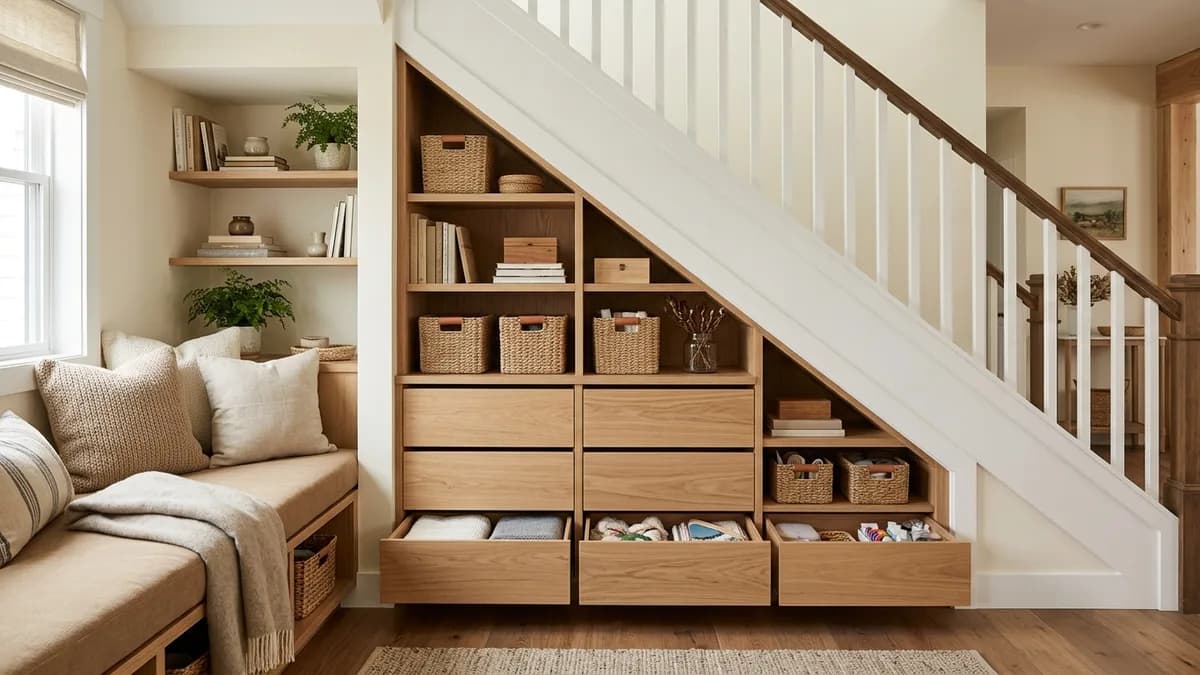
The best under-stair storage solution depends on access and installation constraints: use modular cabinets for a flexible layout, open cubbies for removable bins, or a measured pull-out system when deep storage needs to stay accessible. Choose by actual dimensions, manufacturer load limits, anchoring requirements and total installed cost. This buying guide compares design approaches, not hands-on product tests or verified customer ratings. It is distinct from the companion construction tutorial: use it to choose a system before deciding whether to build one.
Why Under-Stair Storage Solutions Are Worth the Investment in 2026
The space beneath a staircase varies widely in size, accessibility and condition. Measure your own opening rather than relying on an average square-foot figure. A storage solution is worth considering when it solves a specific overflow problem without blocking circulation, service access or safe stair use. It should not be justified by an assumed resale return or an unsupported claim about current home prices.
The good news is that the market for under-stair storage products has matured significantly. You no longer have to commission a custom carpenter to take advantage of this space. There are now modular cabinet systems, flat-pack pull-out drawer units, and freestanding shelving options designed specifically to fit awkward triangular footprints. Whether you rent or own, there is a solution that works for you.
Before you shop, it helps to understand the different types of under-stair storage solutions on the market today, because each one serves a different purpose and fits a different budget.
Types of Under-Stair Storage Solutions: A Comprehensive Review
Understanding the major categories will help you narrow your options quickly. Here is how the main product types stack up in 2026.
1. Built-In Pull-Out Drawer Systems
Pull-out drawer systems are the gold standard for under-stair storage, and the ones reviewed most favorably by homeowners and design professionals alike. These units slide in and out from beneath each individual stair tread, making use of every inch of depth. They work especially well for storing shoes, board games, linens, seasonal clothing, and pantry overflow.
What to look for:
- Full-extension drawer slides rated for at least 75 pounds per drawer
- Solid wood or MDF construction with a moisture-resistant finish
- Soft-close mechanisms to protect drawer faces
- Custom sizing or adjustable configurations to fit your stair run
Price range: Custom built-in pull-out systems typically run from US$800 to US$3,500 depending on the number of drawers and finish quality. Flat-pack modular versions designed to approximate this look start around US$200 to US$600.
Verdict: Best for homeowners who want a permanent, high-value upgrade. If you plan to sell your home within a few years, built-in pull-out systems can add to your home's appeal. For renters, this type is generally not practical.
2. Modular Cabinet Systems
Modular cabinets are freestanding or wall-anchored units that you configure to fill the under-stair footprint. Many flat-pack furniture brands offer units in standard widths that can be combined to fill the space incrementally. Think of it as Tetris with storage.
What to look for:
- Units available in multiple widths (typically 12, 18, and 24 inches wide)
- Height options from 18 to 84 inches to match the slope of your staircase
- Doors with soft-close hinges and adjustable interior shelves
- Wall-anchoring hardware included for tip-over prevention
Plan anti-tip fixings for freestanding furniture according to its instructions. The American Academy of Pediatrics furniture tip-over guide recommends securing furniture and keeping heavier objects low. A 30-inch height is not a general safe threshold, and a low unit is not automatically exempt. Ask the manufacturer or a qualified installer about the correct fixing for the wall and unit.
Price range: Modular under-stair cabinet sets run from US$150 to US$900 depending on the number of units and finish.
Verdict: A great middle ground between fully custom and fully freestanding. You get a built-in look without the custom price tag.
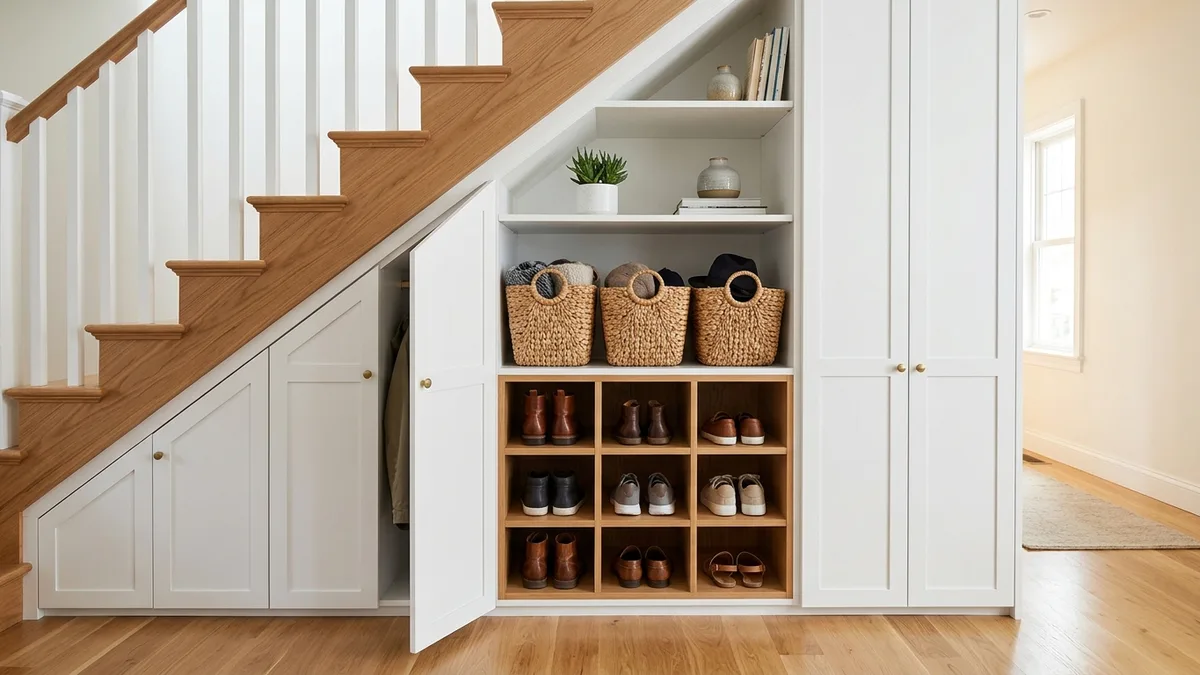
3. Open Shelving and Cubby Units
Open shelving is the most affordable and most flexible under-stair option. These are simple bracket-and-shelf systems or freestanding cubby units positioned within the under-stair void. They work beautifully for displaying decor, organizing labeled bins, and keeping frequently accessed items within reach.
What to look for:
- Adjustable shelf heights to accommodate the sloping ceiling
- Weight ratings appropriate for your intended use (at least 30 pounds per shelf for general storage)
- Matching baskets, bins, or boxes to keep items contained
Price range: Open shelving units start as low as US$40 and scale to US$300 for higher-quality systems.
Verdict: Best for renters or anyone who wants a quick, low-commitment transformation. Pair with labeled storage bins for a clean, organized look.
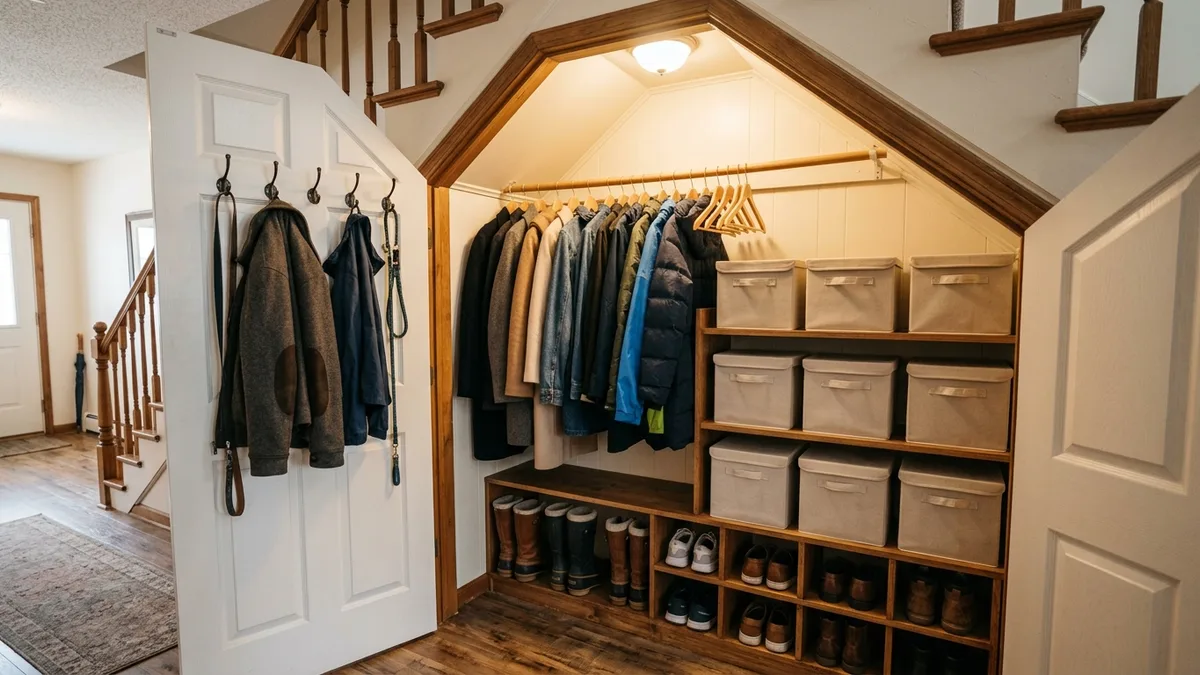
4. Under-Stair Closet Conversions
If your under-stair space already has a door or if you are willing to add one, converting the cavity into a proper closet is one of the most versatile approaches. An under-stair closet can function as a coat closet, a pantry, a cleaning supply station, or a small utility room.
Key products to include inside:
- A single hanging rod for coats and jackets
- Door-mounted hooks and organizers
- A shoe rack or boot tray at the base
- Adjustable shelves on the upper portion for bins and boxes
Price range: Converting an existing open under-stair space into a functional closet typically costs US$100 to US$500 in materials, depending on whether you add drywall, a door, or just interior fittings.
Verdict: Outstanding value. A well-organized under-stair closet is one of the most practical home upgrades you can make for under US$500. Check out our detailed guide to cleaning closet organization for stocking tips.
5. Pull-Out Pantry Inserts
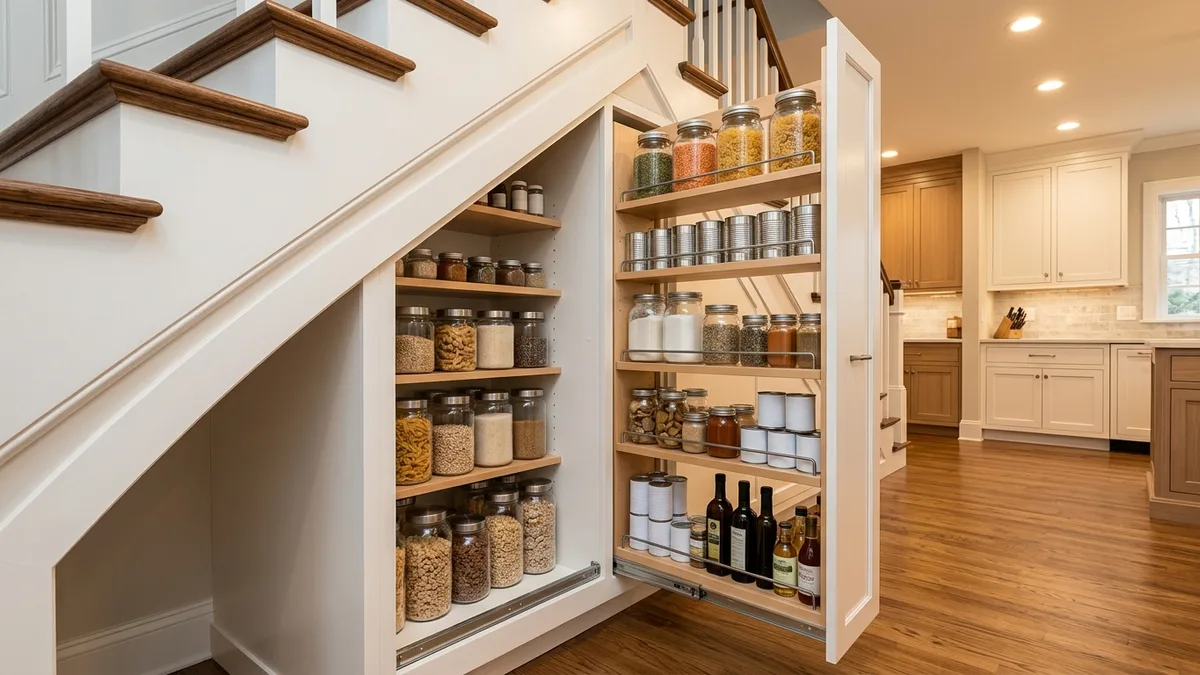
For homes where the under-stair space is adjacent to the kitchen, a pull-out pantry is a dream upgrade. Tall, narrow pull-out pantry columns on full-extension slides can hold dozens of canned goods, spice jars, snack packs, and dry goods, all accessible without rummaging through a deep cabinet.
What to look for:
- Column widths between 6 and 18 inches to fit into stair risers
- Full-extension slides rated for at least 100 pounds
- Adjustable shelf depths to accommodate various container sizes
Price range: Pull-out pantry inserts range from US$80 for a single column to US$400 for a multi-column system.
Verdict: A fantastic space saver for small kitchens. Pair them with airtight food storage containers to keep pantry staples fresh and organized.
What to Measure Before You Buy Any Under-Stair Storage Solution
One of the most common complaints in product reviews for under-stair storage systems is that buyers did not measure carefully enough before purchasing. Here is the exact measurement checklist we recommend:
- Total width of the under-stair opening from side wall to side wall at the base
- Depth of the space from the front opening to the back wall at the deepest point
- Ceiling height at the tallest point (usually at the back, near the newel post)
- Ceiling height at the shallowest point (usually at the front, near the stair's end)
- Angle of the stair slope if you plan to install angled shelving
- Location of any electrical outlets, plumbing pipes, or support posts inside the space
Bring these measurements to any home improvement store or furniture retailer before committing to a purchase. Most modular systems list maximum height and depth requirements on their product pages.
Pro tip: Use painter's tape on the floor to mark out the footprint of any cabinet or shelving unit you are considering. This simple trick lets you visualize exactly how much floor space the unit will consume before you buy.
Reviewing the Best Under-Stair Storage Products Available in 2026
This comparison is an editorial evaluation of storage designs, not a laboratory test, an aggregated review score or a summary of verified buyer feedback. The criteria are measurable fit, ease of access, installation constraints, cleaning access and documented load ratings. Any price bands below are illustrative planning allowances, not checked 2026 offers; obtain a current quote before buying.
Best for Families: Deep Pull-Out Toy and Game Storage
For families, deep pull-out drawers can separate toys and games if the mechanism is suited to the intended use. Start with the actual objects to store, then compare internal drawer dimensions, handle access and the manufacturer safety instructions. Soft-close hardware does not make a drawer childproof or remove the need for anti-tip precautions.
Features to compare:
- Smooth, quiet slide action under load
- Easy-grip drawer pulls sized for small hands
- Documented finish information and any claimed certification verified with its issuer
For more family-friendly storage ideas, browse our kids room organization ideas and playroom storage ideas guides.
Best for Renters: Freestanding Cubby and Bin Systems
Renters should compare removable bins and manufacturer-approved modular layouts before buying. Do not stack independent cubby units unless the manufacturer explicitly permits that configuration and supplies the required connections. If the unit requires wall anchoring, ask the landlord for permission rather than assuming that a freestanding or no-drill label makes it safe.
Features to compare:
- Tools-free assembly
- Stackable design with anti-slip connectors
- Comes with matching fabric or wicker bins
Best for Small Homes: Built-In Combination Units
When this cavity is a main storage zone, combining open shelves, closed cabinets and hanging space lets you assign separate areas to different belongings. This is a layout option, not evidence that combination units outperform other products. Choose only the zones that suit the items you actually keep, and reserve clearance for doors and drawers.
Features to compare:
- At least one section with a door to hide clutter
- Open shelves at eye level for frequently accessed items
- A full-height section (at least 48 inches) for hanging coats or longer items
Best for Home Offices: Under-Stair Desk Nooks
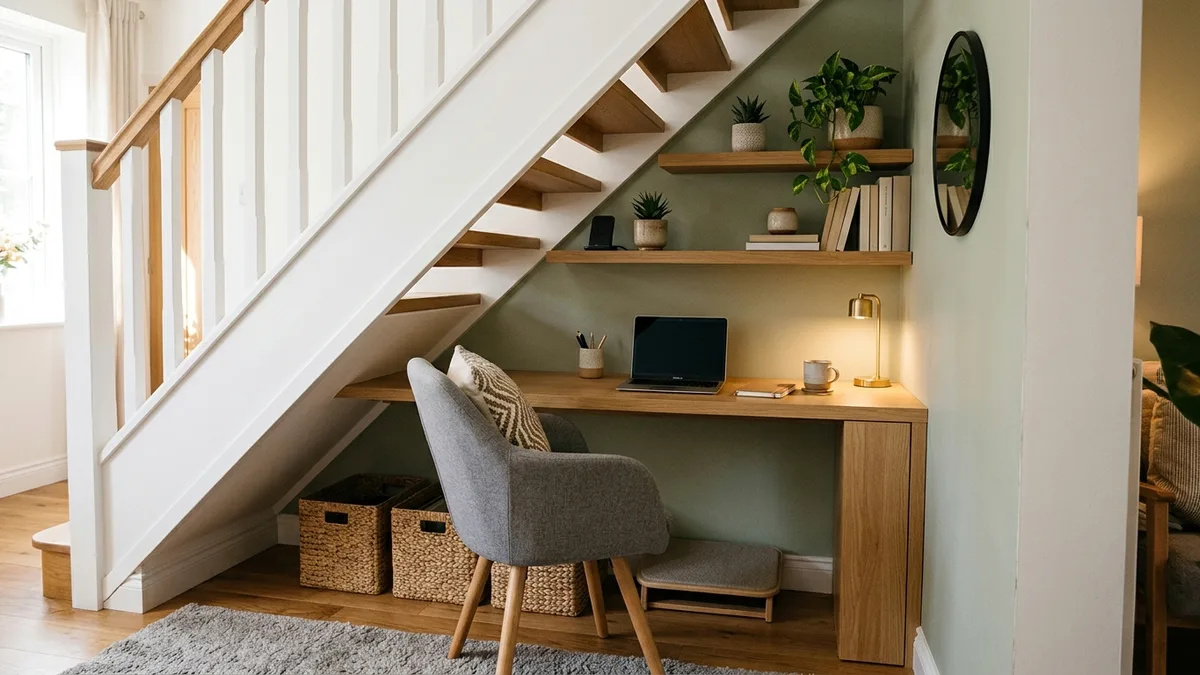
One of the biggest under-stair storage trends in 2026 is converting the space into a compact home office. A floating desk surface mounted at 30 inches high, flanked by floating shelves and a rolling file cabinet tucked underneath, creates a surprisingly functional workspace. This configuration pairs beautifully with cable management ideas to keep cords hidden.
What the best under-stair desk nooks include:
- A desk surface at least 24 inches deep and 36 inches wide
- Floating shelves above the desk for books, binders, and decor
- A compact task chair that tucks fully under the desk when not in use
- A pegboard or magnetic board on the back wall for organizing supplies
For more workspace inspiration, visit our home office desk organization guide.
Materials Guide: Which Under-Stair Storage Materials Last the Longest
The material your under-stair storage system is made from directly affects how long it will last, especially in areas prone to humidity or heavy use.
Solid Wood
Solid wood systems (oak, maple, birch) are the most durable and aesthetically premium option. They handle weight and daily use exceptionally well. The downside is cost, which typically starts at US$500 and rises quickly for custom work. Solid wood is also sensitive to extreme humidity, so avoid it in under-stair spaces that back up against exterior walls with poor insulation.
MDF (Medium-Density Fiberboard) with Laminate
MDF is the most common material for flat-pack under-stair storage systems. It is smooth, takes paint and laminate well, and is more affordable than solid wood. The key limitation is moisture sensitivity: MDF swells and warps if it gets wet repeatedly. A laminate or thermofoil coating adds meaningful protection. Avoid MDF in basements with known humidity issues.
Plywood
Plywood is a strong, moisture-resistant middle ground. Cabinet-grade plywood with a hardwood veneer is an excellent choice for built-in under-stair projects. It holds screws better than MDF and resists warping in humid conditions. Many custom cabinet builders prefer it for under-stair work precisely because of these properties.
Metal Wire and Steel
Wire shelving and steel frame systems are the most affordable and the most breathable option. They are ideal for under-stair spaces that will store shoes, sporting equipment, or cleaning supplies, things that benefit from airflow. The downside is that they are not the most visually polished, so they work best inside a closed closet rather than an open under-stair display area.
Installation Tips: What Every Under-Stair Storage Project Needs to Get Right
Even the best-reviewed product can underperform if it is not installed correctly. Here are the most critical installation considerations for 2026 under-stair storage projects.
Lighting Makes the Difference
The under-stair area is naturally dark. Battery-powered LED puck lights or plug-in LED strip lights installed along the interior ceiling or shelf edges transform the usability of the space dramatically. Look for lights with motion sensors so they activate automatically when you open a door or pull out a drawer.
Flooring Should Be Durable
If the under-stair floor is raw subfloor, add a durable, easy-to-clean surface before installing your storage system. Peel-and-stick vinyl plank flooring works well and costs as little as US$1.50 per square foot. This small upgrade makes the space feel finished and protects the subfloor from moisture and scuffs.
Ventilation Matters for Closed Spaces
If you are installing a fully enclosed under-stair closet, particularly one that will store shoes or cleaning products, adding a small louvered vent at the top and bottom of the door improves airflow. This helps prevent odors and moisture buildup, which are common complaints in sealed under-stair closets.
Anchor Everything Properly
Follow the product instructions for anchoring and use fixings appropriate to the wall construction. The AAP anti-tip guidance explains why securing furniture matters, including when children may climb or open multiple drawers. No single furniture height or generic screw size makes every installation safe. If the mounting surface is unknown, consult an installer before loading the unit.
How to Style Your Under-Stair Storage for Maximum Visual Impact
Functionality comes first, but consistent finishes and clearly labeled containers can make the layout easier to understand. The following styling ideas are editorial suggestions, not claims attributed to a generic design-gallery homepage.
- Use a consistent color palette. Paint the interior of the under-stair space the same color as your trim or a complementary accent color. This makes the storage look intentional rather than improvised.
- Label everything. Labeled bins and baskets are not just functional - they signal organization and make the space look curated. Use consistent label holders or a label maker for a polished result. See our label organizer guide for ideas.
- Mix open and closed storage. Keep decorative items and frequently accessed items on open shelves. Hide bulky, mismatched, or seasonal items behind cabinet doors.
- Add a small rug or mat. A runner or small accent rug at the base of the under-stair storage zone anchors the space and adds warmth.
- Use matching containers. Wicker baskets, fabric bins, or clear acrylic boxes in the same size and color family instantly elevate the look of open shelving.
Budget Breakdown: Under-Stair Storage at Every Price Point
One of the most useful things a review guide can do is help you understand exactly what each budget tier buys you in 2026.
Under US$200 (Renter-Friendly, Minimal Commitment):
At this budget, you are looking at freestanding cubby units, wire shelving, open bracket-and-board shelves, and fabric bins. You will not get a custom look, but you will absolutely get a functional, organized space. This tier is ideal for renters and anyone testing whether the under-stair space will be useful before committing to something more permanent.
US$200 to US$600 (Modular, Semi-Permanent):
This range opens up flat-pack cabinet systems with doors, pull-out pantry inserts, and modular cubby configurations. You can achieve a near-built-in look with patience and careful measuring. Many homeowners in this budget tier also add LED lighting and matching baskets to complete the look.
US$600 to US$2,000 (Custom-Adjacent, High Impact):
At this budget, you can commission semi-custom cabinetry from local cabinet shops, purchase professional pull-out drawer systems, or hire a handyperson to install a built-in closet conversion. The results are hard to distinguish from a fully custom build.
US$2,000 and Above (Fully Custom):
Custom cabinetry, integrated lighting and professional installation require an itemized quote. Ask what the quote includes: measuring, materials, hardware, finishing, electrical work where needed and installation. Do not assume a bespoke design increases resale value or that a broad budget band predicts the final cost.
Moisture Check Before Choosing Materials
Check the cavity for dampness or signs of a leak before ordering enclosed storage. The EPA guide to mold and moisture in the home advises fixing water problems rather than simply covering the affected surface. A ventilated cabinet may be easier to inspect, but ventilation, laminate or a fresh paint finish is not a substitute for correcting the moisture source. Obtain product-specific guidance for materials used in damp locations.
Related Products from Sesoris
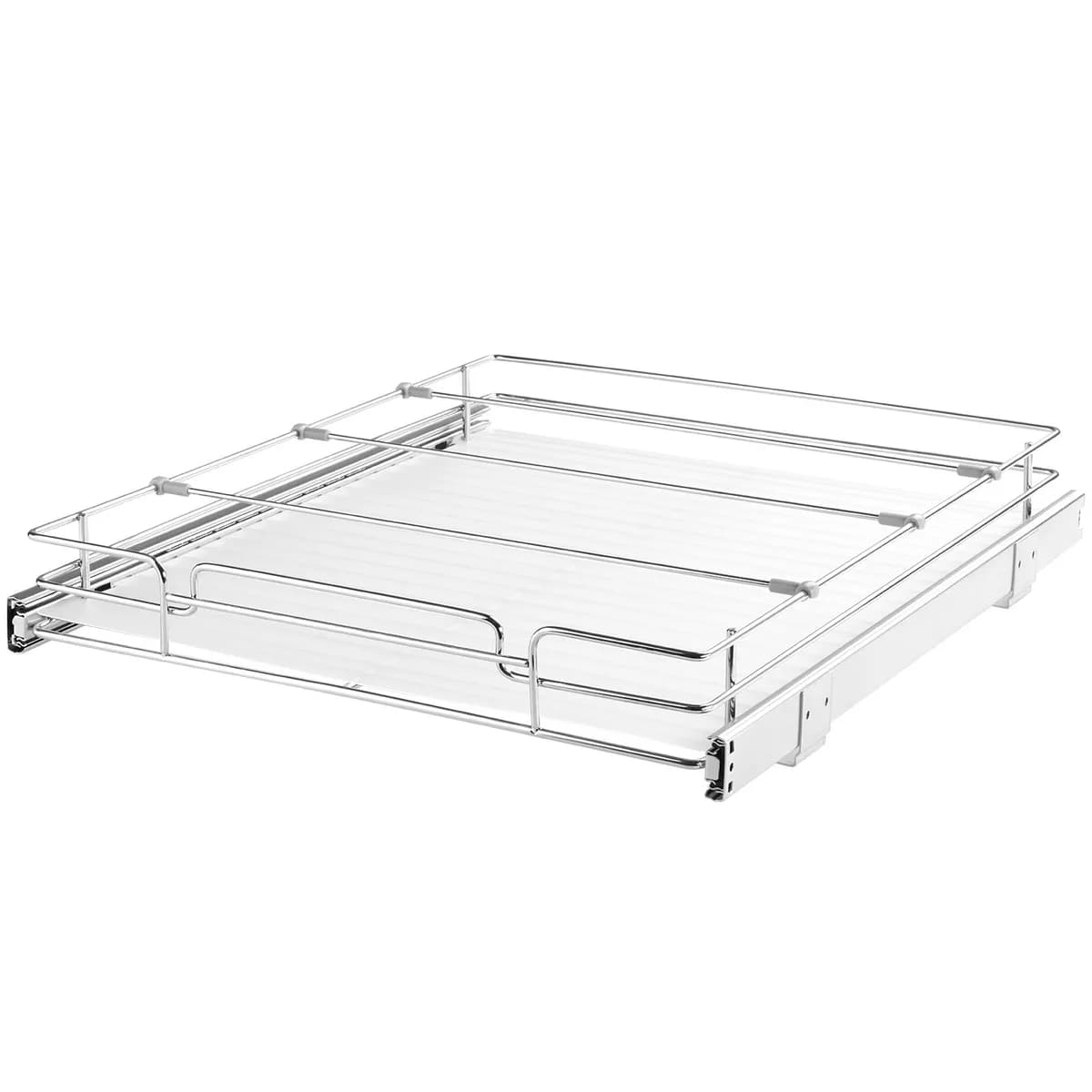
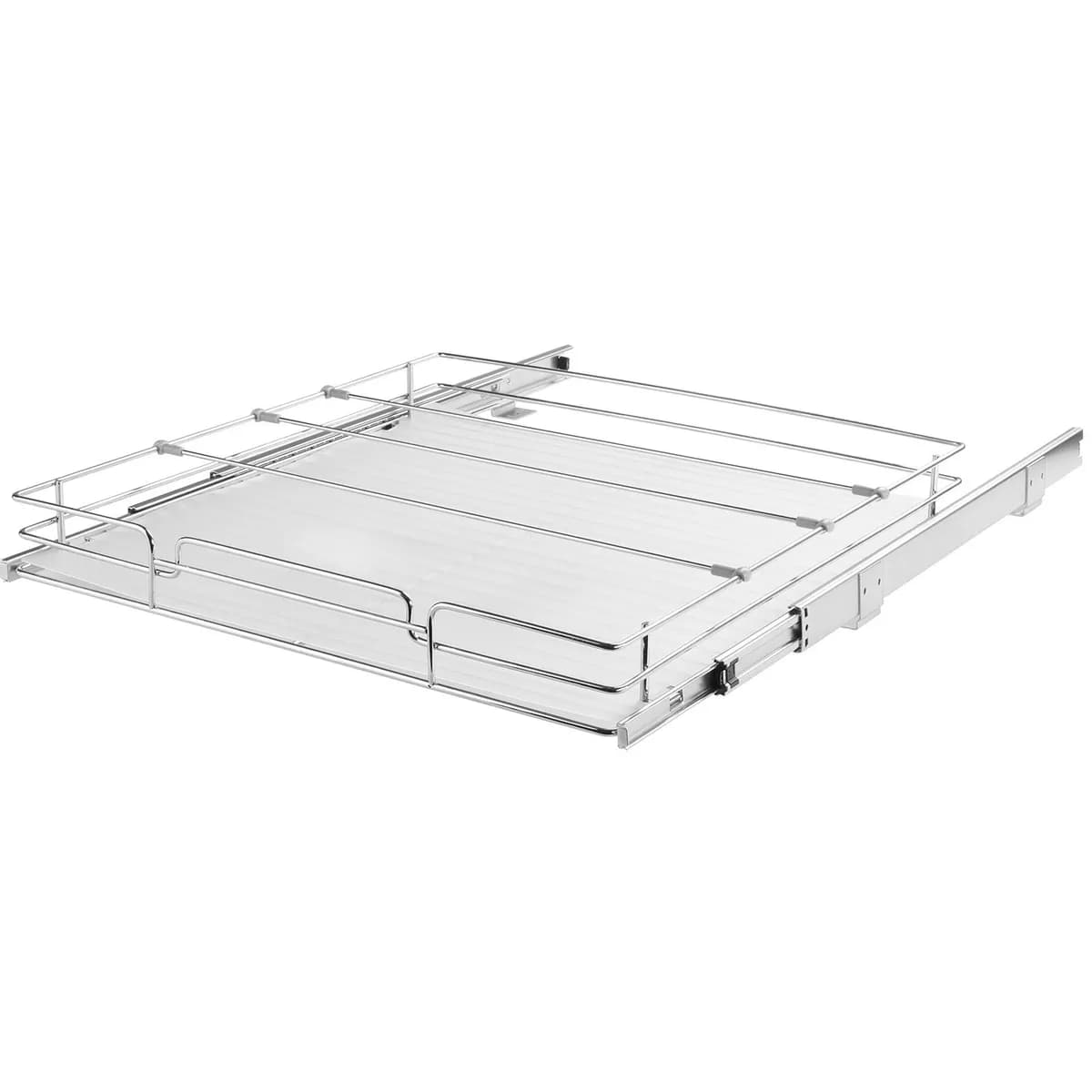
Once you have selected an under-stair design, check the footprint of the Stackable Storage Bins, 24 Pack against its compartments. For a pull-out approach, compare the stated dimensions of the Pull-Out Cabinet Organizer, 17 in. Wide before committing. The Home & Decor collection offers other formats to evaluate using the same fit and installation checklist.
Compare the proposed system against a simple removable-bin layout. Pay for added complexity only when it solves an access problem that the simpler option cannot handle.
FAQ: Frequently Asked Questions About Under-Stair Storage Solutions
Q: Can I add under-stair storage if my stairs are open riser style?
Open-riser stairs present more of a challenge because there is no solid backing to mount against, but it is still possible. The most practical approach for open-riser stairs is to install freestanding shelving between the stair stringers from the outside, creating a storage display that is visible through the open risers. This works especially well for plants, books, and decorative objects. Some homeowners also close in the back of the stairs with boards or panels to create a more enclosed storage cavity.
Q: Is under-stair storage a good project for a beginner DIYer?
It depends on the type. Installing freestanding shelving or cubby units is absolutely beginner-friendly and requires nothing more than basic assembly. Installing pull-out drawer systems or built-in cabinetry is intermediate to advanced work that requires accurate measuring, cutting, and some knowledge of fasteners and wall anchoring. If in doubt, hire a handyperson for the installation and handle the styling yourself.
Q: How much weight can under-stair storage typically hold?
Capacity depends on the exact unit, brackets, fixings, wall or cabinet construction and installation method. Check the manufacturer's stated load limit and conditions rather than borrowing a typical pounds-per-shelf figure from another product. Distribute loads as instructed and seek professional advice where the supporting construction is uncertain.
Q: What is the best way to organize an under-stair closet that currently holds everything?
Start by completely emptying the space and sorting items into four groups: keep and use regularly, keep but store seasonally, donate, and discard. Only return items you genuinely use and need. Then assign a specific zone to each category of item and use labeled bins or baskets to keep each zone distinct. Our seasonal decor storage guide has great strategies for the items you only need a few times per year.
Q: Are there under-stair storage solutions that do not require drilling into the wall?
Some removable bins and low-profile organizers require no drilling, but furniture that needs anchoring is not made safe by calling it renter-friendly. Read the instructions before purchasing. If wall attachment is required, ask the landlord for permission or choose a different storage approach that does not involve the unsecured unit; do not rely on an invented tip-over height threshold.
Conclusion
The space beneath your staircase is one of the most underutilized storage opportunities in the American home, and in 2026, there has never been a better selection of products and systems to help you reclaim it. Whether you are looking for a budget-friendly open shelving setup, a modular cabinet conversion, a pull-out pantry, or a fully custom built-in system, the right under-stair storage solution exists for your home, your budget, and your lifestyle.
The key is to measure accurately, choose the right product type for your goals and your tenancy situation, prioritize quality hardware and proper anchoring, and finish the space with lighting and consistent containers for a polished result. Done right, this project transforms dead square footage into one of the hardest-working areas of your home.
Ready to get started? Explore Sesoris for storage bins, labeled containers, organizer accessories, and household essentials that make every under-stair storage project come together beautifully. Browse our best sellers and new arrivals to find exactly what you need to live more organized.
Liked this guide?
Get new organizing guides and the occasional new product by email. No spam, unsubscribe anytime.
Related articles

Explore more articles
- 30+ Best Laundry Room Shelving Ideas to Maximize Every Inch in 2026
- 25+ Best Lego Organizer Ideas to Tame the Brick Chaos in 2026
- Pantry Organization Bins: The Complete 2026 Guide to a Clutter-Free Kitchen
- 30+ Best Shoe Rack Ideas to Organize Your Home in 2026
- 25+ Best Laundry Closet Ideas to Transform Your Small Space in 2026
- Office Organization Ideas: Complete 2026 Guide to a Productive, Clutter-Free Workplace
- 30+ Best Laundry Room Storage Ideas to Maximize Every Inch in 2026
- 25+ Best Laundry Room Cabinet Ideas to Transform Your Space in 2026