
Home Office Wall Organization Systems: Pegboards, Rails, Grids and Shelves
Home office wall organization systems compared: pegboards, rail systems, wire grids, shelves and pockets, with a layout plan, mounting tips and how to keep the desk clear.
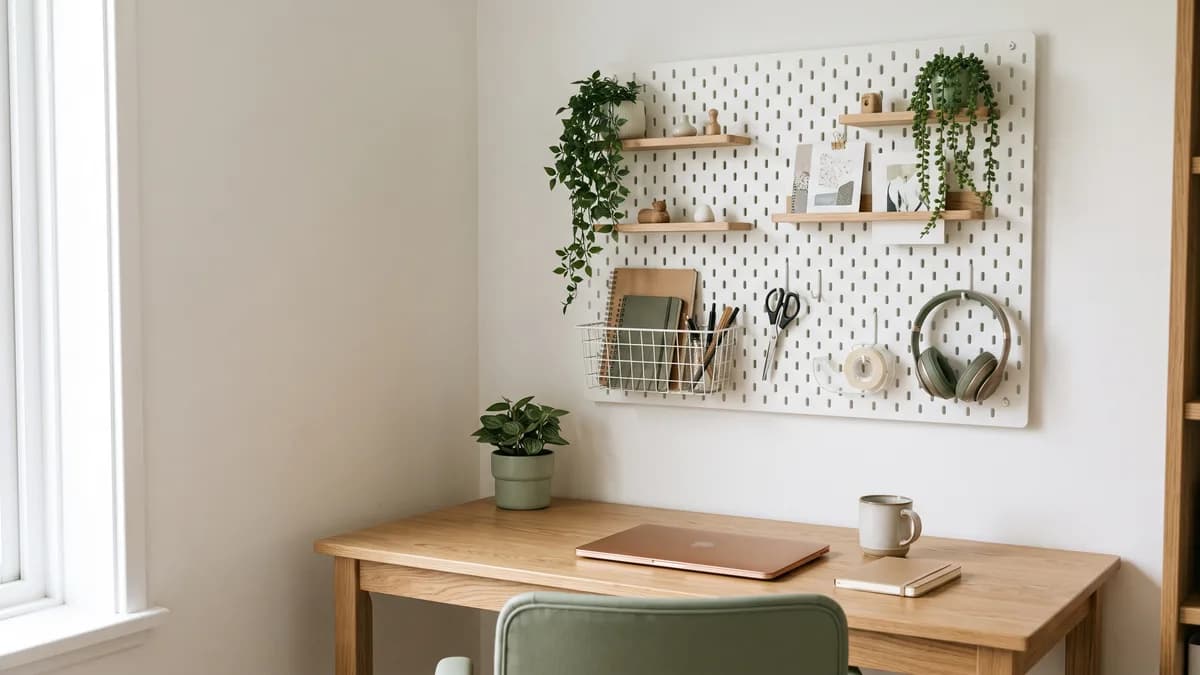
Most home offices run out of desk space long before they run out of room. Pens, chargers, notebooks, headphones, a planner, a stack of papers and a mug all end up on the work surface, and the actual work gets squeezed into a laptop-sized patch in the middle. The wall in front of or beside the desk is usually blank. Home office wall organization systems move the small stuff up onto that wall, so the desk can do its job.
This guide compares the main systems, including pegboards, rail systems, wire grids, wall shelves and hanging pockets, and explains how to plan a layout around your reach, mount it securely and keep it from turning into visual clutter. We also cover options for renters and for small spaces like a desk in a bedroom corner. If you are setting up the whole workspace, our home office desk organization and desk setup ideas guides cover the desk itself.
Why Go Vertical in a Home Office?
A desk is a work surface, not a storage unit. Every item that sits on it permanently reduces the area you have for a laptop, notebook or second screen. Moving frequently used items onto the wall keeps them within reach while clearing the surface.
Wall systems also make items visible. A pen cup in a drawer gets forgotten, but a pen hanging on a pegboard at eye level is always there. Visibility matters for things you need often, such as headphones, scissors, sticky notes, chargers and the notebook you are currently using.
A wall system is flexible too. Most systems use hooks, shelves and containers that can be moved, so the layout can change as your work changes. That is a big advantage over fixed furniture, especially in a room that doubles as a bedroom or guest room.
Finally, a well-planned wall can make a small office feel calmer. When every category has a defined spot, the eye reads it as organized, even if there are many items on display.
The Five Main Wall Systems Compared
There is no single best home office wall organization system. Each suits a different kind of work and a different wall.
| System | Best for | Watch out for |
|---|---|---|
| Pegboard | Flexible layouts, tools, supplies | Needs spacers or a frame so hooks fit behind it |
| Rail system | Clean, minimal look, cups and small shelves | Fewer attachment points than a pegboard |
| Wire grid | Clips, photos, light baskets | Lighter loads only |
| Wall shelves | Books, binders, boxes, decor | Easy to overfill and look cluttered |
| Hanging pockets or file holders | Papers, mail, notebooks | Best for light, flat items |
Many offices combine two systems: for example, a pegboard or rail directly above the desk for daily tools, and a shelf higher up for books and archive boxes. The key is to decide what each part of the wall is for, rather than adding pieces at random.
Pegboards: The Most Flexible Option
Pegboards are perforated panels that accept hooks, small shelves, baskets and cups. Because every hole is an attachment point, you can rearrange the layout in minutes. That makes them the most adaptable home office wall organization system.
A pegboard must stand slightly away from the wall so hooks can fit into the holes. Many panels come with spacers or a frame for this purpose. Mount the panel into studs or with anchors rated for the load, especially if you plan to hang heavier items like a small shelf of books.
Plan the board before you fill it. Put the items you use most at eye level and within arm's reach of your chair, and keep heavier items low and close to mounting points. Leave some empty holes so the board does not look crowded and you have room to add things later.
Pegboards come in metal, wood and plastic. Metal holds the most weight and often accepts magnets, wood looks warm in a living space, and plastic is lightweight and affordable. Our pegboard garage organization guide covers more hook types, many of which work in an office too.
Rails, Grids and Shelves
Rail systems use a horizontal bar mounted on the wall, with hanging cups, baskets, small shelves and hooks. They look clean and minimal and are easy to mount, since one rail needs only a few screws. They suit offices where you want a tidy line of essentials just above the desk.
Wire grids are light metal panels that hold clips, baskets and hooks. They are great for pinning up notes, a calendar or photos, but they are designed for light loads.
Wall shelves are the right choice for heavier and bulkier things: books, binders, archive boxes and printer paper. Floating or bracketed shelves above the desk keep reference material close. Keep shelves high enough that you do not hit your head when you stand up, and use matching boxes so the shelf looks calm. For styling, see our minimalist shelf ideas.
Hanging pockets and wall file holders are perfect for paper. Mail, bills to pay and notebooks in use can sit upright instead of piling on the desk.
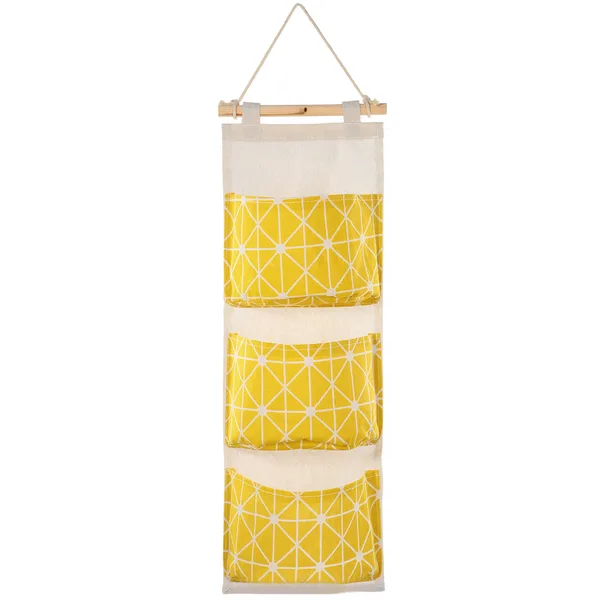
Our Hanging Wall Organizer, 3 Pockets is 7.87 in. wide and 24 in. long, with three pockets of about 7.1 x 5.5 x 3.1 in. each, on a wooden rod and rope loop. It suits a narrow strip of wall beside a desk for chargers, notes or small supplies.
Plan the Wall Around Your Reach
The best layout follows how you actually work. Sit in your chair and notice which items you reach for most during a typical day. Those belong in the zone you can reach without standing up, roughly above and beside the desk at arm's length.
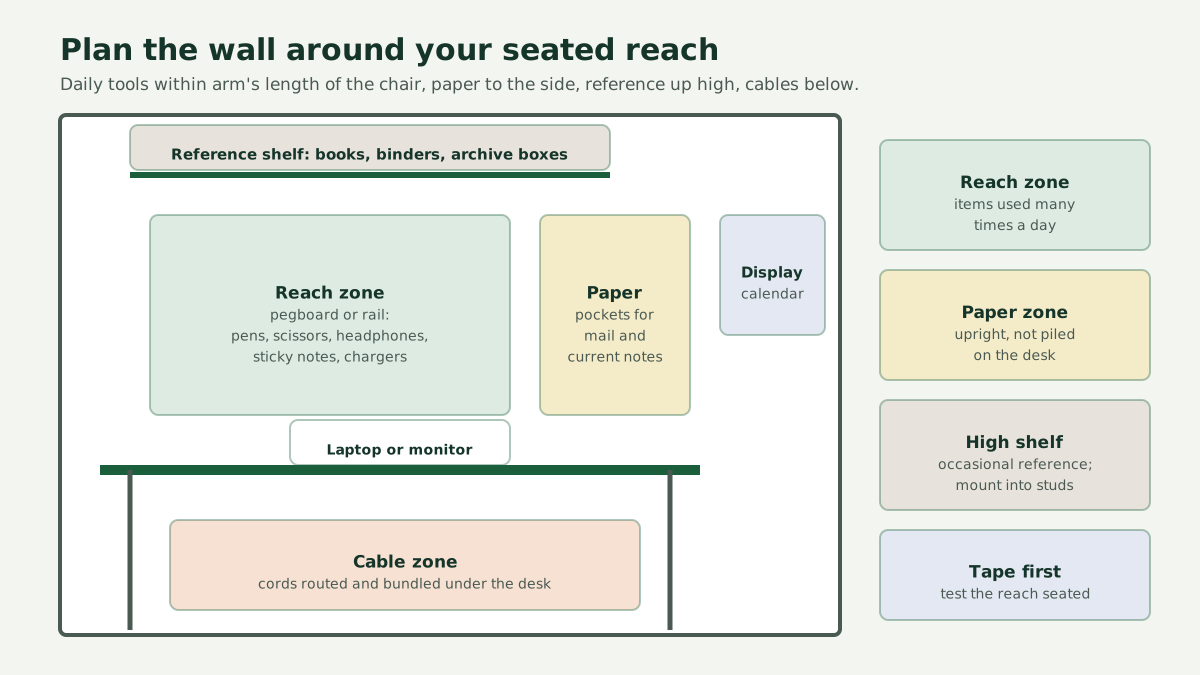
A simple zone plan looks like this:
- Reach zone: daily tools such as pens, scissors, headphones, sticky notes and chargers, on a pegboard or rail directly above the desk.
- Paper zone: pockets or file holders to one side for mail, current projects and notebooks.
- Reference zone: a higher shelf for books, binders and archive boxes you need occasionally.
- Display zone: a calendar, a whiteboard or a few personal items, kept to a small area so they do not compete with tools.
- Cable zone: below the desk, with cords routed and bundled so they stay out of sight.
Mark the layout with painter's tape or paper templates before drilling. Sit at the desk and check that everything in the reach zone can be grabbed without stretching.
Keep the Desk Itself Clear
A wall system works best when the desk keeps only what you use in every session. Everything else should have a home on the wall, in a drawer or on a shelf.
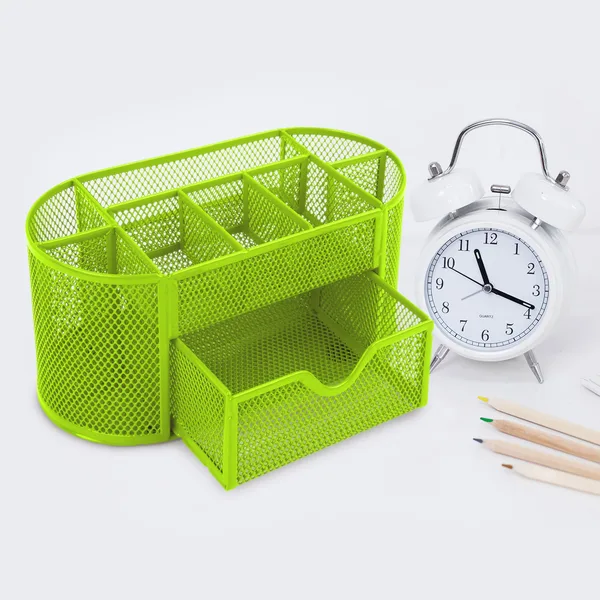
A single compact desk organizer handles the essentials that you prefer to keep on the surface. Our Mesh Desk Organizer with Drawer measures 8.66 x 4.33 x 4.13 in., with four cups, four shallow compartments and a small pull-out drawer for sticky notes.
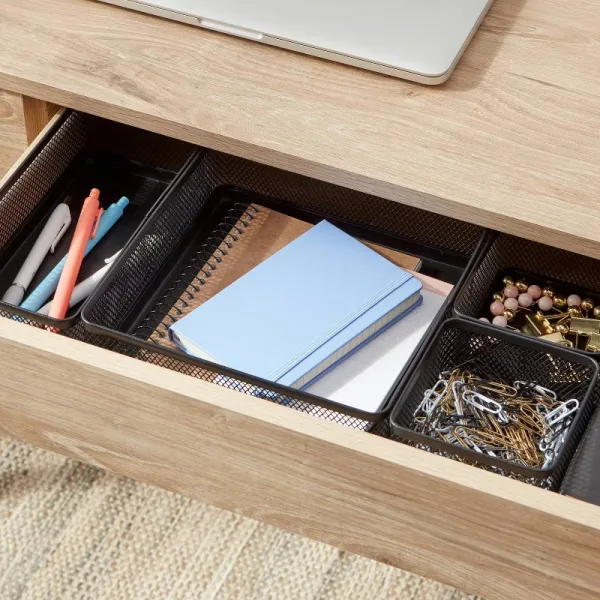
Drawers deserve the same zoning as the wall. Our Mesh Desk Drawer Organizer Set includes four steel mesh trays in different sizes that sort pens, notebooks and clips, or stack on the desktop when there is no drawer. For more ideas, see how to organize your desk.
Mounting Tips and Renter-Friendly Options
Secure mounting is essential, especially for shelves and pegboards that hold real weight. Use a stud finder and fix into studs where possible. Where there is no stud, choose anchors rated for the load and the wall type, and follow the product instructions. Avoid hanging heavy items above where you sit unless they are mounted securely.
Renters have several options that need little or no drilling:
- Adhesive rail or hook systems for light items such as headphones and cables.
- Freestanding pegboard panels on a stand or leaning shelf unit behind the desk.
- Hanging pockets on a single nail or an adhesive hook, for paper and small supplies.
- Over-desk hutches that sit on the desk and add vertical storage without touching the wall.
- Small number of fixings, such as one long rail instead of many separate pieces, if your lease allows small holes.
Always check your lease before drilling, and remove adhesive products carefully to protect paint.
Keep It Calm: Visual Clutter Rules
Wall organization can tip into visual noise if every surface is full. A few rules keep it calm:
- Limit colors. Choose one or two finishes for the system and containers, such as white and natural wood or black and gray.
- Group similar items. Put all writing tools together and all cables together, instead of mixing them.
- Leave empty space. Keep part of the pegboard or rail free so the wall breathes.
- Hide the ugly stuff. Spare cables, receipts and refills belong in a closed box or drawer, not on the wall.
- Review monthly. Remove anything you have not used for a month or more and give its spot to something you use daily.
A calm wall supports focus. Our work from home lifestyle habits guide covers routines that help keep the whole office tidy.
Related Products from Sesoris
If you want to turn these home office wall organization systems into a real setup, start with the Hanging Wall Organizer, 3 Pockets for the wall, the Mesh Desk Organizer with Drawer for the desktop and the Mesh Desk Drawer Organizer Set for drawers. You can also add the Monitor Riser with 3 Height Settings to free space under the screen.
Our practical rule: choose one product that solves the main clutter problem first, then add supporting organizers only when the daily workflow is already clear.
Frequently Asked Questions About Home Office Wall Organization Systems
What is the best wall organization system for a home office?
It depends on what you store. Pegboards are the most flexible for tools and supplies, rail systems give a clean minimal look, wire grids suit notes and light items, and shelves handle books and boxes. Many offices combine a pegboard or rail with a shelf above it.
How high should a pegboard be above a desk?
Place it so the items you use most are within reach while seated, usually starting a little above the desk surface or the top of the monitor. Sit at the desk and test the reach with tape before mounting.
How do I mount a pegboard on a wall?
Use spacers or a frame so the board sits slightly away from the wall for the hooks, and fix it into studs or with anchors rated for the load. Follow the product instructions for spacing and fixings.
What can renters use instead of drilling?
Adhesive rails and hooks for light items, freestanding pegboard stands, hanging pockets on a single small fixing and desktop hutches all add vertical storage without major wall changes. Check your lease first.
How do I stop a wall organizer from looking cluttered?
Limit the color palette, group similar items, leave empty space, keep spare items in closed storage and review the wall monthly to remove things you no longer use.
What should go on the wall versus in a drawer?
The wall holds items you use daily and like to see, such as pens, headphones and current notebooks. Drawers hold refills, spare cables and items you need less often.
Can wall shelves above a desk hold books?
Yes, if they are mounted into studs or with suitably rated anchors. Keep them high enough that you do not hit your head when you stand, and do not exceed the shelf's weight limit.
How do I organize papers on an office wall?
Use hanging pockets or wall file holders for mail, current projects and bills to pay, so papers stand upright instead of piling on the desk. Clear them out weekly.
Conclusion: A Wall That Works So the Desk Can Too
Home office wall organization systems turn unused wall space into the most useful storage in the room. Choose the system that suits what you store, plan the layout around your seated reach, mount it securely and keep the look calm with a limited palette and some empty space. With the small stuff on the wall, the desk is free for actual work.
Start with one system above the desk, live with it for a couple of weeks and adjust. For more ideas, explore our office organization ideas and small home office organization ideas.
Liked this guide?
Get new organizing guides and the occasional new product by email. No spam, unsubscribe anytime.
Related articles
Explore more articles
- Pantry Food Storage Containers: The Complete 2026 Tutorial Guide to a Beautifully Organized Kitchen
- Pretty Food Storage Containers: Transform Your Kitchen with Stylish Organization in 2026
- Food Storage Containers with Lid: The Complete 2026 Buyer's Guide to Fresh, Organized Kitchens
- Rubbermaid Brilliance Food Storage Containers: Complete Review & Buying Guide for 2026
- Pyrex Glass Food Storage Containers: The Complete 2026 Guide to Safe, Durable Kitchen Storage
- How to Build DIY Wood Shelves: Complete Step-by-Step Tutorial for 2026
- 30+ Best Garage Cabinet Ideas to Transform Your Storage Space in 2026
- Purse Storage Ideas for Small Spaces