
How to Organize a Linen Closet Step by Step: Complete Tutorial for a Tidy, Functional Space in 2026
Learn how to organize a linen closet step by step with this complete 2026 tutorial. Transform cluttered shelves into a tidy, functional space today!
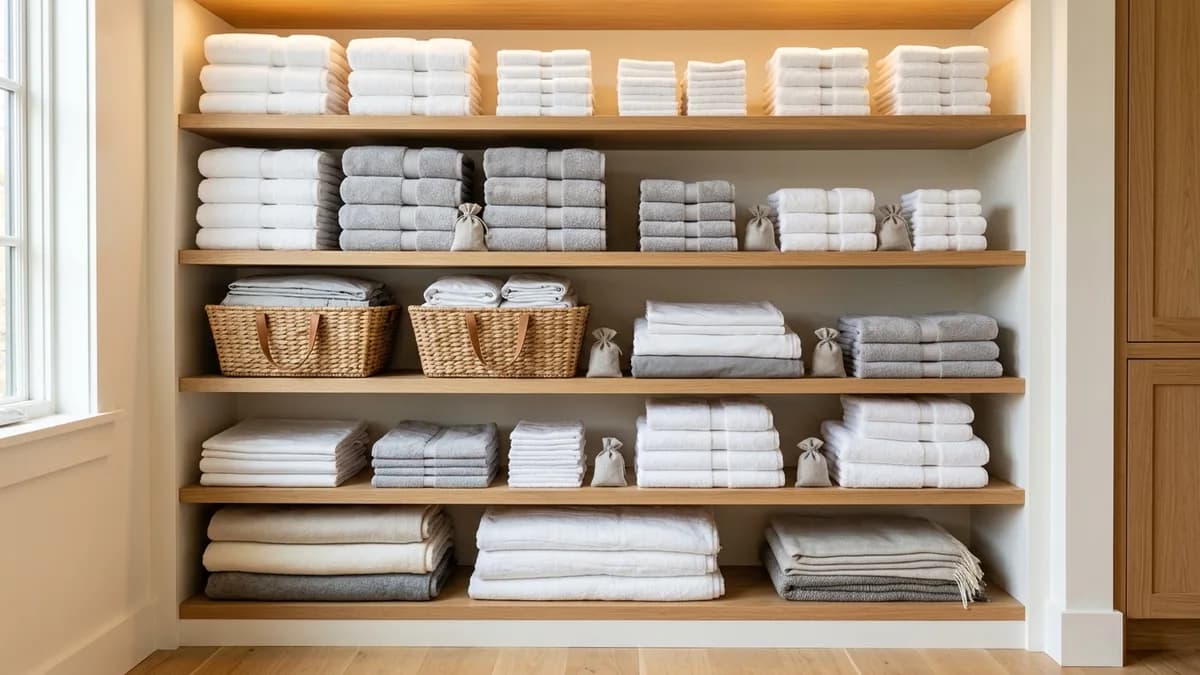
If you have ever opened your linen closet only to have a pillowcase avalanche land on your feet, you are not alone. Learning how to organize a linen closet is one of the most rewarding home organization projects you can tackle in a single afternoon. A well-organized linen closet saves you time every morning, protects your investment in quality bedding and towels, and makes the entire bedroom feel calmer. In this step-by-step tutorial for 2026, I am going to walk you through every stage of the process, from emptying every single shelf to maintaining the system long term, so you never have to wrestle with a chaotic closet again.
Why Organizing Your Linen Closet Is Worth Every Minute
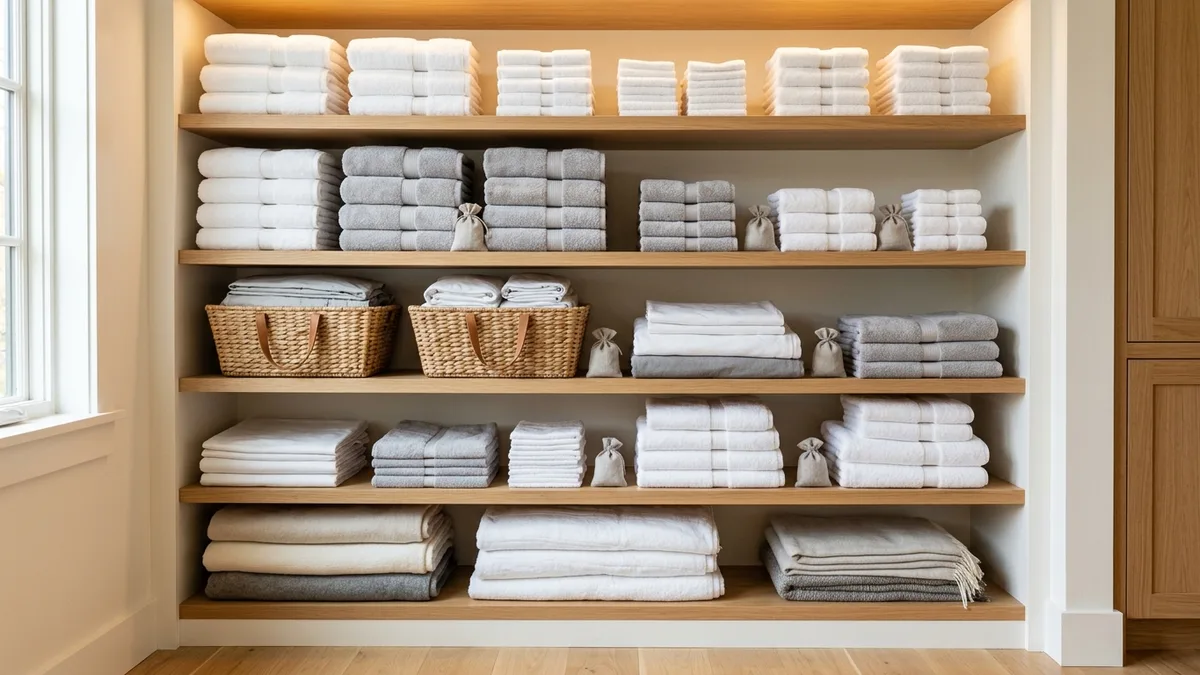
Before we dive into the steps, it helps to understand exactly what you stand to gain. A disorganized linen closet creates a ripple effect throughout your home. You spend extra minutes hunting for a matching sheet set on laundry day, guest towels get buried under mismatched pillowcases, and older linens never get rotated so they wear out unevenly. According to The Spruce, one of the keys to a functional linen closet is a dedicated zone for each category of textile, so every item has a predictable home.
Beyond daily convenience, an organized linen closet also extends the life of your bedding. When sheets and towels are folded properly and stored in a clean, dry space, fabric fibers stay aligned and the textiles hold up through many more wash cycles. That translates directly to money saved on replacements.
What You Will Need Before You Start
Gather these supplies before you begin so the project flows without interruption:
- Measuring tape to record your shelf dimensions in inches
- Trash bags for donations and discards
- Label maker or adhesive labels and a permanent marker
- Matching bins or baskets in a consistent size and color
- Shelf liner if your shelves are bare wood or wire
- Lavender sachets or cedar blocks to keep linens fresh and moth-free
- A laundry basket to temporarily hold items that need washing
Checking out the New Arrivals at Sesoris is a great first step to finding coordinating storage bins and label sets before you start.
Step 1: Empty the Closet Completely and Sort Every Item
This is the step most people want to skip, and it is the most important one. Pull absolutely everything out of the closet and place it on a nearby bed or table. Yes, everything.
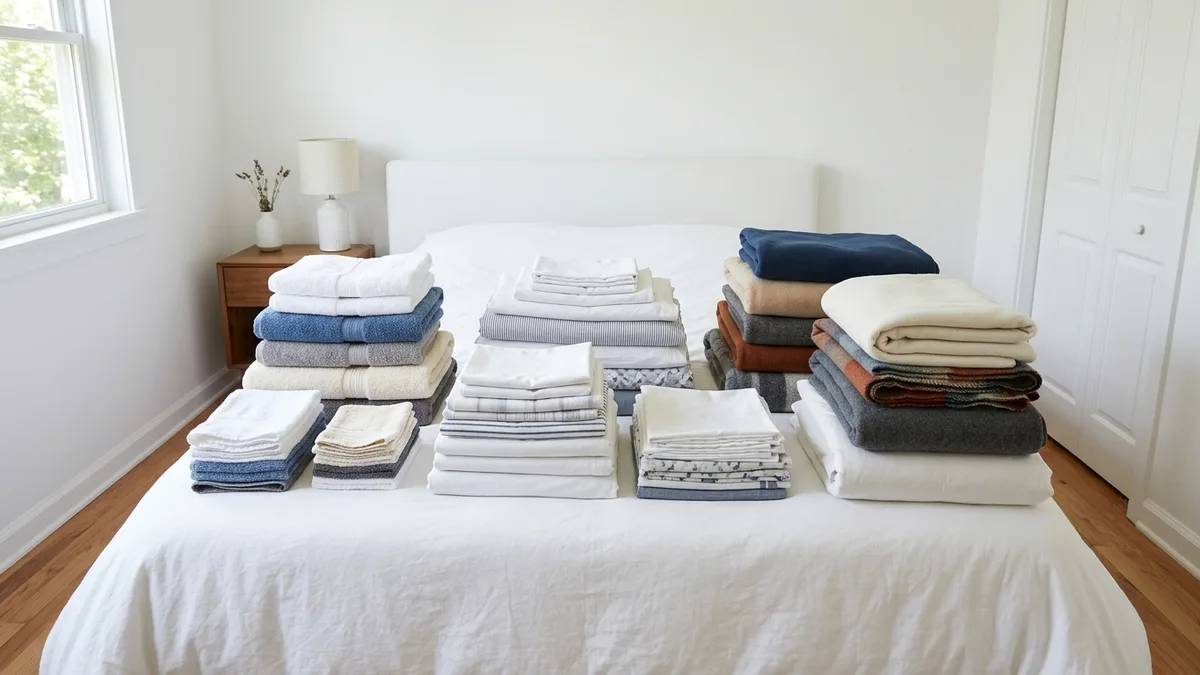
Once everything is out, sort into four categories:
- Keep - Items in good condition that you actively use
- Donate - Gently used linens that no longer serve your household
- Repurpose - Old towels that can become cleaning rags or pet bedding
- Discard - Anything stained, torn, or too worn to pass on
A helpful rule of thumb: if you have not reached for a sheet set or towel in the last 12 months and it is not a seasonal spare, it probably does not need valuable closet real estate. For a bed, most professional organizers recommend keeping two complete sets of sheets per bed plus one spare. For bath towels, two to three towels per household member is plenty.
While the closet is empty, wipe down every shelf with a damp cloth, let it dry completely, and install shelf liner if the surface is rough or bare.
Step 2: Measure Your Shelves and Plan Zones Before Putting Anything Back
With the closet empty, grab your measuring tape and record the width, depth, and height of each shelf in inches. Write these numbers down. This is the moment to plan your zone layout on paper before a single item goes back inside.
A practical zone layout for a standard linen closet typically looks like this:
Top shelf (hardest to reach): Seasonal or rarely used items such as extra blankets, sleeping bag liners, or holiday table linens. Store these in clear lidded bins so you can identify contents without pulling everything down.
Eye-level shelves (prime real estate): Everyday bath towels, hand towels, and the sheet sets you use most frequently. These deserve the easiest access.
Lower shelves: Pillowcases, washcloths, and spare pillow protectors. If you have young children who help put away laundry, lower shelves are ideal for their items.
Door or side wall space: Over-the-door organizers work beautifully for small items like travel-size toiletries, a lint roller, or a few rolled washcloths.
Thinking in zones makes the whole system self-maintaining. When everyone in the household knows the zone for every category, items get put away correctly even on busy days.
How to Handle Deep Shelves
Deep shelves (anything over 14 inches deep) are one of the biggest culprits behind linen closet chaos. Items shoved to the back become invisible and forgotten. Solve this with front-and-back stacking combined with a turntable or pull-out bin on deep shelves. Place taller stacks of towels at the back and shorter, frequently used stacks at the front. Alternatively, use a shallow pull-out basket so the whole shelf slides toward you.
Step 3: Master the Folding Techniques That Actually Save Space
How you fold linens matters just as much as where you store them. Consistent, compact folds let you stack more items on each shelf without toppling towers.
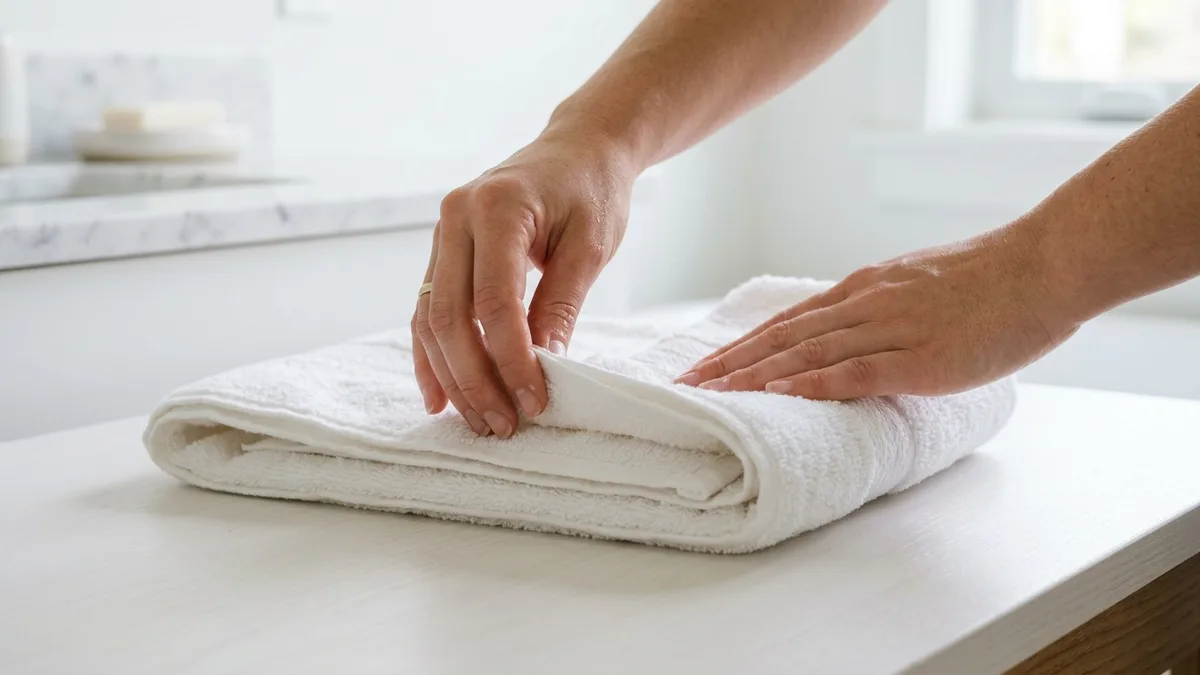
Towel Folding: The Tri-Fold Method
- Lay the towel flat on a clean surface
- Fold one long edge one-third of the way toward the center
- Fold the opposite long edge over the first fold
- Fold the resulting rectangle in half or thirds depending on your shelf height
- Stack seam-side in so the neat folded edge faces out
Stacking with the folded edge facing out creates a tidy, uniform appearance and makes it easy to grab a single towel without disturbing the rest of the stack.
Sheet Set Folding: The Pillowcase Pocket Method
This method keeps every sheet set together as a single neat package, eliminating the frustration of mismatched sets:
- Fold the flat sheet into a compact rectangle
- Fold the fitted sheet and tuck it inside the flat sheet rectangle
- Fold both pillowcases in half, then slide the entire bundle inside one pillowcase
- Fold the stuffed pillowcase into a tidy square
Now each bed's sheet set is a self-contained bundle. Grab one bundle and you have everything you need.
The Towel Roll Alternative
Rolling hand towels and washcloths instead of folding them is a great option for lower shelves or baskets. Rolled towels take up less vertical space and look spa-like when placed in an open basket. This works especially well for guest towels you want to display attractively.
Step 4: Choose and Install Your Storage Containers and Labels
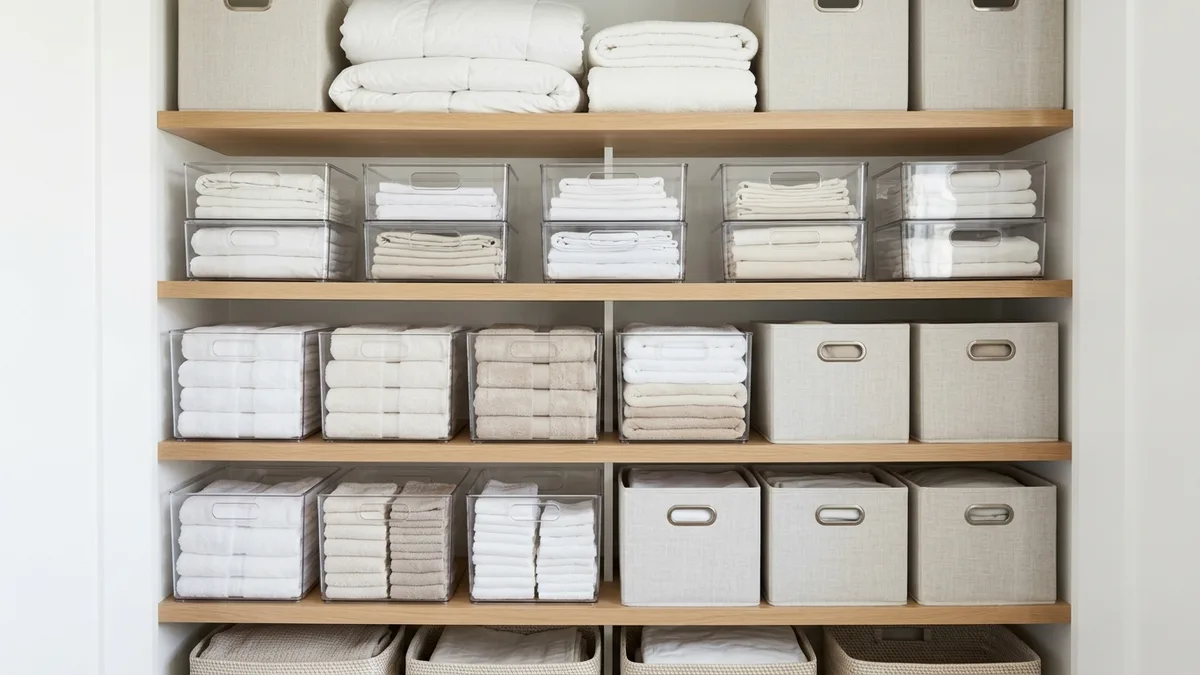
Now that you have folded everything, it is time to put your bins and baskets to work. Consistency is the secret here. When all your containers match in color and style, the closet looks intentional rather than thrown together.
Container Options for Different Shelf Types
For open wire shelving: Use fabric-lined bins or wicker baskets with flat bottoms. The solid sides prevent small items from falling through the gaps and keep the look cohesive.
For solid wood or laminate shelving: Clear acrylic or stackable plastic bins work beautifully. You can see contents at a glance, which reduces the urge to rummage.
For the top shelf: Lidded clear bins are ideal. Lids protect infrequently used items from dust while transparency means you do not have to remember what is inside.
For the door: An over-the-door organizer with pockets or small bins is perfect for washcloths, small toiletries, or a fabric freshener.
Browse the Best Sellers at Sesoris for coordinating bin sets and organizers that fit standard linen closet shelves.
Labeling: The Step That Makes the System Stick
Labels are what transform a tidy closet into a self-maintaining system. Without labels, family members resort to guessing and items end up in the wrong spot within days. Label every bin clearly:
- King Sheets
- Queen Sheets
- Twin Sheets
- Bath Towels
- Hand Towels
- Washcloths
- Pillowcases
- Extra Blankets
Use a label maker for a clean, uniform look, or write on chalkboard adhesive labels if you want flexibility to change categories later. Good Housekeeping recommends using labeled baskets as the single most effective way to keep household members on the same organizational page.
For more detailed labeling strategies, check out our guide to Storage Bin Labels: The Complete 2026 Guide to a Perfectly Organized Home.
Step 5: Load Everything Back In Using Your Zone Plan
Now comes the satisfying part. Using the zone plan you mapped out in Step 2, load your neatly folded, labeled linens back into the closet.
Follow this sequence to avoid having to rearrange later:
- Install empty bins and baskets on each shelf first, confirming they fit without crowding
- Start from the top shelf and work downward, placing seasonal items up high first
- Load the eye-level shelves with everyday towels and your most-used sheet sets
- Fill the lower shelves with pillowcases, washcloths, and less-frequent items
- Add a lavender sachet or two to keep linens smelling fresh naturally
- Hang or install any door organizer last
Leave a small amount of breathing room on each shelf. Cramming items tightly together makes them harder to remove neatly, which quickly unravels your system.
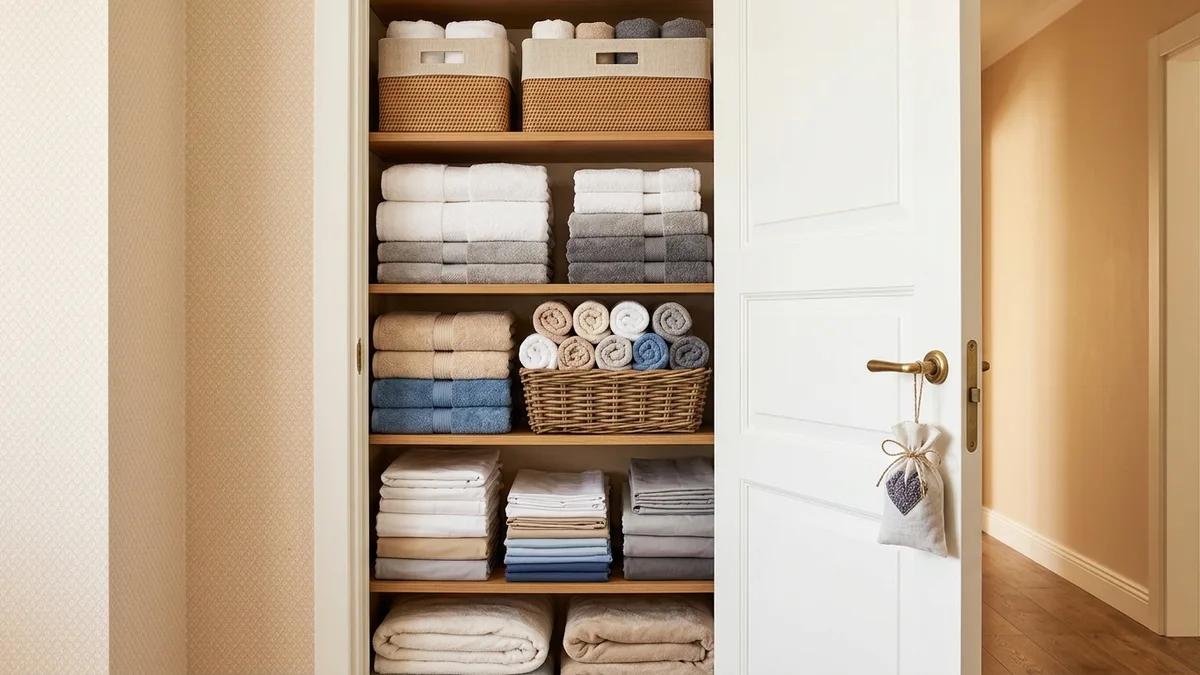
Color-Coding as an Optional Extra Step
If multiple bedrooms share the linen closet, color-coding by room is a game changer. Assign a color family to each bedroom and buy sheet sets and towels in that palette. At a glance, every household member can identify their linens. This works especially well in households with children, since kids as young as four or five can learn which color belongs to their room.
Step 6: Establish a Maintenance Routine to Keep Your Linen Closet Organized
The best organization system in the world will unravel without a simple maintenance habit. The good news is that maintaining a linen closet takes only a few minutes per week once the initial setup is done.
After every laundry day: Fold items using your established method before they go back in the closet. Never stuff a roughly folded sheet into a bin and tell yourself you will fix it later.
Once a month: Do a quick five-minute reset. Pull out anything that migrated to the wrong bin, refold items that shifted, and make sure labels are still accurate.
Every six months: Do a mini-purge. Assess whether any linens have worn beyond their useful life. Rotate stock so older towels and sheets get used before newer ones, extending the life of your entire collection.
Once a year: Empty the closet completely, wipe down shelves, replace lavender sachets, and reassess your zone layout. Family needs change over time, and your system should adapt.
For inspiration on pairing your linen closet organization with a broader home reset, our Sunday Reset Routine: Step-by-Step Tutorial for a Calm, Organized Week in 2026 is a great companion read.
A linen closet that maintains itself is not magic. It is the result of a zone plan, consistent folding, and clear labels that everyone in the household can follow without thinking.
Smart Upgrades That Make Linen Closet Organization Even Easier
Once your basic system is in place, consider these upgrades to take your linen closet to the next level:
Shelf Dividers
Shelf dividers are acrylic or metal bookend-style dividers that keep stacks of folded towels from toppling sideways. They are particularly useful on wider shelves where you have multiple stacks side by side. A standard shelf divider keeps stacks upright and makes it easy to remove one towel without disturbing its neighbors.
Slim Over-the-Door Organizers
Most linen closet doors have completely unused vertical space. An over-the-door organizer with clear pockets or small bins can hold washcloths, a lint roller, extra tags, or even small first-aid supplies. This frees up shelf space for the bulkier items that need it most.
Vacuum Storage Bags for Seasonal Bulky Items
Thick winter blankets and comforters take up disproportionate shelf space. Storing them in vacuum-seal bags during warmer months compresses their volume dramatically. Our Vacuum Storage Bag guide explains how to compress bulky blankets by a significant margin, reclaiming precious shelf inches for everyday linens.
Scent Maintenance
Linens stored in a closet can develop a musty smell over time, especially in humid climates. Cedar blocks, lavender sachets, or moisture-absorbing packets keep the air in the closet dry and fresh. Replace cedar blocks and sachets every three to six months for consistent results.
For additional storage ideas that complement your linen closet project, explore the full range at All Products on Sesoris.
How to Organize a Linen Closet in a Small Space
Not everyone has a roomy walk-in linen closet. If you are working with a single narrow closet or even just a few shelves in a hallway cabinet, these strategies help you make the most of limited space:
Use vertical space aggressively. Install additional shelf brackets to add a shelf between existing ones. A 6-inch gap between shelves that currently holds one item might hold two slim bins with an extra shelf added.
Stackable bins are your best friend. Open baskets are charming but they waste vertical space. Stackable bins with lids allow you to build upward, doubling or tripling your storage capacity on a single shelf.
Store sheet sets vertically. Instead of stacking sheet bundles flat, store them like books, standing on end. This makes every set immediately visible without unstacking anything above it.
Edit ruthlessly. Small spaces require smaller inventories. If you have a compact closet, maintain only one set of sheets per bed plus a single spare. Donate the rest.
Use the closet door. Every inch of door space is potential storage. Even a simple row of adhesive hooks can hold a few spare washcloths or a bag of lavender sachets.
For more ideas tailored to compact spaces, our article on Home Organization Ideas for Small Spaces is packed with practical solutions.
Related Products from Sesoris
If you want to turn this guide into a real setup, start with Stackable Storage Bins, 24 Pack and Pull-Out Cabinet Organizer, 17 in. Wide. For broader options, browse the Home & Decor collection so the article journey does not stop at reading only.
Our practical rule: choose one product that solves the main clutter problem first, then add supporting organizers only when the daily workflow is already clear. This keeps the shopping path useful, not pushy.
FAQ: Frequently Asked Questions About How to Organize a Linen Closet
Q: How many towels and sheet sets should I keep per person?
Most professional organizers recommend two to three bath towels per person plus one or two spare hand towels per bathroom. For bedding, two complete sheet sets per bed is the standard recommendation, with one set in use and one clean set ready to swap in on laundry day. A third spare set is reasonable for guest bedrooms.
Q: What is the best way to store fitted sheets so they do not become a tangled mess?
The pillowcase pocket method described in Step 3 is the most effective approach. Tuck the flat sheet and folded fitted sheet inside a pillowcase. The pillowcase acts as a tidy envelope, keeping the entire set together as a single bundle that you can grab and go.
Q: How often should I wash and rotate my stored linens?
Even linens in storage should be washed periodically. Real Simple recommends washing stored sheets and towels every few months even if they have not been used, since fabrics can absorb odors and dust while sitting in a closet. Rotating older linens to the front ensures even wear across your collection.
Q: Can I organize a linen closet without buying any new bins or organizers?
Absolutely. The most impactful steps, emptying, sorting, folding consistently, planning zones, and labeling, cost nothing. Repurpose shoeboxes covered in contact paper, use old gift boxes, or fold linens into tight neat stacks directly on shelves. The system works without fancy containers. That said, matching bins do make it significantly easier to maintain over time.
Q: How do I keep my linen closet smelling fresh?
Place two or three lavender sachets, cedar blocks, or baking soda sachets on your shelves. Ensure linens are completely dry before folding and storing them, since even slight moisture can cause musty odors. If your closet is in a humid area of the home, a small silica gel moisture absorber placed on the floor of the closet helps significantly.
Q: What should I do with mismatched or worn-out towels and sheets?
Old towels can be cut into cleaning rags for the garage or kitchen, donated to animal shelters (many shelters actively seek old towels for bedding), or composted if they are made from natural fibers. Worn sheets can similarly become drop cloths for painting projects, cleaning rags, or craft fabric.
Conclusion: Your Organized Linen Closet Starts Today
Learning how to organize a linen closet does not require a weekend, a big budget, or professional help. With a clear step-by-step plan, an afternoon of focused work, and a simple maintenance habit, you can turn a chaotic closet into one of the most functional spaces in your home. Start by emptying everything out, sort with intention, master a consistent folding technique, plan your zones, label every bin, and commit to a quick monthly reset. The result is a closet that saves you time every single day in 2026 and beyond.
Ready to find the right bins, baskets, and organizers to complete your project? Visit Sesoris to explore our full collection of home organization essentials. From stackable bins to label sets, everything you need to build your perfect linen closet system is waiting for you at sesoris.com. Live More Organized.
Liked this guide?
Get new organizing guides and the occasional new product by email. No spam, unsubscribe anytime.
Related articles


Explore more articles
- 30+ Walk-In Closet Organization Ideas to Transform Your Dream Wardrobe Space in 2026
- 25 Creative Storage Ideas for Small Space: Transform Your Tiny Home in 2026
- Pretty Food Storage Containers: Transform Your Kitchen with Stylish Organization Solutions 2026
- Guide to Choosing the Best Outdoor Backpack for Hiking and Camping (2026)
- Plastic Dish Racks: Affordable and Lightweight Kitchen Solutions
- 20+ Creative Kitchen Cabinet Organizer Ideas to Transform Your Cooking Space in 2026
- Pantry Food Storage Containers: The Complete 2026 Tutorial Guide to a Beautifully Organized Kitchen
- Storage Containers for Food BPA Free: The Complete 2026 Guide to Safe, Healthy Kitchen Organization