
Pyrex Food Storage Containers: The Complete 2026 Guide to Safe, Durable Kitchen Organization
Discover everything about Pyrex food storage containers in 2026. Compare sets, sizes & features. Shop smarter and live more organized!
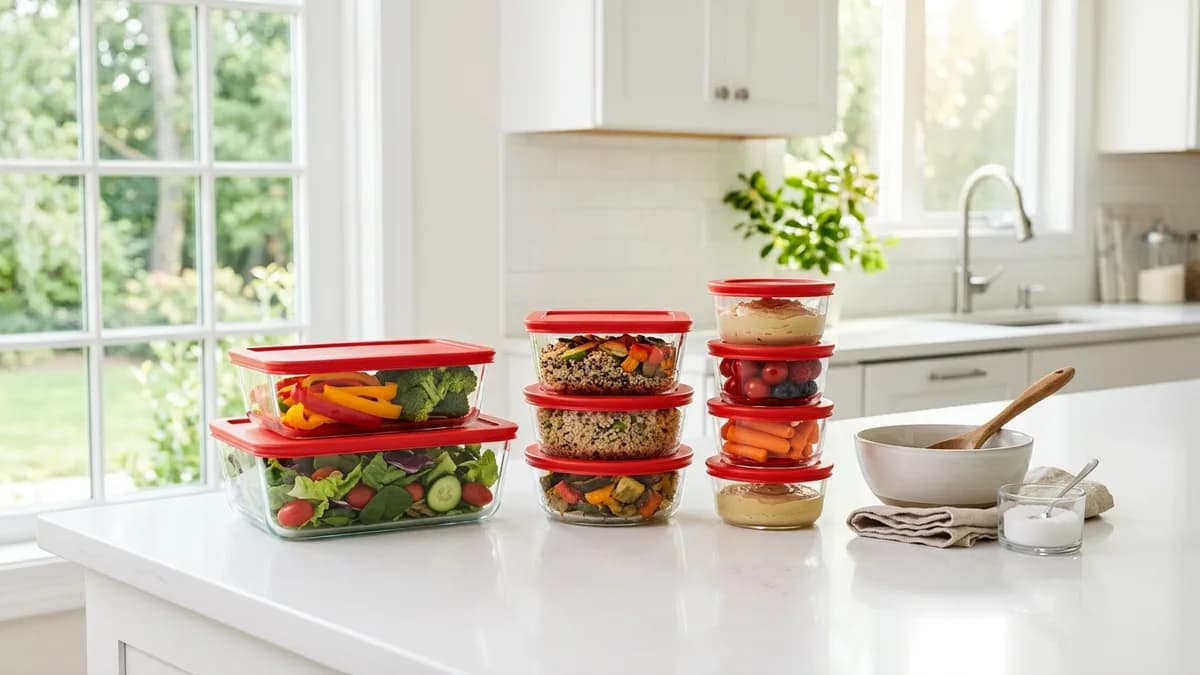
Choose Pyrex food storage containers by the exact dish size, lid type and permitted uses on the product instructions, not by a universal temperature promise. Keep plastic lids out of a conventional oven unless the specific lid is expressly approved for it, fully preheat the oven before inserting approved glassware, and never move frozen glass directly into a hot oven. This guide separates manufacturer safety instructions from practical suggestions for organizing a mixed collection of containers.
Why Pyrex Food Storage Containers Are a Kitchen Essential in 2026
Pyrex sells different product families, and their instructions are not interchangeable. The manufacturer's safety and usage guidance warns against sudden temperature changes, direct heat and use of chipped, cracked or severely scratched glassware. It specifically says not to transfer a frozen dish directly into a hot oven. A glass composition or brand name is not permission to ignore those restrictions.
What really sets Pyrex apart for the modern American household is this combination of benefits:
- Non-porous glass surface that does not absorb food odors or stains, keeping your containers smelling fresh load after load
- Model-specific oven use: use only glassware approved for the intended oven, follow its instructions and remove plastic lids unless specifically approved for that use
- Separate dish and lid instructions: confirm permitted microwave, dishwasher and freezer use for each component
- Material information: check the exact lid's specification; a BPA-free label is not a general guarantee for every food, temperature or appliance
- See-through glass so you can instantly identify contents without opening every container
- Stackable design that keeps your fridge and pantry shelves tidy and space-efficient
For anyone serious about keeping food fresh and organized, investing in a quality set of Pyrex containers is one of the smartest moves you can make in 2026.
Understanding the Different Types of Pyrex Food Storage Containers
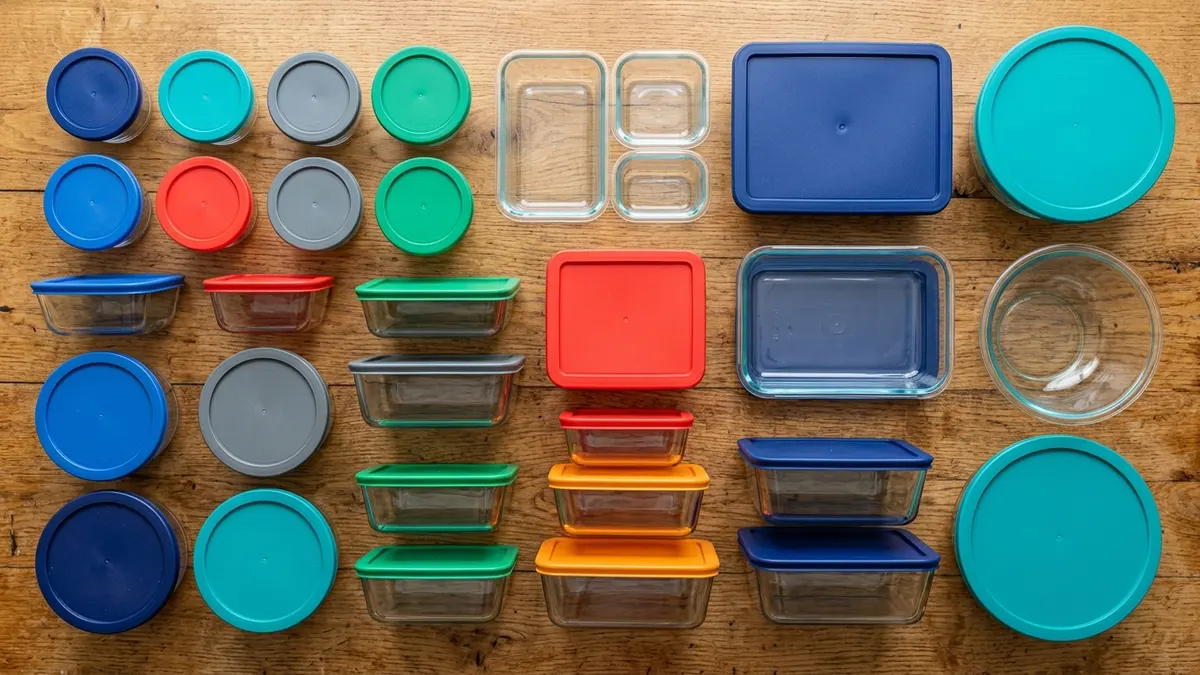
Pyrex offers several container shapes and lid systems. Start with the meals and shelf dimensions you actually use, then compare exact product specifications rather than assuming every set behaves the same way.
Round vs. Rectangular Containers
Pyrex offers both round and rectangular glass containers. Round containers are great for soups, stews, sauces, and single-serve portions. They tend to be easier to stir and scoop from. Rectangular containers, on the other hand, maximize refrigerator shelf space because they fit together like puzzle pieces. They are ideal for storing lasagna, casseroles, marinated meats, and full meal prep portions.
Snap-Lock Lids vs. Classic Lids
Some Pyrex lines use locking lids; others use press-fit plastic covers. Compare the exact product's leak-resistance claim before carrying liquids. Test the lid fit with water at home and keep a filled container upright during transport; a locking mechanism alone does not prove that every model is leakproof.
Common Size Options
Pyrex containers typically come in these standard sizes across their product lines:
- 1-cup (ideal for sauces, dressings, small snacks)
- 2-cup (perfect for individual servings of soup or leftovers)
- 4-cup / 1 quart (great for salads, pasta portions, or meal prep proteins)
- 6-cup / 1.5 quarts (a versatile mid-size for family sides or batch cooking)
- 7-cup (excellent for larger casseroles and family-size leftovers)
- 11-cup / 2.75 quarts (a go-to for big batch soups, stews, or whole baked goods)
A variety of sizes makes portioning easier and can reduce unused space on a shelf. It does not establish how long food is safe to keep. Follow the FDA's safe food-storage guidance on refrigeration, prompt chilling and separating raw foods from ready-to-eat food.
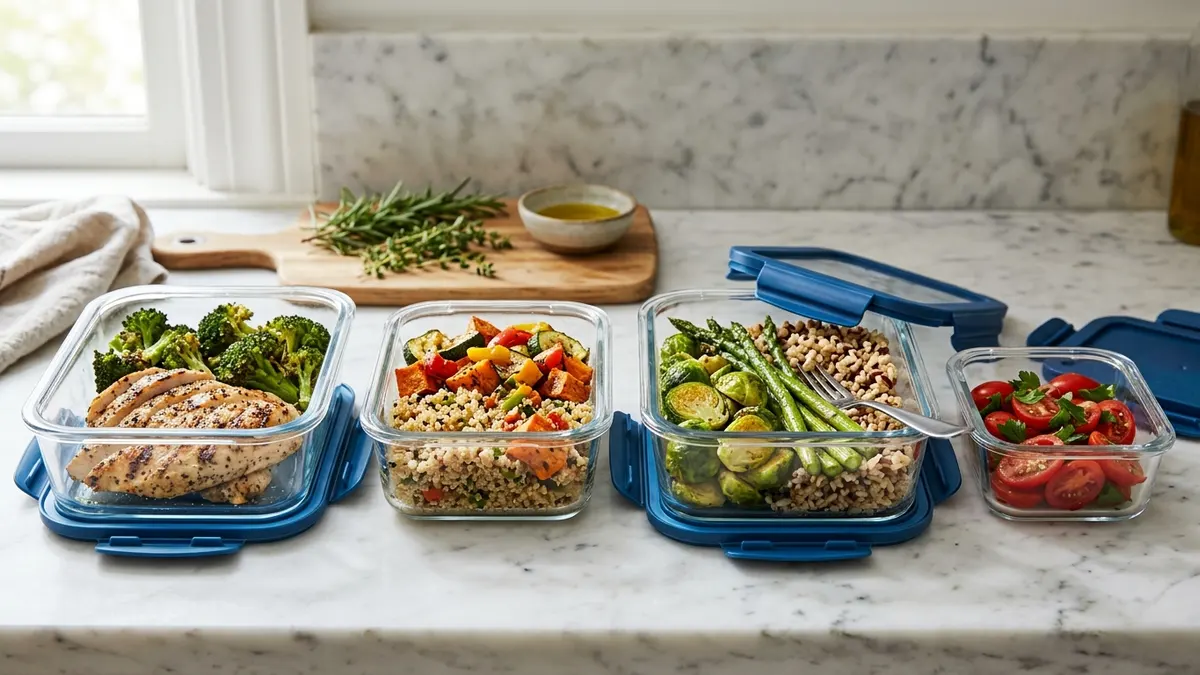
How to Use Pyrex Food Storage Containers Safely
Glass containers are incredibly durable, but there are a few safety guidelines worth following to get the longest life out of your Pyrex set and to keep your food safe.
Oven Use
For glassware approved for a conventional or convection oven, fully preheat the oven first and follow the exact product instructions. Remove plastic lids unless that particular lid is expressly approved for oven use. Do not transfer frozen glass directly into a hot oven, place glass on a stovetop or under a broiler, or add liquid to hot glass. The Pyrex safety instructions explain these restrictions; this guide does not assign one temperature limit to every product line.
Microwave Use
Check the dish and lid instructions before microwave use. Vent or remove the cover as directed and use dry potholders to handle hot glass. Pyrex warns against heating empty or nearly empty glassware, popcorn bags, special browning wrappers and overheating oil or butter. Open hot covers carefully to avoid escaping steam.
Freezer Use
Use only a dish and lid approved for freezer storage, and leave the headspace specified for that product and food. Thaw frozen meals in the refrigerator before any subsequent heating allowed by the instructions. Do not put Pyrex storage glass on a stovetop. Keep food under appropriate temperature control while planning the change from cold storage to reheating; thawing is not a reason to leave a meal on the counter for hours.
Dishwasher Use
Both the glass containers and the plastic lids are dishwasher-safe. However, placing lids on the top rack is a good habit to extend their life and prevent warping from the heating element on the bottom rack.
Pro tip: Never place a hot Pyrex glass container on a cold, wet surface or directly onto a cold countertop. This sudden temperature change, known as thermal shock, can cause glass to crack even in high-quality tempered glass products.
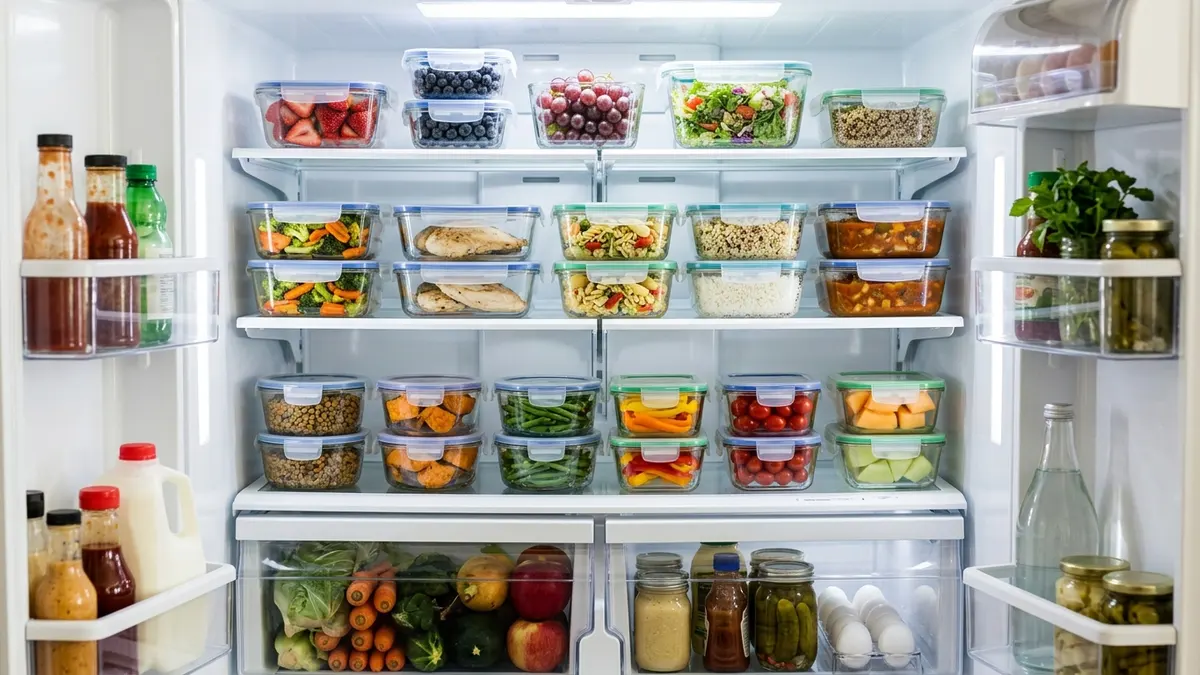
Pyrex Food Storage Containers vs. Plastic: Which Should You Choose?
The useful answer depends on your priorities. Here is a straightforward comparison to help you decide:
Glass Pyrex Containers: Pros
- Separate glass and lid specifications: choose a food-storage product intended for the food and appliance; no material label replaces the manufacturer's use restrictions
- Odor and stain resistant: Tomato sauce, curries, and bold spices rinse right out
- Longer lifespan: A well-maintained glass container can last for years, even decades
- Oven use where approved: some glass storage dishes can also be used for baking under their product-specific instructions
- Reusable storage: sound glassware can be used repeatedly; check local rules because heat-resistant kitchen glass may not belong in a bottle-glass recycling stream
Glass Pyrex Containers: Cons
- Heavier: Glass containers are noticeably heavier than plastic, which matters if you carry lunch daily
- Breakable: Although tempered glass is tough, it can still break if dropped on a hard floor
- Higher upfront cost: A quality Pyrex set costs more than a comparable plastic set, though the long lifespan makes it cost-effective over time
When Plastic Storage Makes More Sense
Plastic containers can be useful where lower weight and reduced breakage risk matter, such as packed lunches and picnics. Choose products intended for food and use them only under their labeling. Our glass, plastic and stainless-steel comparison separates material trade-offs from product-specific reheating permissions.
Choose between glass and plastic according to the meal, carrying weight, available shelf space and exact product instructions rather than assuming one material wins every use case.
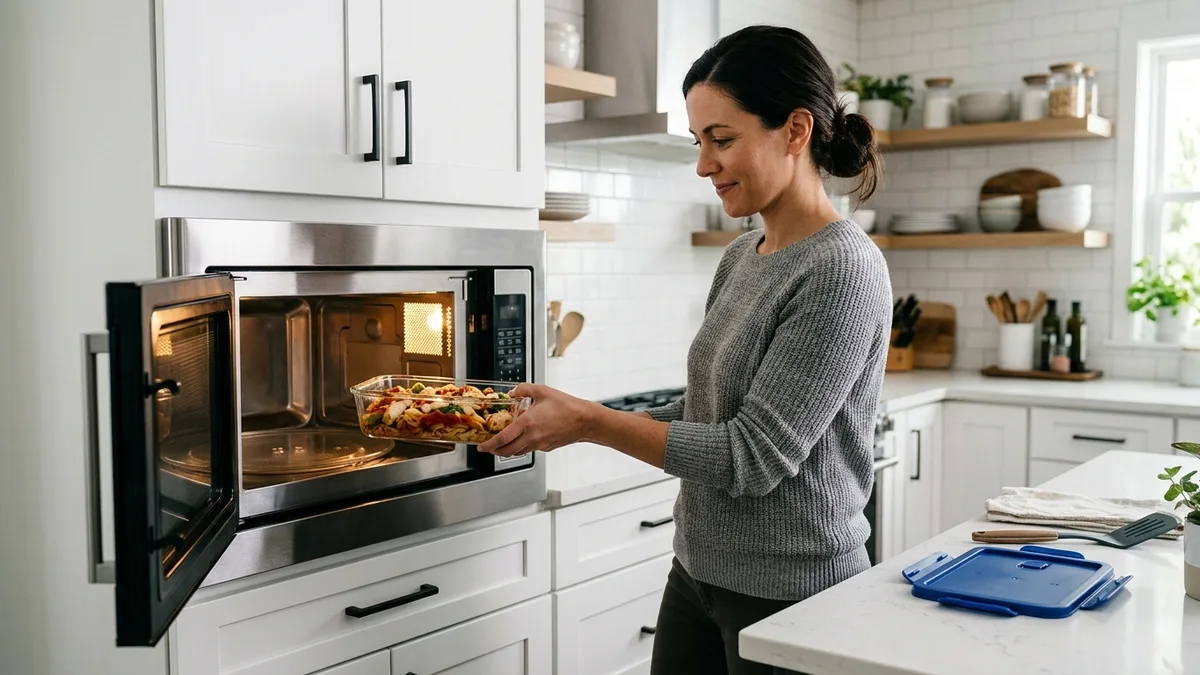
Check the Dish and Lid Separately Before Heating
This checklist is based on the Pyrex safety instructions linked above. It is not a temperature rating or a claim that every branded container has identical permissions. If a replacement lid has different instructions, use the restrictions for the actual component in your hand.
| Use | Glass dish check | Lid and handling check |
|---|---|---|
| Conventional oven | Confirm this dish is oven approved; fully preheat first | Remove plastic or wood lids |
| Frozen meal to oven | Do not transfer frozen glass directly into a hot oven | Thaw under appropriate food-temperature control |
| Microwave | Do not heat empty glass or use browning wrappers | Vent or remove the actual lid as instructed |
| Hot dish after heating | Keep away from cool, wet or metal surfaces | Use a dry potholder or suitable cooling support |
| Refrigerator storage | Follow food-specific safe storage guidance | Keep foods covered and label the date |
| Damaged container | Do not use chipped, cracked or severely scratched glass | Replace a lid that cannot fit or seal properly |
How to Organize Your Pyrex Food Storage Containers Like a Pro
Owning great containers is only half the battle. Keeping them organized is where most people struggle. Use these practical steps to manage a mixed container collection:
Store Lids Separately
One of the biggest sources of kitchen cabinet chaos is unsorted lids. Keep all your Pyrex lids in a single dedicated space, either in a deep drawer with a divider or in a small bin inside your cabinet. Standing lids upright in a vertical file organizer works surprisingly well and makes it easy to grab the right size at a glance.
Stack Containers by Size
Nest glass containers from largest to smallest. Because Pyrex containers are designed with stackability in mind, they fit neatly inside each other, taking up minimal cabinet real estate. Group your rounds together and your rectangles together so the right shape is always within reach.
Label Your Containers
If you do a lot of meal prep, use reusable labels or dry-erase labels on the lids to mark contents and dates. This is a game-changer for reducing food waste. You can find printable storage labels and labeling ideas that work perfectly on smooth lid surfaces.
Designate a Meal Prep Shelf
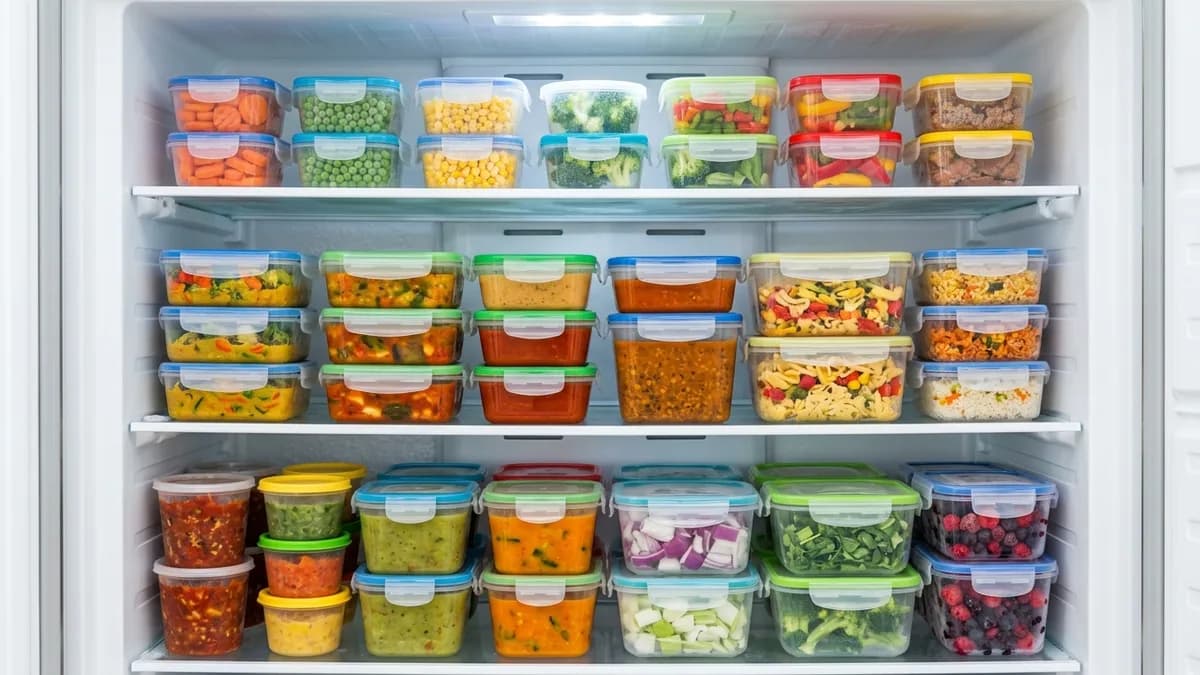
Reserve one dedicated refrigerator shelf for your prepped meals in Pyrex containers. Keeping everything in one spot makes it easy to see what you have for the week without digging through the fridge. Check out these fridge organization ideas for more inspiration on structuring your refrigerator efficiently.
Do a Regular Lid Audit
Lids crack, warp, or go missing over time. Every few months, pair every container with its lid and toss or recycle any orphaned pieces. This prevents clutter and ensures your set is always ready to use.
Pyrex Food Storage Containers for Meal Prep: A Practical Lifestyle Guide
For a meal-prep routine, label portions and plan both the storage and heating steps before cooking. The FDA advises refrigerating perishables within two hours, or one hour above 90°F, and keeping the refrigerator at 40°F or below. For quicker chilling, follow the FDA's advice to divide leftovers into shallow containers. Do not wait for a large batch to reach room temperature as a universal rule. A practical container plan can then look like this:
- Cook with approved equipment, then portion food into suitable shallow storage containers while following safe chilling guidance and the glassware's cooling instructions
- Portion out grains like rice, quinoa, or pasta into individual 2-cup round containers for grab-and-go lunches
- Store prepped vegetables in mid-size 4-cup containers with lids snapped shut to maintain crispness
- Keep sauces and dressings in 1-cup containers so they stay separate until serving time
- Freeze extra portions in clearly labeled containers with headspace left for expansion
Keep a written list of container sizes and corresponding lids so another household member can put items away without trial and error. Matching containers may simplify stacking, but using them does not replace safe storage times or refrigerator temperature checks.
Caring for Your Pyrex Set to Make It Last for Years
Glass containers are a long-term investment, and with the right care habits, a quality Pyrex set can genuinely last for years or even decades. Use these care habits:
- Avoid metal utensils scraping the inside of glass containers, as they can leave superficial scratches over time
- Hand wash lids periodically even if they are dishwasher-safe, since hand washing is gentler on the plastic and seal gaskets
- Inspect for chips or cracks before each use, especially around the rim. A chipped container can crack unexpectedly under heat
- Do not use abrasive scrubbers on glass, as they can dull the surface. A soft sponge with dish soap works perfectly
- Store with lids loose if containers are clean and dry, so no moisture gets trapped inside
Caring for your Pyrex containers properly is a natural extension of a sustainable living mindset, since well-maintained glass containers eliminate the need to repeatedly buy replacement plastic containers.
How Pyrex Compares to Other Glass Food Storage Brands
Pyrex is far from the only glass food storage brand on the market in 2026. Brands like Glasslock, OXO, and various store-brand options all compete in this space. So what makes Pyrex worth considering?
- Brand heritage and consistency: Pyrex has been manufactured and trusted in America since 1915, giving it an unmatched track record in home kitchens
- Wide availability of replacement lids: Because Pyrex is so common, replacement lids are easy to find at most major retailers
- Diverse product lines: From basic round containers to bake and store sets, the Pyrex lineup covers nearly every kitchen need
- Competitive price point: Pyrex sets offer genuine value at their price tier, especially considering the lifespan of quality glass
Compare another brand in the Glasslock food storage containers guide. For another overview of glass container selection, the top rated glass food storage containers guide is a great resource.
Before buying a replacement, compare the manufacturer's listing with a written checklist: capacity, outside dimensions, lid compatibility, permitted heating methods and the space available in your cabinet. Treat a review's general recommendation as a shortlist, not a substitute for instructions supplied with the exact dish.
Related Products from Sesoris
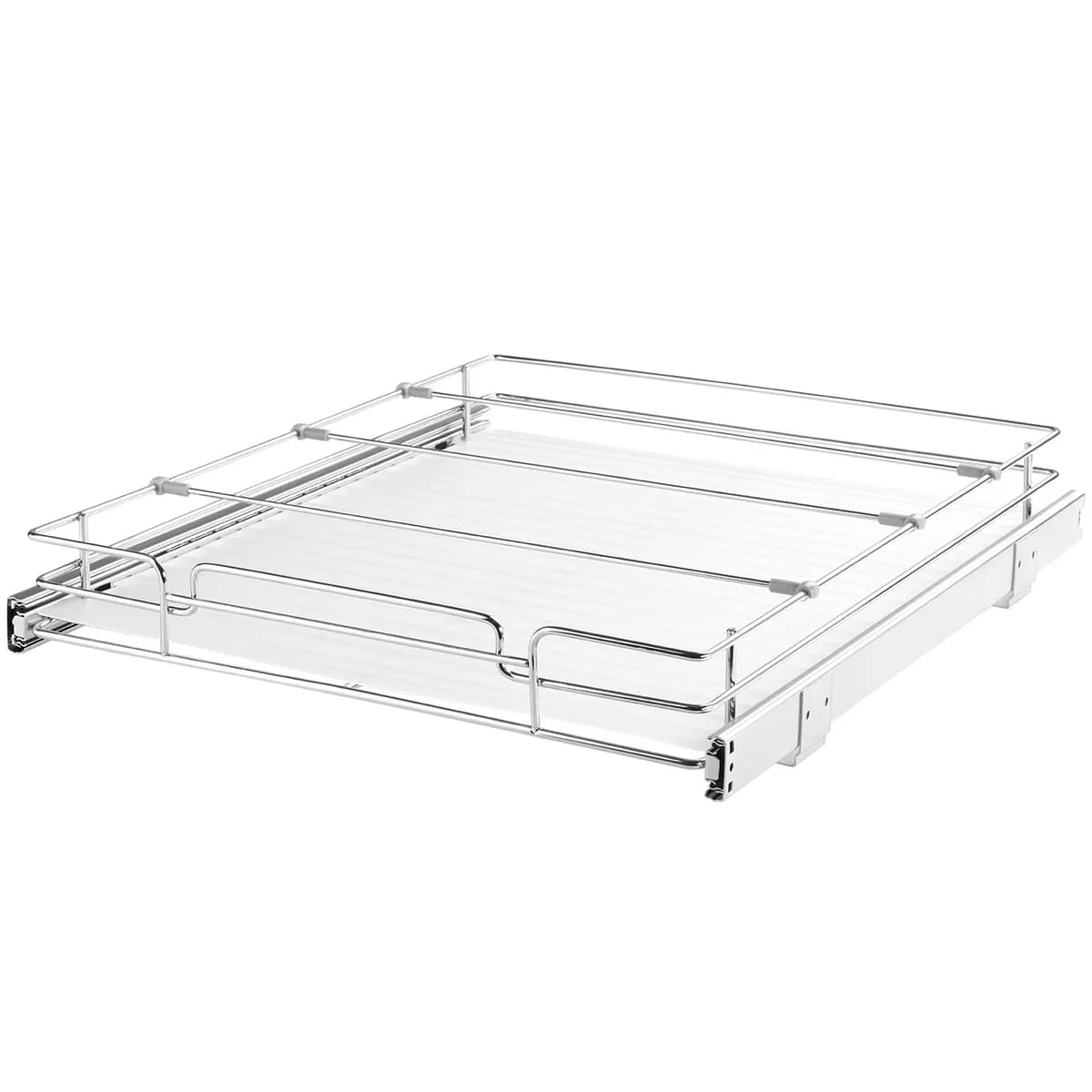
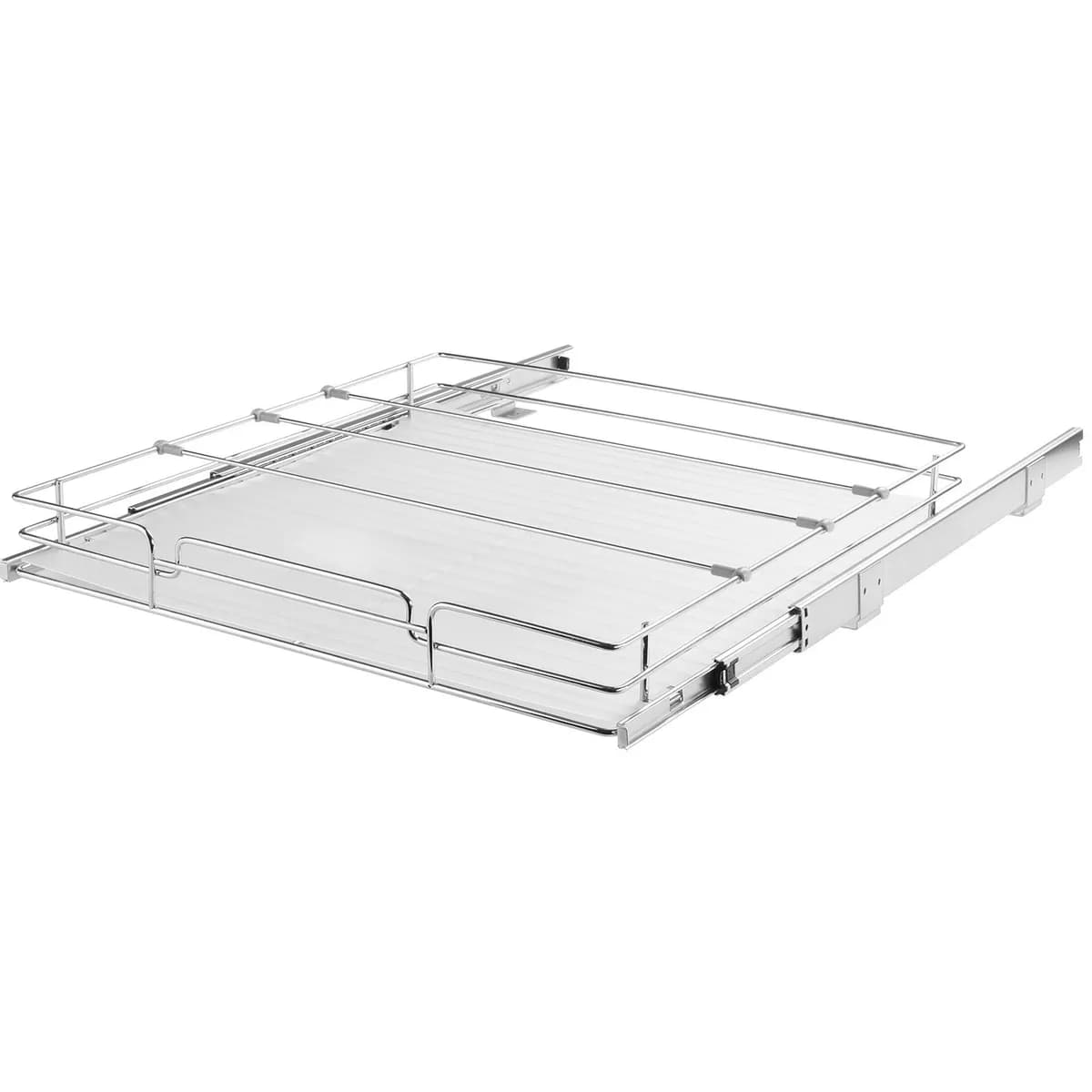
If you want to turn this guide into a real setup, start with Pull-Out Cabinet Organizer, 14 in. Wide and Double-Layer Bamboo Bread Box. For broader options, browse the Kitchen & Dining collection so the article journey does not stop at reading only.
Our practical rule: choose one product that solves the main clutter problem first, then add supporting organizers only when the daily workflow is already clear. This keeps the shopping path useful, not pushy.
FAQ: Frequently Asked Questions About Pyrex Food Storage Containers
Are Pyrex food storage containers truly oven-safe?
Use only glassware approved for the intended oven and follow the exact product instructions. Fully preheat the oven, do not move frozen glass directly into a hot oven, and remove plastic lids unless that particular lid is expressly approved. There is no universal temperature statement in this guide for every Pyrex product.
Can I put Pyrex containers directly from the freezer into the microwave?
Follow the exact product's microwave and thawing instructions, and thaw frozen meals in the refrigerator rather than relying on a few minutes at room temperature. Do not microwave empty or nearly empty glassware. The manufacturer's warning against thermal shock still applies to glass described as tempered.
Do Pyrex lids create an airtight seal?
Seal performance depends on the exact product and condition of its lid. Check the manufacturer's leakproof or airtight claim rather than inferring it from a press-fit or locking design. Replace a warped or damaged lid, and do not treat an airtight seal as a substitute for refrigeration.
How many containers do I need to start a practical Pyrex set?
For a household of two to four people, a set of 10 pieces (which typically includes five containers and five lids in assorted sizes) is a solid starting point for everyday fridge storage and meal prep. You can always add larger containers as your cooking habits evolve.
Are Pyrex containers safe for storing acidic foods like tomato sauce?
Use a container intended for food storage and follow its instructions for the food and temperature involved. Clean, intact glass is convenient for sauces because it is easy to inspect, but it does not make a perishable sauce safe indefinitely. Keep it refrigerated as appropriate and follow food-storage guidance.
What is the difference between Pyrex and Pyrex glass?
In the United States, the Pyrex brand sold by Corelle Brands produces containers made from tempered soda-lime glass. The original Pyrex formulation used borosilicate glass, which is still used by some European manufacturers under similar branding. For most everyday kitchen storage needs, the current US Pyrex tempered glass performs reliably when used according to the safety guidelines above.
Can the glass dish go on the stovetop?
No. Pyrex safety guidance prohibits using this glassware on a stovetop or other direct heat source, including under a broiler. Oven approval does not mean burner, grill or countertop-appliance approval. Follow the exact product instructions.
Conclusion: Upgrade Your Kitchen with Pyrex Food Storage Containers
A useful Pyrex food storage container collection fits your meals and cabinet dimensions, has lids you can match reliably, and is used within its actual safety instructions. Start with the pieces you reach for repeatedly rather than buying the largest set. There is no need to replace every plastic container merely to make the shelves look coordinated.
The key is choosing the right sizes for your household, organizing them thoughtfully in your cabinets and fridge, and following the simple care habits that will keep your set in great shape for years to come. A well-organized kitchen starts with the right tools, and Pyrex gives you exactly that.
Ready to explore more kitchen organization essentials? Browse the full range of home and kitchen storage solutions at Sesoris and check out our best sellers to find products that help you truly live more organized. And if you are looking for even more food storage inspiration, our complete guide to food containers and storage is a great next read.
Liked this guide?
Get new organizing guides and the occasional new product by email. No spam, unsubscribe anytime.
Related articles


Explore more articles
- Dish Rack Above Sink: Ultimate Guide to Kitchen Space Organization
- 15 Brilliant Toy Storage Ideas for Living Room: Transform Your Family Space in 2026
- Best Desk Organizers for a Productive Work Desk
- Small Entryway Shoe Storage Ideas: 30 Smart Solutions for Tiny Spaces in 2026
- Craft Storage Room Ideas: Transform Your Creative Space with Smart Organization in 2026
- Plastic Storage Boxes: How to Choose and Use
- Enclosed Dish Racks: Dust-Free & Pest-Free Kitchen Storage
- Best Airtight Storage Containers for Pet Food: Keep Your Pet's Food Fresh in 2026