
Kitchen Food Storage Containers: The Ultimate 2026 Guide to Fresh, Organized Kitchens
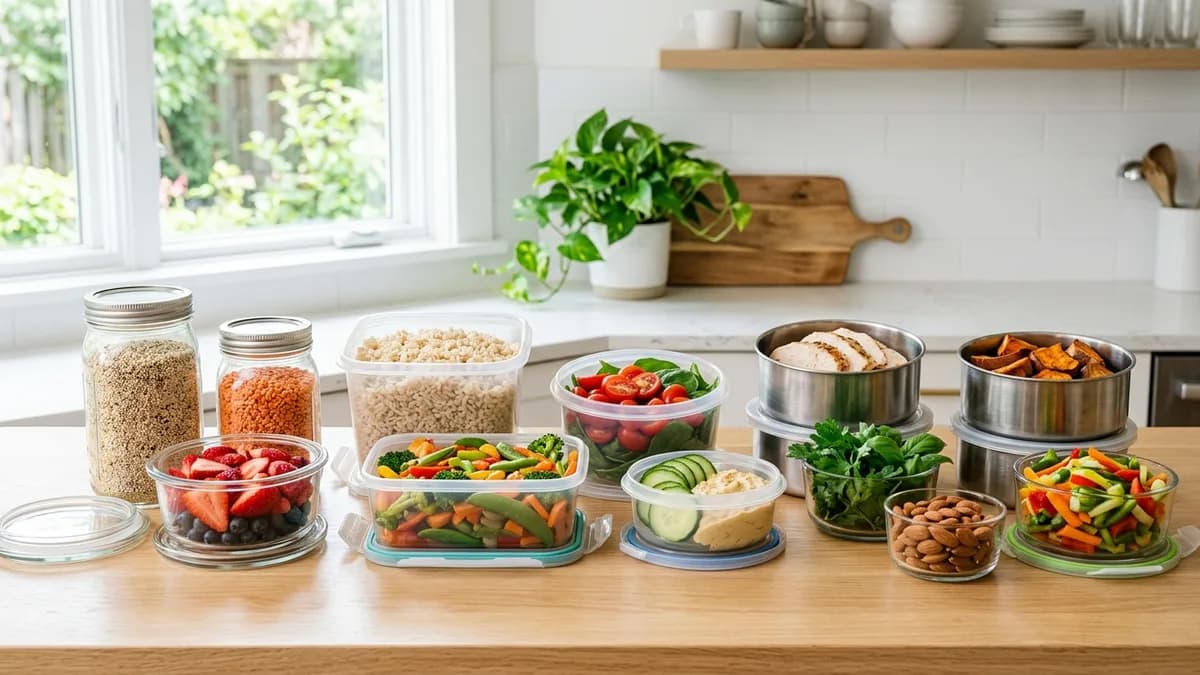
If your kitchen drawers are a chaotic jumble of mismatched lids and random containers, you are not alone. Finding the right kitchen food storage containers is one of the single most impactful changes you can make for your home in 2026. The right set keeps leftovers fresh, dry goods pest-free, meal prep simple, and your countertops and fridge looking clean. Whether you are stocking a walk-in pantry or organizing a compact apartment kitchen, this guide covers everything you need to know: which materials work best, how to pick the right size and shape, how to organize them so they are easy to grab, and what to look for before you buy.
Why Kitchen Food Storage Containers Matter More Than You Think
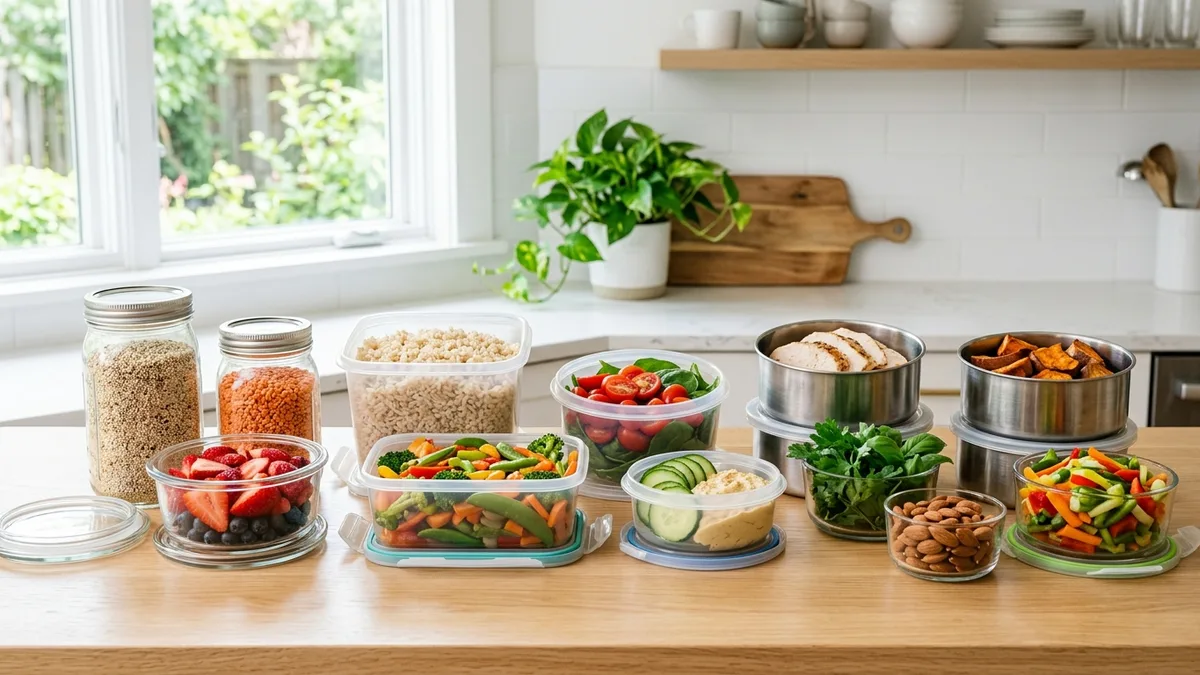
Most people underestimate how much a good set of kitchen food storage containers affects daily life. When food is stored properly, it stays fresh longer, which reduces food waste and saves money at the grocery store. According to the USDA Food Safety and Inspection Service, proper sealing and temperature control are two of the biggest factors in keeping food safe and extending its shelf life. Beyond food safety, well-chosen containers also make your kitchen look and feel organized, which is a daily quality-of-life win.
Upgrading your containers is one of the fastest ways to level up your kitchen organization. When everything has a clear, consistent container, you can see what you have at a glance, grab what you need without digging, and spend less time wondering if that leftover pasta is still good.
The Real Cost of Bad Storage
Flimsy lids, cracked plastic, and containers that never quite seal properly are not just annoying. They actively work against you. Food dries out, absorbs fridge odors, or attracts pantry pests. I have personally tossed out more than a few half-eaten meals because a warped lid let moisture escape overnight. Investing in quality containers pays for itself quickly.
Choosing the Right Material for Your Kitchen Food Storage Containers
The material of your containers is the single most important factor in the buying decision. Each type has real strengths and real trade-offs.
Glass Containers
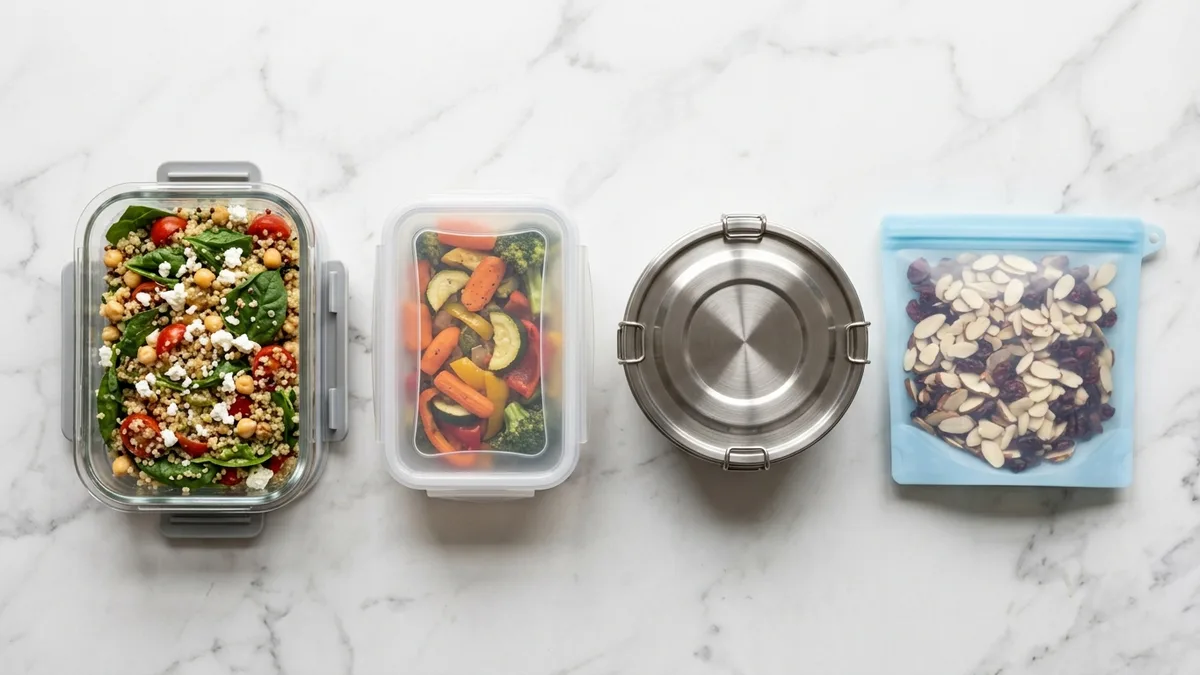
Glass is the gold standard for many home cooks in 2026. It does not absorb odors or stains, it is microwave and oven safe (check the specific product), and it looks beautiful on an open shelf or in a transparent fridge. Tempered glass containers are durable enough for daily use and are dishwasher safe. The main drawback is weight and the risk of breakage if dropped.
- Best for: Leftovers, meal prep, oven-to-fridge storage
- Look for: Tempered glass bodies, leak-proof locking lids, oven-safe ratings
- Avoid: Non-tempered glass that can shatter from thermal shock
For a deeper dive into glass options, check out our guide on best food storage containers glass.
BPA-Free Plastic Containers
Lightweight, affordable, and virtually unbreakable, plastic containers are a practical choice for families and anyone who packs lunch regularly. The key is to look for BPA-free labels. Bisphenol A (BPA) is a chemical formerly common in food-grade plastics that has raised health concerns, so most reputable brands have moved away from it entirely. Plastic can warp over time and may stain with tomato-based sauces, but it is hard to beat for portability.
- Best for: Packed lunches, kids' snacks, on-the-go meals
- Look for: BPA-free certification, dishwasher-safe labels, tight snap-lock lids
- Avoid: Clear plastic that has turned cloudy or cracked, which signals degradation
Learn more about safe plastic options in our BPA-free food storage containers guide.
Stainless Steel Containers
Stainless steel is incredibly durable, does not absorb odors, and is a fantastic eco-friendly alternative to single-use plastic. It is not microwave safe, and you cannot see the contents without opening it, but for lunchboxes, camping, or dry good storage, it is nearly indestructible. Many families are switching to stainless steel as part of a broader zero-waste kitchen effort.
- Best for: Kids' lunchboxes, dry snack storage, outdoor and travel use
- Look for: Food-grade 18/8 stainless steel, leak-resistant lids, smooth interior finish
- Avoid: Containers with rubber seals that are not dishwasher-safe if that matters to your routine
Silicone Bags and Containers
Silicone storage is flexible, collapsible, and completely freezer-safe. Silicone bags are a popular replacement for disposable zip-lock bags. They can be used in the microwave, freezer, boiling water, and some are even safe for sous vide cooking. They are lightweight and roll up small when empty, making them ideal for small kitchens.
- Best for: Freezing, marinating, snacks, small kitchens
- Look for: Food-grade platinum silicone, leak-proof zipper or fold-top seals
- Avoid: Thin silicone that does not hold its shape when filled with liquid
How to Size and Shape Your Kitchen Food Storage Container Collection
One of the most common mistakes people make when buying kitchen food storage containers is buying a set without thinking about how they will actually use each piece. Size and shape matter enormously.
Sizes You Actually Need
I recommend building your collection around three core size categories:
- Small (under 1 quart): Perfect for sauces, dressings, cut fruit, small snacks, and single-serving leftovers. These are the ones you grab most often.
- Medium (1 to 3 quarts): The workhorses of any container set. Great for soup, salads, cooked grains, and most dinner leftovers.
- Large (4 quarts and up): Ideal for batch cooking, storing a full pot of chili or stew, and keeping bulk dry goods like flour, oats, or dog kibble fresh.
Having at least two or three containers in each size category gives you the flexibility to handle any storage task that comes up.
Shape Considerations
Rectangular and square containers are almost always more space-efficient than round ones because they fit together without gaps. This is especially important inside your fridge and pantry where every cubic inch counts. Round containers are great for soups and liquids because they are easier to stir and pour from, but they leave wasted space on shelves.
Pro tip: Stick to one brand or one design system for your main container set. When all your lids are the same style and your containers nest or stack uniformly, your kitchen organization transforms almost instantly.
Matching Containers to Storage Zones
Think about where you will use each container:
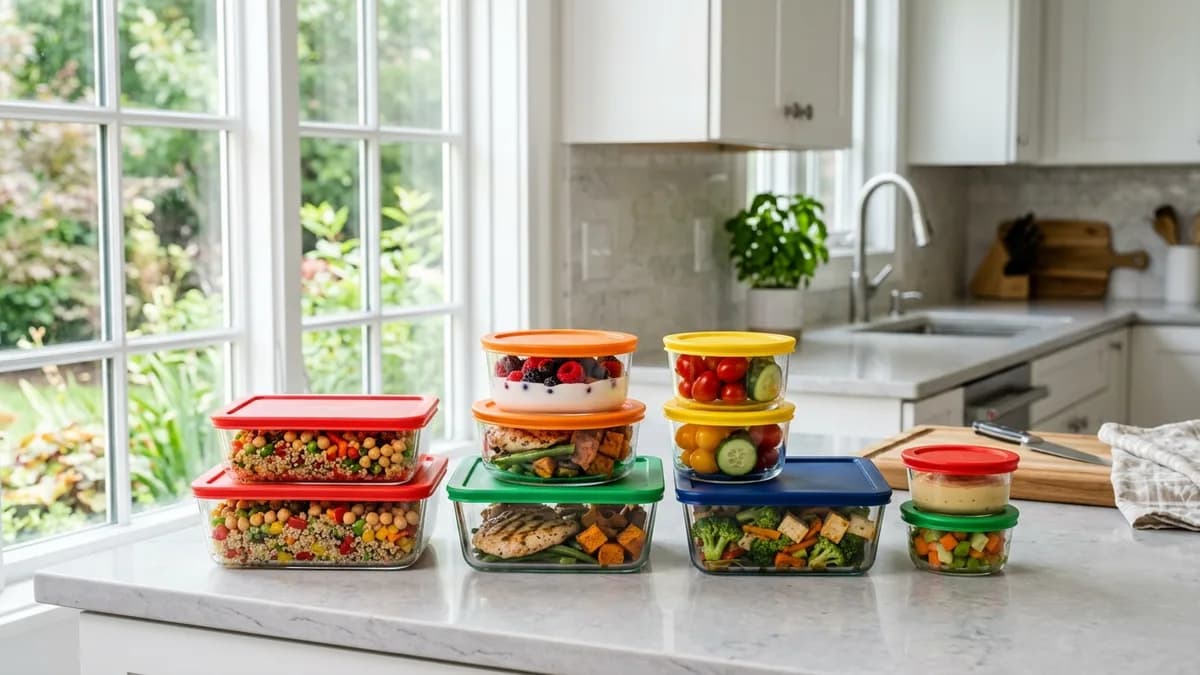
- Fridge zone: Rectangular glass or BPA-free plastic, clear so you can see contents at a glance
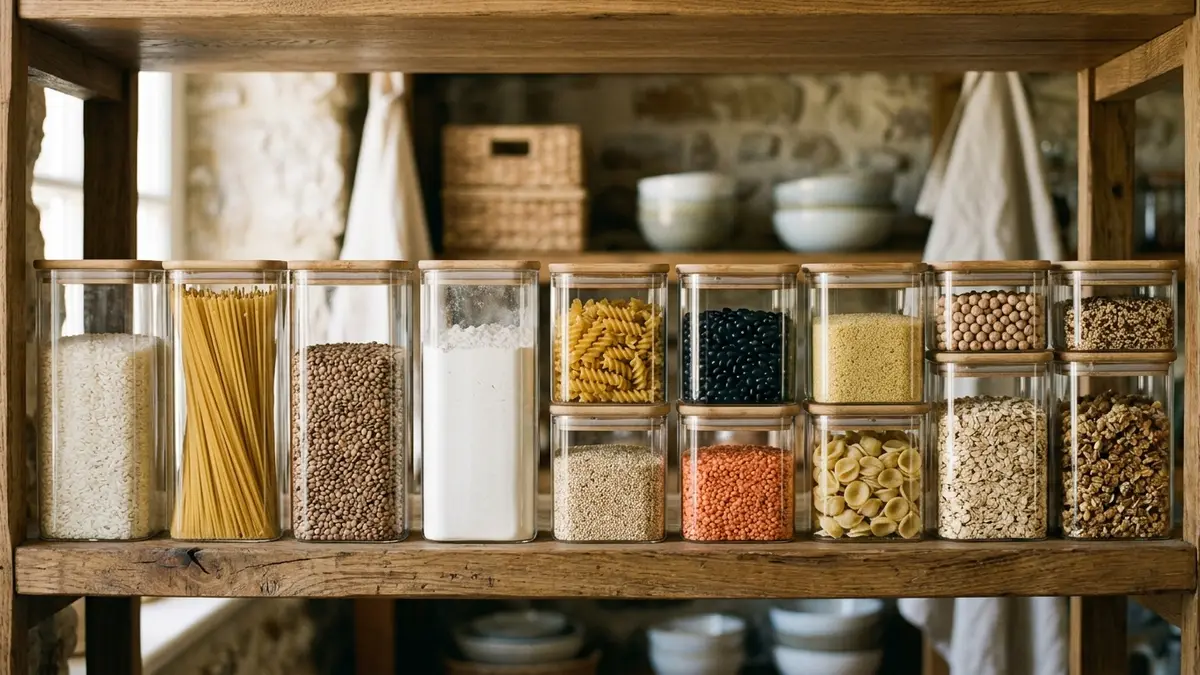
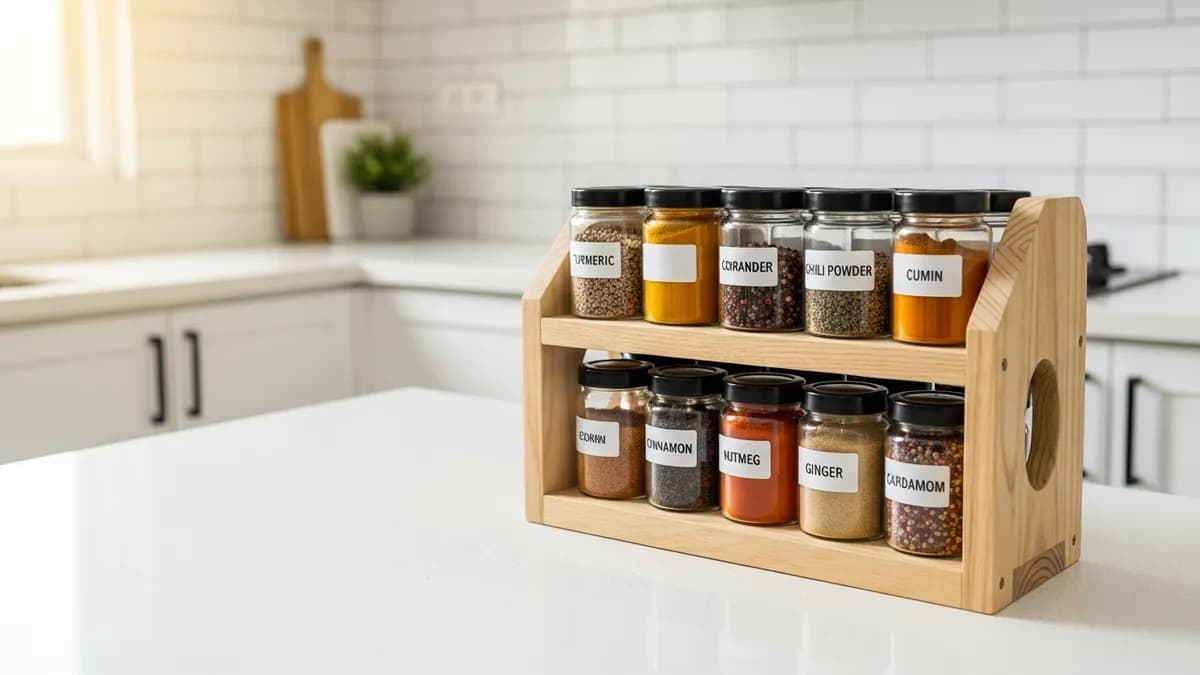
- Pantry zone: Square airtight containers for dry goods like pasta, cereal, nuts, and spices
- Freezer zone: Containers with wide mouths for easy filling, and materials rated for temperatures as low as minus 4 degrees Fahrenheit
- Countertop zone: Attractive glass or ceramic canisters for items you use daily like coffee, tea, or snacks
For more pantry-specific ideas, our food storage containers for pantry guide is a great next read.
Airtight Seals: The Feature That Makes or Breaks a Container
When it comes to kitchen food storage containers, an airtight seal is non-negotiable for most applications. Air exposure causes food to dry out, oxidize, and go stale faster. Moisture from an imperfect seal leads to soggy leftovers and mold growth. Here is what to look for in a good seal:
Types of Lid Seals
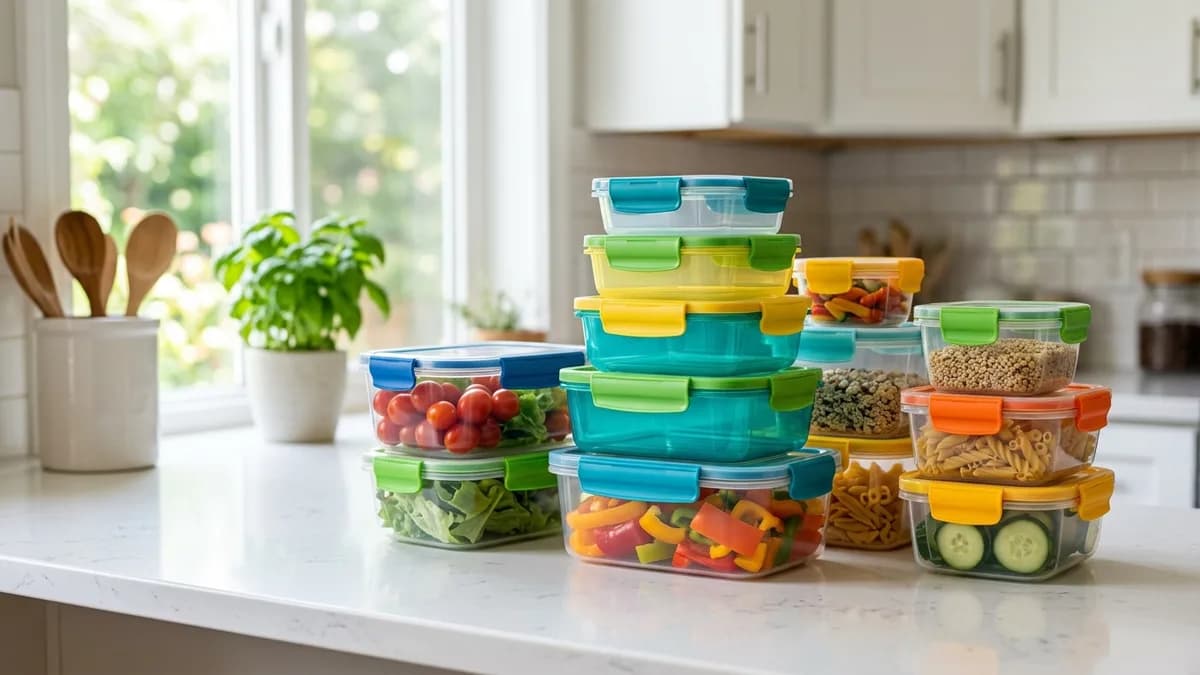
Snap-lock lids with four side clips are currently the most popular design for a reason. They create a uniform seal around the entire lid, are easy to open with one hand once you get the feel for them, and they hold up well in the dishwasher.
Screw-top lids are excellent for liquids and meal prep containers you plan to shake or transport. They are harder to open quickly but offer a very secure seal.
Push-down lids with a simple press-fit are fine for dry goods but are generally not leak-proof enough for liquids or refrigerator use.
Hinged or fold-top lids are common on silicone bags and work well for light storage, though they require a flat surface to stand upright.
For a comprehensive look at lid options, visit our article on food storage containers lids.
Testing the Seal Before You Buy
If you are buying in-store, press down on a fully assembled container and then tip it sideways. A good seal will not budge. If you are buying online, look for customer reviews that specifically mention leak-proof performance. A container that looks great in photos but leaks in a bag is useless.
According to Good Housekeeping, the best-performing containers in professional kitchen testing consistently have tight-fitting gasket-lined lids that maintain their seal even after hundreds of dishwasher cycles.
Organizing Your Kitchen Food Storage Containers So You Can Actually Find Things
Even the best containers become a frustration if they are not organized well. Here are the systems that actually work in real American kitchens.
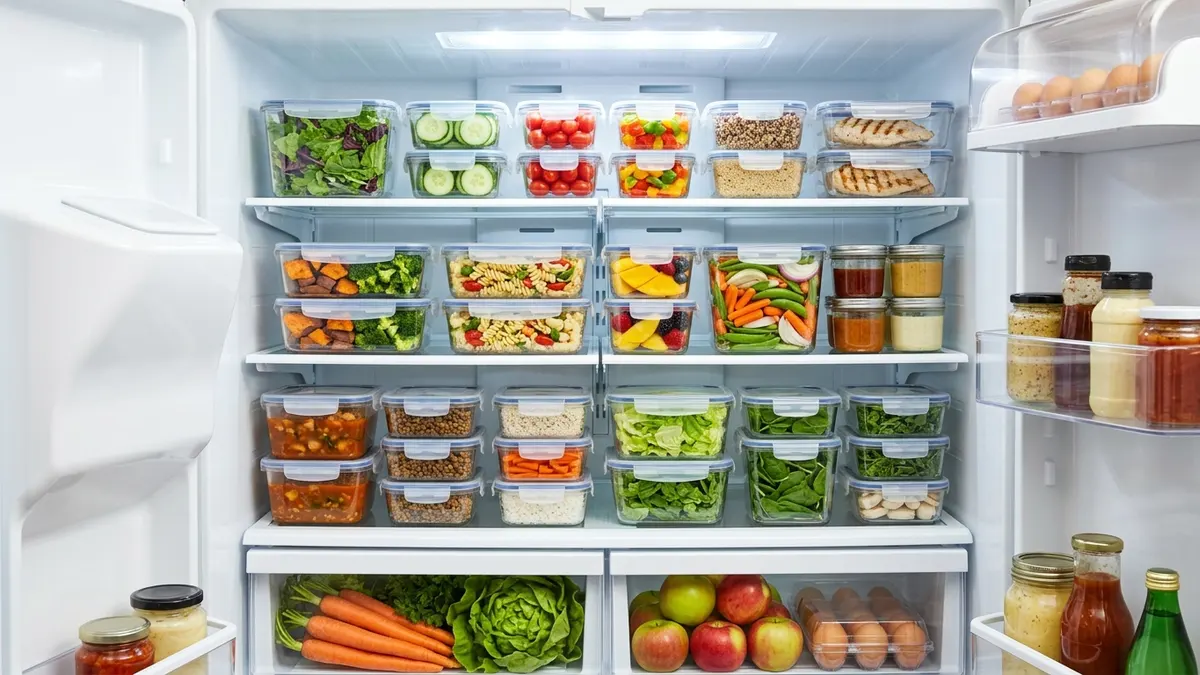
The Nesting and Stacking Method
Choose a container system where empty containers nest inside each other by size, and full containers stack on top of each other. Store lids separately in a vertical lid organizer or a deep drawer with a divider. This keeps your cabinet from turning into a lid avalanche every time you open the door.
Dedicated Zones in the Fridge
Assign specific shelves or zones in your fridge to different types of stored food. For example:
- Top shelf: Leftovers and ready-to-eat meals in clear rectangular containers
- Middle shelf: Meal prep ingredients and marinating proteins
- Bottom shelf: Large batch-cooked items like soups and grains
- Drawers: Produce in ventilated containers or reusable produce bags
This pairs beautifully with a full fridge organization strategy. Our fridge organization ideas article has 30 additional tips to take your refrigerator from chaotic to catalog-worthy.
Labeling Your Containers
Labeling is especially important for the freezer, where everything looks the same once frozen. Use freezer-safe masking tape and a permanent marker, or invest in reusable silicone labels. Note the contents and the date. A good rule of thumb from Real Simple is to check and rotate your freezer containers monthly so nothing gets buried and forgotten.
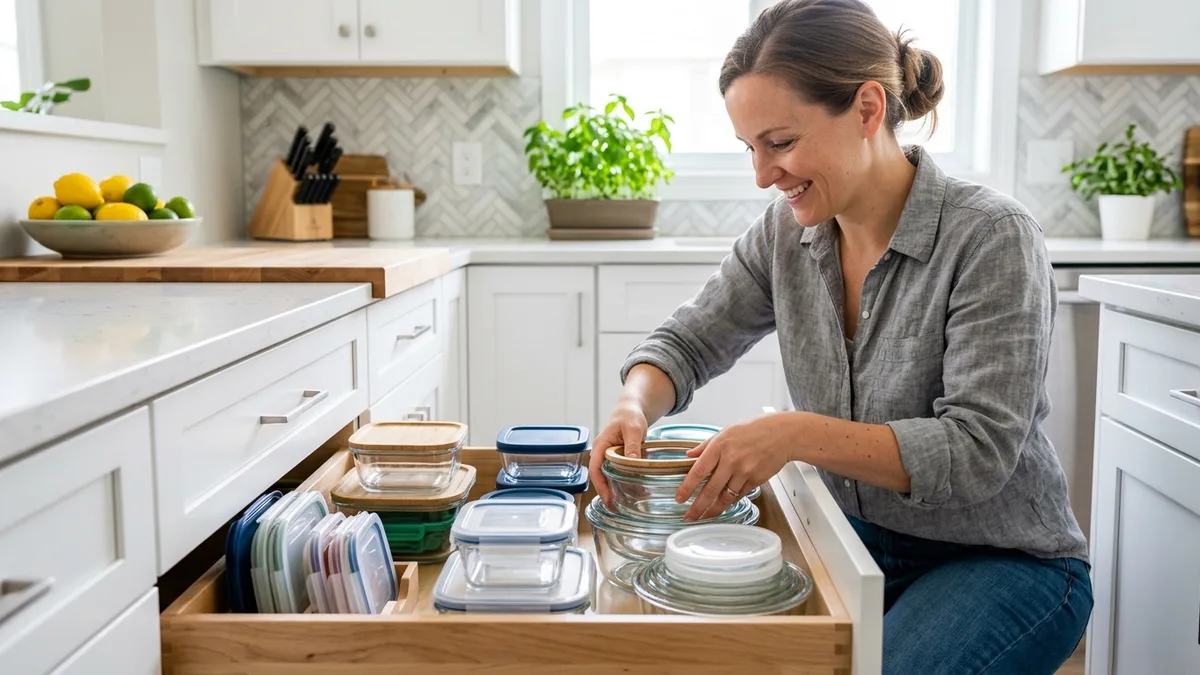
Cabinet Organization for Empty Containers
Store containers with their lids attached when possible to avoid the maddening hunt for matching lids. For sets with uniform lids, stack containers by size inside a dedicated cabinet or deep drawer. Use a small bin or a vertical file organizer to corral lids that are too large to stay attached during storage.
For more inspiration, check out our guide to kitchen counter organization ideas.
What to Avoid When Buying Kitchen Food Storage Containers in 2026
Not all containers are created equal. Here are the red flags to watch for when shopping:
- Mismatched lid systems: Sets where every lid is a different style or size are a recipe for frustration
- Opaque containers for the fridge: You cannot see what is inside without opening them, which leads to forgotten leftovers
- Very thin plastic: It warps in the dishwasher and cracks faster under regular use
- Containers without oven or microwave ratings: These are the wrong choice if you want to reheat food directly in the container
- Oversized sets you do not need: A 50-piece set sounds impressive until you realize you only use 12 of the containers and the rest take up a full cabinet shelf
- Lids without a silicone or rubber gasket: These rarely create a true airtight seal
A Simple Framework for Building Your Ideal Container Set
If you are starting from scratch or doing a full kitchen refresh in 2026, here is a practical framework for putting together a complete kitchen food storage container collection without overbuying:
- Start with a core set: Buy a matching set of 10 to 20 containers in small, medium, and large sizes from one brand so lids are interchangeable
- Add specialty pieces: One or two wide-mouth quart containers for soups, a set of small sauce containers for dressings, and a few large airtight canisters for pantry staples
- Include freezer-specific containers: At least four to six wide-mouth freezer-safe containers for batch cooking
- Get a silicone bag set: Six to eight reusable silicone bags in two sizes for snacks, freezing, and marinating
- Invest in one set of attractive countertop canisters: These live on your counter and hold daily-use items like coffee, flour, or sugar
This five-step approach gives you coverage for every storage scenario without cluttering your cabinets. Browse our best sellers to find sets that fit this framework perfectly.
Remember: The best kitchen food storage containers are the ones you will actually use consistently. Simple, durable, and well-organized always beats elaborate and ignored.
Related Products from Sesoris
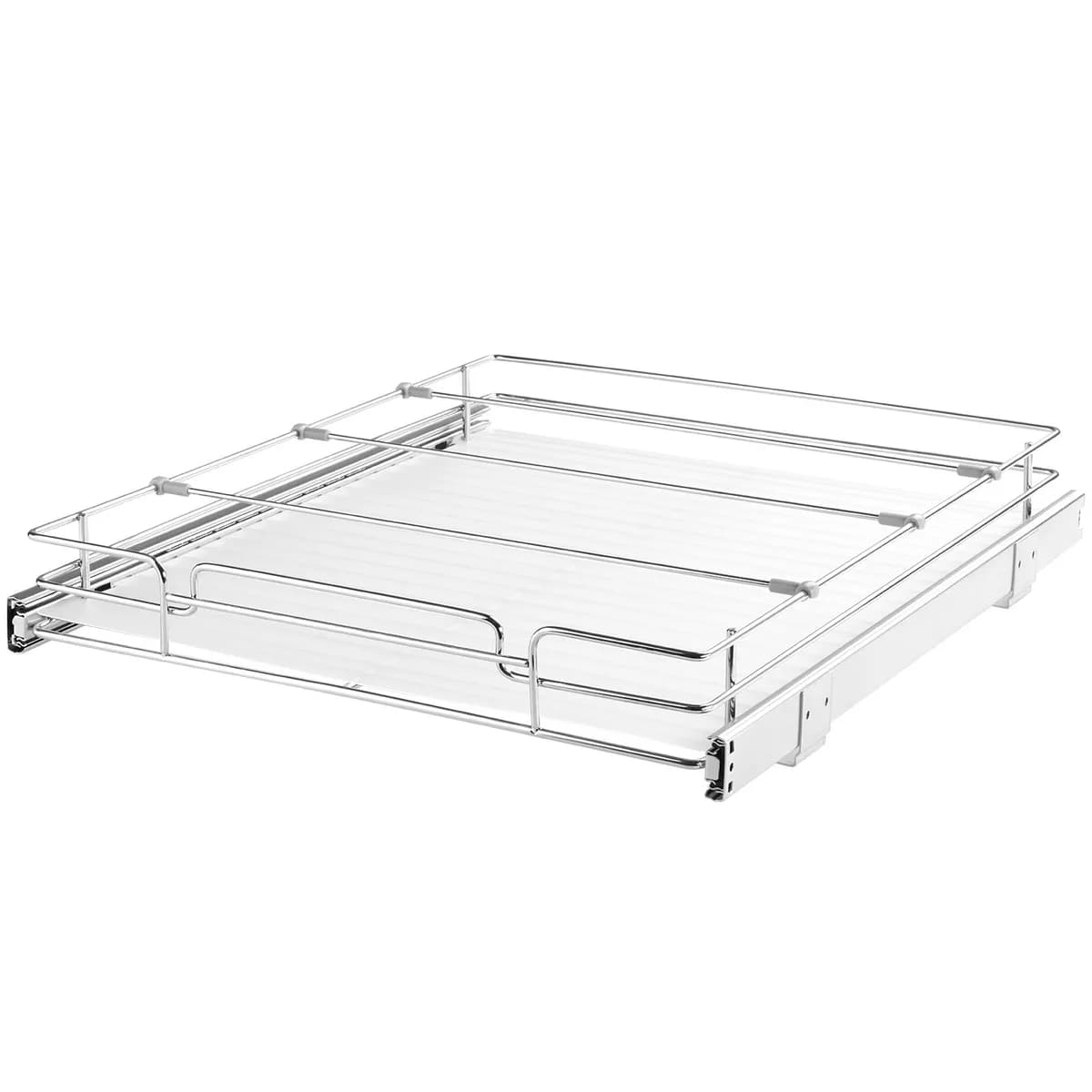
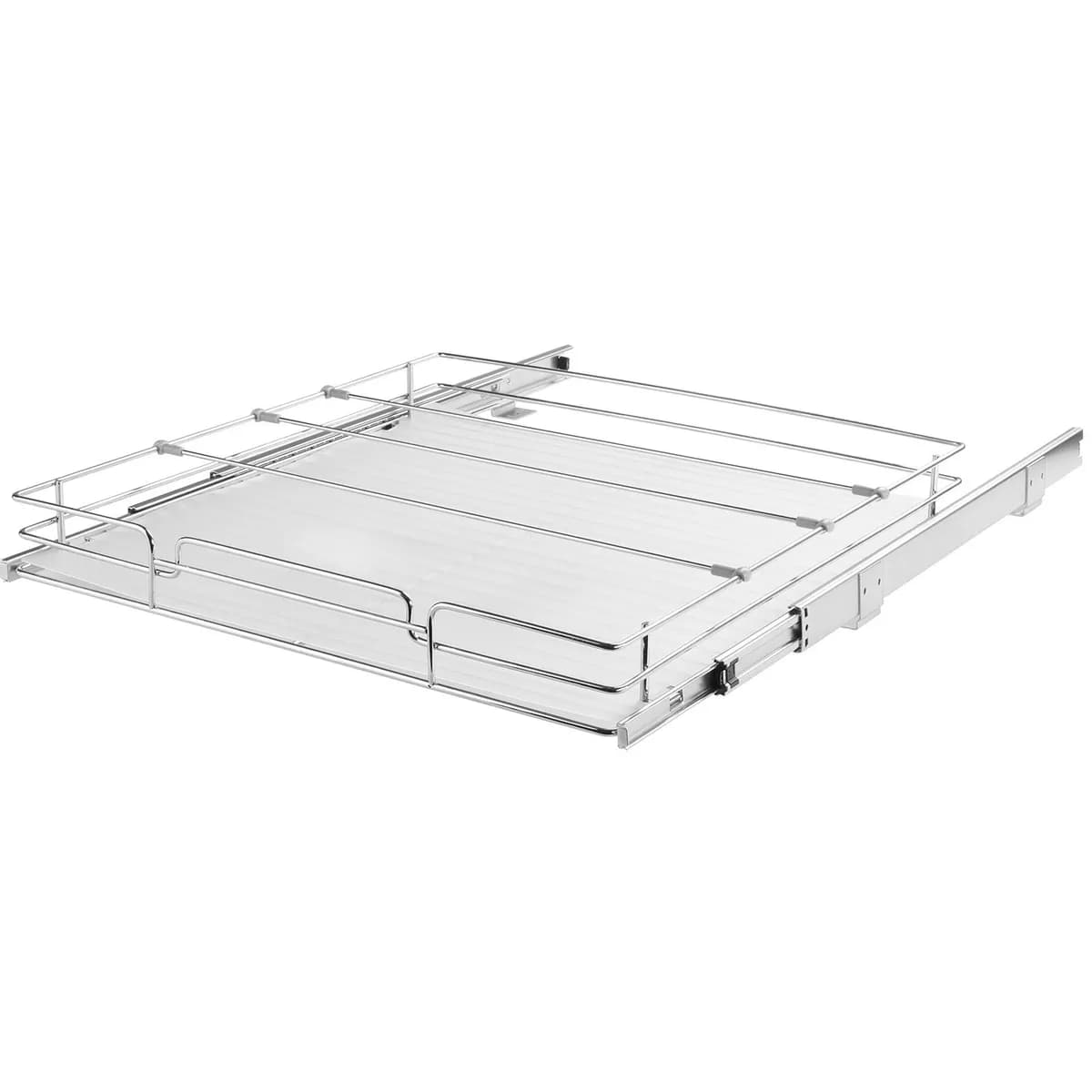
If you want to turn this guide into a real setup, start with Pull-Out Cabinet Organizer, 14 in. Wide and Double-Layer Bamboo Bread Box. For broader options, browse the Kitchen & Dining collection so the article journey does not stop at reading only.
Our practical rule: choose one product that solves the main clutter problem first, then add supporting organizers only when the daily workflow is already clear. This keeps the shopping path useful, not pushy.
FAQ: Frequently Asked Questions About Kitchen Food Storage Containers
Q: How many food storage containers do I actually need?
Most households do well with 10 to 20 containers in total, spanning small, medium, and large sizes. If you meal prep regularly or cook in large batches, you may want closer to 25 to 30. The goal is to have enough to store a week's worth of leftovers and prepped ingredients without running out, but not so many that your cabinet becomes unmanageable.
Q: Can I use glass food storage containers in the freezer?
Yes, but with conditions. The glass must be labeled as freezer-safe. Always leave at least one inch of headspace in the container because liquids expand as they freeze. Avoid moving glass containers directly from the freezer to a hot oven or microwave, as rapid temperature changes can cause thermal shock and cracking.
Q: What is the difference between airtight and leak-proof?
Airtight means no air can enter or escape, which is ideal for keeping dry goods fresh and preventing fridge odors from transferring. Leak-proof means no liquid can escape, which is what you need for soups, sauces, and anything you plan to transport in a bag. The best containers for most kitchens are both airtight and leak-proof.
Q: Are plastic food storage containers safe to microwave?
Only if they are labeled microwave-safe by the manufacturer. Even then, I recommend transferring acidic or fatty foods to a glass or ceramic dish before microwaving, as heat can cause some plastics to degrade over time. Look for containers that explicitly state BPA-free and microwave-safe on the packaging.
Q: How often should I replace my food storage containers?
Replace plastic containers when they become warped, cracked, deeply scratched, or discolored. These changes can harbor bacteria and indicate the material is breaking down. Glass containers can last indefinitely if handled carefully. Silicone containers should be replaced when they develop tears or when the seal stops holding.
Q: What is the best way to remove food odors from plastic containers?
Soak the container in a solution of one tablespoon of baking soda per cup of warm water for at least 30 minutes, then wash normally. For stubborn smells like garlic or fish, stuff the dried container with crumpled newspaper overnight. White vinegar is also effective for neutralizing acidic odors.
Conclusion: Build a Kitchen That Works for You
The right set of kitchen food storage containers is one of those foundational investments that quietly improves your daily life in dozens of small ways. Food stays fresher, your fridge looks cleaner, meal prep becomes a habit instead of a chore, and you stop throwing away food because you forgot it was in there. In 2026, the options are better than ever: more durable materials, smarter lid designs, and beautiful aesthetics that make your kitchen feel intentional rather than improvised.
Start by identifying your biggest pain points, whether that is leaky lids, a chaotic fridge, or a pantry full of open bags, and choose containers that directly solve those problems. Build around a core matching set, add specialty pieces where you need them, and create a simple organization system so every container has a place.
Ready to upgrade your kitchen? Explore our full range of home organization products at Sesoris and check out our new arrivals for the latest kitchen storage solutions. Your most organized kitchen yet is just a few containers away. Live More Organized.
Weekly Home Tips
Get home organization ideas, product picks, and exclusive deals delivered weekly.
No spam. Unsubscribe anytime.
Explore More Articles
- Kitchen Dish Rack Guide: Best Kitchen Plate Storage Solutions for 2026
- 30+ Stunning Decorating Wall Shelf Ideas to Transform Your Home in 2026
- L-Shaped Kitchen Design: The Most Efficient Layout
- Home Decluttering Guide for Beginners
- How to Speed Clean Your House in 30 Minutes
- Bedroom Wall Shelf Ideas for Small Spaces
- 20+ Brilliant Storage Space Ideas for Small Bedrooms: Maximize Every Inch in 2026
- Under Stairs Storage Ideas: Smart Ways to Transform Awkward Space in 2026