
Sliding Door Closet Organization Ideas That Work Around the Doors
Sliding door closet organization ideas that solve the half-open problem: split the closet into two zones, use the full height, fix the floor and corners, and keep both sides reachable.
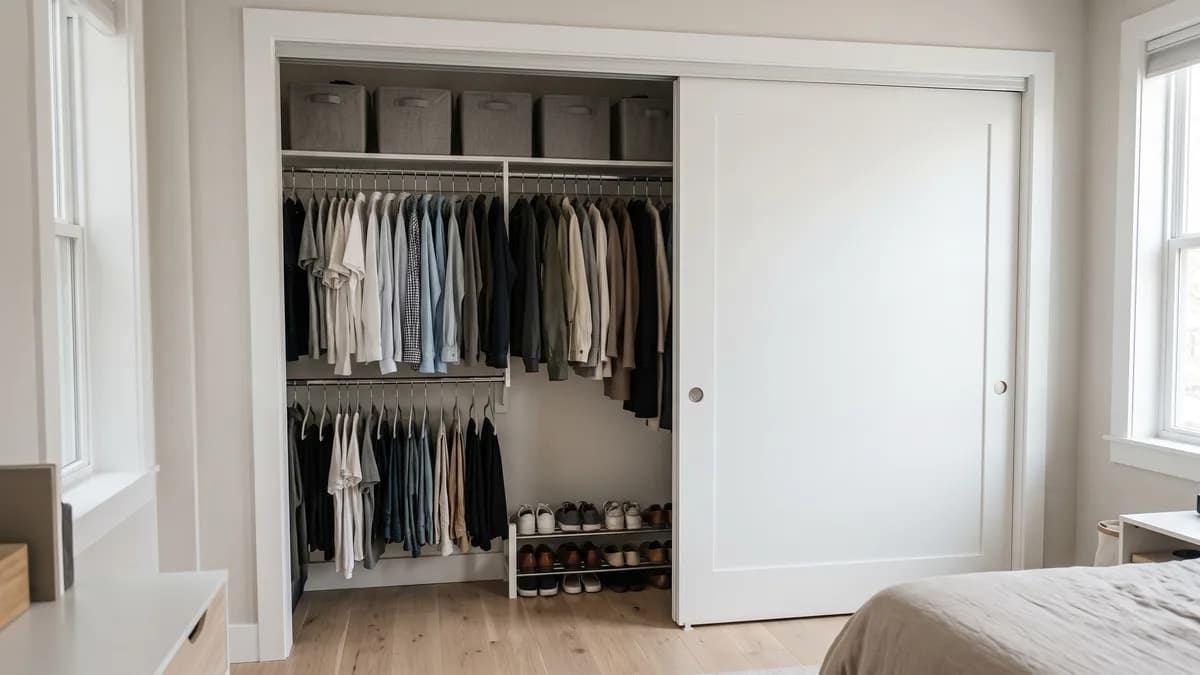
Sliding door closets are common in bedrooms, apartments and newer builds because the doors do not swing into the room. They also come with a built-in challenge: you can only ever see and reach about half of the closet at a time. One door always covers part of the space, and whatever lives behind it tends to get forgotten. The middle of the closet, where the doors overlap, is often the hardest spot of all to use. Sliding door closet organization ideas need to work with that limitation instead of fighting it.
This guide explains how to plan a reach-in closet with bypass doors, from splitting it into two zones to using the full height, organizing the floor, handling the awkward corners and choosing storage that does not block the doors. We also share small upgrades, like lighting and door tracks, that make a sliding closet easier to live with. For general closet strategy, our small closet organization ideas and how to organize your closet guides are good background reading.
The Sliding Door Problem, Explained
Most sliding closets use bypass doors: two or three panels on parallel tracks that slide past each other. Open the left door and it covers the right side, and the reverse. That means the closet effectively has two separate openings, each about half the width of the closet.
This shapes how you should organize it. Anything wider than one opening, such as a long shelf unit or a large bin, can be awkward to get in and out. Anything stored right behind the center, where doors overlap, is never fully visible from either side. And anything that sticks out past the door track, such as a tall bin on the floor or a hook on the side wall, can stop the doors from sliding.
The upside is that this layout pushes you toward a very clear system. When each side of the closet has its own job, you always know which door to open.
Split the Closet Into Two Zones
The most useful sliding door closet organization idea is to treat the closet as two closets. Decide what each half is for, and keep each category entirely on one side so you never have to slide doors back and forth to get dressed.
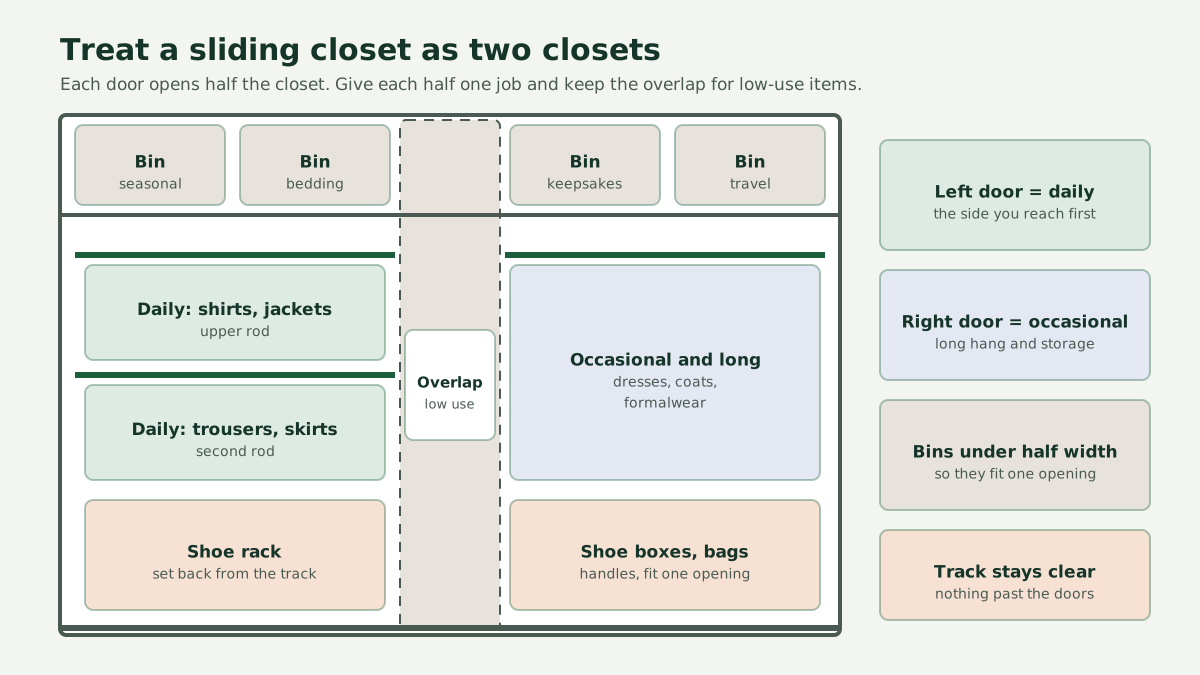
Common ways to split the zones:
- Daily and occasional: everyday clothes on one side, formalwear, seasonal clothes and storage on the other.
- Person A and person B: in a shared bedroom, each person gets one door.
- Hanging and folded: long hanging on one side, shelves and drawers on the other.
- Clothes and household storage: in a guest room, one side for guests, one side for linens and keepsakes.
Put the daily zone behind the door you naturally reach first, usually the side closest to the bed or the bedroom door. That small detail saves steps every single morning.
Use the Full Height of the Closet
Reach-in closets usually have one rod and one shelf, which wastes a lot of vertical space. Adding height is the fastest way to increase capacity.
Start with the top shelf. Most closets have unused space above it, so add a second shelf or stack sturdy bins for seasonal clothes and items you rarely need. Use bins that are no wider than half of the closet opening, so they can come out through one door.
Below the rod, look at what hangs there. Shirts, jackets and folded trousers take far less height than dresses or long coats. On the side with short items, a second rod below the first can nearly double hanging space. Keep one section of full-height rod for long items.
Soft storage helps on the top shelf because it compresses. Bulky bedding and puffy coats take a fraction of the space when compressed.
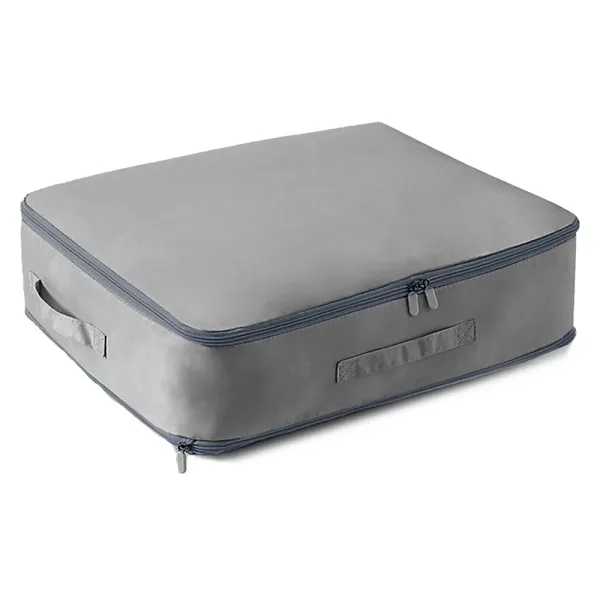
Our Compression Storage Bag for Bedding measures 20.47 x 16.53 x 11.81 in. and zips down from 11.81 to 5.9 in. tall, which makes a comforter or a stack of winter sweaters fit on a top shelf that was full before.
Organize the Closet Floor
The floor of a sliding closet tends to fill with shoes, bags and laundry, and those items then block the doors. A clear floor plan avoids that.
Keep everything on the floor inside the door track, set back from the front edge so doors slide freely. Low shoe racks work well because they stay below hanging clothes and can be pulled forward through one opening. Lidded boxes with compartments are another option, especially for shoes you do not wear every week.
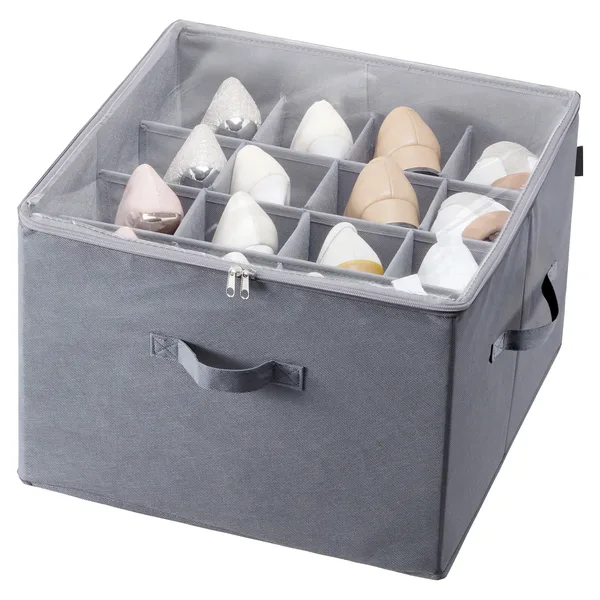
Our Under-Bed Shoe Storage Box has 16 compartments with movable dividers and a clear lid, at 17 x 17 x 12.4 in. That size fits through one half of most bypass closet openings and slides onto the closet floor or under the bed when space runs out.
Laundry is the other floor problem. A hamper with a lid near the closet, rather than a pile on the closet floor, keeps dirty clothes contained and stops them from catching under the doors.
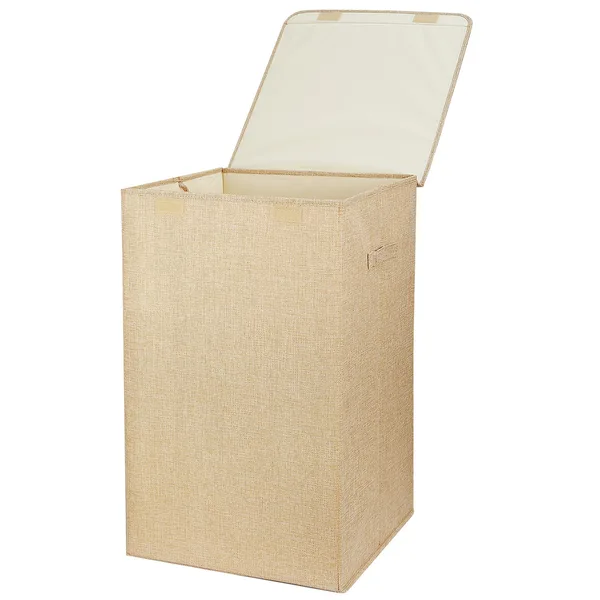
Our Foldable Laundry Hamper with Lid is 15.75 x 15.75 x 24.8 in. with a lid and side handles, and it folds flat when you need the space back.
Make the Corners and Center Work
Reach-in closets are usually wider than their door openings, which leaves deep side corners behind the wall on each end. Those corners are hard to see and reach, so they suit items you rarely need: luggage, keepsake boxes, spare bedding or out-of-season shoes. Use containers with handles so you can pull them out without climbing in.
The center, where doors overlap, is the other awkward spot. It is visible only partly from either side. Avoid putting daily clothes there. Instead, use it for long items that hang in one place, such as coats or garment bags, or for a narrow set of shelves that you can reach into from either opening.
Some people mount a hanging organizer or tall shelf unit in the middle to separate the two zones visually. That works if the unit is narrow and does not stick out past the track.
If your closet has three door panels instead of two, the same logic applies with three zones. The middle panel usually gives the best access, so make that the daily zone and use the two outer sections for occasional clothes and storage. With three panels there are two overlap areas instead of one, which makes narrow vertical storage, such as a hanging shelf organizer, even more useful in those spots.
Choose Storage That Does Not Block the Doors
Measure before buying anything for a sliding closet. Three numbers matter most:
| Measurement | Why it matters | Tip |
|---|---|---|
| Width of one door opening | Largest item you can get in or out | Choose bins and units narrower than this |
| Depth from back wall to door track | Maximum storage depth | Leave a small gap so doors do not rub |
| Height under the rod | Space for floor storage | Measure the shortest hanging item on that side |
| Height above the top shelf | Room for extra shelf or bins | Check against the door header |
| Side corner depth | Space for rarely used items | Use handled bins to reach them |
Hooks, door-mounted organizers and over-the-door racks generally do not work on sliding doors, because the doors pass each other with little clearance. If you want hooks, mount them on the inside side walls, set back far enough not to catch hanging clothes.
For more closet systems that work in tight spaces, see our modular closet organization and corner closet system guides.
Small Upgrades That Make a Big Difference
A few small changes make sliding closets noticeably easier to use:
- Add lighting. Battery-powered motion lights inside each half make the back of the closet visible.
- Clean and adjust the tracks. Vacuum dust from the bottom track and adjust rollers so doors glide easily.
- Use matching slim hangers. They save rod width and make each half look calmer.
- Label top-shelf bins. Put labels on the front edge so you can read them from below.
- Consider mirrored or lighter doors. Mirrored panels can make a small bedroom feel larger, and they double as a dressing mirror.
- Keep a landing spot. A hook or valet stand outside the closet gives tomorrow's outfit a home.
These upgrades do not change the layout, but they remove the small frictions that make people stop putting things away.
A Simple Routine to Keep It Working
Organized closets slip when putting things back takes effort. Keep a short routine:
- Daily: hang or fold clothes back in their zone, and drop laundry straight into the hamper.
- Weekly: clear anything that has landed on the floor and check that doors slide freely.
- Seasonally: swap the top-shelf bins with the daily zone, and donate anything you did not wear.
Seasonal swaps are easier when off-season clothes are already in labeled, compressed bags on the top shelf. Our guide to small space clothing storage ideas covers more ways to rotate clothes through the year, and our step-by-step guide on how to organize your bedroom closet shows how the closet fits into the wider room.
Related Products from Sesoris
If you want to turn these sliding door closet organization ideas into a real setup, start with the Compression Storage Bag for Bedding for the top shelf and the Under-Bed Shoe Storage Box for the floor. A Foldable Laundry Hamper with Lid keeps laundry out from under the doors. Browse more options in our Home & Decor collection.
Our practical rule: choose one product that solves the main clutter problem first, then add supporting organizers only when the daily routine is already clear.
Frequently Asked Questions About Sliding Door Closet Organization Ideas
Q: How do you organize a closet with sliding doors?
Treat it as two closets. Give each side a clear job, such as daily clothes on one side and occasional items on the other, use the full height with extra shelves or a second rod, and keep floor storage set back from the door track.
Q: What should go in the middle of a sliding door closet?
Items you do not need every day, like long coats, garment bags or a narrow shelf unit you can reach from either side. Avoid putting daily clothes where the doors overlap.
Q: Can you use over-the-door organizers on sliding doors?
Usually not. Bypass doors slide past each other with very little clearance, so over-the-door racks tend to catch. Mount hooks or organizers on the inside side walls instead.
Q: How do I use the corners of a reach-in closet?
Use the deep side corners for rarely used items such as luggage, keepsakes or spare bedding, stored in containers with handles so you can pull them out easily.
Q: How wide should storage bins be for a sliding closet?
Narrower than one door opening, so you can get them in and out without moving both doors. Measure the opening before buying.
Q: How can I add more hanging space to a sliding door closet?
Add a second rod below the first on the side with shirts and folded trousers, and keep a section of full-height rod on the other side for long items.
Q: Why won't my sliding closet doors close properly?
Often something on the floor or a bin on a shelf is sticking out past the door track, or the track is dirty. Clear the track, set storage back, and adjust the rollers if needed.
Q: Are sliding closet doors good for small bedrooms?
Yes. They do not swing into the room, which saves floor space, and mirrored panels can make a small room feel larger. They simply need a two-zone layout to stay practical.
Conclusion: Work With the Doors, Not Against Them
The best sliding door closet organization ideas accept that you can only open half the closet at a time. Split the closet into two clear zones, use the full height, keep the floor organized and set back from the track, and save the corners and center for things you rarely need. Measure before you buy, and choose storage that fits through one opening.
With that structure in place, a sliding door closet becomes one of the easiest closets to keep tidy. For more ideas, explore our small walk-in closet organization ideas and closet storage and organization ideas.
Liked this guide?
Get new organizing guides and the occasional new product by email. No spam, unsubscribe anytime.
Related articles
Explore more articles
- Craft Room Organization: The Complete 2026 Guide to a Creative, Clutter-Free Space
- 30+ Best Small Pantry Ideas to Maximize Every Inch of Your Kitchen Storage in 2026
- Modular Shelving System: What to Compare
- Free Printable Storage Bin Labels: The Complete 2026 Guide to a Perfectly Organized Home
- Seasonal Decor Storage: The Complete 2026 Guide to Organizing Holiday & Seasonal Items
- 30+ Best Kids Bedroom Storage Ideas to Create a Fun, Tidy Space in 2026
- 25+ Best Book Storage Ideas for Small Spaces to Maximize Every Inch in 2026
- 30+ Best Under Sink Organization Ideas to Maximize Every Inch in 2026