
Apartment Closet Organization Ideas: 14 Renter-Friendly Fixes That Fit
Apartment closet organization ideas that work without drilling: double hanging rods, shelf bins, door racks, under-bed boxes and a freestanding rack when the closet runs out of room.
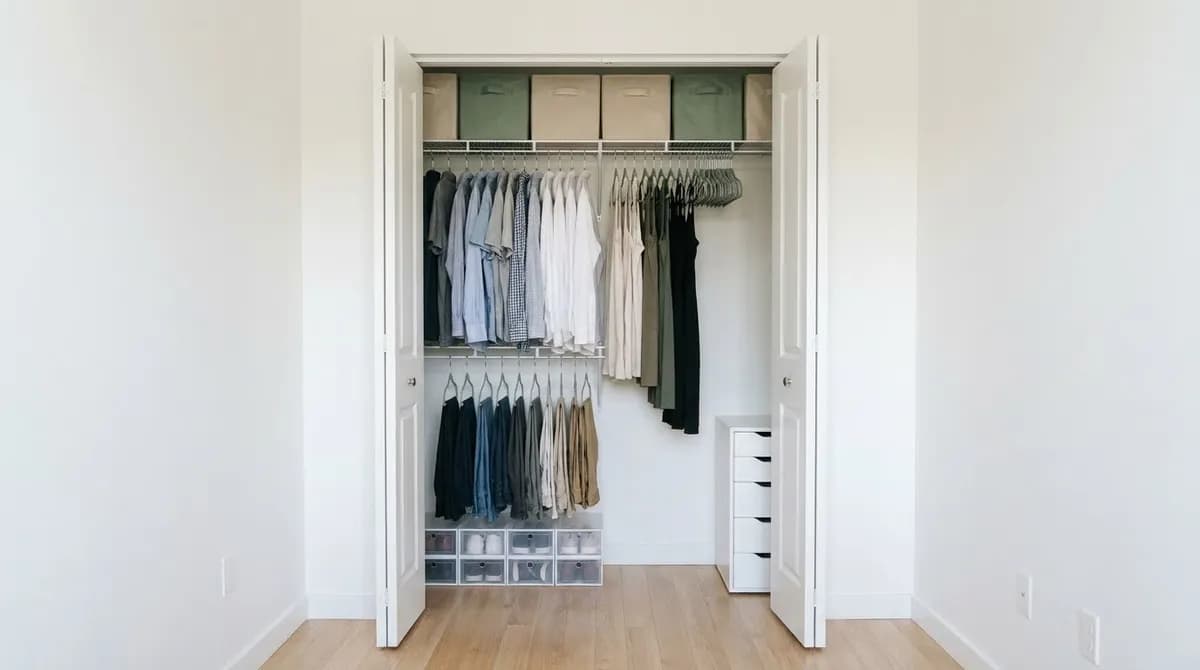
The best apartment closet organization ideas add storage without changing the closet itself. Double the hanging space with a second rod that hooks onto the first, put lidded bins on the shelf above the rod, use the back of the door for shoes and accessories, slide flat boxes under the bed for off-season clothes, and add a freestanding garment rack when the closet is simply too small. Everything on this list goes up without drilling, comes down in minutes and leaves the walls the way they were when you moved in, so it protects your security deposit as well as your sanity.
Renters face a closet problem that homeowners rarely do. Most apartment closets are a single reach-in space with one rod, one wire shelf and a pair of bifold or sliding doors. You usually cannot swap the shelving, cut new holes or install a custom system, and you may move again in a year or two. The goal is a setup that makes the existing closet work harder today and packs into a box on moving day.
What Makes Apartment Closets Different
A typical apartment closet is built for the minimum: a rod at one height, a shelf above it and a lot of empty air. In a small bedroom that closet may hold every piece of clothing you own, plus shoes, bags, bedding and the vacuum. The space is narrow, the depth is fixed and the light is often poor. On top of that, the lease limits what you can change. Many leases ask tenants to get written permission before drilling, painting or removing fixtures, and anything you add may need to come out before you hand back the keys.
That combination points to a clear strategy. First, use the vertical space the builder left empty, because most of the waste in a reach-in closet sits below the shirts and above the shelf. Second, prefer tension, hooks and freestanding pieces over screws. Third, cut the amount of clothing that lives in the closet at any one time, because the cheapest storage upgrade is fewer things to store. If your whole home feels short on room, our guide on how to organize a small apartment covers the rest of the rooms with the same renter-friendly approach.
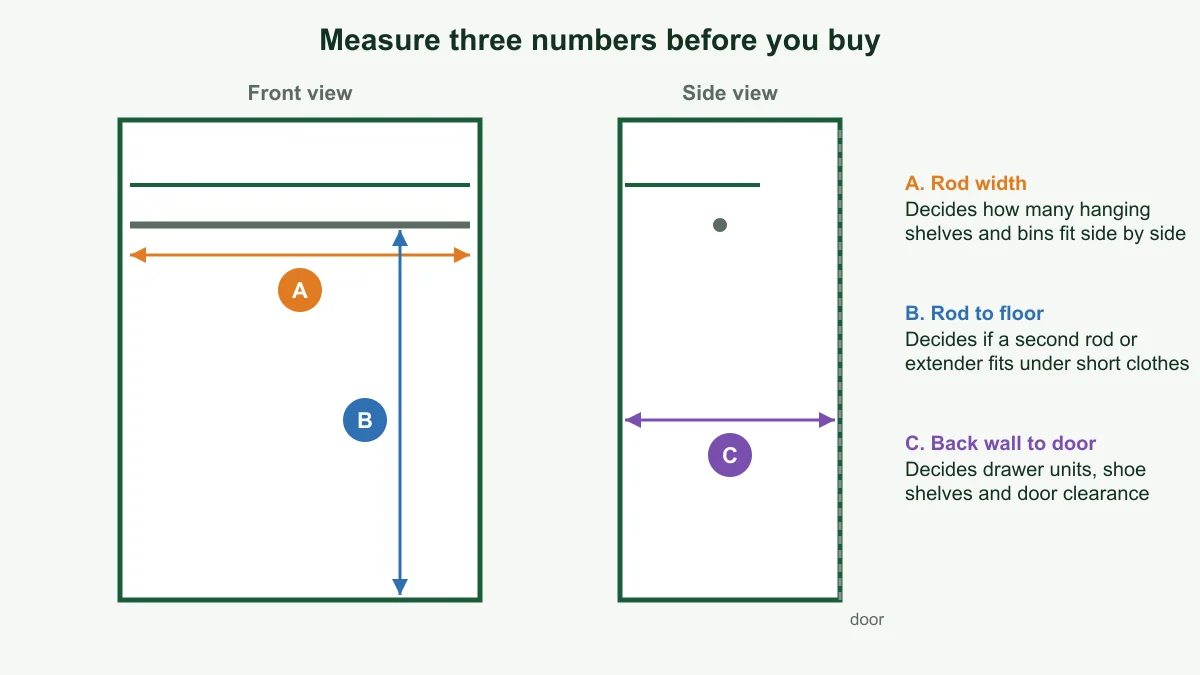
Before you buy anything, measure three numbers: the width of the rod, the height from the rod to the floor and the depth from the back wall to the door. Those three measurements decide which organizers will fit, and they keep you from returning a hanging shelf that is two inches too wide for the opening.
Apartment Closet Organization Ideas at a Glance
Use this table to pick the fixes that match your closet and your lease. Most renters combine three or four of them rather than doing all fourteen.
| Idea | Space it uses | Tools needed | Leaves a mark? |
|---|---|---|---|
| Hanging closet rod extender | Below short clothes | None, hooks on the rod | No |
| Tension rod as a second rod | Below or beside the main rod | None | No, if padded ends |
| Lidded bins on the top shelf | Above the rod | None | No |
| Shelf dividers | Top shelf edges | None, clip on | No |
| Hanging fabric shelves | Rod space | None | No |
| Slim matching hangers | Rod space | None | No |
| Over-the-door rack | Back of the door | None, hooks over the door | Rarely, use felt pads |
| Removable adhesive hooks | Side walls | None | Low risk if removed slowly |
| Floor shoe shelf | Closet floor | None | No |
| Under-bed storage boxes | Under the bed | None | No |
| Freestanding garment rack | Bedroom wall | Light assembly | No |
| Small drawer unit inside the closet | Closet floor | None | No |
| Clear bins for accessories | Shelf or floor | None | No |
| Seasonal rotation | Everywhere | None | No |
Double Your Hanging Space Without Tools
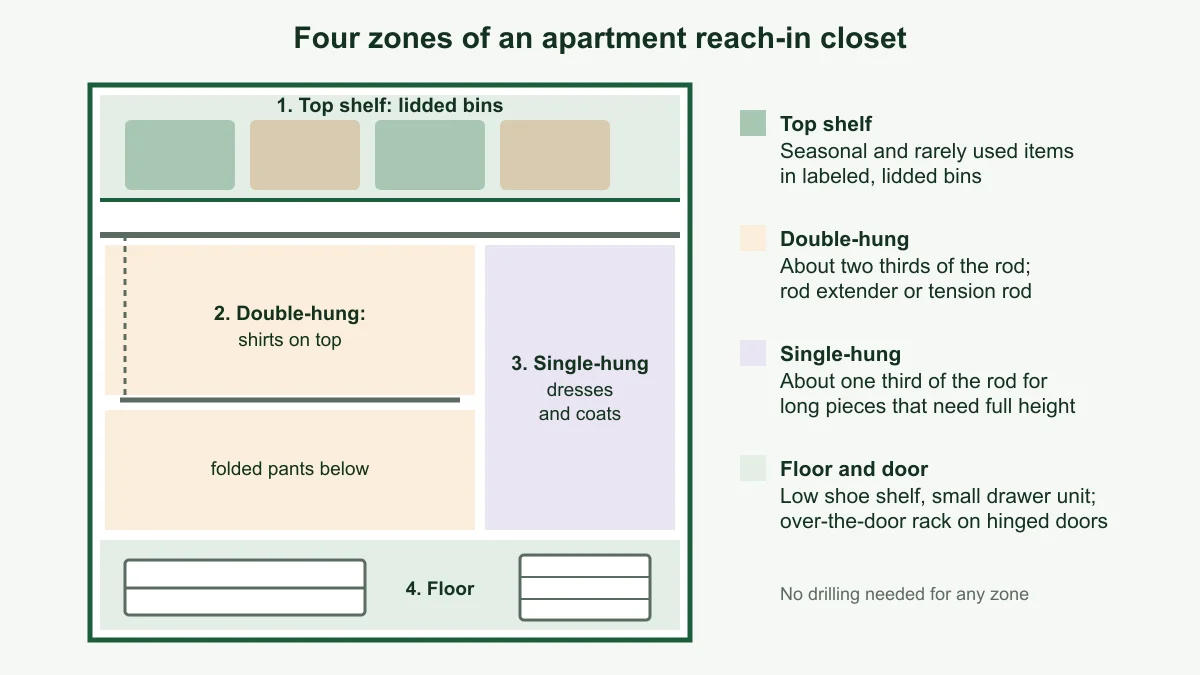
The fastest win in almost any reach-in closet is a second hanging level. Shirts, blouses and folded pants hang about half the height of the rod, which leaves a tall empty gap underneath. A closet rod extender hooks over the existing rod and drops a second bar into that gap, so two short garments occupy the space that one used to. It takes about thirty seconds to install and nothing to remove.
A spring tension rod is the other option. Pressed between the side walls of the closet below the main rod, it creates a lower level for skirts, kids' clothes or pants. Choose one with rubber or padded ends and do not overtighten it, because too much pressure can dent drywall. Tension rods hold less weight than a fixed rod, so put lighter garments on them and keep heavy coats on the original bar.
Long dresses and coats still need full height, so leave one end of the closet at a single level. A simple split works well: about two thirds double-hung for short items and one third single-hung for long ones. If your closet has sliding doors, put the long section behind the door you open less often. Our guide to sliding door closet organization ideas explains how to plan around the panel that always blocks half the space.
Use the Shelf Above the Rod
The wire shelf above the rod is usually the most wasted space in an apartment closet. Things get tossed up there, slide off the back and disappear. Lidded fabric bins or clear boxes turn that shelf into real storage. Pick bins that match the shelf depth so they do not hang over the edge, and give each one a single job: winter accessories, swimwear, spare bedding, gym clothes. Put a simple label on the front so you can find things without pulling every bin down.
Clip-on shelf dividers keep stacks of sweaters and jeans from toppling into each other, and they need no tools at all. If the shelf is wire, lay a thin liner or a sheet of cardboard on it first so small items and bin feet do not slip through the gaps. Heavy items belong lower down. A full bin of books or a box of paperwork on a high shelf is hard to lift safely and puts strain on the brackets you are not allowed to replace.
For a step-by-step method that also works for small closets, see how to organize your closet. The same sorting rules apply whether you rent or own.
Hanging Shelves and Slim Hangers
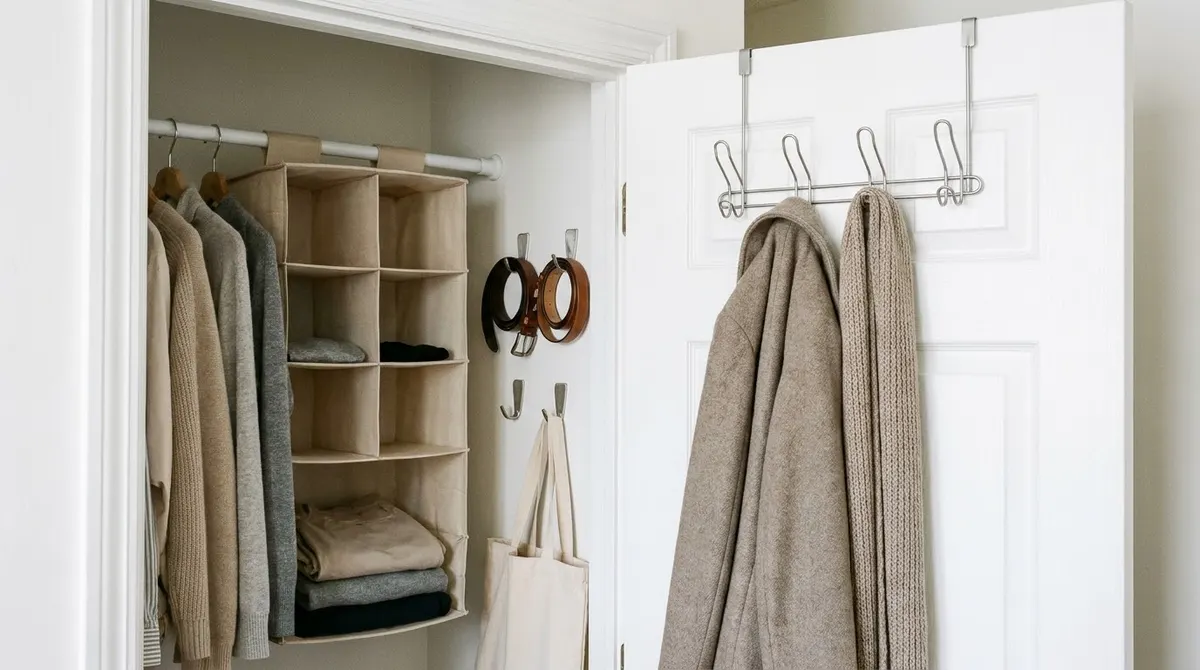
Hanging fabric shelves hook onto the rod and add a column of cubbies for folded T-shirts, sweaters and handbags. They are ideal when the bedroom has no room for a dresser. Look for one with a stiff frame so the cubbies do not sag, and keep it to one end of the rod so it does not crowd your hanging clothes.
Swapping a mixed collection of bulky plastic and wire hangers for one style of slim hangers can free a surprising amount of rod space, and the uniform height makes the whole closet look calmer. Velvet or flocked hangers also stop silky tops from sliding to the floor. Keep a few sturdy wooden or wide-shoulder hangers for coats and blazers, because thin hangers can stretch the shoulders of heavy garments over time.
Bags and purses are awkward in a small closet. A hanging organizer with clear pockets, or a row of shelf dividers that keeps each bag upright, stops them from collapsing into a heap. Our ideas for purse storage go into more detail on shapes and materials.
Work the Back of the Door
The closet door, or the bedroom door next to it, is free vertical storage that many renters forget. An over-the-door rack hooks over the top edge and needs no screws. Use it for shoes, scarves, belts, hats or a small collection of handbags. Add felt pads where the hooks touch the door so they do not scuff the paint, and check that the door still closes fully before you load it.
Bifold closet doors usually cannot take an over-the-door rack, because the panels fold. In that case, use the bedroom door or a wall beside the closet instead. Sliding closet doors also cannot take one. For shoe-heavy households, an over-the-door rack plus a low shoe shelf on the closet floor will hold most daily pairs. More layouts are in our guide to closet shoe storage ideas.
Removable Hooks and Renter-Safe Walls
The side walls inside a closet are often bare, and they are a good spot for belts, ties, a robe or tomorrow's outfit. Removable adhesive hooks are designed to come off without tearing paint when you pull the release tab slowly and straight down, as the packaging directs. Clean the wall with rubbing alcohol first, respect the weight rating on the package and wait the recommended time before hanging anything.
Treat adhesive hooks as low risk rather than zero risk. Older paint, textured walls and humid closets can all make them fail or peel paint on removal. If your lease is strict, test one hook in a hidden spot and remove it after a week to see how your walls react before you commit to a row of them.
Add a Freestanding Closet When the Closet Runs Out
Some apartment closets are simply too small for the amount of clothing a person or a couple owns. When that happens, the answer is not to cram harder but to add a second closet that needs no installation. A freestanding garment rack with built-in shelves gives you a hanging rail plus space for folded clothes, boxes and shoes, and it moves with you on the next lease.
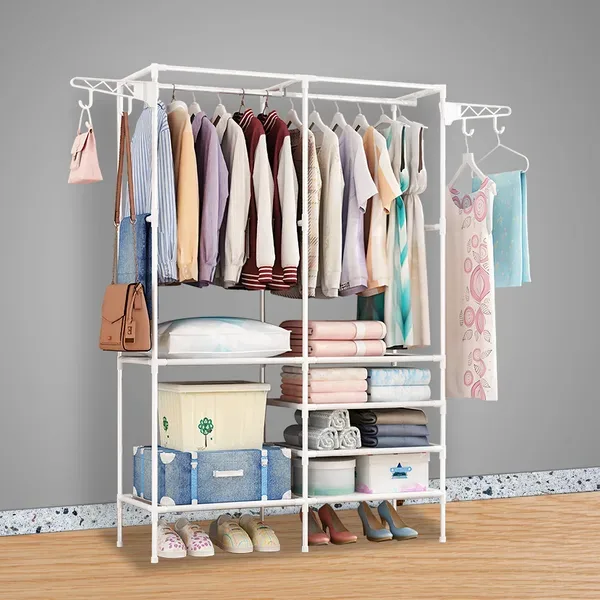
Place the rack against a wall away from radiators and direct sunlight, and keep the most-used items at eye level so the open rack looks intentional rather than cluttered. Our freestanding garment rack with shelves is one example of a no-drill piece that works as a second closet in a studio or a shared bedroom. If your rack or any shelf unit is tall and could tip, read the furniture anchoring section below before loading it.
Make the Closet Floor and Under the Bed Work
The closet floor tends to collect shoes, laundry and bags in a pile. A low two- or three-tier shoe shelf brings order to the pairs you wear most, and a small drawer unit beside it can hold socks, underwear or workout gear if the bedroom has no dresser. Measure the floor space between the door track and the back wall before you buy, so sliding or bifold doors still close.
Under the bed is the natural home for anything you do not need this season. Flat, lidded under-bed boxes keep sweaters, extra bedding and spare shoes dust-free, and some have wheels that make them easy to pull out. Our guide to under-bed storage compares the main styles. If the bed is too low, inexpensive bed risers can add a few inches of clearance.
Renter-Friendly or Ask the Landlord First?
Not every closet upgrade is equal under a lease. Use this as a general guide, and always check your own lease or ask your property manager when in doubt, because rules vary by building.
| Upgrade | Usually renter-friendly | Usually ask first |
|---|---|---|
| Rod extender or tension rod | Yes | No |
| Bins, dividers and hanging shelves | Yes | No |
| Over-the-door rack | Yes | No |
| Removable adhesive hooks | Usually | If walls are textured or freshly painted |
| Freestanding rack or drawer unit | Yes | No |
| Anchoring a tall unit to the wall | Often allowed for safety | Yes, confirm anchor holes |
| Replacing the wire shelf or rod | No | Yes |
| Screw-in closet system | No | Yes |
| Painting the closet | No | Yes |
| Adding a light fixture | No | Yes, battery lights are the renter option |
A Weekend Plan for an Apartment Closet
You can reset most apartment closets in a single weekend. Follow these steps in order so you buy only what the closet actually needs.
- Empty the closet completely. Lay everything on the bed so you can see the full amount at once. 2. Sort into keep, store, donate and repair. Be strict with clothes you have not worn in a year. 3. Measure the closet. Write down the rod width, rod-to-floor height and depth. 4. Plan the zones. Decide which part of the rod stays single-hung and which becomes double-hung. 5. Move off-season items out. Pack them into under-bed boxes or the top-shelf bins. 6. Buy only what fills a gap. A rod extender, a set of bins and a door rack cover most closets. 7. Load from top to bottom. Bins on the shelf first, then hanging clothes, then the floor. 8. Label and reset weekly. Five minutes on a Sunday keeps the system from drifting back into a pile.
A capsule wardrobe makes step two much easier, because it gives you a clear target for how many pieces stay in the closet at any one time.
Safety and Moisture Basics
Tall freestanding pieces such as garment racks with shelves, bookcases and drawer units can tip over, especially when the top is heavier than the bottom or a child climbs on them. The U.S. Consumer Product Safety Commission's Anchor It! guidance recommends anchoring furniture to the wall with the kit that comes with the piece. In an apartment, ask the landlord before drilling, and many will agree because anchoring is a safety measure. Keep heavy items on low shelves either way.
Closets are also prone to stale air and damp, especially on exterior walls or next to a bathroom. The EPA's brief guide to mold, moisture and your home explains that controlling moisture is the key to preventing mold. Do not pack clothes so tightly that air cannot move, put only clean and dry items away, and leave the door open now and then. If you see or smell mold, report it to your landlord in writing rather than covering it up.
Common Mistakes With Apartment Closets
- Buying organizers before measuring. A hanging shelf or drawer unit that is too wide is the most common return. - Overloading a tension rod. Keep heavy coats on the fixed rod and lighter items on the tension rod. - Using the top shelf as a junk drop. Bins with labels stop the shelf from becoming a mystery pile. - Keeping every season in the closet. Rotating off-season clothes out is the biggest space saver. - Ignoring the door. The back of the door often holds more than a whole shelf. - Drilling without permission. It can cost part of your deposit, and there is almost always a no-drill alternative.
For more ways to make tight spaces work, our guides to small closet organization ideas and coat closet organization ideas use the same no-fuss approach. If clothes are overflowing across the whole bedroom, see small space clothing storage ideas as well.
Frequently Asked Questions
How do I organize a small apartment closet without drilling?
Use a closet rod extender or tension rod to add a second hanging level, lidded bins and clip-on dividers on the shelf, an over-the-door rack for shoes and accessories, and under-bed boxes for off-season clothes. All of these hook, clip or stand in place and come out without tools.
Are tension rods safe for closets?
Yes, for light to medium loads. Choose a rod with padded ends, do not overtighten it and keep heavy coats on the fixed rod. Too much pressure or weight can dent drywall or make the rod slip.
Will removable adhesive hooks damage apartment walls?
They are designed to come off cleanly when you pull the release tab slowly and straight down, but older paint, textured walls and damp closets raise the risk. Test one hook in a hidden spot first and follow the weight rating on the package.
What can I do if my apartment closet is too small?
First reduce what lives in it by rotating off-season clothes to under-bed storage. Then add a second closet that needs no installation, such as a freestanding garment rack with shelves or a small wardrobe, placed against a bedroom wall.
How do I add more hanging space in a reach-in closet?
Hang a rod extender from the existing rod or fit a tension rod lower down so short garments use two levels. Keep about a third of the rod single-hung for dresses and coats.
Should I anchor a freestanding wardrobe or garment rack in a rental?
Tall units that could tip should be anchored, following the U.S. Consumer Product Safety Commission's Anchor It! guidance. Ask your landlord before drilling. Many agree because anchoring is a safety measure, and you can patch the small holes when you move out.
How do I keep clothes fresh in a closet with no window?
Do not pack the rod too tightly, store only clean and dry clothes and leave the door open from time to time so air can move. Report any mold to your landlord in writing.
What is the best way to store shoes in an apartment closet?
Put daily pairs on a low shoe shelf on the closet floor or an over-the-door rack, and move seasonal or special-occasion shoes into lidded boxes under the bed or on the top shelf.
Final Thoughts
Apartment closet organization ideas work best when they respect the lease and the limits of the space. Add a second hanging level, put real bins on the shelf, use the door and the floor, move off-season clothes under the bed and bring in a freestanding rack when the closet runs out. None of it needs a drill, all of it moves with you, and the closet you leave behind looks exactly like the one you found.
Liked this guide?
Get new organizing guides and the occasional new product by email. No spam, unsubscribe anytime.
Related articles

Explore more articles
- 30+ Best Storage Ideas for Small Space: Maximize Every Inch of Your Home in 2026
- Stainless Food Storage Containers: The Ultimate 2026 Guide to Durable, Healthy Kitchen Organization
- Plastic Storage Containers Food: The Complete 2026 Guide to Safe, Fresh Kitchen Organization
- Storage Containers for Dog Food: Complete 2026 Guide to Keeping Your Pet's Kibble Fresh
- How to Build a DIY Clothes Rack: Complete Step-by-Step Tutorial for 2026
- 30+ Best Garage Cabinet Ideas to Transform Your Storage Space in 2026
- 30+ Best Playroom Storage Ideas to Create a Fun, Tidy Kids' Space in 2026
- Modular Closet Organization: The Complete 2026 Guide to a Flexible, Clutter-Free Wardrobe