
Corner Pantry Organization Ideas: 12 Ways to Use Every Inch of the Corner
Corner pantry organization ideas that fix the hard-to-reach corner: turntables, labeled bins, door racks, corner shelves, a zone plan for every shelf and food safety habits.
The best corner pantry organization ideas solve one problem: the back corner where shelves meet is deep, dark and hard to reach. Put turntables in the corners so items spin to the front, keep the shelves on each side shallow enough to see everything, store heavy and bulk items low, use the door for small packets and spices, and group food in labeled bins so nothing disappears into the corner again.
A corner pantry can be a small walk-in closet set at an angle between two walls, an L-shaped run of shelves in the corner of a larger pantry, or a corner cabinet used as food storage. All of them share the same weak spot: a blind corner where two shelves overlap. This guide covers twelve practical ideas for using that space, a zone plan for every height, and the food storage habits that keep a corner pantry safe and easy to use.
Corner Pantry Organization Ideas at a Glance
Here is a quick overview of the most useful ideas and where each one fits. Most corner pantries need three or four of them working together, not all of them at once.
| Idea | Solves | Where it works | Effort |
|---|---|---|---|
| Turntables in the corners | Items lost in the blind corner | Every shelf where two runs meet | Low |
| Labeled bins by category | Loose packets and mixed piles | Middle and lower shelves | Low |
| Shelf risers | Wasted vertical space | Shelves with short items like cans | Low |
| Over-the-door rack | Small items with no home | Pantry door | Low |
| Quarter-round corner shelf | Unused floor or counter corner | Corners without built-in shelves | Medium |
| Pull-out spice rack or swivel rack | Spice jars hidden behind each other | Eye-level shelf | Low |
| Heavy items on the floor | Unsafe heavy lifting | Floor and lowest shelf | Low |
| Clear canisters for dry goods | Not knowing what is running low | Eye-level and middle shelves | Medium |
| Wall hooks and rails | Aprons, bags, brooms | Narrow wall beside the door | Low |
| Step stool storage | Top shelves out of reach | Floor or door | Low |
| Zone map and inventory list | Overbuying and forgotten food | Whole pantry | Medium |
| Lighting | Dark corners | Ceiling or under shelves | Medium |
1. Put Turntables in Every Corner
The corner where two shelves meet is the hardest spot in the pantry to reach. A turntable, often called a lazy Susan, fixes it. Place one in the corner of each shelf and load it with jars, bottles and cans. A quick spin brings the back of the turntable to the front, so nothing gets stranded. Use a turntable with a raised edge so items do not fall off, and measure the depth of the corner before you buy. A turntable that is too large will rub against the side shelves and stop spinning. For more ways to bring deep items forward, see our deep pantry organization ideas.
2. Group Food in Labeled Bins
Bins turn loose items into categories you can pull out like drawers. Use one bin for each group: snacks, baking, breakfast, pasta and grains, sauces, and kid-friendly foods. Put a label on the front of each bin so anyone in the house can put things back.
Bins work especially well on the side shelves next to the corner, where you can slide a whole bin forward to see what is at the back. Our pantry organization bins guide compares bin materials and sizes.
3. Add Shelf Risers for Cans and Jars
Cans and small jars often waste half the height of a shelf. A two- or three-step riser lifts the back row so you can read every label. Risers work best on side shelves where you look at items straight on, not in the corner itself, where a turntable is more useful.
4. Use a Quarter-Round Corner Shelf
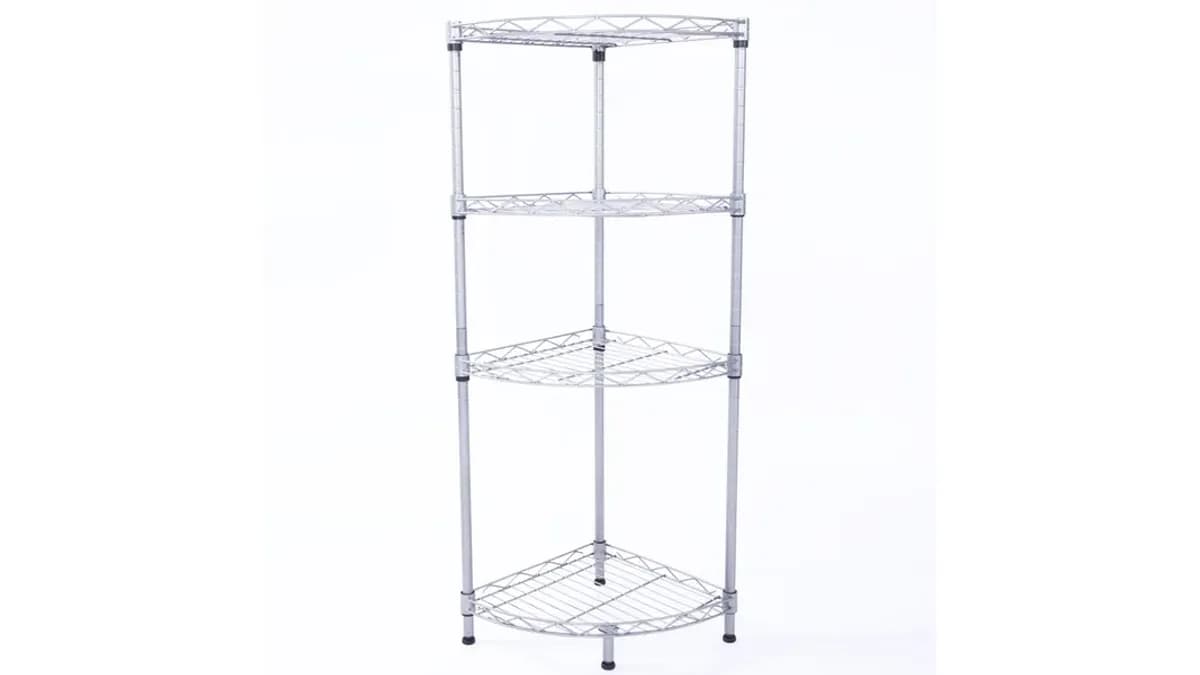
If your corner pantry has a bare corner on the floor or a gap at the end of a shelf run, a freestanding corner shelf can fill it. The 4-tier corner wire shelf is 11.81 x 11.81 x 35.43 inches with four quarter-round tiers, so it tucks into a corner and holds oils, vinegars, potatoes, onions or paper goods.
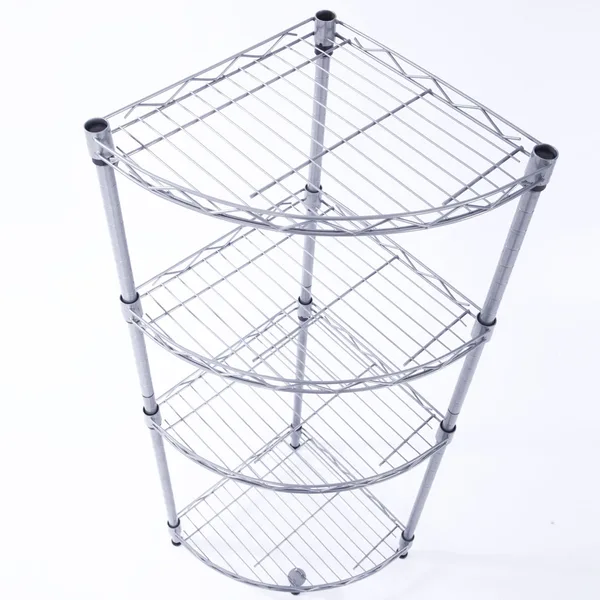
Wire shelves let air move, which suits produce such as onions and potatoes stored in breathable baskets. Add a shelf liner if you store small jars that might tip on the wires.
5. Use the Pantry Door
The back of the pantry door is often the most underused surface in a corner pantry. An over-the-door rack with shallow baskets holds spices, packets, snack bars, foil and wraps, all at a glance.
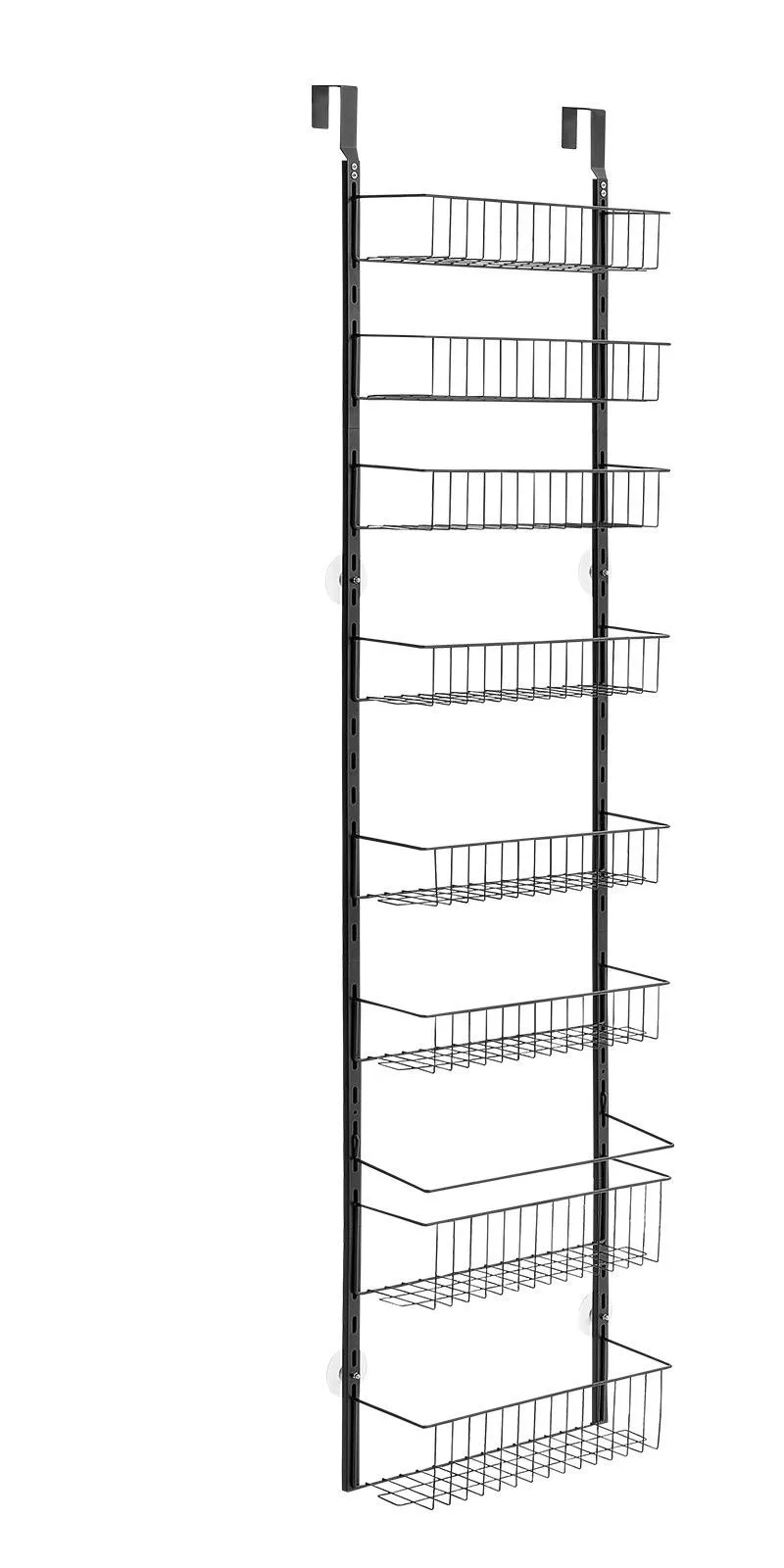
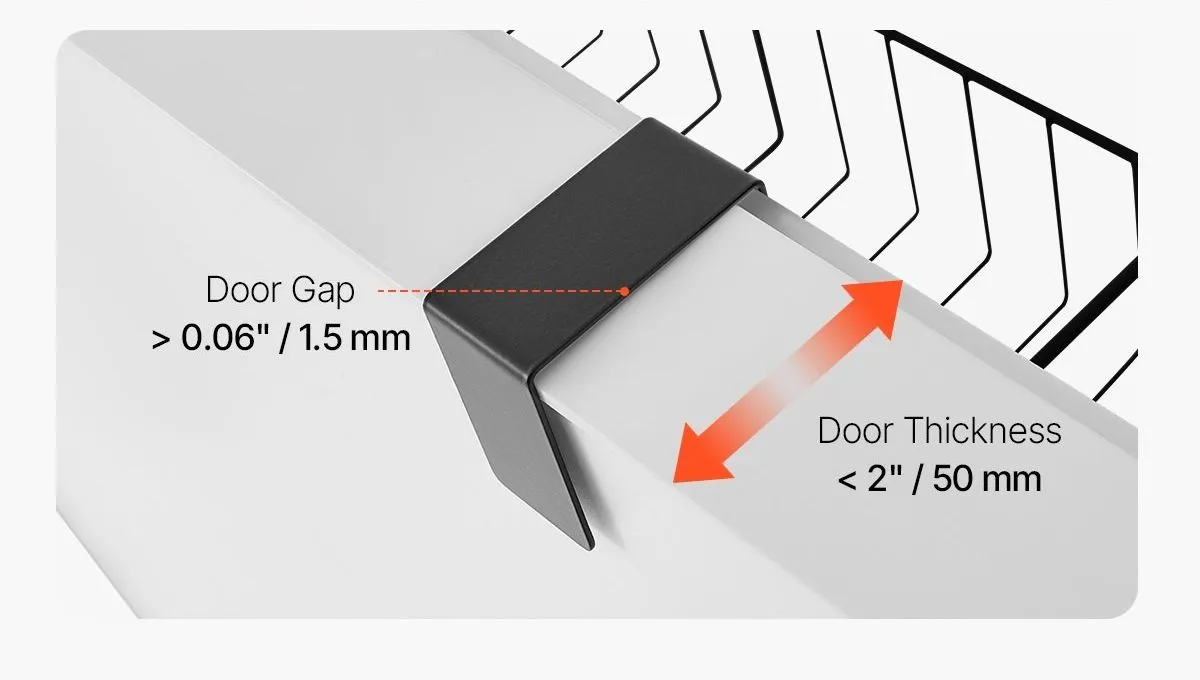
The 8-tier over-the-door pantry organizer has baskets 16 inches wide and 4.9 inches deep, a total rating of 26.5 pounds (3.31 pounds per basket), and fits doors up to 2 inches thick. Check the door clearance before you buy: this model needs about 7.1 inches of free space behind the door so it can close.
Measure your door before ordering any over-the-door rack. The hook has to fit over the top of the door, and the door still has to close with the rack in place.
6. Give Spices a Rack That Moves
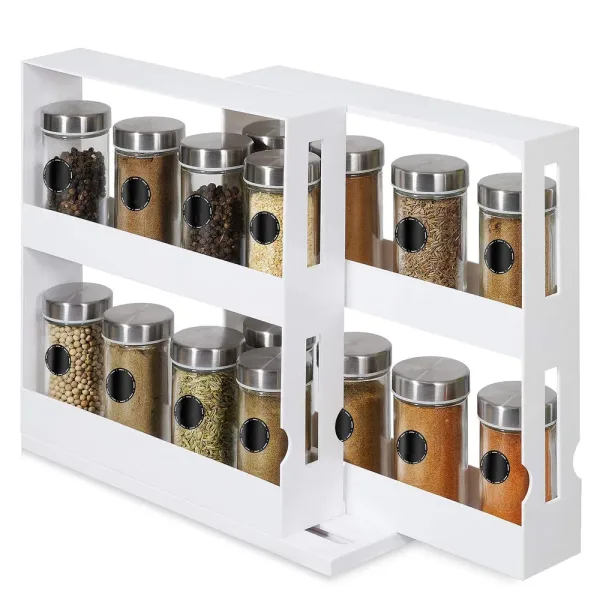
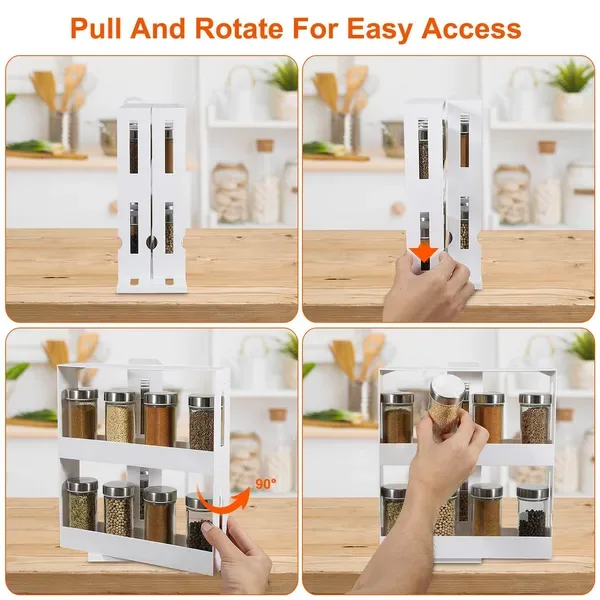
Spice jars are small and easily lost behind each other. A swivel or pull-out spice rack on an eye-level shelf lets you see every label. The swivel cabinet spice rack holds up to 20 bottles in a footprint of 11 x 4.1 inches, and its front rack swings out so you can reach the back row without moving the front one.
For more options, see our 3 tier spice rack buying guide and the how to organize a spice drawer tutorial.
7. Store Heavy and Bulk Items Low
Bulk bags of rice, flour, pet food, cases of water and small appliances belong on the floor or the lowest shelf. Lifting them from a high corner shelf is awkward and risky. A low rolling cart or a sturdy bin with handles makes them easy to slide out.
8. Decant Dry Goods Into Clear Canisters
Clear canisters with tight-fitting lids make it easy to see when you are running low and help protect food from pests. The University of Maryland Extension's guide to kitchen and pantry pests recommends keeping food in glass jars, plastic containers or metal canisters with tight-fitting lids, and inspecting bulk foods again when you get them home and transfer them into storage containers. Keep a strip of masking tape or a small label on each canister with the product name. Our guide to pantry food storage containers compares canister shapes and lid types.
9. Hang Hooks and Rails on Narrow Walls
Corner pantries often have a short wall beside the door that is too narrow for shelves. Use it for hooks or a slim rail to hold reusable shopping bags, aprons, a small broom or a clipboard with your shopping list.
10. Keep a Step Stool Inside
Top shelves in a corner pantry are often out of reach. A folding step stool that hangs on a hook or slides beside the floor bins makes those shelves usable for backup supplies, holiday baking items and paper goods.
11. Map Zones and Keep an Inventory
A zone map is a simple plan of what lives where. Once it is set, the pantry stays organized because everyone knows where to put groceries away. Use this zone plan as a starting point and adjust it to your shelf heights.
| Zone | What to store | Why |
|---|---|---|
| Top shelf | Backup supplies, holiday baking, paper goods | Rarely used, light items only |
| Eye level | Daily foods, spices, breakfast items | Easiest to see and reach |
| Middle shelves | Bins of snacks, pasta, grains, sauces | Frequent use, easy to slide out |
| Corner of each shelf | Turntables with jars and bottles | Spinning brings items forward |
| Lower shelves | Cans, bulk bags, small appliances | Heavy items stay low and stable |
| Floor | Water, pet food, produce baskets | Heaviest items, no lifting |
| Door | Spices, packets, wraps, snack bars | Small items in shallow baskets |
Add a running inventory list on the inside of the door or in a phone note. Write down items when you open the last package, not when you run out.
12. Add Light to the Dark Corner
Corner pantries are often dim, and the corner itself can be very dark. A battery-powered motion-sensor light or an under-shelf light strip makes labels readable without moving items. Lighting alone can make a corner pantry feel larger and easier to use.
Food Safety Habits for a Corner Pantry
Organization and food safety go together. A tidy pantry makes it easier to spot problems before they reach your plate.
- Separate food from chemicals. The FDA's guidance on storing food safely says not to store non-perishable foods near household cleaning products and chemicals. Keep cleaners in a separate cabinet, not on a pantry shelf. - Check cans when you shelve them. The same FDA page lists swelling, leakage, punctures, holes and fractures as signs of can damage, along with crushing or denting severe enough to prevent normal stacking or opening with a manual can opener. It also notes that stickiness on the outside of a can may indicate a leak. - Rotate stock. Put newly bought items behind older ones so the oldest packages get used first. - Clean shelves when you find pests. University of Maryland Extension advises throwing away infested foods and cleaning shelves thoroughly, including cracks and corners, to remove food material and insect eggs or larvae.
For a broader routine, our how to organize your pantry step by step tutorial walks through a full reset.
Step-by-Step: Reorganize a Corner Pantry
- Empty every shelf, including the corner. Corners often hide expired or duplicate items. 2. Check dates and condition. Remove anything expired, damaged or infested. 3. Wipe the shelves and let them dry. 4. Group items on the counter by category. 5. Measure the corners and shelf depths, then choose turntables, bins and risers that fit. 6. Load the heavy items first on the floor and lowest shelves. 7. Fill eye level with the foods you use every day. 8. Set up the door for spices and small packets. 9. Label everything and post a simple zone map on the door.
If your corner storage is in a kitchen cabinet instead of a closet, our corner cabinet kitchen ideas cover blind-corner pull-outs and cabinet turntables. For small homes, see our small pantry organization ideas.
Frequently Asked Questions
How do you organize a corner pantry?
Start by emptying it and grouping food by category. Put turntables in the corners where shelves meet, bins on the side shelves, heavy items on the floor and daily items at eye level. Use the door for spices and small packets, then label everything.
What is the best way to use a blind corner in a pantry?
A turntable is usually the simplest fix. It spins items from the back of the corner to the front. Measure the corner depth so the turntable can turn freely without rubbing against the shelves on either side.
How deep should corner pantry shelves be?
Shallower shelves make it easier to see everything, but the right depth depends on your space and what you store. Measure your largest items, such as cereal boxes or small appliances, and choose a depth that fits them without creating a second hidden row.
Should I use bins or turntables in a corner pantry?
Use both. Turntables work best in the corner itself, where items are hardest to reach. Bins work best on straight side shelves, where you can slide a whole category forward like a drawer.
What should go on the pantry door?
Small, light items that get lost on shelves: spices, seasoning packets, snack bars, foil, plastic wrap and tea. Check the weight rating of the door rack and the clearance behind the door before installing it.
How do I keep pests out of my pantry?
Store dry goods in containers with tight-fitting lids, inspect bulk foods when you bring them home and clean shelves regularly. University of Maryland Extension recommends glass jars, plastic containers or metal canisters with tight-fitting lids.
Can I store cleaning supplies in the pantry?
It is better not to. The FDA advises against storing non-perishable foods near household cleaning products and chemicals. Keep cleaners in a separate cabinet or closet.
How often should I reorganize a corner pantry?
Do a quick reset weekly when you put groceries away, and a full clean-out a few times a year. Check the corners each time, since that is where forgotten items collect.
Final Thoughts
A corner pantry stops wasting space once the corner itself can move. Add turntables, keep the side shelves organized with labeled bins, put heavy items low, use the door for small items and light the dark spots. With a simple zone map and a weekly reset, the corner becomes one of the easiest places in the kitchen to find what you need. For more ideas, browse our pantry organization ideas and kitchen food storage ideas.
Liked this guide?
Get new organizing guides and the occasional new product by email. No spam, unsubscribe anytime.
Related articles
Explore more articles
- 25+ Best Indoor Plant Shelf Ideas to Greenify Your Home in 2026
- 25+ Best Stationery Organizer Ideas to Transform Your Desk in 2026
- How to Store Food to Last Longer: Complete 2026 Guide
- 30+ Kitchen Food Storage Ideas for a Tidy 2026
- Storage Shelving Ideas for Every Room
- Minimalist Shelf Ideas: 25+ Stylish Picks for 2026
- Multipurpose Kitchen Rack: The Complete Buying Guide
- Best Storage Solutions for the Bedroom: 30+ Smart Ideas to Organize Your Space in 2026