
Kitchen Lifestyle Habits That Actually Keep Your Home Organized in 2026
Discover the kitchen lifestyle habits that genuinely work in 2026. Build routines that save time, reduce clutter, and make cooking feel effortless every day.
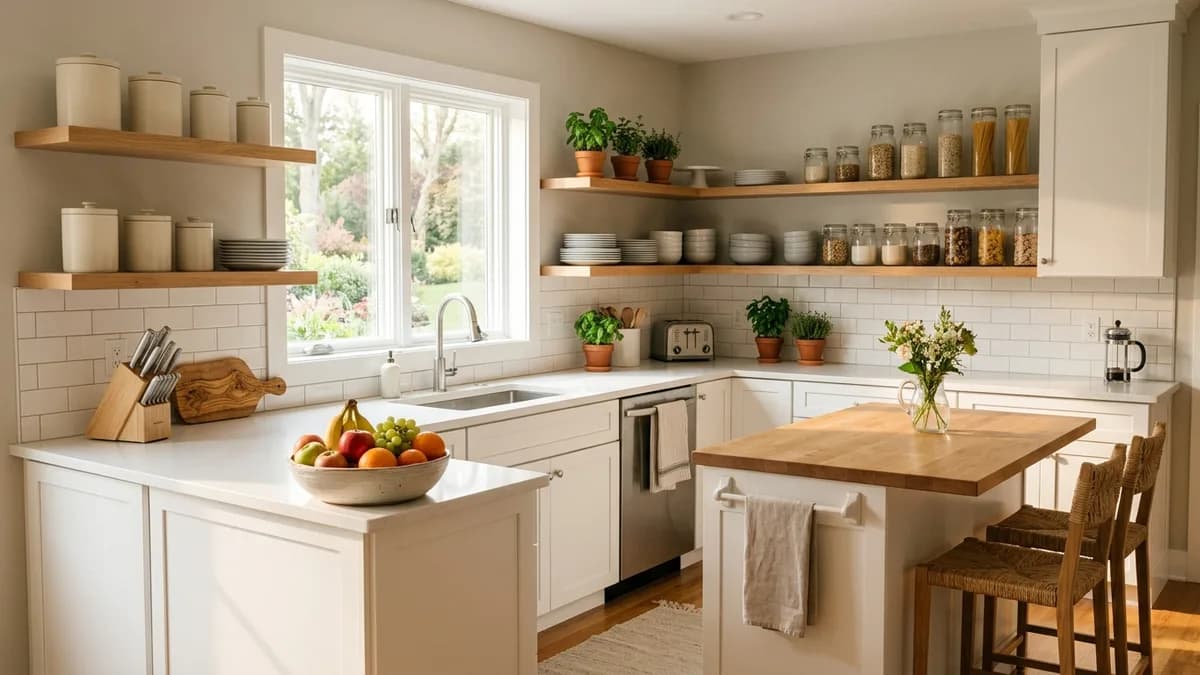
If you have ever looked at your kitchen at the end of a long day and thought, 'How did it get this bad this fast?' you are not alone. The truth is, a tidy kitchen is not about having more storage or spending a fortune on organization products. It comes down to your kitchen lifestyle habits and the small, repeatable decisions you make every single day. In 2026, more American households are shifting toward intentional living, and the kitchen is the heart of that shift. This guide walks you through the daily, weekly, and seasonal habits that will genuinely transform how your kitchen looks and feels, without overhauling your entire life.
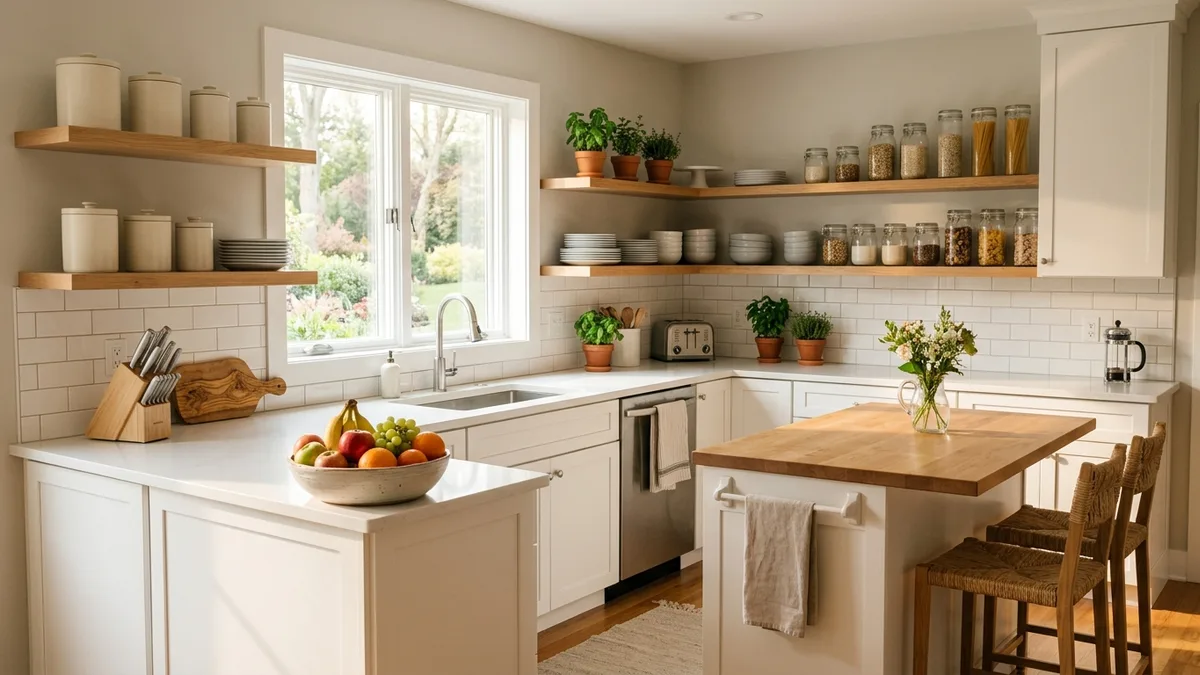
Why Kitchen Lifestyle Habits Matter More Than Products
Most people reach for a new gadget, a new rack, or a new set of bins when their kitchen feels chaotic. And while quality storage products absolutely help, they are only as effective as the habits that support them. According to The Spruce, one of the most common reasons kitchen organization fails is that systems are set up but never maintained. Products sit unused, zones collapse back into clutter, and the whole effort feels wasted.
The real foundation of an organized kitchen is a set of consistent kitchen lifestyle habits that do not require willpower every single time. When a habit becomes automatic, you stop thinking about it and just do it. That is when your kitchen starts staying clean on its own.
Think about the difference between someone who wipes the stovetop every time they cook versus someone who does it once a week. The daily wipe-down takes about 90 seconds. The weekly scrub can take 20 minutes and a lot of frustration. Small habits compound into big results.
The Morning Kitchen Lifestyle Habits That Set the Tone for Your Day
Your morning kitchen routine does not need to be elaborate. In fact, the simpler it is, the more likely you are to stick with it. Here are the morning habits that consistently make the biggest difference.
Start With a Clean Sink
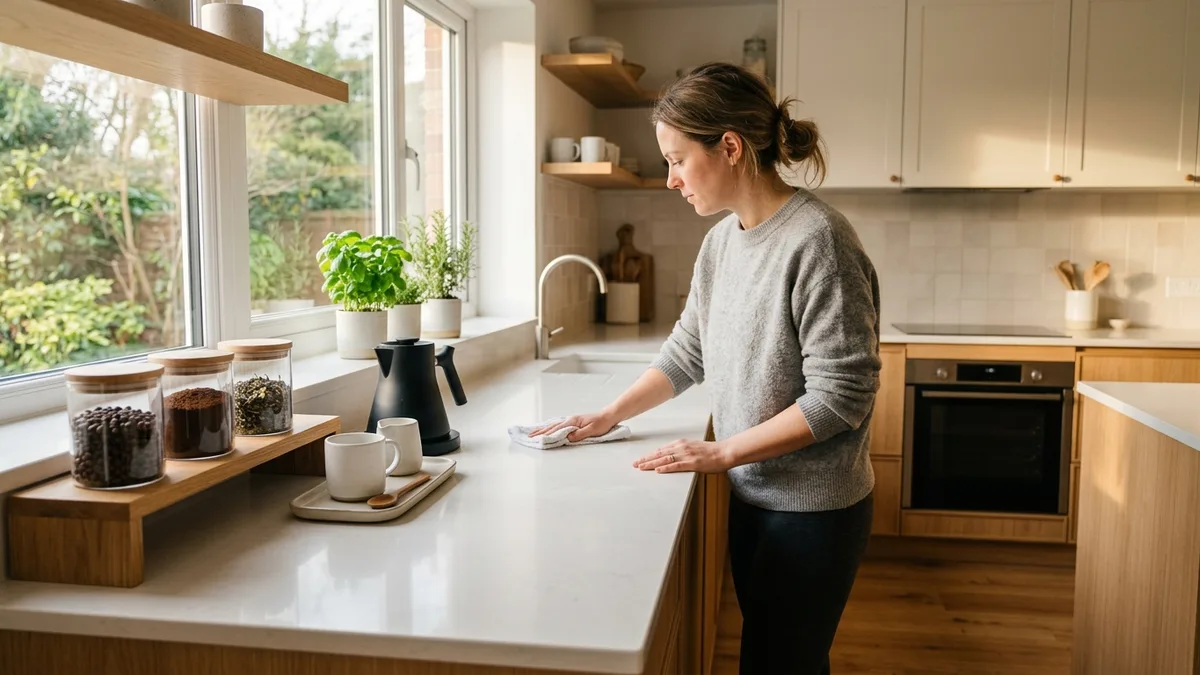
Before you make your coffee or pack your lunch, spend two minutes clearing the sink. Rinse any dishes left from the night before and wipe down the basin. A clean sink is a visual anchor that keeps the rest of the kitchen feeling manageable. Good Housekeeping notes that the state of your kitchen sink is often the single biggest visual cue for whether a space feels clean or chaotic.
Set Up Your Coffee or Breakfast Station the Night Before
This is one of the most underrated kitchen lifestyle habits you can build. Laying out your coffee supplies, setting the timer on your coffee maker, or prepping overnight oats before bed means your morning starts smoothly, with less rushing and less mess. A dedicated coffee station setup with a small tray, labeled canisters, and a consistent spot for your mug makes this even easier.
Put Away One Thing Before You Leave the Kitchen
Every single time you leave the kitchen, put one thing away. This sounds almost too simple, but it is genuinely effective. Over the course of a morning, that might mean the cutting board goes back in its slot, the toaster gets pushed to the corner, and the dish towel gets hung up. None of these take more than five seconds, but collectively they prevent the slow creep of clutter.
Afternoon and Evening Kitchen Habits That Prevent Overnight Mess
The evening kitchen routine is where most households either succeed or fall apart. After a full day, the last thing anyone wants to do is clean. The trick is to make the evening routine so short and automatic that it barely feels like effort.
The One-Pot, One-Pan Rule During Cooking
Whenever possible, try to cook with the minimum number of dishes. This is not about limiting your cooking, it is about being intentional. Use one large skillet instead of three smaller pans. Use a sheet pan dinner instead of multiple pots. Fewer dishes during cooking means far less cleanup after eating, and that directly supports your evening kitchen lifestyle habits.
Clean As You Go
Professional chefs call it 'mise en place,' but the clean-as-you-go mindset is the lifestyle version of that concept. While your pasta is boiling, rinse the colander. While your chicken is resting, wipe the cutting board. This habit keeps your kitchen from reaching a critical mess point by the time dinner is ready. According to Real Simple, cleaning as you cook can cut post-meal kitchen time by as much as half.
The 10-Minute Evening Reset
Before you head to bed, commit to a 10-minute kitchen reset. This is not a deep clean, just a quick reboot. Here is a simple framework:
- Load or run the dishwasher
- Wipe down the counters and stovetop
- Put away any stray items that have migrated onto the counter
- Sweep or do a quick Swiffer pass on the floor
- Empty the sink
That is it. Ten minutes, done. You wake up to a clean kitchen every morning, which makes your morning habits infinitely easier to maintain.
A clean kitchen at the start of the day is one of the highest-return lifestyle investments you can make. It sets the tone for how you eat, how you cook, and how you feel in your own home.
Weekly Kitchen Lifestyle Habits for a Consistently Organized Space
Daily habits keep the surface tidy. Weekly habits keep the systems working. Here is where you zoom out and look at the bigger picture of how your kitchen is functioning.

Weekly Pantry Check and Meal Planning
Once a week, ideally on a Sunday or the evening before your grocery run, open your pantry and take stock of what you have. Check expiration dates, move older items to the front, and make a note of what needs restocking. Then build your meal plan around what is already there. This habit does three powerful things at once: it reduces food waste, saves money, and keeps your pantry organization from collapsing into chaos.
Pair your pantry check with a quick fridge audit. Toss anything past its prime, wipe down any sticky shelves, and consolidate leftovers into clearly labeled containers. A well-maintained fridge is a cornerstone of healthy, organized kitchen lifestyle habits.
Reorganize One Zone Per Week
Your kitchen is made up of zones, the baking zone, the snack zone, the coffee station, the spice area, the utensil drawer. Every week, pick one zone and spend just 10 to 15 minutes making sure it is still working for you. Are the items you reach for most often in the easiest-to-access spots? Is anything in there that does not belong? Small weekly tune-ups prevent the need for a major overhaul every few months.
Deep Clean One Appliance
Rotate through your appliances weekly. One week it is the microwave, the next it is the toaster oven, the week after that it is the refrigerator drawers. By spreading appliance cleaning across the whole month, you never face a situation where everything is dirty at once, and no single cleaning session ever feels overwhelming.
The Pantry and Storage Habits That Make Organization Stick
No conversation about kitchen lifestyle habits is complete without talking about storage systems. The way you store things directly determines how easy your habits are to maintain.
Use Clear, Airtight Containers for Dry Goods
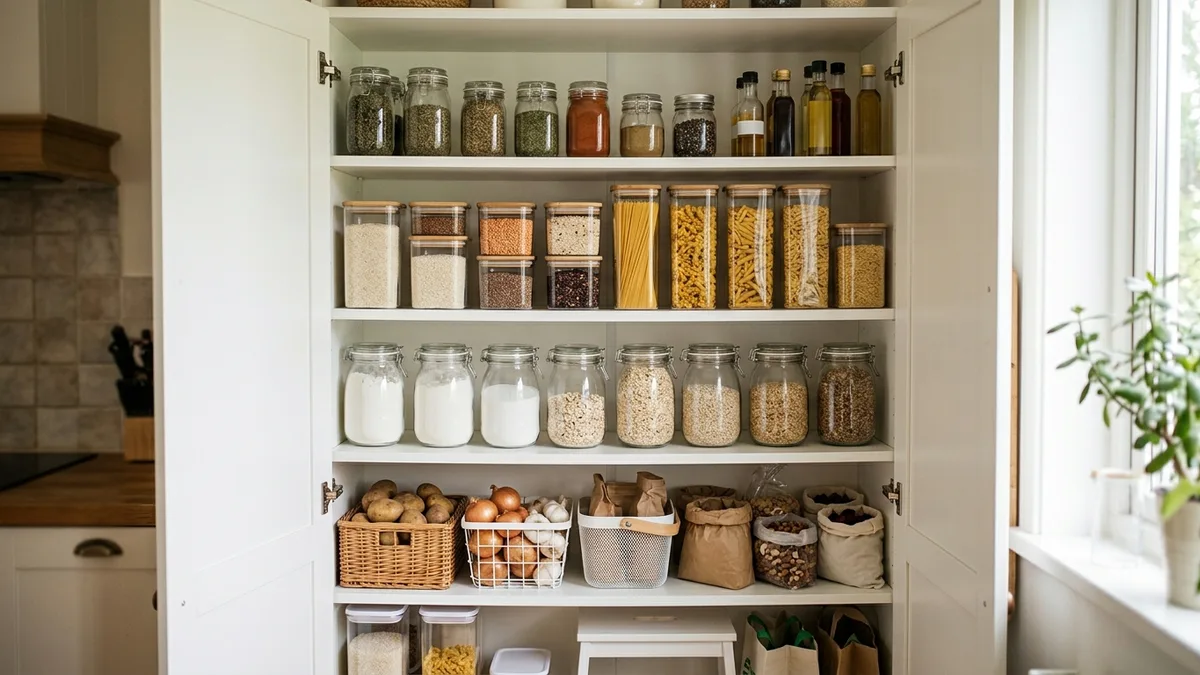
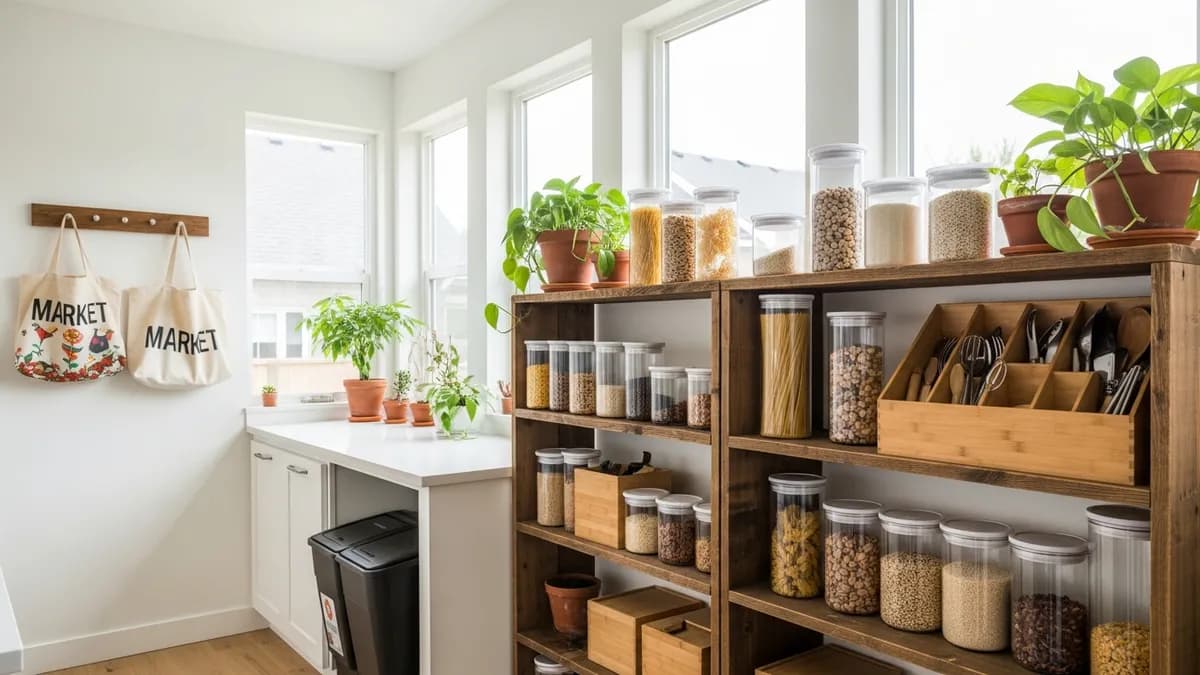
Switching your dry pantry staples, think flour, rice, oats, pasta, cereal, nuts, into clear airtight containers is one of the highest-impact storage changes you can make. You can see exactly what you have at a glance, nothing gets stale or develops bugs, and your pantry looks calm and intentional rather than like a jumble of half-open bags.
Look for containers that are stackable and come in consistent sizes so you can use your shelf space efficiently. Our collection of airtight food storage containers at Sesoris is a great place to start, with options in multiple sizes to handle everything from a pound of lentils to a five-pound bag of flour.
For more guidance on choosing the right containers, our guide to airtight food storage containers covers everything from materials to lid types to sizing.
Label Everything
Labels are the connective tissue of any great kitchen organization system. When every container, bin, and drawer is clearly labeled, every single person in your household knows exactly where things go. This means less time hunting for things, less time putting things in the wrong place, and a self-maintaining system. You do not need a fancy label maker, though they are a fun investment. Masking tape and a marker work just as well.
Our guide to building a label organization system has practical advice on what to label, where to put labels, and how to create a consistent visual language throughout your kitchen.
Assign Every Item a Home
The fundamental rule of kitchen organization: everything needs a specific, permanent home. If an item does not have a designated place, it will always end up somewhere random, which means it is always adding to clutter. When you bring home a new kitchen tool, the first thing you do is decide where it lives before you put it away the first time. That single decision prevents future chaos.
The Kitchen Drawer and Cabinet Habits That Save You Time Every Day
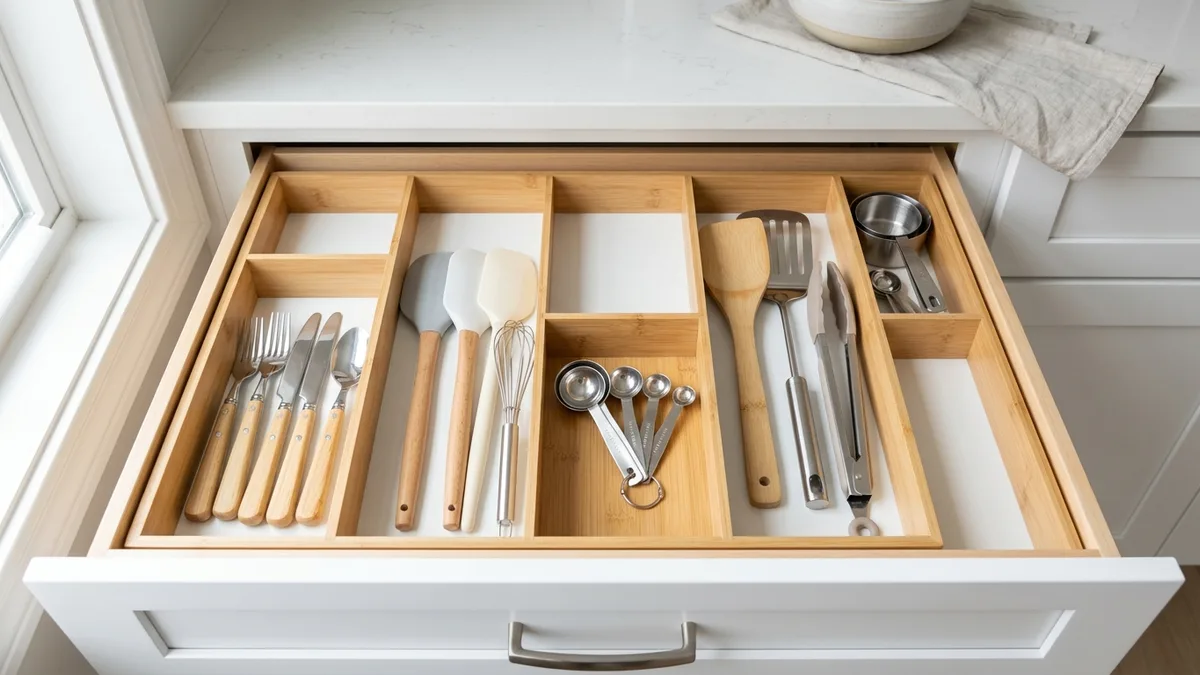
Drawers and cabinets are where kitchen lifestyle habits either get reinforced or break down. If your drawers are a jumble and your cabinets are a game of Tetris every time you need a pot, even your best intentions will fade fast.
Use Drawer Dividers
A simple bamboo or plastic drawer divider is one of the most effective organizational tools in any kitchen. It takes a junk drawer and turns it into a functional, usable space. Assign each section a category: baking tools, grilling tools, measuring spoons, etc. Put dividers in your utensil drawer, your junk drawer, even your spice drawer. The structure they provide makes it effortless to put things back in the right spot.
Check out our kitchen drawer organizer ideas for inspiration on making the most of every inch of drawer space.
Store Things Where You Use Them
This sounds obvious, but it is more nuanced than it seems. Your coffee supplies should live next to the coffee maker. Your cutting boards should live next to your prep area. Your pots and pans should live next to or directly under the stove. When storage location matches usage location, you naturally put things back where they belong because it is the path of least resistance.
Go Vertical in Cabinets
Most American kitchen cabinets have more vertical space than they use. Adding a second shelf riser, using stackable organizers, or hanging a small rail inside cabinet doors can effectively double your storage capacity without adding a single square foot to your kitchen footprint. This is especially valuable in smaller kitchens where counter space is at a premium.
For more ideas on maximizing vertical space, our small kitchen organization ideas guide is packed with practical solutions.
Seasonal Kitchen Lifestyle Habits to Refresh Your Space
Beyond daily and weekly routines, building in a few seasonal kitchen habits keeps your systems from getting stale and your storage from quietly filling up with things you no longer need.
Quarterly Purge
Every three months, do a thorough pass through your kitchen. Pull everything out of one cabinet or pantry shelf at a time, and ask yourself honestly: Do I use this? Does it work? Do I need multiples of this? A quarterly purge keeps clutter from accumulating slowly and invisibly. Donate duplicates, toss broken tools, and recycle expired pantry items.
This is also a great time to reassess your food storage containers. Lids go missing, containers warp, and sets get separated. A quarterly container audit ensures your storage system is actually complete and functional.
Seasonal Swap of Tools and Appliances
Just like a wardrobe has seasonal rotations, so can your kitchen. If you never use your ice cream maker in winter or your slow cooker in summer, store those appliances out of the way and bring in the ones that see regular use for the current season. This frees up counter and cabinet space and keeps your kitchen feeling relevant and functional year-round.
Refresh Your Pantry Labels
Labels fade, peel, and become outdated as your food habits change. Once or twice a year, pull out all your containers, give them a good wash, and replace any labels that are worn or no longer accurate. This small refresh takes about 30 minutes and immediately makes your pantry feel brand new.
How to Build These Kitchen Lifestyle Habits So They Actually Stick
Knowing what habits to build is one thing. Actually building them is another. Here are evidence-backed strategies for making these routines stick.
Start With Just One Habit
Habit research consistently shows that trying to change everything at once leads to overwhelm and abandonment. Pick one habit from this list, ideally one that feels easy and high-impact, and do it every day for two weeks before adding another. The clean sink habit is a great starting point because it is fast, visible, and immediately rewarding.
Stack New Habits Onto Existing Ones
If you already make coffee every morning, that is your anchor habit. Stack your new 'put one thing away' habit right after you pour your first cup. If you already load the dishwasher after dinner, stack your countertop wipe-down habit directly onto that. Connecting new behaviors to existing ones dramatically increases follow-through.
Make Your Kitchen Enjoyable to Be In
You are far more likely to maintain kitchen lifestyle habits in a space you genuinely enjoy. Add a small plant to the windowsill. Put a candle on the counter. Play a favorite podcast while you do your evening reset. Small sensory enhancements make routine tasks feel less like chores and more like self-care.
According to Houzz, homeowners who describe their kitchen as a space they love are significantly more likely to keep it organized than those who feel neutral or negative about the space. Investing a little in making your kitchen beautiful is actually an investment in your organizational habits.
Use Visible Storage as Accountability
When your most-used items are stored in clear containers on open shelves, the state of your kitchen is always visible. There is nowhere for clutter to hide. For many people, this visibility is a powerful motivator to maintain tidiness. It also makes restocking and pantry checks much faster because you can see at a glance what is running low.
Related Products from Sesoris
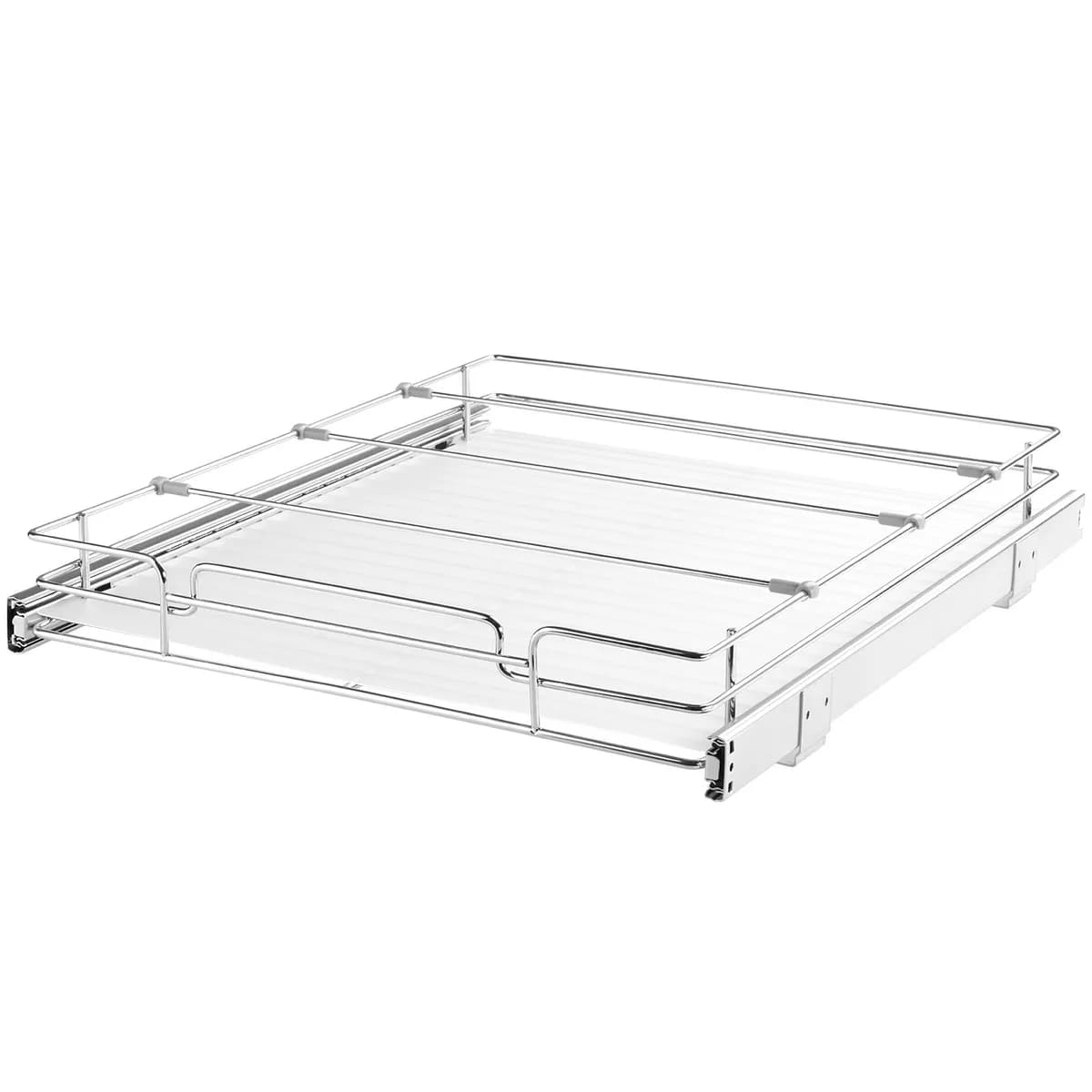
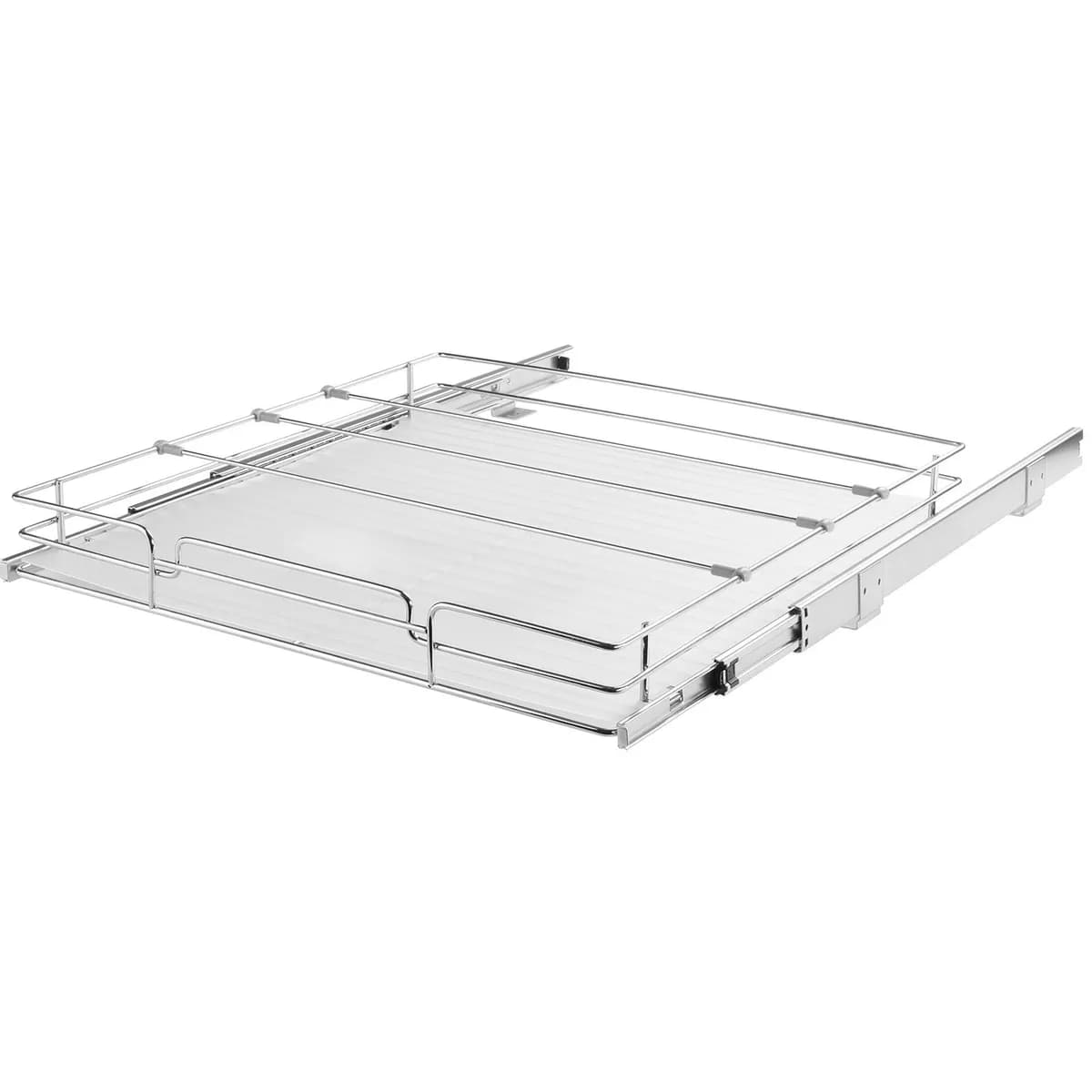
If you want to turn this guide into a real setup, start with Pull-Out Cabinet Organizer, 14 in. Wide and Over-the-Door Pantry Organizer, 8 Tier. For broader options, browse the Kitchen & Dining collection so the article journey does not stop at reading only.
Our practical rule: choose one product that solves the main clutter problem first, then add supporting organizers only when the daily workflow is already clear. This keeps the shopping path useful, not pushy.
FAQ: Frequently Asked Questions About Kitchen Lifestyle Habits
Q: How long does it actually take to build a kitchen habit?
The popular idea that habits form in 21 days is a myth. Research published in the European Journal of Social Psychology found that habit formation can take anywhere from 18 to 254 days depending on the complexity of the behavior and the individual. For simple kitchen habits like wiping the stovetop or clearing the sink, most people find they feel automatic within four to six weeks of consistent practice.
Q: What is the single most impactful kitchen lifestyle habit I can start today?
If you can only do one thing, make it the evening kitchen reset. Waking up to a clean kitchen changes how your entire next day feels. It reduces morning stress, makes breakfast easier to prepare, and gives you a sense of control and calm that carries into the rest of your routine.
Q: I have a small kitchen. Do these habits still apply?
Absolutely, and they may matter even more. In a small kitchen, clutter compounds faster and mess becomes overwhelming more quickly. The habits in this guide are especially valuable for compact spaces. Pair them with smart vertical storage and small kitchen organization ideas and your small kitchen can feel surprisingly spacious and functional.
Q: How do I get my whole family to follow these kitchen habits?
Make the right behavior the easiest behavior. If every item has an obvious, labeled home, putting it away correctly requires no extra thought. Involve your household in setting up the system so everyone has buy-in. Keep the rules simple: clear the sink before bed, put things back where they came from, and wipe the counter after cooking. Simple, consistent rules are far easier to follow than complex systems.
Q: Do I need to buy a lot of products to implement these habits?
Not at all. Most of these habits cost nothing. That said, a few targeted investments, clear airtight containers, drawer dividers, a good set of labels, can make your habits dramatically easier to maintain. Think of organizational products as infrastructure that supports your habits, not a substitute for them.
Conclusion: Building a Kitchen That Works for Your Life in 2026
A beautifully organized, consistently tidy kitchen is not a luxury reserved for people with huge homes, professional organizers, or unlimited budgets. It is the natural result of building the right kitchen lifestyle habits and maintaining them consistently over time. From your morning sink reset to your weekly pantry check to your quarterly purge, every habit in this guide is designed to be simple, realistic, and genuinely effective for busy American households in 2026.
Start small. Pick one habit, practice it until it feels automatic, then layer in the next one. Over the course of a few months, your kitchen will transform, not because you bought everything new, but because you built a lifestyle that keeps it that way.
Ready to support your new kitchen habits with the right storage solutions? Visit Sesoris to explore our full range of kitchen organization products, from airtight containers to drawer organizers to pantry bins. Check out our best sellers and new arrivals to find the tools that will make your kitchen lifestyle habits effortless and enjoyable. Live More Organized.
Liked this guide?
Get new organizing guides and the occasional new product by email. No spam, unsubscribe anytime.
Related articles

Explore more articles
- Refrigerator Organizer: How to Arrange Your Fridge Neatly and Save Electricity
- Blanket Storage Ideas for the Living Room
- Simple Ramadan Decoration Ideas to Create a Festive Home Atmosphere
- IKEA Entryway Organization: 30+ Smart Ideas to Transform Your Home's First Impression in 2026
- Bathroom Closet Organization Systems: 30+ Ideas for a Tidy Storage Space
- Organization and Cleaning: Complete Tutorial Guide to Transform Your Home in 2026
- 25 Brilliant Living Room Storage Ideas to Transform Your Space in 2026
- Mini Aluminum Dish Racks: Perfect Space-Saving Solutions 2026