
Knife Organizer Guide: Drawer Docks, Blocks and Magnetic Strips
How to choose a knife organizer that protects your blades and your hands, with how to measure, set up an in-drawer dock, mount a magnetic strip and keep knives safe around kids.
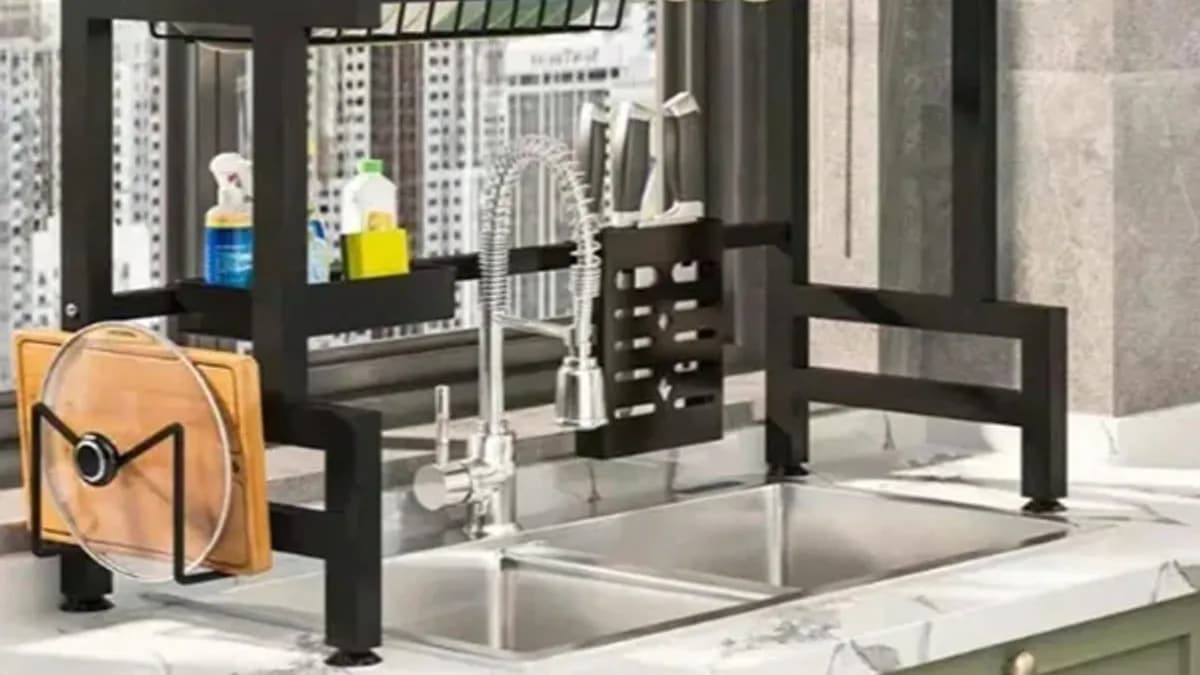
A good knife organizer gives every blade its own spot, so edges stop knocking against other metal and your hand never goes searching through a pile of sharp things. For most kitchens the best choice is an in-drawer dock, which hides the knives and clears the counter. A magnetic wall strip is better when you have a dry stretch of wall and no spare drawer. A compact block suits anyone who wants no install, and blade guards are the fallback for a shared drawer.
Knives are one of the few kitchen tools that get worse when you store them badly. A loose pile dulls the edge, and it turns reaching for a paring knife into a small risk every day. This guide covers what each organizer does well, how to measure, how to lay out a drawer, where a magnetic strip should go, and how to stay safe around kids. If you are working on the whole room, start with our guide on how to keep your kitchen organized.
What a Knife Organizer Actually Has to Do
Shopping for a knife organizer gets easier once you know the four jobs it has to do. Every option on the market does some of them better than others, so the right pick depends on which job matters most in your kitchen.
Protect the edge. The American Knife and Tool Institute says to never let your knives roam free in a drawer, and its advice is to give each blade its own home so it does not jostle with other utensils. America's Test Kitchen makes the same point in its knife care lesson: as knives move around in a drawer, they can nick each other, and you too.
Protect your hands. Good storage means you touch a handle first, every time. If you have to look for the knife you want, or slide others aside to get it, the organizer is not doing its job.
Keep knives dry. Storage that traps moisture works against the steel. The American Knife and Tool Institute warns that putting knives away wet, especially in any sort of block, can result in mold and bacteria.
Fit the way you cook. The best organizer sits within a step of the place you actually cut. A beautiful block in a far corner gets ignored, and the knives end up back on the counter or in the sink.
The Four Main Types of Knife Organizer
Nearly every product you will find is a version of one of four designs. They differ in where they live, how many knives they hold, and how much setup they need.
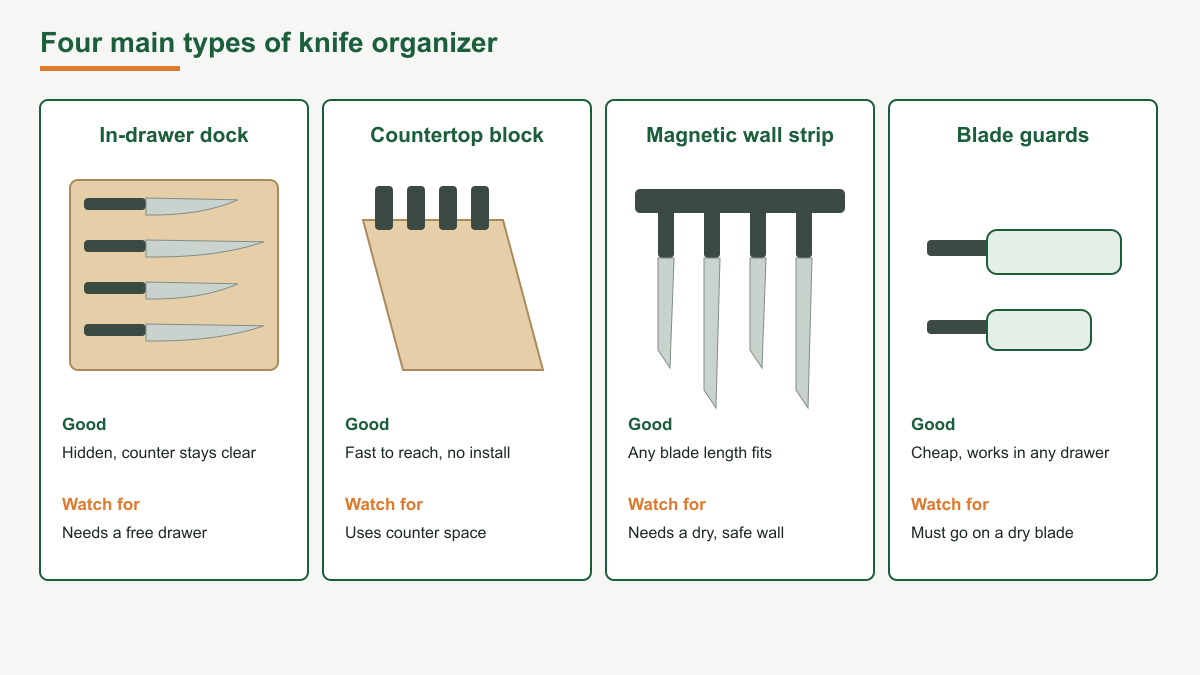
Table 1. The four main knife organizer types compared by where they fit best and what to check first.
| Organizer type | Best for | Main advantage | What to check first |
|---|---|---|---|
| In-drawer dock | Kitchens with a free drawer near the prep area | Knives stay hidden and the counter stays clear | Drawer width, depth and clear height |
| Countertop block | Renters and anyone who wants no install | Fast to reach, works the moment you unpack it | Slot fit for your own knives, counter depth under the cabinets |
| Slotless universal block | Mixed sets of different brands and lengths | Flexible filling holds almost any blade shape | How easily the insert comes out for cleaning |
| Magnetic wall strip | Small kitchens with a dry stretch of wall | Holds any blade length and frees up counter and drawer space | Wall type, mounting height, strength of the magnet |
| Blade guards | Shared drawers and knives that travel | Cheap, simple cover for each blade | Guard length and a snug fit on the blade |
In-Drawer Docks
An in-drawer dock is a tray with angled slots that sits flat in a drawer. The knives lie on their sides with the handles toward you. The American Knife and Tool Institute calls drawer inserts made for knives the option with the greatest versatility, and suggests picking one with slots that fit a range of knife sizes. Docks work best in a drawer you can give over to knives alone, and they pair well with the rest of your kitchen organizer ideas.
Countertop Blocks
A block is the easiest knife organizer to set up. America's Test Kitchen says keeping your knives in any block is a big step up from a kitchen drawer. The limit is the slots. The American Knife and Tool Institute calls the blocks sold with matching sets limiting. A slotless universal block solves this with a flexible filling, which grips whatever you slide in. A block takes up counter space, so read our kitchen counter organization ideas before you give it a permanent spot.
Magnetic Wall Strips
A magnetic strip is a metal-holding bar that screws or sticks to the wall. It leaves both the counter and the drawers free, and because the blades hang side by side, a long strip holds any length of knife and keeps every one in plain view. You will not need to remember which knife goes in which slot. It needs a solid wall, a magnet strong enough for your heaviest knife and a location away from water and heat. Note that a ceramic knife will not stick to a magnet.
Blade Guards
Blade guards are individual covers that slide over the edge. America's Test Kitchen describes them as a good choice if you must keep your knives in a drawer. They are also handy for a knife you carry to a picnic or a vacation rental. The rule is simple: only cover a blade that is completely dry, because a guard holds any leftover moisture against the steel.
How to Measure Before You Buy
A dock that is a little too long or too tall simply will not work, so the numbers matter. Take the measurements below before you shop, and write them down so you can compare them to the listing. The same habit helps with any drawer project, as our guide to deep kitchen drawer organizer ideas explains.
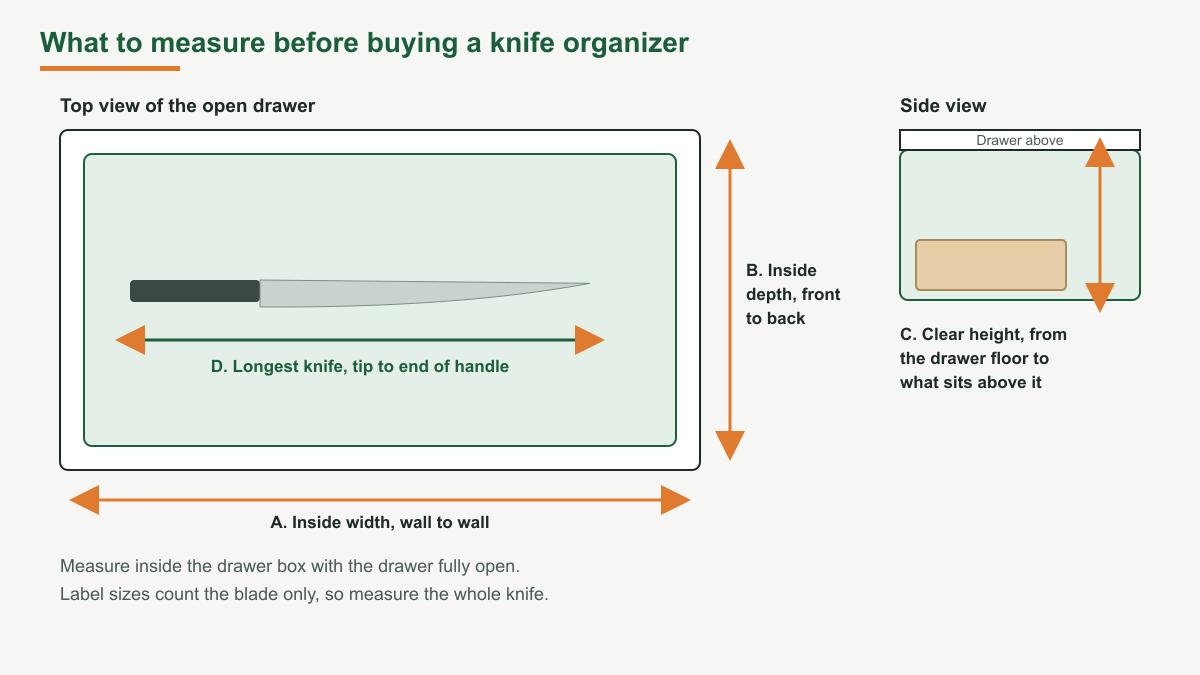
- Inside width. Measure wall to wall inside the drawer box, not the drawer front.
- Inside depth. Pull the drawer fully open and measure from the inside of the front panel to the inside of the back panel.
- Clear height. Measure from the drawer floor to the underside of whatever sits above it when the drawer is closed. Docks hold handles higher than you might expect.
- Your longest knife. Measure the whole knife from tip to the end of the handle. Knives are sold by blade length, so a knife with an 8 inch blade is much longer than 8 inches overall.
- Your knife count. Lay out every knife you own and set aside the ones you never use. Buy for the set you keep, plus one spare slot.
- Your thickest blade. A cleaver or a heavy chef's knife may not fit a slot built for slim blades. Compare its thickness and height against the slot size in the listing.
For a block, swap the drawer numbers for the depth of your counter and the height under your wall cabinets. A block has to tilt the knives up and out, so leave room to lift the longest one straight out of its slot. For a strip, measure the width of the wall you plan to use and allow a little space past both ends.
How to Set Up an In-Drawer Knife Organizer
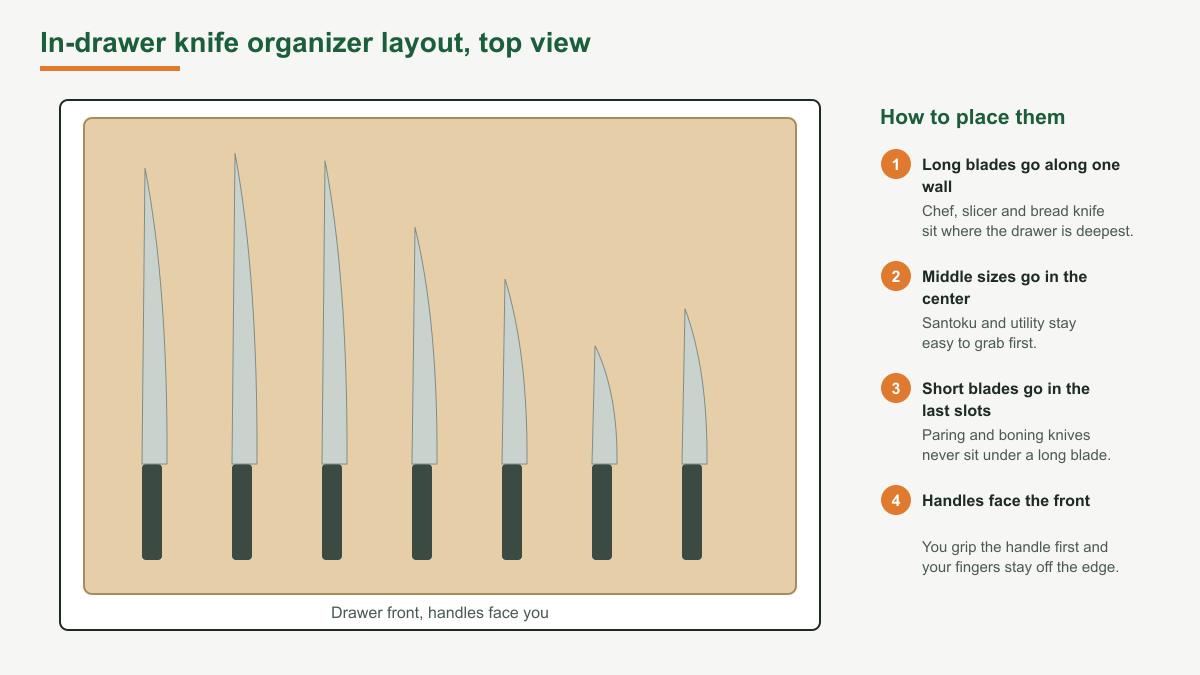
A dock only works if the knives go back in the same place every time. A simple layout makes that automatic. Choose the drawer first: it should sit next to your main cutting spot, at a comfortable waist height, and away from anything hot. If your drawers are already full, our guide to kitchen drawer organizers for large utensils can help you free one up.
- Empty the drawer and clean it. Vacuum out crumbs, wipe it down and let it dry fully before anything goes back in.
- Add a non-slip liner. A thin liner stops the dock from sliding each time you open the drawer.
- Place the dock against one wall. This leaves one usable strip of space beside it for a honing steel or kitchen shears.
- Load long blades first. The chef's knife, slicer and bread knife take the longest slots.
- Add middle and short knives. Keep the ones you use most toward the front of the row so you can grab them without reaching across the others.
- Point every handle at you. You should only ever touch a handle when you open the drawer.
- Test the drawer. Open and close it at normal speed. If anything shifts or a handle touches the drawer above, fix it now.
Keep this drawer for knives alone. As soon as spatulas and measuring spoons move in, the edge protection you paid for starts to disappear. If you need a home for those tools, see our kitchen cabinet organization ideas, or borrow the zone method from our step-by-step guide on how to organize a spice drawer.
Where to Mount a Magnetic Knife Strip
The strip is the easiest organizer to get wrong, because its problems only show up later. The American Knife and Tool Institute says a magnetic rack can keep knives out of easy reach of children, so mounting height matters as much as location.
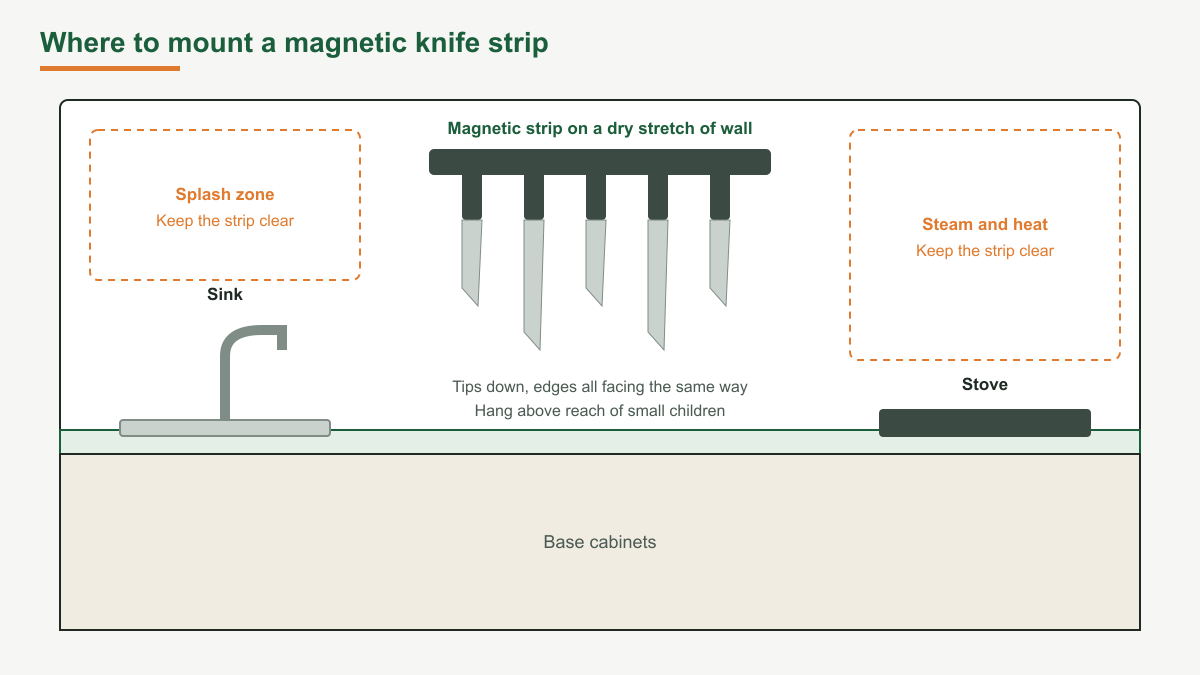
- Stay clear of the sink. Splashes land on the blades and leave them wet.
- Stay clear of the stove. Steam and cooking grease settle on anything hanging nearby.
- Check the wall. Screw into studs or use the anchors the wall needs. A strip loaded with knives has to stay put.
- Keep it close to the cutting spot. One step away is ideal.
- Keep clear of cabinet doors. Open every nearby door and make sure none of them swings into the handles.
To hang a knife, bring the spine to the magnet first and then roll the blade flat. Doing it the other way lets the edge snap against the metal. To take one down, roll it off by the spine rather than pulling straight out. If your wall is short on space, a strip can share it with hanging tools, and our kitchen pot rack ideas show how to plan a wall that does more than one job.
Keeping Knives Safe Around Kids
If children live in your home or visit often, safety goes first and everything else comes second. The American Knife and Tool Institute suggests storing knives in a drawer with a safety latch that is not easily unlocked by unsupervised kids. It also advises that knives never sit close to the edge of counters or appliances, where little hands can reach them.
A few habits add up to a much safer kitchen:
- Latch the knife drawer. A closed drawer alone will not stop a curious child.
- Move blocks well back. Push a countertop block to the rear of the counter, not near the edge.
- Mount strips high. Check for stools and chairs that could turn a high strip into a reachable one.
- Never leave a knife in the sink. The American Knife and Tool Institute warns against keeping knives in a wet sink, especially overnight.
- Put knives away right after washing. A clean knife left on the counter is still a sharp knife within reach.
- Store camping knives elsewhere. Keep outdoor knives with your camping gear, out of reach of children, rather than mixed in with the kitchen set.
Care Habits That Keep the Organizer Working
An organizer protects a knife only if the knife goes in clean and dry. Wash by hand with a sponge, soap and hot water, then dry the blade before it goes anywhere. America's Test Kitchen warns that reaching into a soapy sink with knives at the bottom can lead to serious cuts, so wash each knife as you finish with it.
Skip the dishwasher. The American Knife and Tool Institute calls it the worst thing you can do to a knife, because heat, detergent and water can damage both the blade and the handle. Carbon steel needs extra care. It can blacken or rust if it is not completely dry, and a light wipe of mineral oil before storing helps.
If a knife needs to air-dry for a minute, give it a dedicated spot instead of laying it in a dish pile. The over-the-sink dish rack in our shop includes a knife holder, a utensil holder and a cutting board holder, so a washed knife stays apart from the plates. Our guide to dish drying racks covers how to place one.
Then clean the organizer itself. Empty a dock or block, shake out the crumbs and wipe it down, and let it dry fully before the knives go back. Follow the maker's care notes for the material. Wipe a magnetic strip with a damp cloth and dry it, so that grease does not build up where the blades rest.
Which Knife Organizer Fits Your Kitchen
When two options both seem fine, let your kitchen decide. Start with safety, then look at what space you really have.
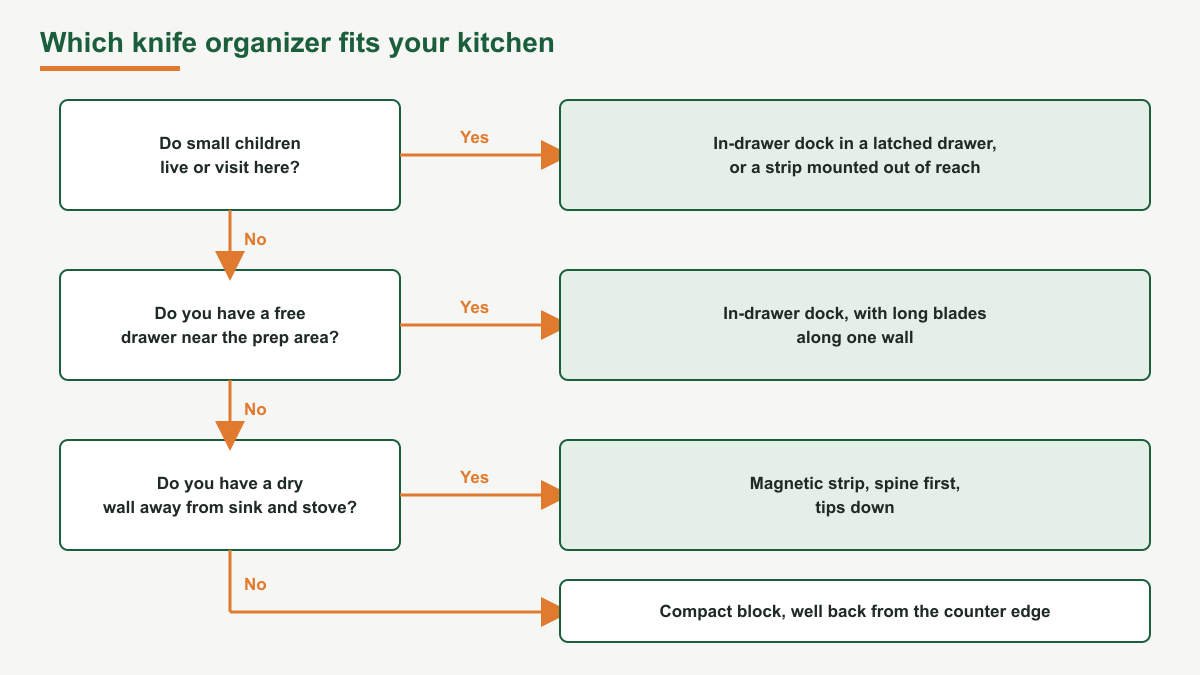
Table 2. A quick match between common kitchen situations and the knife organizer that suits them.
| Your kitchen | Best pick | Why it works |
|---|---|---|
| Small children at home | Dock in a latched drawer | Knives stay hidden behind a latch |
| Tiny apartment | Magnetic strip | Uses wall space, not counter or drawer space |
| Rental with no drilling allowed | Compact block or dock | Nothing needs to be attached to the wall |
| Mixed knives of many lengths | Slotless block or strip | No fixed slot sizes to outgrow |
| Busy cook with clear counters | In-drawer dock | Close at hand and out of sight |
| Island with deep drawers | Dock in the island | Puts knives right at the prep surface |
| Only one shared utensil drawer | Blade guards | Covers each edge until a dedicated spot opens up |
For a tiny kitchen, the strip is often the only option that adds storage without costing any, and it fits with the other ideas in our guide on how to organize a tiny kitchen. If you have an island, a drawer on the prep side makes a natural knife station, and our kitchen island organizer ideas show how to plan each side. You can browse more storage for this room in our Kitchen & Dining collection.
Common Knife Storage Mistakes
Most knife storage problems come from a few small habits. Each of these is simple to fix once you notice it.
- Forcing a blade into a tight slot. If a knife needs a push, it is the wrong slot. Friction wears on the edge over time.
- Storing knives edge down on a hard surface. The whole weight of the blade rests on the edge. Lay it on its side or rest it on the spine.
- Putting knives away damp. A quick wipe with a towel is not always enough around the handle joint, so dry it with care.
- Buying for a set you no longer own. Sort your knives first, then buy for the ones you really use.
- Mixing tools into the knife drawer. One peeler or whisk rattling around is enough to start nicking edges.
- Ignoring the organizer itself. Crumbs, dust and grease collect in slots, so add a wipe-down to your regular kitchen reset.
Frequently Asked Questions
What is the best way to organize kitchen knives?
Give each blade its own space. For most homes that means an in-drawer dock near the main cutting area. Use a magnetic strip if you have a dry wall and no spare drawer, and a block if you want no install at all.
Is it bad to store knives in a drawer?
Loose in a drawer, yes. Knives knock against each other and other tools, which can nick the edges and cut your hand. In a drawer with a dock or insert, each blade has its own slot, so drawer storage works well.
Are magnetic knife strips safe?
Yes, when mounted well. Screw the strip firmly to a solid wall, keep it away from the sink and stove, use a magnet strong enough for your heaviest knife, and hang it above the reach of small children.
Do magnetic strips damage knives?
They can if the edge snaps against the metal. Bring the spine to the strip first, then roll the blade flat. To remove the knife, roll it off by the spine rather than pulling straight out.
Are wooden knife blocks unsanitary?
A block needs cleaning like any other kitchen tool. Crumbs and moisture can collect in the slots, and putting knives away wet can result in mold and bacteria. Store only clean, dry knives and empty the block for a regular clean.
How do I organize knives in a small kitchen?
Use the wall. A magnetic strip takes up no counter or drawer space and holds several knives in a short run. If you have no suitable wall, a compact block or a slim dock in one drawer also works well.
Where should a knife organizer go in the kitchen?
Within a step of your main cutting area and away from the sink and stove. Moisture and heat are the two things to avoid, and a knife that is close by is more likely to go back where it belongs.
How do I keep knives away from kids?
Store them in a drawer with a safety latch, or on a strip mounted high and clear of any stool or chair. Keep blocks away from counter edges, and never leave a knife in the sink or on the counter.
Conclusion: One Spot for Every Blade
The right knife organizer starts with your kitchen, not with the product. Check for safety first, measure the drawer and your longest knife, and choose between a dock, a block, a strip or guards based on the space you really have. Then build the habit that makes any of them work: wash by hand, dry completely, and put each knife back in the same spot. Your blades stay sharper for longer, and you never have to reach blindly for a knife again.
Liked this guide?
Get new organizing guides and the occasional new product by email. No spam, unsubscribe anytime.
Related articles
Explore more articles
- DIY Storage Box Ideas from Simple Materials
- Wooden Kitchen Tables: Timeless Classics That Never Go Out of Style
- Stove Rack Storage: Organize Your Cooking Area for Maximum Efficiency
- DIY Wooden Spice Rack: Step-by-Step Guide
- 30+ Walk-In Closet Organization Ideas to Transform Your Dream Wardrobe Space in 2026
- 25+ IKEA Closet Organization Ideas to Transform Your Wardrobe Storage in 2026
- Rubbermaid Food Storage Containers: Buying Guide
- Stainless Steel Food Storage Containers: Ultimate Guide to Durable Food Storage in 2026