
Office Closet Organization Ideas: Cloffice Layouts and Supply Closet Systems
Office closet organization ideas for turning a reach-in closet into a cloffice or a tidy supply closet, with how to measure, shelf zones, containers, wall storage and upkeep.
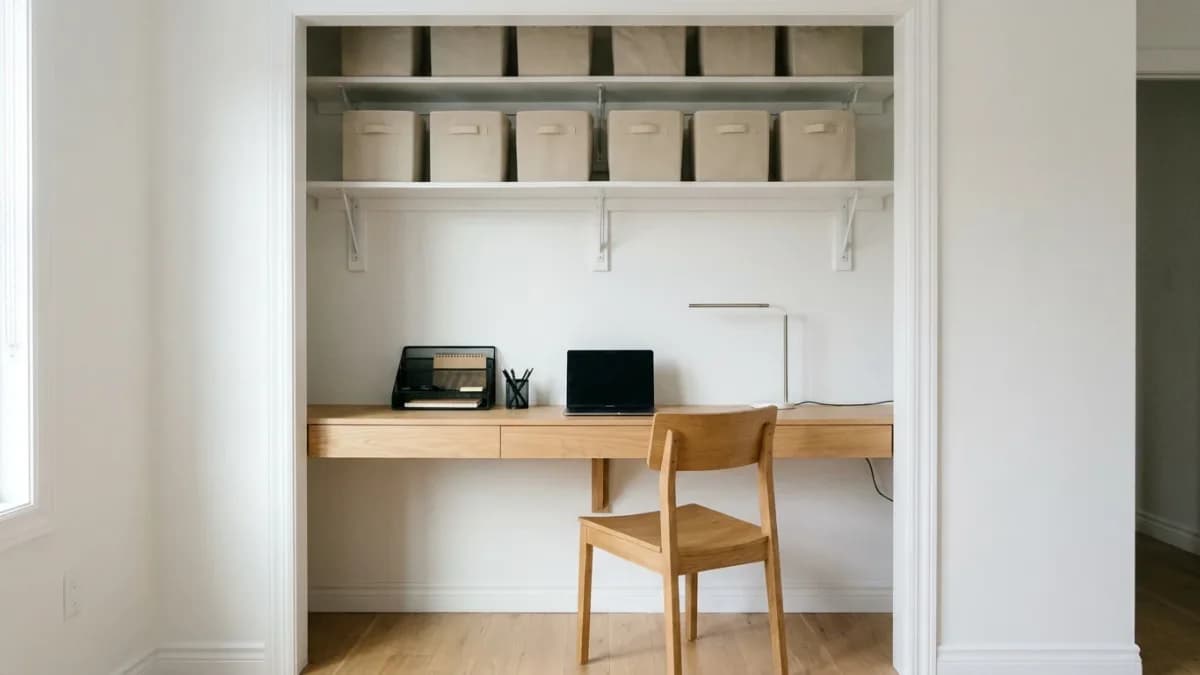
The best office closet organization ideas come down to one decision first: is this closet going to be your desk, or the place that feeds your desk? A closet turned into a compact workspace (often called a cloffice) needs a clear knee zone, a work surface across the full width, daily supplies at eye level and backstock on the top shelf. A supply closet needs shelves sorted by how often you reach for things, clear or labeled containers, and the door working as extra storage. Either way, you measure first, sort second and buy organizers last.
Closets are the most underrated square footage in a home office. They already have walls on three sides, a door that hides clutter on video calls, and shelves or a rod you can rework. This guide covers both versions: turning a reach-in closet into a desk nook, and organizing a closet that stores paper, tech and office supplies for the room around it. If you are still planning the room itself, start with our home office desk organization guide and our ideas for a small home office.
Decide What the Closet Has to Do
Before you pull out a single shelf, write down the job. A closet that tries to be a desk, a printer station, a gift wrap center and a coat closet at once ends up doing none of them well. Most homes land in one of three setups.
A full cloffice. The closet is the workspace. You sit facing the back wall, the doors come off or fold away, and everything you need for the working day lives within arm's reach. This works well in guest rooms, bedrooms and apartments without a spare room.
A supply closet. You already have a desk elsewhere, and the closet holds paper, printer ink, files, cables, packing supplies and the things that make a desk messy. The goal is quick retrieval and an easy restock.
A hybrid. Half the closet holds a standing work surface or a printer station, the other half keeps hanging storage or shelves. This suits people who work at a laptop for short sessions and need the closet for other things too.
Pick one, then plan around it. The table below sums up how the three setups differ.
| Closet setup | Best for | What to keep in it | First organizer to add |
|---|---|---|---|
| Full cloffice | Daily desk work in a room without space for a desk | Laptop or monitor, daily supplies, a lamp, a few files | A full-width desk surface and one eye-level shelf |
| Supply closet | Homes that already have a desk in the room | Paper, ink, files, cables, mailing supplies, backstock | Shelves sorted by reach, clear or labeled bins |
| Hybrid | Short laptop sessions plus regular closet storage | A standing shelf for the laptop, printer, some hanging items | A wire shelf unit or a pull-out tray on one side |
| Tech and charging closet | Families who share devices | Chargers, routers, spare cables, batteries | A shelf with one power strip and labeled cable bins |
Measure the Closet Inside the Frame
Organizers and desk boards that do not fit are the most common reason a closet office project stalls. The door opening is narrower than the closet itself, so measuring the opening gives you the wrong numbers. Step inside and measure wall to wall, back wall to the front edge of the frame, and floor to ceiling.
Write down five numbers: the interior width, the interior depth, the height to the lowest existing shelf or rod, the width of the door opening, and where the nearest outlet sits. The opening width decides how wide a desk board or a shelf unit can be when you carry it in. The outlet decides which side your cords will run down. If there is no outlet inside, plan for one extension cord that runs along a wall, not across the floor.
Then check the depth against your chair. A shallow closet still works as a cloffice, because your knees and chair can sit in the room outside the closet line. What does not work is a closed cabinet or a stack of bins under the desk that pushes your chair back. The OSHA computer workstation guidance on desks says to avoid storing items such as a computer tower under the desk, because the space under the work surface is where your legs need to be.
Turn a Reach-In Closet Into a Cloffice
A cloffice works when the work surface spans the full width of the closet, the space underneath stays clear, and the shelves above are sorted by how often you reach for them. Here is the layout that fits most reach-in closets.
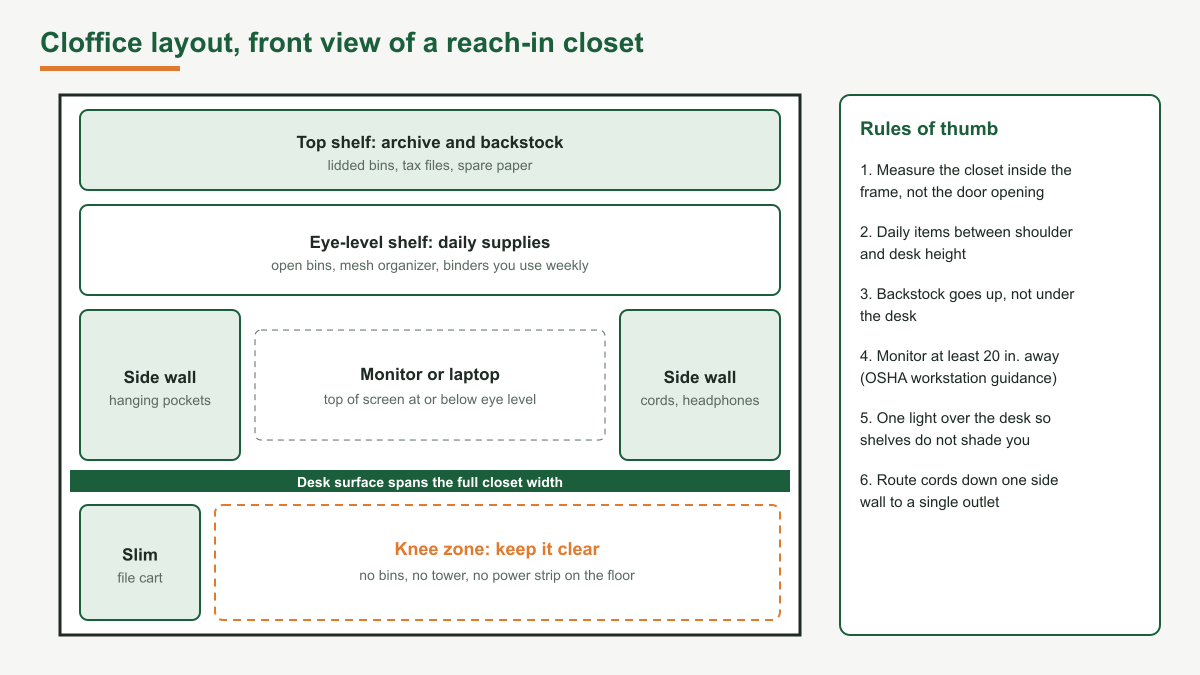
- Remove or rework the doors. Bifold doors can stay if they fold fully open. Swinging doors often block your elbows; take them off and store the hardware in a labeled bag in case you ever move.
- Clear out the rod and lower shelf. Most reach-in closets have a hanging rod with a shelf above it. The rod usually sits too high to work under, so take it out. Keep the upper shelf if it is sound; it becomes your archive shelf.
- Install the work surface across the full width. A desk board supported on wall cleats or brackets at each side wall keeps the knee zone free of legs. Set the height to suit your chair and your seated elbow height, then check it before you fix it in place.
- Add one shelf at eye level. This is the shelf you will use most. Leave enough room above the desk for your monitor or laptop screen, then fit the shelf above that.
- Light it. Shelves above a desk cast a shadow. A slim lamp or an under-shelf light strip over the desk surface makes the nook usable in the evening.
- Run the cords down one side wall. One power strip mounted on a side wall, with every cable routed to it, keeps the floor clear. Our desk cable management ideas show clip and sleeve options that work in tight spaces.
Where you put the screen matters more in a closet than in an open room, because the back wall is close. The OSHA guidance on monitors recommends putting the monitor directly in front of you, at least 20 inches away, with the top line of the screen at or below eye level. In a shallow closet, that often means pushing the screen to the back of the desk and using a separate keyboard, or using a laptop stand at the back edge with the keyboard brought forward.
For more on arranging the surface itself, see our office desk setup ideas and work from home desk setup ideas.
Shelf Zones: What Goes Where
Every closet office, whether it is a cloffice or a supply closet, follows the same rule: the more often you reach for something, the closer it should live to eye level. Things you need daily belong between shoulder and desk height. Things you need monthly go up. Things that are heavy go down, but never into the knee zone of a desk.
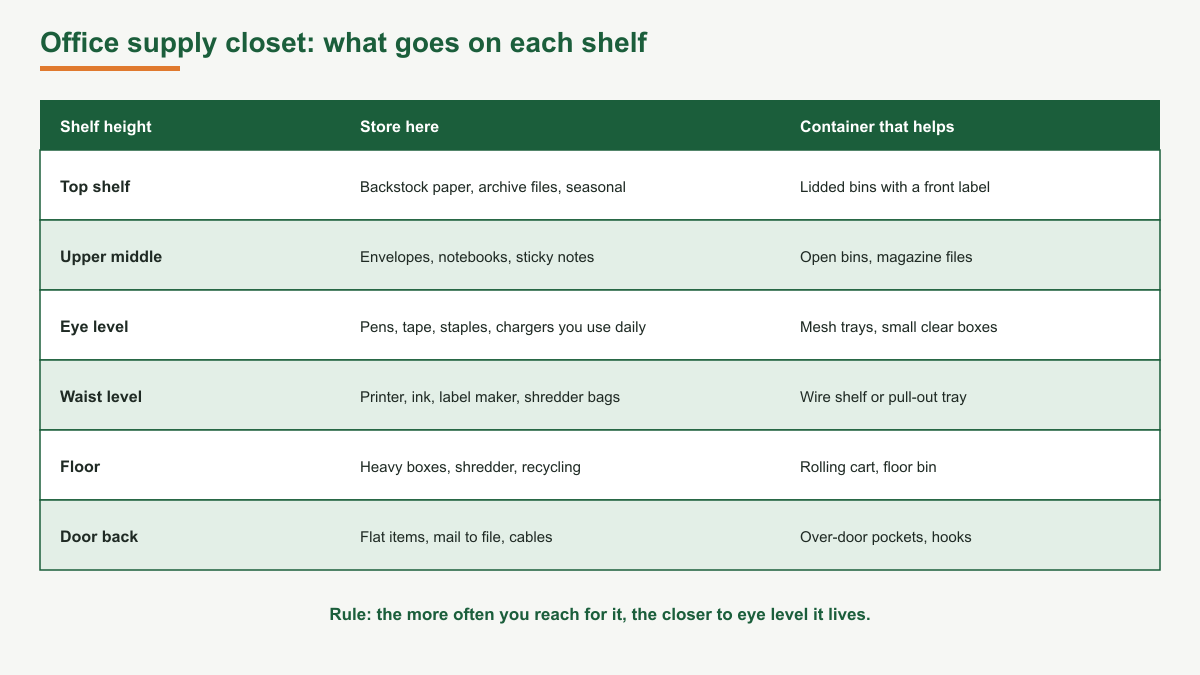
Top shelf. Archive files, tax records, spare paper, holiday cards and anything you touch a few times a year. Use lidded bins with a label on the front, because you will not see the tops.
Upper middle. Notebooks, envelopes, sticky note refills and the things you restock from. Open bins or magazine files work here because you can see into them.
Eye level. The daily kit: pens, tape, scissors, a stapler, chargers, earbuds. Shallow trays keep these from piling up.
Waist level. The printer, ink and the label maker. A wire shelf or a pull-out tray gives the printer room to breathe and lets you reach the paper drawer.
Floor. Heavy boxes, a shredder and a recycling bin. In a cloffice, these live on one side only, outside the knee zone.
If you want more container ideas for the supplies themselves, our office supplies organization ideas go through pens, paper and small parts in detail.
Containers That Keep Office Supplies in Their Lanes
The right container depends on what you are storing and where it sits. Small items need shallow trays with sides. Paper needs upright files. Backstock needs lidded bins that stack.
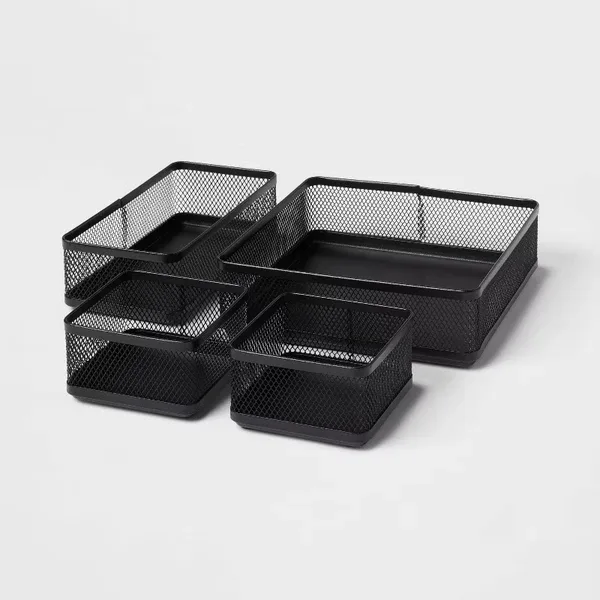
Mesh trays are the workhorse of a closet office. A set like the Mesh Desk Drawer Organizer Set is listed with four trays in different sizes, black steel mesh sides with solid bottoms, and a largest tray of 8 x 8 x 4.5 inches. Set them side by side on the eye-level shelf, one category per tray: pens and markers, tape and glue, clips and staples, chargers and cables. The mesh lets you see what is inside from the front, and the solid bottom stops small items from falling through.
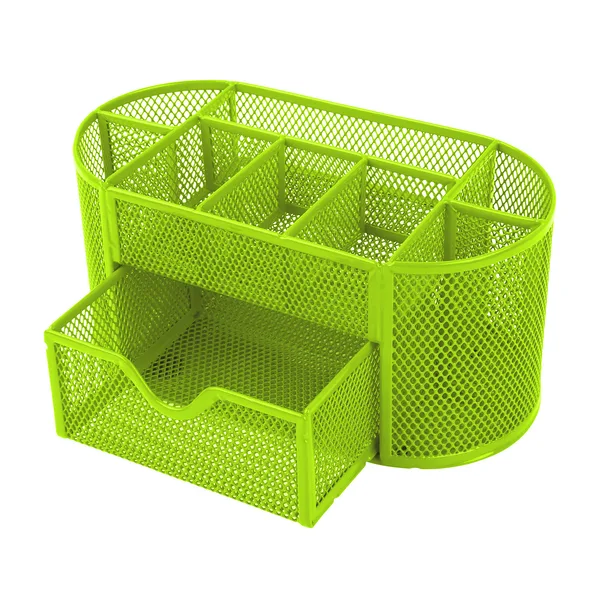
On the desk surface itself, one caddy is enough. The Mesh Desk Organizer with Drawer has nine sections listed: four cups, four shallow compartments and a pull-out drawer for sticky notes, with a footprint of about 8.66 x 4.33 inches. In a narrow cloffice, a compact caddy like this keeps the working surface open for a laptop and a notebook. Anything that does not fit in the caddy goes back up to the shelf at the end of the day.
For backstock and small parts, clear boxes with hinged lids keep things like spare staples, push pins, SD cards and batteries visible and separated. Stack them on the upper middle shelf with the label facing out. If you are setting up drawers as well, our guide on how to organize your desk covers drawer dividers and inserts.
Use the Walls and the Door
A closet has more wall than floor. Side walls and the back of the door are the places most people forget, and they are perfect for flat, light things.
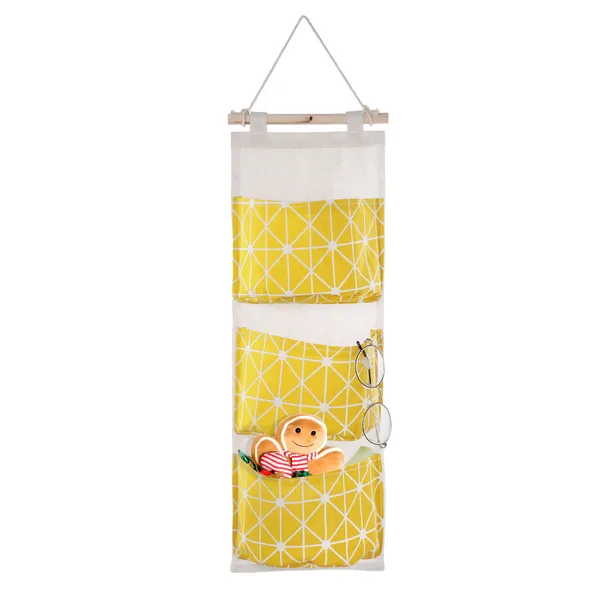
A hanging pocket organizer on a side wall of a cloffice holds headphones, a phone, chargers and a notebook without taking any desk space. The Hanging Wall Organizer is listed at 7.87 x 24 inches overall with three pockets of about 7.1 x 5.5 x 3.1 inches each, made of stiff linen-cotton fabric on a wooden rod. Hang it at the height where your hand naturally goes when you sit down, not above the shelf line.
Other wall ideas that work in a closet office:
- A pegboard panel on one side wall for scissors, a ruler, a tape dispenser and cable hooks.
- A slim magazine file screwed to the wall for incoming mail and papers to file.
- A small corkboard or a magnetic strip at eye level for the week's notes, kept small so it does not become a second clutter zone.
- Over-the-door pockets on a supply closet door for envelopes, mailers, gift wrap and cables in labeled bags.
Our home office wall organization systems guide goes deeper on rails, panels and shelf systems if you want to plan a whole wall.
Organize an Office Supply Closet Step by Step
If the closet is for storage rather than a desk, the process is the same one you would use for any closet, with a few office specific checks. Our utility closet organization ideas and closet shelves organization ideas cover the shelving side in more depth.
- Empty it completely. Take everything out and put it on a table or the floor in the room.
- Sort into categories. Paper, writing tools, filing, tech and cables, mailing and packing, printer supplies, archive, and things that do not belong in an office.
- Purge. Recycle dried pens, cables for devices you no longer own, outdated manuals and duplicate supplies beyond a reasonable backstock. Shred anything with personal information before you recycle it.
- Decide the zones. Use the shelf map above. Daily items at eye level, backstock up, heavy items down.
- Contain each category. One bin, tray or file per category, labeled on the front.
- Keep one empty bin. A spare bin on the middle shelf catches incoming items until you have time to put them away.
- Set a restock line. When a category gets down to its last pack, write it on a list taped inside the door.
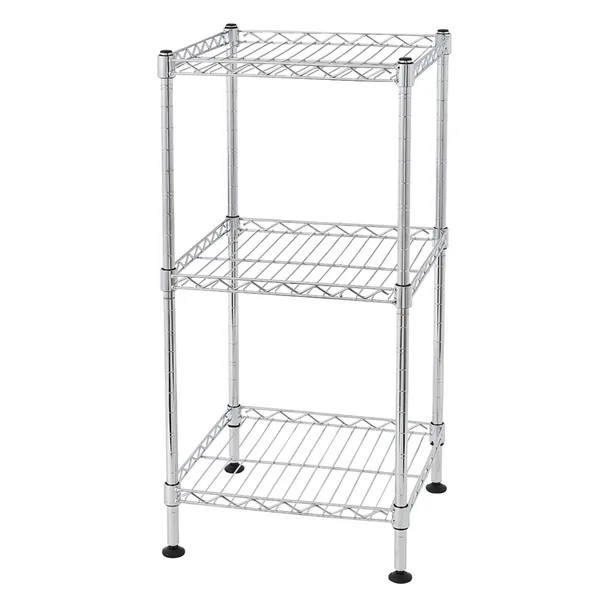
If the closet has no shelves at all, a freestanding wire unit is the fastest fix. The 3-Tier Wire Shelving Rack is listed with an 11.8 x 11.8 inch footprint, a height of 23.6 inches, three shelves rated for up to 66 pounds each and a leveling foot on each post. That size fits beside a printer on the closet floor or under a fixed upper shelf, and the open wire lets air move around a printer or a router.
Cloffice Ideas for Small Closets and Apartments
Not every closet is wide enough for a full desk. In apartments, a narrow linen closet or the end of a hallway closet can still hold a workspace if you scale things down.
Fold-down desk. A wall-mounted desk that folds flat inside the closet lets you close the door on work at the end of the day. Pair it with a single shelf above and a slim lamp.
Standing shelf. If you only answer emails for half an hour at a time, a shelf at standing height with the laptop on it uses less space than a sitting desk and needs no chair.
Half and half. Keep the hanging rod on one side for coats or out-of-season clothes, and build the desk on the other side. A curtain or a tension rod panel can hide the clothes side on video calls.
Rolling cart. A narrow cart that rolls out to the desk in the morning and back into the closet at night holds your daily kit. It keeps the closet floor flexible.
For a broader look at fitting a workspace into a small room, see our organization ideas for a small home office and our tips for a small closet.
Keep the Closet Office Tidy
A closet hides clutter well, which is both its strength and its trap. Five habits keep a cloffice or a supply closet from drifting.
- Reset the desk every evening. Put the daily kit back in its tray, close the laptop and clear the surface. It takes two minutes and the next morning starts clean.
- One in, one out for supplies. When a new pack of pens comes in, the old loose ones go into the kit or the bin.
- File weekly. Empty the incoming mail file once a week and shred what you do not need.
- Check the cords monthly. Cables creep. Re-clip them and remove chargers for devices you no longer use.
- Review the archive yearly. Move old files to long-term storage or shred them according to your own record-keeping needs.
If the whole room needs a reset, our guide to decluttering a home office walks through a full clear-out, and our office organization ideas cover the rest of the room.
Frequently Asked Questions
What is a cloffice?
A cloffice is a closet converted into a small home office. The doors are removed or folded back, a work surface is installed across the closet, and shelves above hold supplies. It gives you a dedicated workspace without needing a spare room.
How do I organize an office supply closet?
Empty the closet, sort supplies into categories, purge what you do not use, then store by frequency: daily items at eye level, backstock on the top shelf and heavy items on the floor. Give each category its own labeled bin or tray.
How deep does a closet need to be for a desk?
There is no single minimum, because your knees and chair can sit outside the closet line. Measure the inside depth and make sure the space under the desk stays clear. A shallow desk board works if you push the screen to the back and keep the keyboard near the front.
Where should the monitor go in a closet office?
Directly in front of you. OSHA workstation guidance recommends a monitor at least 20 inches away with the top line of the screen at or below eye level. In a shallow closet, place the screen at the back edge of the desk and use a separate keyboard.
Can I keep a printer in a closet office?
Yes. Put it on a waist-level shelf or a wire unit so you can reach the paper tray, keep space around it for air to move, and run its cord down the same side wall as the rest of the cables.
What should I do with the closet doors?
Bifold doors can stay if they fold fully open and do not block your elbows. Swinging doors are usually easier to remove; keep the hinges and screws in a labeled bag so you can reinstall them later.
How do I light a closet office?
Add a light over the desk surface, because shelves above the desk cast a shadow. A slim desk lamp or a plug-in light strip under the lowest shelf works without rewiring.
What containers work best for office supplies?
Shallow mesh or plastic trays for daily items, clear lidded boxes for small parts and backstock, upright magazine files for paper, and lidded labeled bins for archive files on the top shelf.
Conclusion: A Closet That Works as Hard as Your Desk
The best office closet organization ideas start with the job, not the products. Decide whether the closet is your desk or your supply room, measure inside the frame, keep the knee zone clear, and sort shelves by how often you reach for things. With a full-width work surface, one eye-level shelf of daily supplies, the walls and door doing the light lifting, and a two-minute reset each evening, a plain reach-in closet becomes a workspace you can close the door on.
Liked this guide?
Get new organizing guides and the occasional new product by email. No spam, unsubscribe anytime.
Related articles


Explore more articles
- Pyrex Glass Food Storage Containers: The Complete Guide to Premium Kitchen Storage in 2026
- Cat Wall Shelf Ideas: Safe, Stylish Climbing Routes for Indoor Cats
- Kitchen Lifestyle Habits That Actually Keep Your Home Organized in 2026
- Indoor Plants and Home Organization: The Lifestyle Guide to a Greener, Tidier Home in 2026
- Best Over-the-Sink Dish Drying Racks: Complete 2026 Review & Buying Guide for a Smarter Kitchen
- Best Garage Storage Solutions: A Source-Backed Practical Guide for 2026
- 30+ Best Storage Ideas for Small Space: Maximize Every Inch of Your Home in 2026
- Stainless Steel Food Storage Containers: The Complete 2026 Tutorial Guide to Durable, Healthy Kitchen Organization